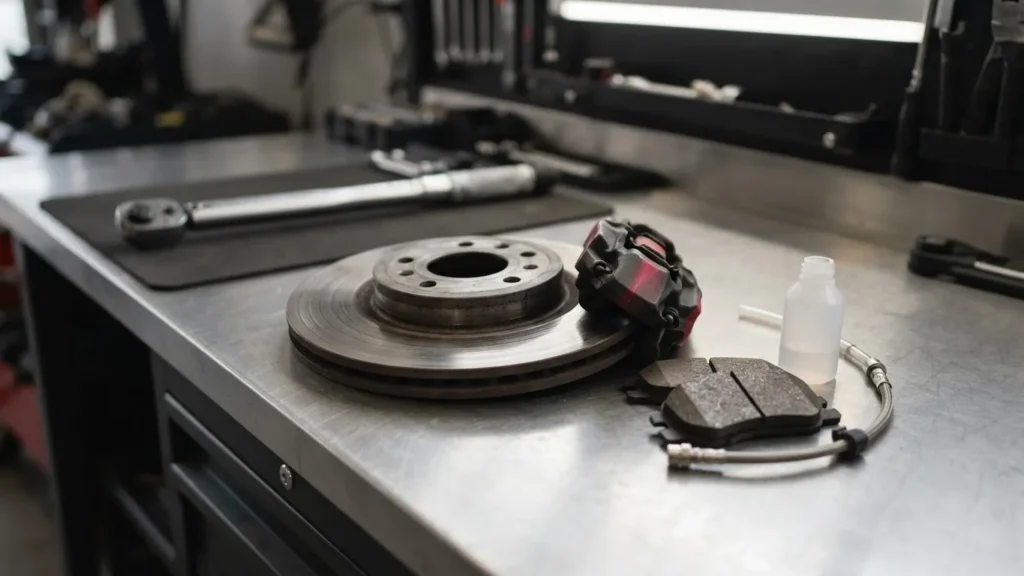
The one fact that decides almost everything about DOT 5 brake fluid is this: it is silicone, and silicone does not absorb water. That single property is sold as an advantage and is, in practice, a trade-off that ends careers of restoration projects when it is misunderstood. Glycol fluids (DOT 3, DOT 4, DOT 5.1) draw moisture into themselves and spread it thin. A silicone base brake fluid refuses the water, so whatever moisture gets past the seals has nowhere to go but the lowest point in the system, where it waits. Before you pour a drop, you need to know which vehicles this fluid belongs in and which it will quietly destroy.
Under the federal rule that governs brake fluid, a silicone base brake fluid is one that consists of not less than 70 percent by weight of a diorgano polysiloxane. That threshold, written into 49 CFR 571.116, is the line that separates DOT 5 from the glycol-based grades beside it on the shelf.
Quick answer: DOT 5 brake fluid is a silicone-based fluid defined by at least 70 percent diorgano polysiloxane by weight. It does not absorb moisture, does not strip paint, and holds a high boiling point in storage, which makes it suited to non-ABS classic, military, and some older motorcycle systems that were filled dry. It is not an upgrade over DOT 4 or DOT 5.1, cannot be mixed with any glycol fluid, and should not go into an anti-lock braking system. Water that enters the system pools instead of dispersing, so the fluid must never share a line with the fluid it replaces.
The 70% silicone threshold that separates DOT 5 from DOT 5.1
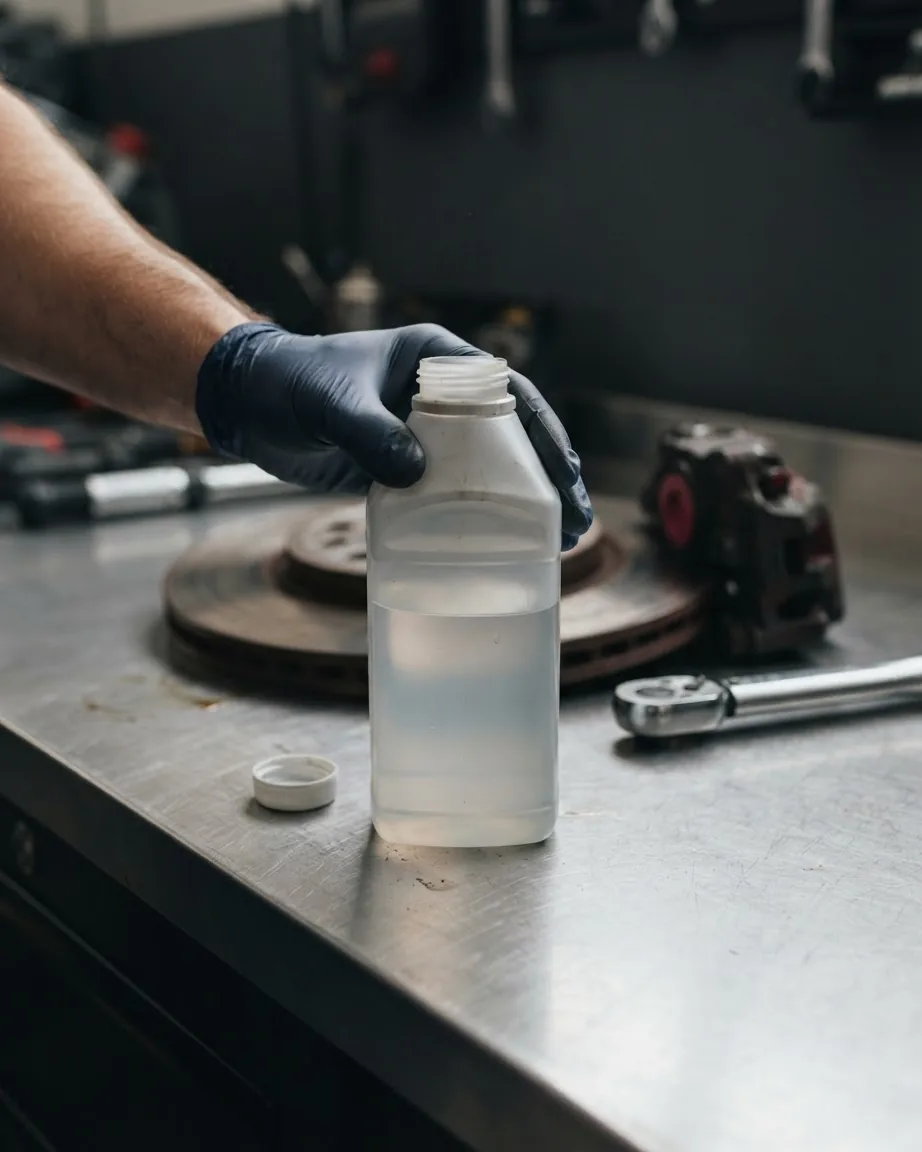
The names look sequential. They are not. DOT 5 and DOT 5.1 are chemically different families that happen to sit next to each other in numbering, and the boundary between them is a composition figure, not a performance grade.
According to the brake fluid entry at Wikipedia, DOT 5 contains at least 70% by weight of a diorgano polysiloxane, while DOT 5.1 is the non-silicone version of DOT 5, defined by FMVSS 116 as being less than 70% silicone. The same 70 percent mark appears in the federal regulation itself: the eCFR text of 49 CFR 571.116 defines a silicone base brake fluid as one that consists of not less than 70 percent by weight of a diorgano polysiloxane.
So a bottle marked DOT 5.1 is a glycol fluid. It mixes with DOT 3 and DOT 4, works in ABS systems, and absorbs water the way they do. A bottle marked DOT 5 is silicone and shares none of those traits. Reading the two as “5, then a slightly better 5.1” is the error that leads people to top off one with the other. The numbers tell you almost nothing about which is “higher”; the chemistry behind the 70 percent line tells you everything.
Why DOT 5 is hydrophobic, and why that pools water in the low points
Glycol brake fluid is hygroscopic: it pulls water vapor out of the air through seals, hoses, and the reservoir cap, then carries that moisture dissolved throughout the system. The water never collects anywhere because it is spread evenly, which is why glycol fluids lose boiling point over time and need a change on a schedule.
Silicone fluid does the opposite. It repels water. The selling point is obvious: the fluid itself does not degrade from absorbed moisture, which is why it keeps so well in a stored or low-mileage vehicle. The hidden cost shows up once any water does get in, because the silicone cannot take it up.
Boostin Performance describes the result plainly: water forms localized puddles that can centralize corrosion and, because water has a much lower boiling point of 212ºF, result in brake failure if left unchecked. You can read their breakdown of the grades in this comparison of DOT 3, 4, 5, and 5.1. A pocket of water sitting in a caliper that reaches 212 F under hard braking flashes to steam, and steam compresses. That is a soft pedal at the worst possible moment, plus a rusting bore where the puddle sat. The fluid that was supposed to protect the system becomes the reason a low point rots.
The no-mixing rule: DOT 5 and glycol fluid never share a system
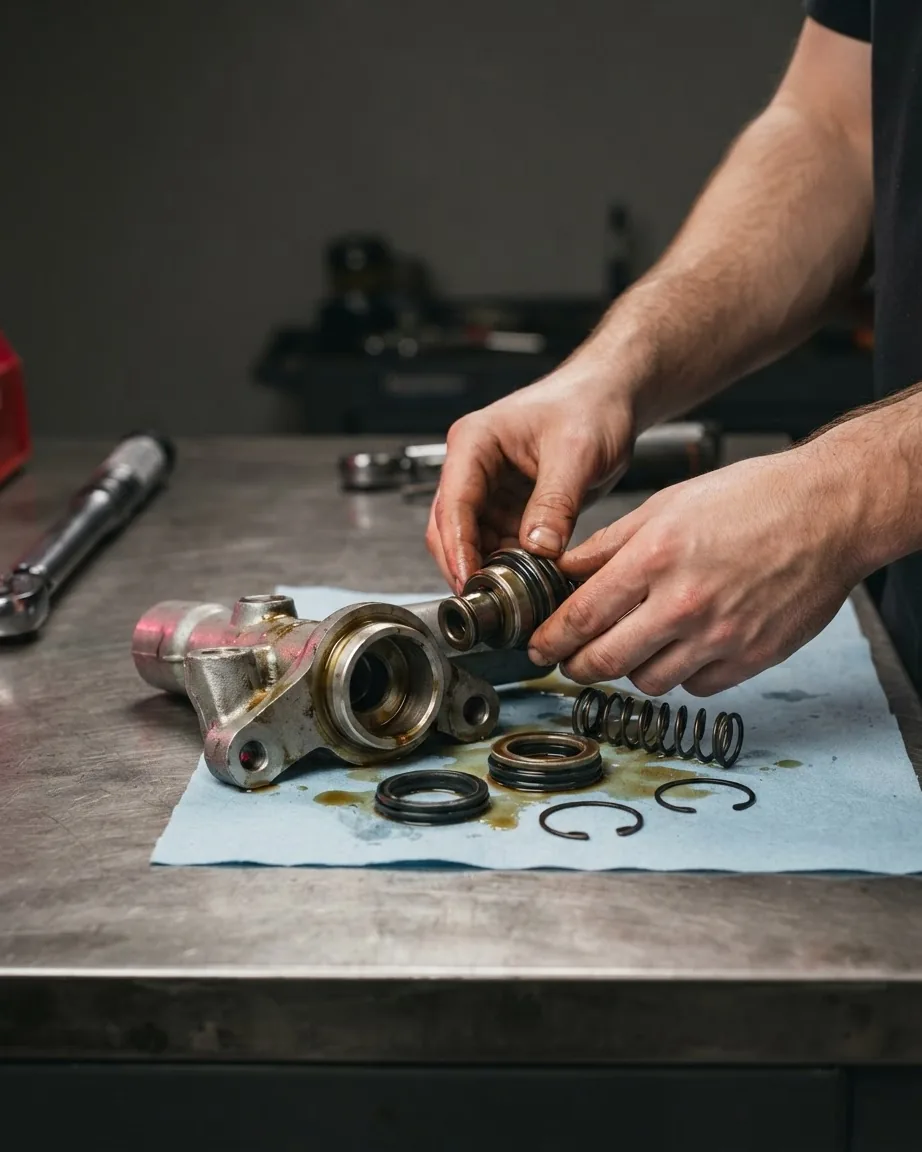
This is the mistake that scraps a brake system. DOT 5 silicone and any glycol fluid (DOT 3, DOT 4, DOT 5.1) are chemically incompatible. They do not blend into a usable fluid; they separate, gel, and foul seals. Pouring DOT 5 into a reservoir that still holds a trace of old DOT 3 is not a shortcut, it is a rebuild.
Because of that, DOT 5 is only appropriate in one of two states: a non-ABS system that has never held glycol fluid, or a system taken down to bare parts and rebuilt completely dry before the silicone goes in. There is no valid “flush and switch” where you run the new fluid through until the old stuff clears. Any glycol film left in a bore, a flex line, or a master cylinder seal is enough to start the reaction.
If your vehicle currently runs glycol fluid and you simply want fresh fluid, the question is not DOT 5 versus DOT 5.1, it is whether you are prepared to replace or fully clean every wetted component. For most drivers, the honest answer is to stay on the glycol grade the manufacturer specified. For the broader topic, see our brake pads section.
Why DOT 5 does not belong in an ABS system
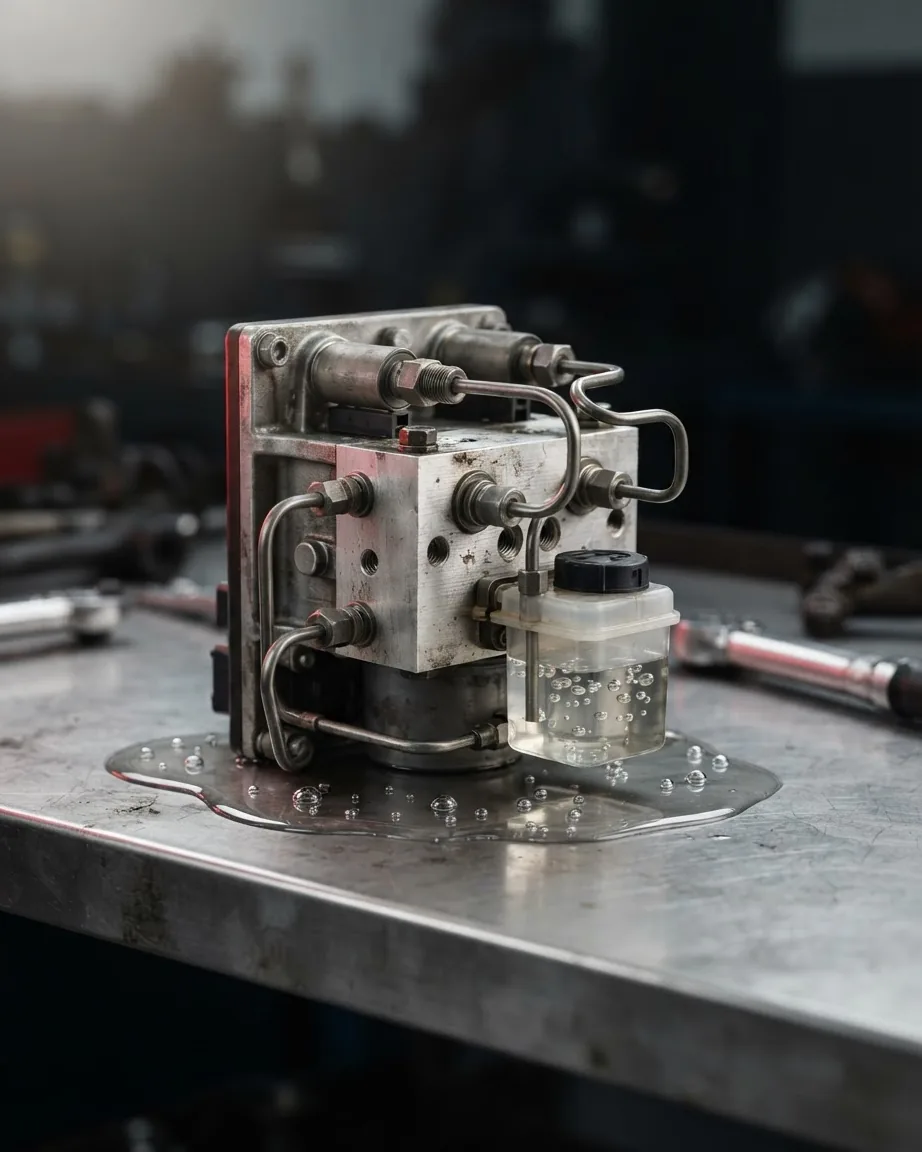
Anti-lock braking systems cycle fluid through a pump and modulator at high speed, opening and closing valves many times a second. Silicone fluid aerates under that kind of agitation more readily than glycol fluid does, and it is also slightly more compressible. Tiny air bubbles whipped into the fluid behave like the steam pocket described earlier: they squash under pedal pressure instead of transmitting it.
The practical outcome is a spongy pedal and unreliable ABS response. That is why DOT 5 is kept out of ABS-equipped vehicles as a rule, and why the “universal, fits all hydraulic brake systems” phrasing you sometimes see on product listings is marketing scope, not an ABS clearance. A line that says a fluid works in all types of hydraulic brake systems is not the same as a line that says it is validated for anti-lock hardware.
If you own anything with ABS, DOT 5 is off the table regardless of the rest of the picture. The compressibility and aeration are inherent to silicone, not a sign the installer did something wrong.
The spongy pedal and trapped air you should expect, not fix
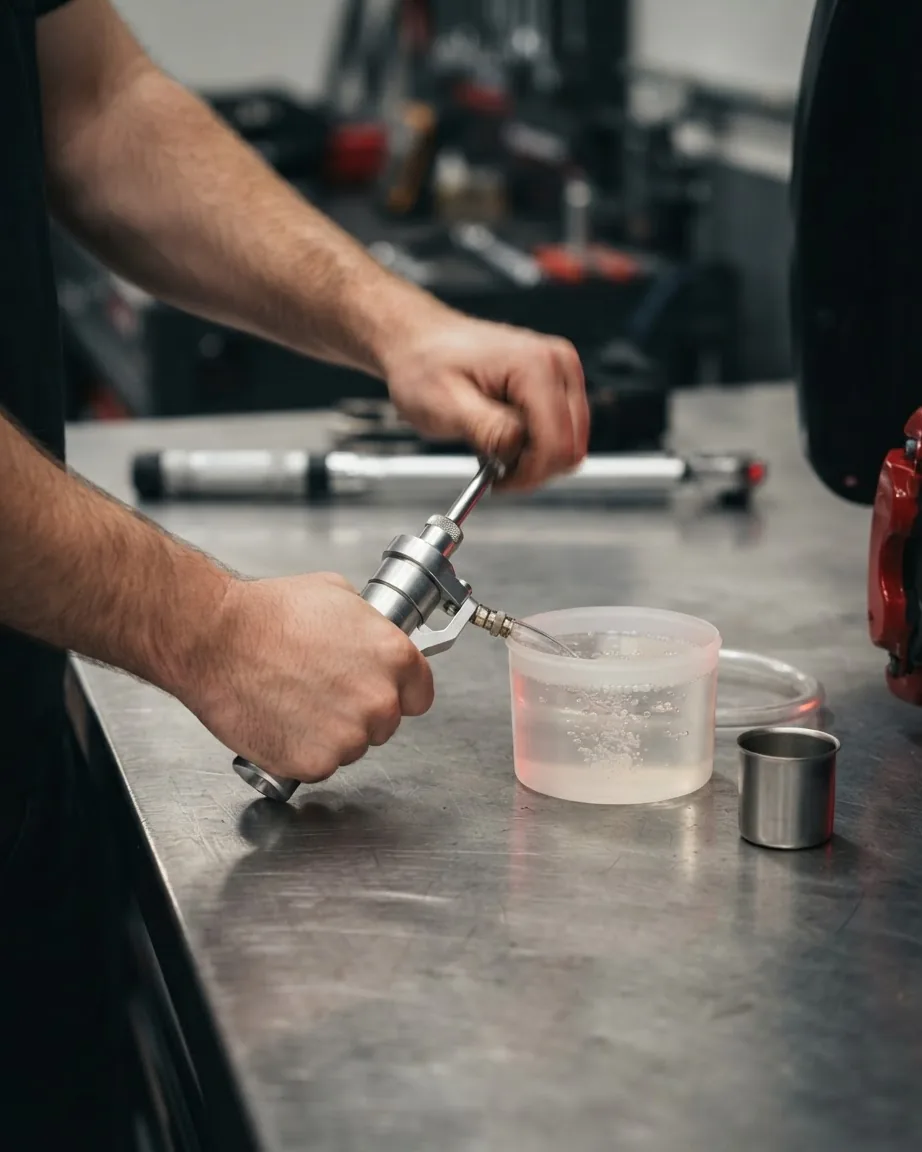
A fresh DOT 5 fill can feel softer at the pedal than glycol fluid, even in a correctly bled non-ABS system. Silicone holds onto microscopic air better and is marginally more compressible, so a slightly longer pedal travel is a characteristic of the fluid, not proof of a bleeding mistake.
The practical implication: bleed slowly, let the fluid stand so entrained air can rise, and do not chase perfection by over-bleeding or by assuming a line is bad. A pedal that firms up after the system settles is behaving normally. That said, there is a hard limit. A pedal that keeps sinking under steady foot pressure, that gets softer over days, or that needs pumping to come up is not the silicone characteristic, it is a leak or trapped water, and it means inspect now.
Telling those two apart is a judgment call, and a soft pedal is a safety-critical symptom. If you cannot clearly attribute it to the fluid’s nature, a certified mechanic should put the car on a lift before it goes back on the road. Our guide to low brake fluid symptoms is worth a look alongside this.
Dry and wet boiling points: the FMVSS number versus the military number
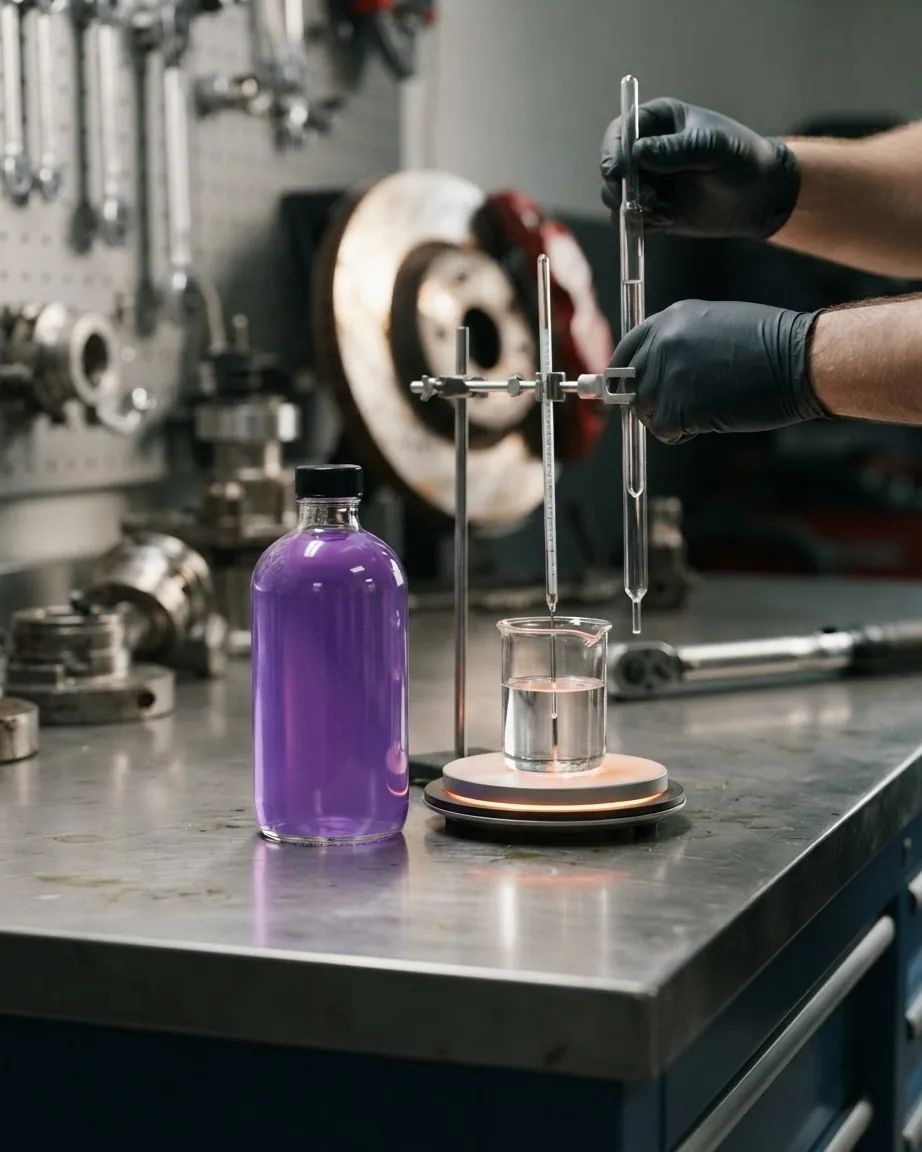
Here two different standards set two different numbers for the same type of fluid, and conflating them is how people assume a DOT 5 label promises more than it does.
Under the federal motor vehicle safety standard, the eCFR text of FMVSS 116 sets the minimum dry and wet equilibrium reflux boiling points that a civilian DOT 5 product must clear. The same standard limits kinematic viscosity for DOT 5 to no more than 900 mm2/s at minus 40 C.
The military specification is a separate document with a higher wet floor. MIL-PRF-46176B, published through the US Department of Defense (Army TACOM), covers silicone-based hydraulic brake fluid for ambient temperatures ranging from +55 C to -55 C, and its wet boiling point shall be 207 C minimum. The MIL-PRF-46176B specification document lays out that 207 C figure.
These are not two readings of one value. The FMVSS wet minimum is the US civilian requirement; the 207 C wet minimum is the US military requirement under a different method and jurisdiction. They must not be averaged or treated as a single “DOT 5 wet boiling point.”
The takeaway for label reading: a bottle marked only DOT 5 guarantees the FMVSS wet minimum, nothing higher. If you need the military 207 C wet performance, you need a fluid that actually certifies to MIL-PRF-46176B, not a generic DOT 5 that merely meets the federal floor.
The 0.35% water pick-up ceiling and why silicone keeps in storage
The military spec also quantifies how little water the fluid is allowed to take on. Under MIL-PRF-46176B, humidified silicone fluid water pick-up shall not exceed 0.35% by weight. Pair that with the 207 C wet floor and you can see why silicone earns its place in vehicles that sit.
Glycol fluid in a car parked for years keeps pulling in moisture whether the vehicle is driven or not, and its boiling point falls. Silicone resists that uptake, holding the 0.35% ceiling, so a correctly filled non-ABS classic or a stored military vehicle does not degrade its fluid simply by standing still. That durability is the genuine reason silicone was standardized for fleet use since the 1990s, where vehicles may sit for long stretches between use.
The caveat already covered still applies: resisting new water does not remove water already trapped at a low point. Storage stability is a real benefit; moisture immunity after the fact is not.
When DOT 5 brake fluid is the correct choice
Strip away the marketing and the “yes” cases are narrow and specific. DOT 5 brake fluid is the right call when all of these hold: the system has no ABS, it has never held glycol fluid (or has been fully rebuilt dry), and the vehicle benefits from storage stability and paint protection more than from moisture dispersion.
That profile fits a short list:
- Stored or low-use classics – cars driven a few times a year, where glycol fluid would quietly absorb moisture between outings. Silicone holds its boiling point while the vehicle sits.
- Military and fleet vehicles – the use case MIL-PRF-46176B was written for, with its +55 C to -55 C range and standardization for equipment that may sit for long periods.
- Some older non-ABS motorcycles – including certain older Harley-Davidson models. Harley-Davidson sells an H-D DOT 5 Brake Fluid in a 355 ml bottle, but the official guidance on the H-D DOT 5 product page is to refer to the owner’s manual for the required type. Do not assume DOT 5 is the correct fill for any given bike; the manual, not the shelf, decides.
Paint protection is the one bonus that applies broadly. Spilled glycol fluid lifts paint on contact; silicone does not, which matters on a show car where a drip near the master cylinder would otherwise mean repainting. Beyond those cases, for a daily driver with ABS running glycol fluid, DOT 5 is the wrong fluid no matter how good the storage numbers sound.
Seal compatibility during a conversion, and what it costs
Switching an old system to silicone is a full job, not a top-off. Because DOT 5 cannot share a system with glycol fluid, a proper conversion means draining, disassembling, and cleaning or replacing every wetted part: master cylinder, calipers or wheel cylinders, flex hoses, and hard lines. Only then does the silicone go into a dry system.
Seal compatibility is the recurring worry here. Rubber formulated for glycol fluid may behave differently with silicone, and the cautious approach on a rebuild is to fit fresh seals rated for the fluid you are installing rather than reusing elastomers soaked in the old fluid. This is one reason enthusiasts treat a conversion as part of a brake rebuild rather than a standalone fluid swap. A brake caliper rebuild kit is a natural companion to this kind of work.
On cost: a fluid flush and bleed as a service commonly runs in the neighborhood of $100 at a shop, but that figure is for a straightforward same-fluid change. A silicone conversion that involves tearing the system down to bare components and replacing seals and hoses runs well beyond that, driven by parts and labor rather than the fluid itself. Price the rebuild, not the bottle.
The tools and reading a mechanic uses on a silicone system
A technician approaching a DOT 5 fill or conversion does not rely on the usual glycol habits. The relevant tools and checks are specific.
- Clean bleeding equipment – vacuum or pressure bleeder hardware kept free of any glycol residue, since cross-contamination is the whole hazard with silicone.
- A hydrometer or refractometer is of limited use – silicone does not change the way glycol does as it ages, so the usual moisture-content check tells you less. Judgment leans on visual inspection and system history instead.
- Visual fluid inspection – DOT 5 is dyed a distinct color for exactly this reason, so a technician can confirm at a glance that no glycol fluid is present. Dark or contaminated fluid in a line is a flag to stop and investigate.
- A line flaring tool – needed whenever hard lines are cut and replaced during a dry rebuild; see our brake line repair kit write-up.
The warning signs that send any brake system in for inspection apply here too: a pedal that feels soft or sinks, fluid that looks dark, or any sign of a leak. With silicone, add one more: because trapped water pools instead of dispersing, a localized corrosion spot or an unexplained soft pedal in a DOT 5 system is a reason to pull the affected component, not top it off.
How manufacturers handle the DOT 5 change interval
Glycol fluids carry a clear calendar, since the fluid absorbs moisture and loses boiling point on a predictable curve. Silicone muddies that logic, because the fluid itself does not degrade from moisture the way glycol does.
That does not mean a DOT 5 system is maintenance-free. The failure mode is different, not absent. Water can still enter past seals over years and pool in low points, so periodic inspection of the fluid and the bores remains sensible even when the fluid chemistry is holding. The safest stance is to follow the vehicle manufacturer’s guidance for the specific application rather than assuming silicone exempts you from service.
Because interval advice is genuinely conditional on fluid type and vehicle, the broader explanation of the calendar logic lives in our guide to how often to change brake fluid. For anything that touches whether your brakes will stop the car, confirm the fluid type and service plan with a certified mechanic rather than a shelf label or a forum thread.
What the wet minimum actually buys you over a water puddle
The spec sheet and the failure mode never sit side by side, so the real safety margin stays hidden. Put the numbers already in play next to each other and the trade-off becomes concrete. Water boils at 212 F, far below the wet boiling point floor that a compliant DOT 5 fluid must clear. The arithmetic shows exactly why a hydrophobic fluid can fail long before its own rating is reached.
- False comfort. A compliant DOT 5 fluid still boils well above the boiling point of plain water even when wet. That gap is the problem, not the reassurance: the water that pooled in a low point flashes to steam long before the surrounding silicone is anywhere near its limit, so the fluid’s rating never protects the puddle.
- Headroom gone once wet. The dry boiling floor drops to the wet floor once moisture is present. For glycol fluids that moisture is spread thin across the whole system; for DOT 5 it is concentrated in one spot, so the effective local performance is worse than the wet number suggests.
- The puddle boils first. The trapped water reaches steam well below the temperature the fluid is legally required to tolerate wet, which is the mechanical reason a soft pedal can appear under hard braking in a system that passed every spec on paper.
FAQ
Can I pour DOT 5 into my car to fix a spongy pedal?
No. If your car runs glycol fluid, adding silicone creates an incompatible mix that gels and attacks seals. A spongy pedal usually points to trapped air, worn components, or a leak. Have the existing fluid bled and the system inspected first; swapping fluid chemistry is never the fix for a soft pedal.
Is DOT 5 a better fluid than DOT 4 or 5.1?
Neither. It is different, not higher. For storage stability and paint safety in a non-ABS classic, silicone wins. For a modern car with anti-lock brakes, DOT 4 or 5.1 is correct and DOT 5 is unusable. “Better” depends entirely on the vehicle, so match the fluid to the system, not to the bigger number.
Does DOT 5 ever need replacing if it does not absorb water?
Resisting moisture is not the same as staying clean forever. Water can slip past seals across many years and settle in a caliper, and debris still builds up. Inspect the fluid and bores periodically, and follow your vehicle maker’s guidance. Treat silicone as low-maintenance, not no-maintenance.
Why does a brand call its DOT 5 fluid suitable for all hydraulic brake systems?
That is broad scope language, not an anti-lock clearance. Silicone aerates and compresses under the rapid valve cycling inside an ABS modulator, giving a vague pedal and unreliable response. A claim about working across hydraulic systems does not mean a fluid is validated for anti-lock hardware, so keep DOT 5 out of ABS vehicles.