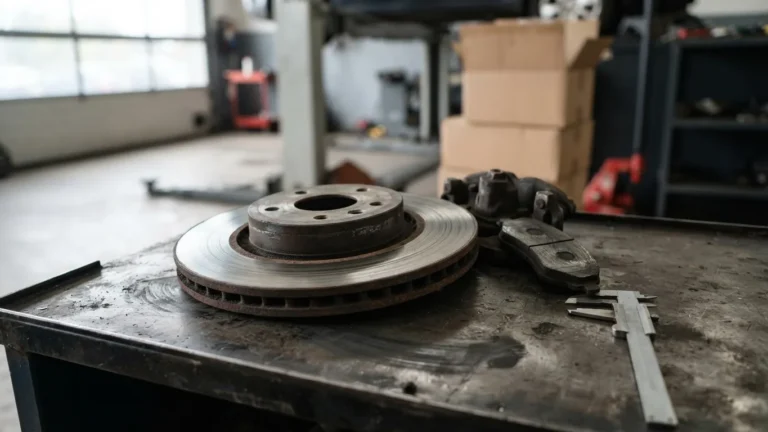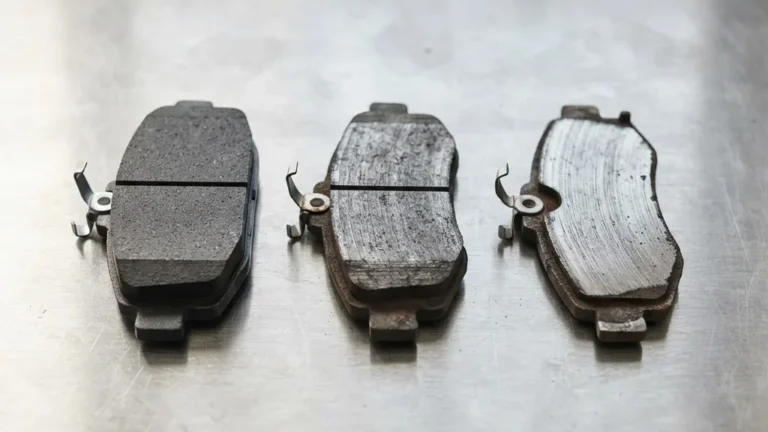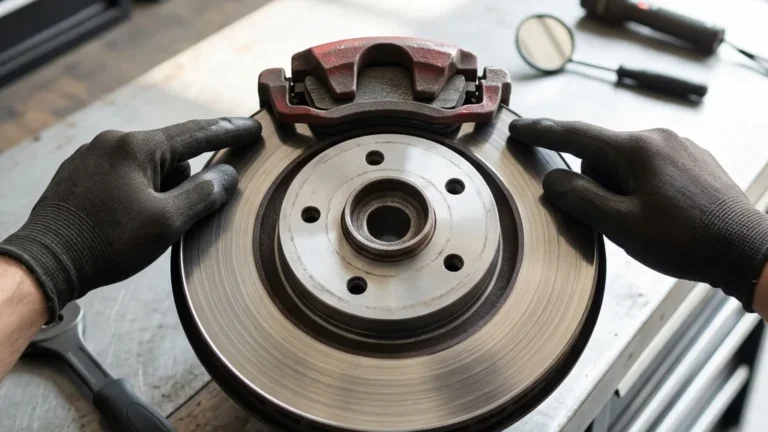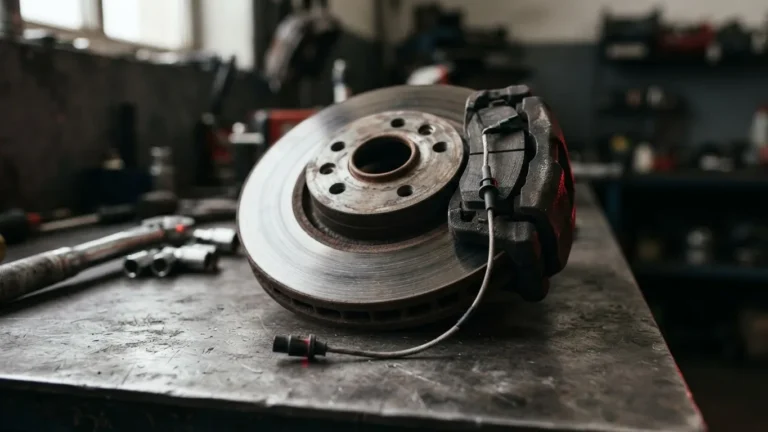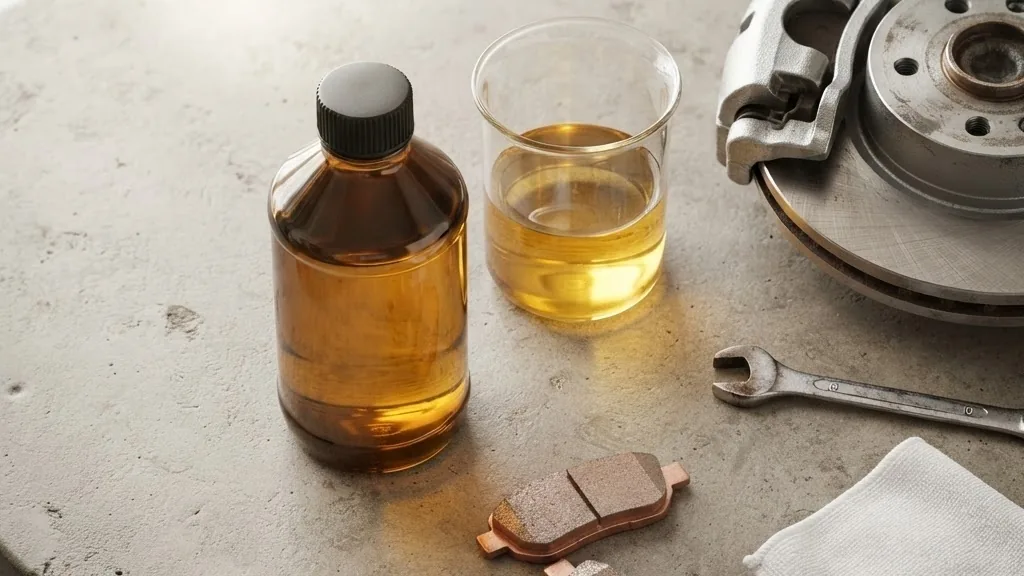
How often to change brake fluid comes down to the calendar and to one measurable quantity: the amount of water the fluid has pulled out of the air since it was poured in. Mileage barely enters the equation. A garage-kept coupe with 4,000 miles on it can carry wetter fluid than a commuter car that covered 40,000 miles over the same stretch, because the aging mechanism is absorption rather than friction. Most owners judge the fluid by peering into the reservoir, and color does carry some information about what each brake fluid shade means. Color does not track water content, though, and water content is what governs whether your pedal stays firm.
Quick answer: For most cars, the working rule for how often to change brake fluid is every two to three years, with the owner’s manual overriding any general figure. Published schedules scatter widely. Some brands specify two years, some three, some 45,000 miles, and some list no replacement at all. When the manual stays silent, switch to a measurement instead of a guess. Replace the fluid once water content passes 3 percent, and at 2 percent for towing, mountainous driving, sustained high speed, or any vehicle with anti-lock brakes. Glycol-ether fluid takes on roughly 1 to 2 percent water per year, so three years is rarely too soon.
How Often to Change Brake Fluid, by Manual and by Marque
The owner’s manual is the only binding interval for any given vehicle, and the published spread is wider than most drivers expect. Jiffy Lube’s summary of manufacturer practice lists some brands at two years, others at three years, others at 45,000 miles, and a fourth group with no stated recommendation at all. CARFAX puts the practical range at roughly two to five years depending on the marque, and notes that mainstream models frequently schedule a check rather than a scheduled replacement.
Tesla’s current US service documentation for the Model 3 calls for a brake fluid health check every four years, replacing if necessary, with a footnote that towing, mountain descents, performance driving and hot or humid environments may require more frequent checks. Older Tesla manuals specified two years. Intervals move, and they differ by market, so pull your own schedule before trusting a number quoted second-hand.
That spread is not sloppiness on the part of the manufacturers. A European marque writing a prescriptive two-year schedule and a domestic brand writing nothing are making different bets about climate, seal materials and how their owners actually use the car. Neither bet knows anything about your garage, your humidity, or the mountain pass you tow a trailer over twice a summer.
When the schedule says inspect rather than replace
An inspection-only schedule hands the decision back to you, which is precisely the situation that sends people searching. The eBay Motors DIY guidance splits the difference with a concrete interval of 30,000 to 45,000 miles or two to three years, deferring to the manual, and it is the only page in the mainstream cluster that gives a testing cadence: check the fluid every six months with a test strip.
Six months is a sensible rhythm for a car that lives outdoors in a humid state. For an arid climate and a garage, annual is defensible. What matters is that the check produces a number rather than an impression. Three practical triggers should move you from checking to replacing:
- A measured water content above 3 percent, or above 2 percent under severe duty.
- Any hydraulic component opened for repair, which forces a full bleed regardless of fluid age.
- An interval date that has passed with no measurement available to argue otherwise.

Why the Calendar Beats the Odometer
Glycol-ether brake fluid is hygroscopic, meaning it attracts and holds water from the surrounding air. The hydraulic system is sealed, and it still breathes: moisture migrates through flexible hoses, past the reservoir vent, and around seals that were never designed to be vapor-tight. Nothing about parking the car stops that process. MISCO, which manufactures refractometers and publishes a brake fluid application note, puts general uptake at 1 percent or more of moisture per year of service, with a two-year-old car typically showing 2 to 3 percent water.
Torque Brake Fluid’s technical page gives 1 percent to 2 percent per year depending on climate and operating conditions. Two independent sources, same order of magnitude. Treat it as a range rather than a constant, because a car in Louisiana and a car in Nevada are not running the same experiment.
Here is the consequence nobody puts on the label. Low mileage protects your pads and rotors, and it does nothing whatsoever for your fluid. If you are tracking wear on friction material by distance, that logic works, and it is covered properly in the mileage and millimeter guide for brake pads. Fluid runs on a clock instead.
A collector car driven only a few hundred miles a year still has fluid that ages by the calendar rather than by the odometer. The mileage says the brakes are barely used. The chemistry disagrees.
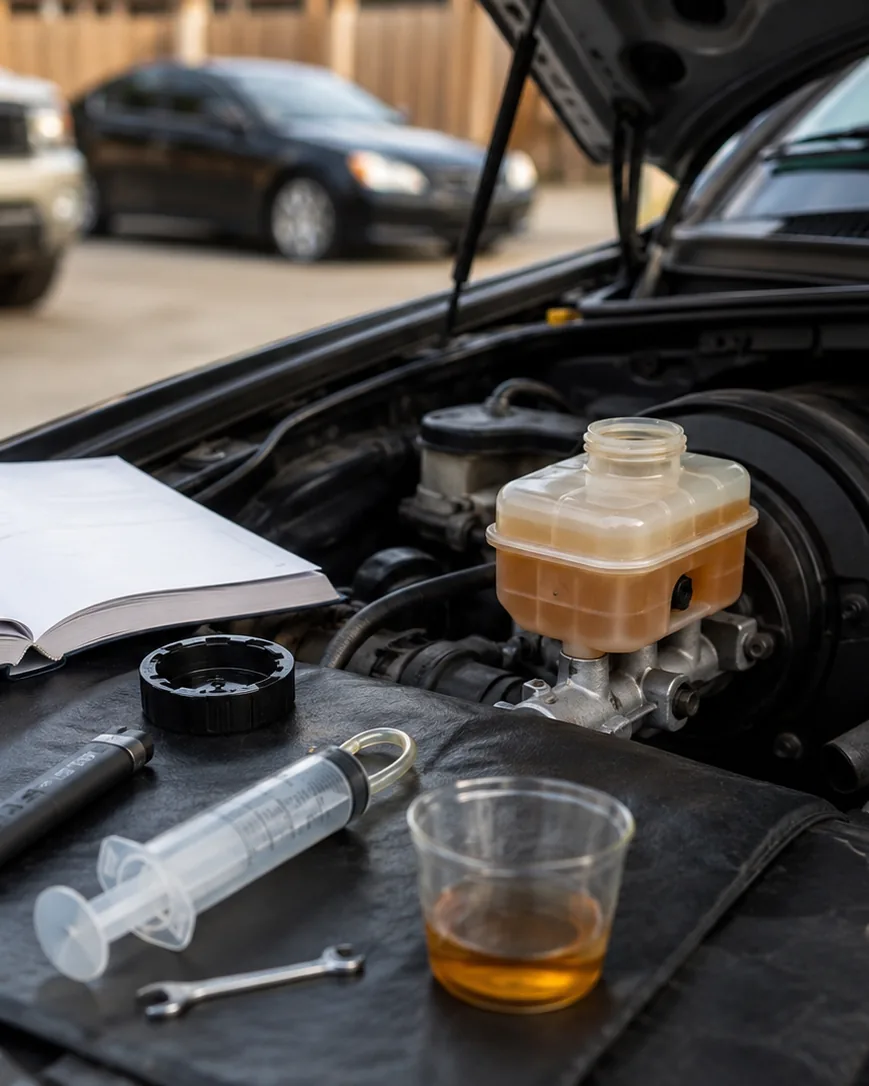
Dry Versus Wet Boiling Point: What FMVSS 116 Actually Guarantees
Federal Motor Vehicle Safety Standard No. 116, codified at 49 CFR 571.116, sets minimum equilibrium reflux boiling points for every grade sold in the United States. Fresh fluid must reach 205 C (401 F) for DOT 3, 230 C (446 F) for DOT 4, and 260 C (500 F) for DOT 5. Those are floors, not typical values, and many retail fluids clear them by a wide margin.
The second set of numbers is the one that should change your maintenance habits. Wet minimums under the same standard fall to 140 C (284 F) for DOT 3, 155 C (311 F) for DOT 4, and 180 C (356 F) for DOT 5. A fully compliant DOT 4 is therefore permitted to lose 75 C (135 F) of boiling headroom between the bottle and the end of its service life. That delta is the entire argument for a time-based interval.
| Grade | Dry ERBP minimum | Wet BP minimum | Viscosity max at -40 C |
|---|---|---|---|
| DOT 3 | 205 C / 401 F | 140 C / 284 F | 1,500 mm2/s |
| DOT 4 | 230 C / 446 F | 155 C / 311 F | 1,800 mm2/s |
| DOT 5 | 260 C / 500 F | 180 C / 356 F | 900 mm2/s |
Why does boiling matter so much? Liquid does not compress. Vapor does. Drop the fluid below its boiling point during a long descent and part of the column in the caliper turns to gas, and the pedal that was firm three corners ago sinks toward the floor. Corrosion is the slower failure mode running underneath all of this, working on the master cylinder bore, the caliper pistons and the anti-lock hydraulic unit.
The word “wet” has a precise legal meaning, which almost no consumer page explains. Under S6.2.5, the sample is humidified in a desiccator over distilled water inside a 50 +/- 1 C oven, alongside a triethylene glycol monomethyl ether referee fluid supplied under SAE Standard J1703. Humidification stops when that referee material reaches 3.70 +/- 0.05 percent water by weight. The widely repeated “3.7 percent water” figure is the endpoint of a laboratory test, not a field threshold, and confusing the two is how bad advice spreads. The full text sits at the eCFR entry for Standard No. 116, source of record 36 FR 22902, dated 2 December 1971.
What the federal test actually puts the fluid through
The corrosion test immerses six metal strips in water-wet fluid for 120 +/- 2 hours at 100 +/- 2 C. Permissible weight change is 0.2 mg/cm2 for steel, tinned iron and cast iron, 0.1 for aluminum, and 0.4 for brass and copper. The stroking test runs a simulated brake system through 85,000 total strokes at 6,895 +/- 345 kPa (1,000 +/- 50 psi), at 1,000 +/- 100 strokes per hour, held at 120 +/- 5 C. Fluid pH must stay between 7.0 and 11.5 throughout.
Read that list and the point lands. Compliance certifies a fluid at manufacture. It certifies nothing about the fluid currently sitting in your car.
DOT 3, DOT 4, DOT 5, and the DOT 5.1 Labeling Trick
FMVSS 116 recognizes exactly three grades: DOT 3, DOT 4 and DOT 5. There is no standalone DOT 5.1 grade in the standard. What the regulation does instead is require DOT 5-grade fluid to be further distinguished on the container as either “DOT 5 SILICONE BASE” or “DOT 5.1 NON-SILICONE BASE” under S5.2.2.1(b) and S5.2.2.2(e). That labeling split is why a bottle marked DOT 5.1 carries DOT 5 boiling numbers while remaining fully miscible with DOT 3 and DOT 4.
Silicone-base fluid is defined as containing not less than 70 percent by weight diorgano polysiloxane, and it must never be mixed with glycol fluid. Federal color coding exists to stop exactly that mistake: glycol grades run colorless to amber, silicone-base runs purple, and hydraulic system mineral oil runs green. The performance requirements trace back to work published by SAE International, including the J1703 motor vehicle brake fluid standard and its borate-ester counterpart J1704.
One popular upgrade rule deserves to die. DOT 4 is permitted a cold viscosity ceiling of 1,800 mm2/s at -40 C against 1,500 mm2/s for DOT 3, so a legal DOT 4 can be thicker cold than the DOT 3 it replaced. On a cold-climate car with anti-lock brakes and electronic stability control, both of which pump fluid through narrow passages, thicker is worse. Look for a dual-rated DOT 3/4 or a low-viscosity DOT 4.
Stop Guessing: How to Measure Water Content
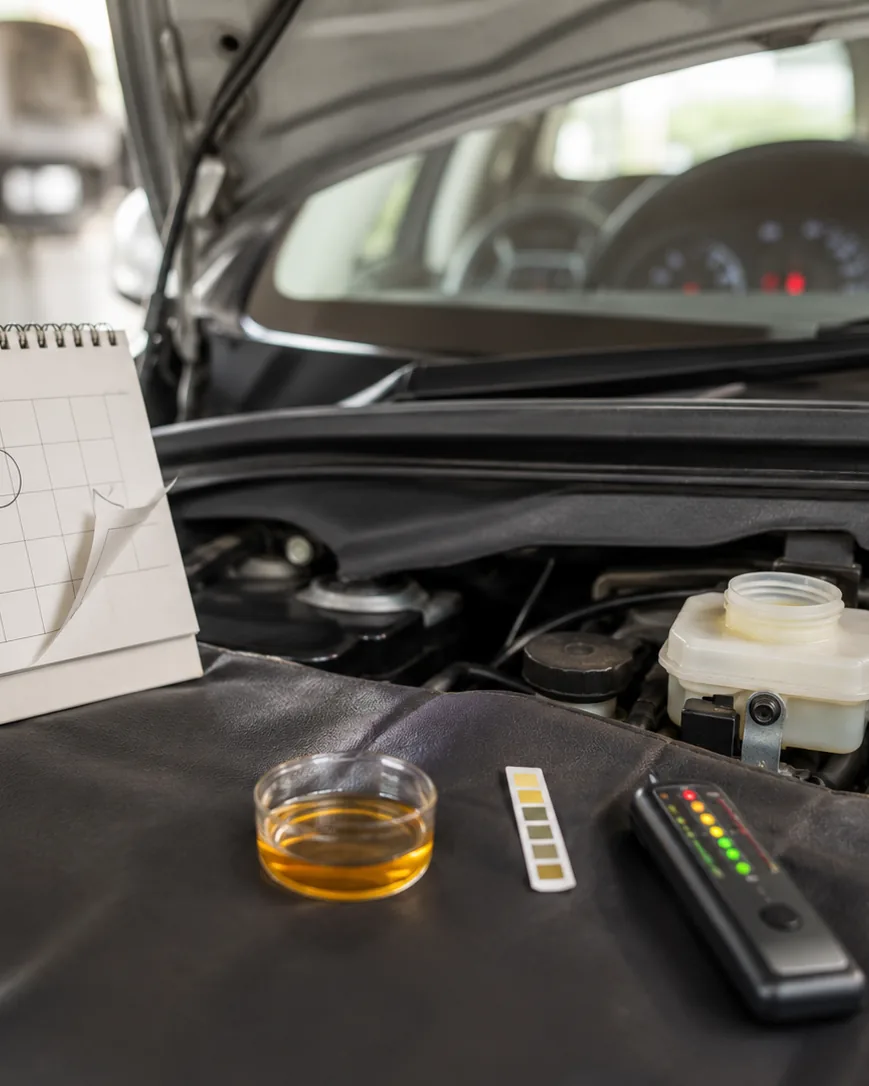
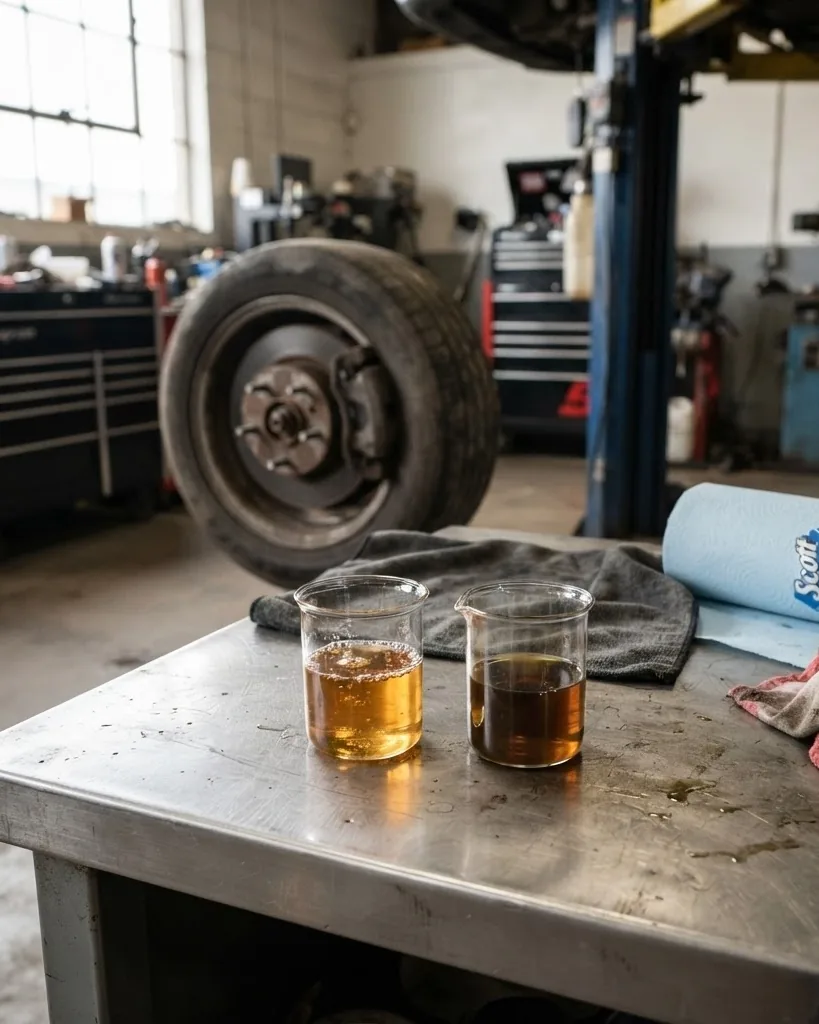
Color is not a moisture test. State that plainly, because the single most common maintenance decision in this category rests on looking at a reservoir and drawing a conclusion the fluid cannot support. Darkening tracks age, dye breakdown and contamination from copper and seal debris. Water content tracks something else entirely, and it is the variable that sets your boiling point.
Start with the bottle. FMVSS 116 requires every packager to mark the minimum wet boiling point in Fahrenheit on the container under S5.2.2.2(f), together with the grade, a lot serial number and four specific safety warnings, one of which instructs the user to keep the container tightly closed to prevent moisture absorption. NHTSA has fielded formal questions about those container rules, and its published interpretations confirm that the labeling duty falls on the packager rather than the user, as in this NHTSA interpretation on brake fluid container labeling. That printed number is your floor. Everything you measure afterward gets compared against it.
The tool ladder, cheapest to most accurate
- Chemical test strips. These react to corrosion inhibitors or dissolved copper, with a typical action threshold around 200 ppm copper. They tell you the fluid has turned corrosive, not how much water is present.
- Refractometer. Reads water content directly from a drop of fluid, which is why MISCO publishes replacement thresholds against it.
- Conductivity meter. Fast, inexpensive, and adequate for a go/no-go call at the reservoir.
- Electronic boiling-point tester. Heats a small sample until it boils and reports the temperature. Most accurate, and it answers the question the standard actually asks.
Now the decision rule that the mainstream pages leave out. MISCO recommends replacement for all vehicles once water exceeds 3 percent, dropping to 2 percent for towing, mountainous driving, sustained high speed, or anti-lock-equipped vehicles. The reason for the tighter threshold is the shape of the curve. MISCO reports that 2 percent water lowers a DOT 3 boiling point by roughly 135 F (75 C), and that a three- to four-year-old car sitting at 3 to 4 percent may boil below 300 F (149 C). A widely reproduced service-trade breakdown for typical DOT 3 gives 1 percent at about 369 F, 2 percent at about 320 F, and 3 percent at about 293 F. Treat that second set as trade press rather than primary data, and note how steep the loss is in the first percentage point.
Severe Duty, Electric Vehicles, and Motorcycles
Regenerative braking is the most common reason owners assume they can skip this service, and it is the wrong inference. Regen sheds kinetic energy through the motor, which spares the pads and rotors and leaves the hydraulic fluid absorbing moisture on exactly the same schedule as any gasoline car. Tesla’s own maintenance guidance goes further and advises pressing the brake pedal frequently, because friction brakes that go unused accumulate rust and corrosion.
Duty cycle moves the interval more than powertrain does. Each of these cases argues for the 2 percent threshold rather than 3 percent:
- Towing, where sustained load pushes rotor and caliper temperatures far above commuting norms.
- Long mountain descents, the classic setup for a boiling event.
- Track days and performance brake packages, where repeated hard stops soak heat into the caliper.
- Humid coastal climates, which sit at the upper end of the 1 to 2 percent annual uptake range.
- Road-salt regions, where corrosion is already working on the lines and the anti-lock unit.
Motorcycles deserve their own note. Front and rear circuits are usually independent, reservoirs hold very little fluid, and a small absolute volume of water is a large percentage. Classic and collector cars raise the DOT 5 silicone question, and the answer is binary: silicone never mixes with glycol, and converting means a complete strip and rebuild rather than a flush.
Flush, Bleed, or Top Up
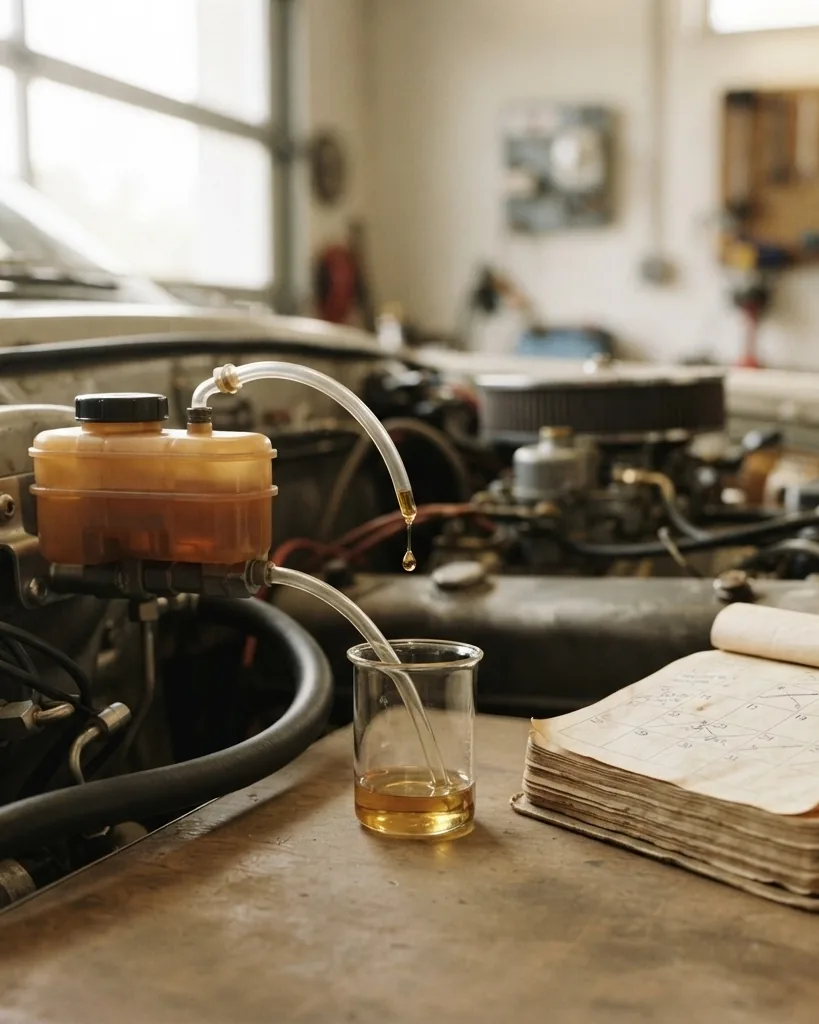
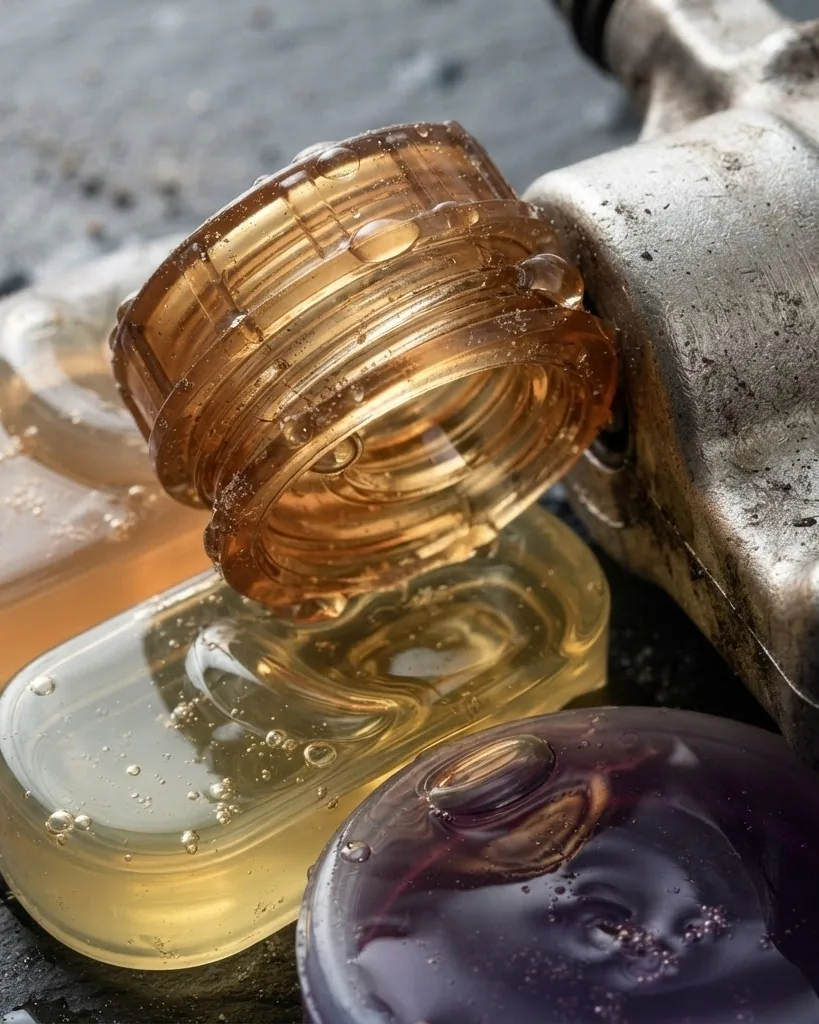
Three different jobs, three different triggers. A flush replaces the entire fluid volume on a time or measurement basis. A bleed removes air after a component has been opened. Topping up adds fluid to a low reservoir, and it is the one people misuse. A falling level normally means worn pads or a leak, so adding fluid hides the fault instead of fixing it. Any time a line, caliper or master cylinder is opened, a full bleed is mandatory, which is worth knowing before you buy a brake line repair kit and its contents.
Who Sets the Rules, and What Compliance Costs You
The National Highway Traffic Safety Administration, part of the US Department of Transportation, issues and enforces the Federal Motor Vehicle Safety Standards, and FMVSS No. 116 is the one covering brake fluids, containers and labeling. The authoritative text is maintained by the Office of the Federal Register through the eCFR. SAE International supplies the underlying test chemistry, including the TEGME referee material and the RM-66-04 compatibility fluid used in the wet boiling point and stability tests, plus J527a double-wall steel tubing for the stroking rig. ISO 4925 provides the international equivalent classes for markets outside the United States.
Measurement methods come from ASTM International: D1123 for water content, D445 and D2515 for kinematic viscosity, D1121 for the pH apparatus, and D1415 for rubber hardness in IRHD. Technician competence is certified separately by the National Institute for Automotive Service Excellence, better known as ASE.
What does compliance cost you at the counter? Packaging rules bite first: any container of 177 mL or more must carry a resealable closure, an inner seal impervious to the fluid, and a tamper-evident feature destroyed on first opening. That is the regulatory reason a half-used bottle from last year belongs in disposal rather than in your reservoir, and used fluid goes to a collection program under Environmental Protection Agency household hazardous waste guidance. The Insurance Institute for Highway Safety and the American Automobile Association both publish consumer vehicle guidance, and neither sets fluid specifications. Consumer Reports runs an independent auto test center whose testing manager, Michael Crossen, is a useful voice on flushes offered outside the manufacturer schedule. When a service writer proposes a flush, ask for the measured reading behind it.
Frequently Asked Questions
What happens if you never change brake fluid?
Water accumulates, the boiling point falls, and corrosion works on the master cylinder, calipers, wheel cylinders and the anti-lock unit. A fluid sitting at 3 to 4 percent water can boil below 300 F, and vapor compresses where liquid does not. The pedal travels toward the floor at exactly the moment you need it firm.
Can I mix DOT 3 and DOT 4?
Yes, within limits. DOT 3, DOT 4 and DOT 5.1 non-silicone fluids are all glycol-based and mix freely, so adding DOT 4 to a DOT 3 system is chemically safe. Silicone DOT 5 is the exception and must never meet glycol fluid. Check the cold viscosity ceiling before treating DOT 4 as an automatic upgrade.
Does brake fluid go bad in the bottle?
It does. Glycol-ether fluid pulls moisture from ambient air, which is why FMVSS 116 requires containers of 177 mL or more to carry a resealable closure, an impervious inner seal and a tamper-evident feature. One of the four mandated warnings tells you to keep the container tightly closed. Buy the size you will finish.
Do electric vehicles need brake fluid changes?
They do. Regenerative braking spares the pads and rotors and does nothing to the fluid, which keeps absorbing water on its own schedule. Tesla’s documentation sets a four-year health check for the Model 3 and separately advises pressing the pedal often, since under-used friction brakes accumulate rust and corrosion over time.
Is dark brake fluid always bad?
Darkening signals age and contamination, and it is a fair prompt to test. It is no substitute for a reading. Federal rules require glycol fluids to leave the factory colorless to amber, so a dark reservoir marks elapsed time only. A falling level usually points at the pads, so read how to measure brake pad thickness before topping up.
How do I tell a scheduled flush from an upsell?
Ask for a number. A shop that reports a measured water percentage or a boiling-point reading has evidence. A shop that says the fluid looks dark has an opinion. Compare whatever they measure against the wet boiling point printed on your fluid bottle, and against the 3 percent and 2 percent replacement thresholds.