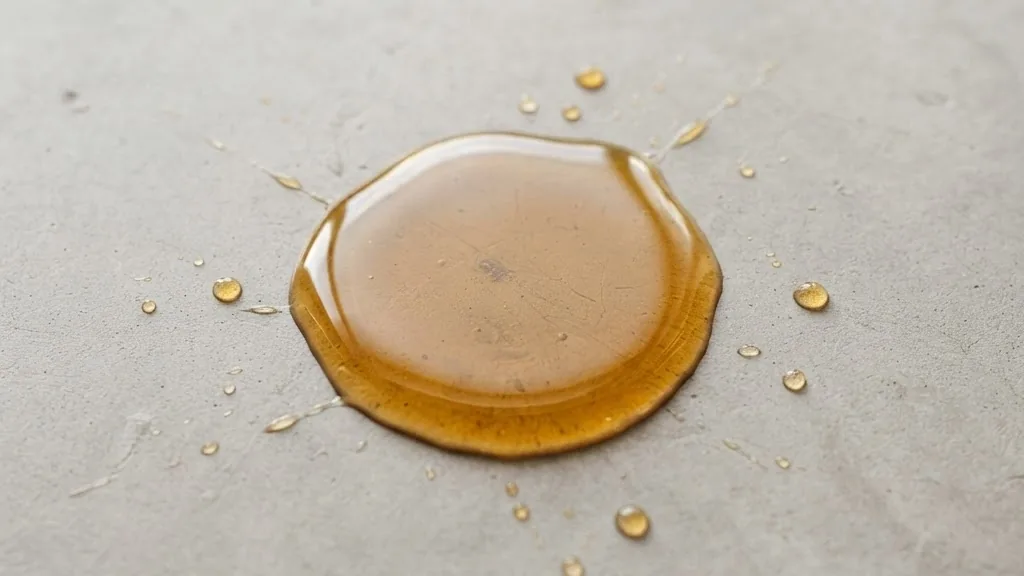
Brake fluid color is the quickest health check you can do on your braking system, and it takes about ten seconds. Fresh fluid is nearly clear; as it ages it turns amber, then brown, then a dark, sludgy black, and if it ever looks milky, that is a separate warning entirely. Reading that color tells you whether your fluid is doing its job or quietly putting your stopping power at risk. This guide gives you the full color chart, explains why the color changes, and tells you exactly when to flush.
Brakes are not a place to guess. Degraded fluid does not just look bad, it lowers the temperature at which your brakes can fade, so understanding the color scale is genuinely a safety skill, not just maintenance trivia. The NHTSA treats the braking system as core safety equipment, and the hydraulic fluid is the part of it most owners never think to check.
The brake fluid color chart
Most glycol-based brake fluid, the DOT 3 and DOT 4 in the vast majority of cars, follows a predictable color path as it ages. There are roughly four stages.
| Color | Condition | What to do |
|---|---|---|
| Clear to light amber | Fresh, healthy fluid | Nothing; this is ideal |
| Darker amber to light brown | Aging, normal wear | Monitor; plan a change soon |
| Dark brown to black | Degraded, contaminated with wear particles and moisture | Flush the system now |
| Milky or cloudy | Water contamination | Flush immediately; do not drive hard |
New fluid out of a sealed bottle is clear to pale yellow. A little darkening over a year or two is normal aging. Once it reaches dark brown or black, it has absorbed contaminants and lost performance, and it is time to replace it. Milky fluid is its own category, covered below. Automotive references such as AutoZone’s brake fluid guide use the same basic color progression.
Why brake fluid changes color
The color change is not random; it tracks two things happening inside the system.
First, brake fluid is hygroscopic, meaning it absorbs water from the air over time, even through microscopic pores in hoses and around seals. Brake fluid can take on a meaningful amount of moisture within about a year of exposure. Second, heat and the constant flexing of rubber components, plus tiny metal particles from the system, darken the fluid as it ages.
Both processes matter because they lower the fluid’s boiling point. Brake fluid works by being nearly incompressible, transmitting your pedal force to the calipers. Water in the fluid boils at a far lower temperature than the fluid itself, and under hard braking that water can flash to vapor. Vapor is compressible, so the pedal goes soft and braking power drops, a dangerous condition called brake fade or vapor lock that the NHTSA and brake manufacturers cite as a core reason to keep the hydraulic system maintained. The darkening color is the visible signal that this invisible chemistry is underway.
What milky or cloudy fluid means
Milky, cloudy, or opaque brake fluid is different from simple darkening, and it is more urgent. It means water has contaminated the fluid to the point that the two are emulsifying, and the fluid can no longer be trusted.
Water contamination drops the boiling point sharply and can also cause internal corrosion of brake lines, the master cylinder, and calipers. If your fluid looks milky, do not put off the fix and avoid hard or repeated braking, such as long mountain descents, until it is flushed and replaced. This is one of the clearest go-now signals the reservoir can give you, and it usually means a full system flush plus an inspection for where the water got in.
When to flush, by color and time
Two triggers should prompt a brake fluid flush: what it looks like, and how long it has been.
- By color: flush when the fluid is dark brown or black, and flush immediately if it is milky.
- By time and mileage: most manufacturers recommend changing brake fluid every 2 to 3 years, or roughly every 30,000 to 45,000 miles, regardless of color.
The time-based rule matters because moisture absorption happens whether or not you drive much, so a low-mileage car can still have tired fluid. Follow whichever trigger comes first, and always check your owner’s manual, since some manufacturers specify their own interval. If your dashboard shows a brake warning or you notice low brake fluid symptoms, address that alongside the flush rather than just topping off.
DOT 3, 4, 5.1, and 5 explained
Not all brake fluid is the same, and the type affects both color and change interval. The DOT rating refers to a Department of Transportation standard for boiling point and composition.
| Type | Base | Typical color | Notes |
|---|---|---|---|
| DOT 3 | Glycol | Clear to amber | Lower boiling point; often changed around every 20,000 miles |
| DOT 4 | Glycol | Clear to amber | Higher boiling point; can last up to about 60,000 miles |
| DOT 5.1 | Glycol | Clear to amber | High performance; mixes with DOT 3 and 4 |
| DOT 5 | Silicone | Usually dyed purple | Not compatible with the others; never mix |
The crucial point is compatibility. DOT 3, 4, and 5.1 are glycol-based and can generally be mixed in a pinch, though it is best to use what your car specifies. DOT 5 is silicone-based, looks purple, and must never be mixed with glycol fluids. As a rough guide, DOT 3 has a dry boiling point around 205 degrees Celsius and DOT 4 around 230 degrees Celsius, and moisture lowers both. Always use the type printed on your reservoir cap or in your manual.
How to check your brake fluid
Checking color and level takes a couple of minutes and no tools.
- Park on level ground and let the engine cool. Pop the hood.
- Find the reservoir, a translucent plastic tank usually near the back of the engine bay on the driver’s side, marked with a brake symbol and minimum and maximum lines.
- Check the level against those lines first. Low fluid can mean worn pads or a leak, both worth investigating.
- Judge the color through the translucent tank, or shine a flashlight. Compare it to the chart above.
- Do not leave the cap off long. Because the fluid absorbs moisture from the air, reseal it promptly.
If you cannot tell the color through a stained reservoir, a clean dab on a white paper towel reveals the true shade. Never let dirt fall into the reservoir, and never use fluid from a bottle that has been open a long time, since it has already absorbed moisture. It is also worth checking the color in good light, because a reservoir viewed in a dim garage can make healthy amber look alarmingly dark, or hide genuine darkening that daylight would reveal. A quick look every few months, perhaps at the same time you check your engine oil, keeps you well ahead of any unpleasant surprise on the road.
How a brake fluid flush works
Knowing what a flush involves helps you decide whether to do it yourself or hand it to a shop. The goal is to push every bit of the old, dark, moisture-laden liquid out of the lines and replace it with fresh.
- The old liquid is drawn from the reservoir and topped up with new, so fresh product feeds the system as the old is pushed out.
- Each wheel is bled in turn, usually starting at the corner farthest from the master cylinder, by opening a bleeder valve while pressure pushes the old liquid out through a tube.
- Bleeding continues at each corner until what runs out is clean and clear, with no air bubbles, which also removes any trapped air that causes a soft pedal.
- The reservoir is set to the full line and the cap resealed promptly to keep moisture out.
It is a methodical job, and air is the enemy, since trapped bubbles ruin pedal feel. A shop can do a full flush quickly, and it is a sensible task to leave to professionals if you are not set up to bleed brakes properly. If you are already under the car, it also pairs well with checking your pads; our guide on how to check brake pads covers what to look at while you are there. Low reservoir level alongside dark liquid often points to worn pads, since the caliper pistons extend to meet thinner pads and draw more liquid down into the calipers.
Common brake fluid myths
A few persistent misconceptions lead owners astray. Here is what holds up.
- Myth: if the level is fine, the condition is fine. Level and condition are separate. A full reservoir can still hold dark, moisture-saturated liquid that needs replacing.
- Myth: you never need to change it. Because the system absorbs water over time, even a car that brakes gently needs periodic replacement on a time basis.
- Myth: any type can be mixed. Glycol types DOT 3, 4, and 5.1 are broadly compatible, but silicone DOT 5 must never be mixed with them.
- Myth: a darker color always means imminent failure. Mild amber is normal aging; it is the dark brown, black, and milky shades that demand action.
Clearing up these beliefs keeps you from either ignoring a real problem or panicking over normal aging. The reservoir gives you honest information if you know how to read it.
Why color is a clue, not a full test
Here is the nuance most color charts leave out: color is a useful proxy, but it is not a precise measurement of fluid health. Fluid can absorb enough moisture to be unsafe while still looking only moderately amber, because moisture is clear.
The accurate tests measure what color only hints at. A brake fluid moisture test strip changes color to estimate water content, and shops can use an electronic tester or measure the actual boiling point, an approach consumer automotive guides echo when they note that color alone can understate contamination. If your fluid looks borderline, or you simply want certainty, a moisture strip costs little and tells you more than your eyes can. The practical rule: treat dark or milky fluid as a definite flush, and treat the time-and-mileage interval as the backstop for fluid that still looks acceptable but may be quietly saturated.
The safety stakes of old fluid
It is worth being blunt about why this matters. Brake fluid is the link between your foot and your brakes, and when it degrades, stopping suffers in ways you may not notice until you need to stop hard.
- A soft or spongy pedal is a classic sign of moisture or air in the system, and it should never be ignored.
- Longer stopping distances can result from fade when contaminated fluid heats up.
- Internal corrosion from water can damage expensive components like the master cylinder and ABS unit.
Fresh fluid is cheap insurance against all of this. A flush every couple of years, or whenever the color goes dark or milky, keeps your braking firm and predictable. If you ever feel a spongy pedal, treat it as urgent regardless of how the fluid looks, and have the system inspected before driving far.
Doing it yourself versus a shop
A flush sits right at the edge of what many home mechanics tackle, so it is worth weighing honestly.
Doing it yourself is cheap, often just the cost of a bottle or two of the correct type plus a length of clear tubing and a catch bottle. The challenge is that bleeding brakes well usually takes either a helper to pump the pedal or a one-person tool such as a vacuum or pressure bleeder, and any air left in the lines produces a soft pedal that you then have to chase out. Get it right and you save real money; get it wrong and you can end up with worse braking than you started with.
A professional flush is inexpensive relative to the safety it protects, and a shop has the pressure equipment to do it cleanly and quickly, often in well under an hour. For most owners, the math favors paying a shop for this particular job every couple of years, especially because braking is not a system where a learning mistake is low-stakes. If you do choose the DIY route, work one corner at a time, keep the reservoir topped up so you never draw air in, and bench-test the pedal before driving.
Climate, towing, and how fast it ages
How quickly your brakes need attention depends partly on how and where you drive. A few factors speed up the aging clock.
- Humid climates push more moisture into the system, since the liquid pulls water from the air. Cars in damp regions tend to need attention sooner than the calendar suggests.
- Mountain driving and towing generate far more heat, which both ages the liquid and makes a low boiling point dangerous on long descents. If you tow or live near steep grades, lean toward the shorter end of the change interval.
- Stop-and-go city driving works the brakes constantly, building heat that accelerates breakdown compared with steady highway miles.
- A car that sits still ages on the time-based schedule, because moisture absorption does not stop just because the wheels are not turning.
None of this changes the basic rules, but it explains why two cars of the same age can have very different-looking reservoirs. When your driving is hard on the brakes, treat the published intervals as a maximum rather than a target.
Frequently asked questions
What color should brake fluid be?
Fresh brake fluid is clear to light amber or pale yellow. As it ages it darkens to amber and then brown. Dark brown, black, or milky fluid signals that it needs to be flushed and replaced.
Is dark brake fluid dangerous?
Dark brown or black fluid has absorbed moisture and contaminants, which lowers its boiling point and can cause brake fade under hard use. It is not an instant failure, but it means you should flush the system promptly.
What does milky brake fluid mean?
Milky or cloudy fluid means water has contaminated it and the two are emulsifying. This sharply lowers the boiling point and can corrode brake components, so it calls for an immediate flush and an inspection.
How often should I change brake fluid?
Most manufacturers recommend every 2 to 3 years, or about 30,000 to 45,000 miles, regardless of color. Flush sooner if the fluid turns dark or milky. Always check your owner’s manual for the specific interval.
Can I just top off old dark brake fluid?
No. Topping off adds fresh fluid to degraded, moisture-laden fluid and does not restore performance. If the fluid is dark or milky, flush and replace the whole system rather than just adding more.
What is the difference between DOT 3 and DOT 4?
Both are glycol-based and look clear to amber, but DOT 4 has a higher boiling point and resists fade better, while DOT 3 has a lower boiling point and is often changed sooner. Use the type specified on your reservoir cap.
Why is my brake fluid low and dark at the same time?
A level that has dropped while the liquid is also dark often points to two things at once: normal aging that darkened it, plus worn brake pads pulling more of it down into the calipers as the pistons extend. Check your pads, look for leaks, and plan a flush rather than simply topping off.
Can old brake fluid cause a spongy pedal?
Yes. Moisture-laden fluid boils at a lower temperature, and under heat that water can turn to vapor, which is compressible and makes the pedal feel soft. Trapped air does the same. A spongy pedal should be inspected promptly regardless of how the fluid looks.