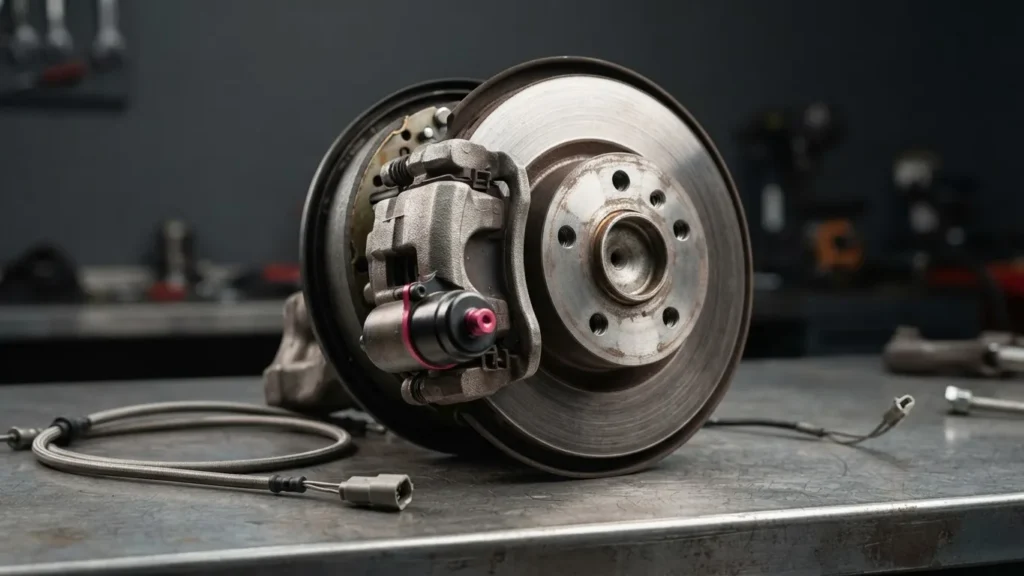
In June 2025, General Motors told the National Highway Traffic Safety Administration that a corroded wiring harness could make the parking brake clamp down on its own while a Chevrolet Blazer EV was moving down the road. That single sentence captures why an electric parking brake problem deserves more respect than a lit bulb on the dash: the same system that quietly holds your car on a hill can, when a wire breaks, grab a rear wheel at speed. Most of the time the noises and pedal twitches you notice are designed in. The job here is telling the harmless behavior apart from the fault that sends you to a shop today.
An electric parking brake (EPB) replaces the hand lever or foot pedal with a switch and two small motors that pull the rear brakes tight. Because it is electronic, it throws its own warnings, and those warnings do not all mean the same thing. This guide separates benign cues from genuine faults, lays out the known recall populations, and gives you the repair numbers before a service writer does.
Quick answer: An electric parking brake problem warning means the car has detected a fault in the EPB system, not simply that the brake is set. Motor noise from the rear wheels and slight brake-pedal movement during operation are normal. A dash message naming the EPB, a blinking parking-brake indicator, or a “service parking brake” alert is a fault that should be inspected promptly. Do not rely on the parking brake until it is checked. Actuator replacement typically runs $400 to $900 combining part and labor. A lit brake warning paired with poor braking means stop and call a mechanic.
Normal EPB Sounds and Pedal Movement vs. a Real Fault
The first mistake drivers make is treating every click and whir as a failure. It usually is not. Mazda North American Operations documents the EPB function in its owner materials, and Honda’s own guidance is blunter still: according to Keeler Honda, you may hear the parking brake motor operating from the rear wheel area as the brake applies or releases, and the brake pedal may move slightly during that operation. Both are expected. The motors are physically tugging the rear calipers, and you hear and feel them work.
What is not normal is a dashboard message that says “Electric Parking Brake Problem” or the EPB system indicator coming on while driving. Honda’s guidance separates two lights that look alike: the ordinary parking-brake indicator, which just tells you the brake is applied or needs releasing, and the EPB system indicator, which points to a detected fault. If the parking-brake indicator blinks at the same time the system indicator appears, Honda notes the brake may not be set at all, which is the opposite of what the lever symbol usually implies.
So the rule is simple. Sound and slight pedal movement during a deliberate apply or release: expected. A named fault message, a blinking indicator, or a warning that appears on its own while you drive: a fault to diagnose. One caveat worth knowing before you panic over a non-responsive switch, Honda points out that the EPB cannot be applied or released at all if the battery goes dead. A weak battery can mimic a failure without any component being broken.
Can You Keep Driving With an Electric Parking Brake Problem Warning?
This depends on which warning you are looking at, and the sources draw the line differently on purpose.
For a Honda showing the specific “Electric Parking Brake Problem” message, the manufacturer’s guidance is to avoid using the parking brake and have the vehicle checked by a dealer immediately. That is narrower than “do not drive.” It is a warning aimed at the EPB fault itself, telling you not to trust the brake while the car still rolls and brakes normally through the foot pedal.
A broader and more urgent situation is a brake warning tied to actual stopping trouble. If the brake warning light is lit and the pedal feels soft, sinks, or drops toward the floor, that is not an EPB inconvenience, it is a hydraulic or service-brake emergency. Stop driving and get the car to a certified mechanic. A pedal that travels to the floor is never something to investigate later. The same holds if the ABS light and the brake light are both on together; that pairing belongs in a shop, not on the highway.
There is a physical reason to take an unexplained EPB alert seriously rather than ignoring it for days. Some systems can bind or overheat if the brake is partially applied while the car moves, which compounds the original fault into wear or heat damage. When in doubt about whether the brake is dragging, treat the warning as a reason to inspect now, not next month.
The GM Blazer EV “Service Parking Brake” Recall (25V433)
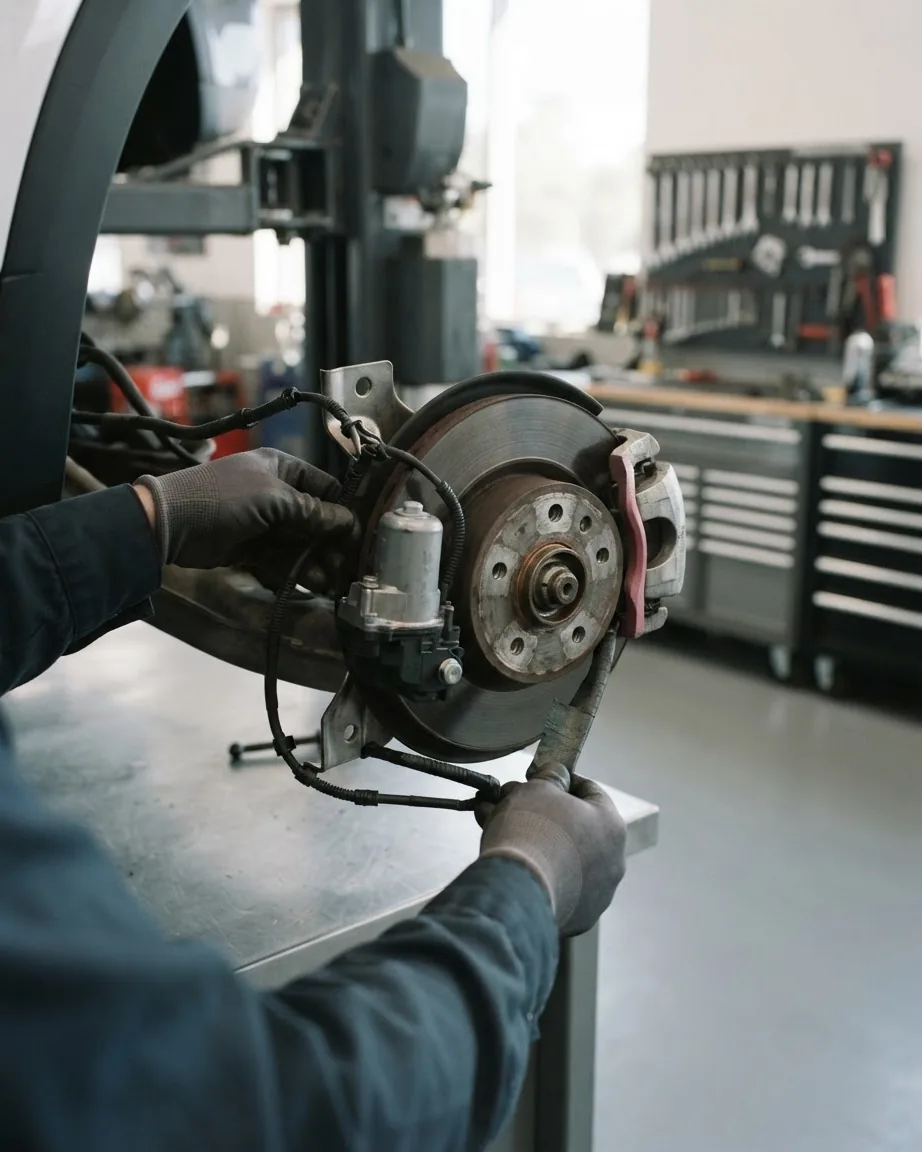
This is the recall that shows what the worst version of an EPB fault looks like. In its Part 573 Safety Recall Report 25V433, General Motors identified a rear parking-brake wiring harness in certain 2024 – 2025 Chevrolet Blazer EV vehicles that can become damaged or corroded. The routing lets the wires flex at the sharpest bend in the harness during normal driving, and that flexing can short or break the wires. The result is either unintended actuation of the parking brake or complete loss of parking-brake function.
The population is 40,233 potentially involved vehicles. Drivers may see a “service parking brake” warning, and in some cases the vehicle will not shift out of park. The field data is what makes this concrete: of 97 complaints GM reviewed, two described rear wheel lock-up while driving and one described loss of parking brake function. A rear wheel locking at speed is the failure that turns a dashboard message into a crash risk.
The fix is not a part you buy. Dealers inspect the harness, reroute it, and add anti-abrasive tape; a harness with existing damage gets replaced. GM also flagged consumer advisories including park-outside guidance while awaiting repair. Because all covered vehicles are under warranty, there is no out-of-pocket cost. If you own a 2024 – 2025 Blazer EV and see a “service parking brake” message, this recall is the first thing to rule out before anyone quotes you for parts.
The Ford Park-Lock Recall: A Different Mechanism Entirely
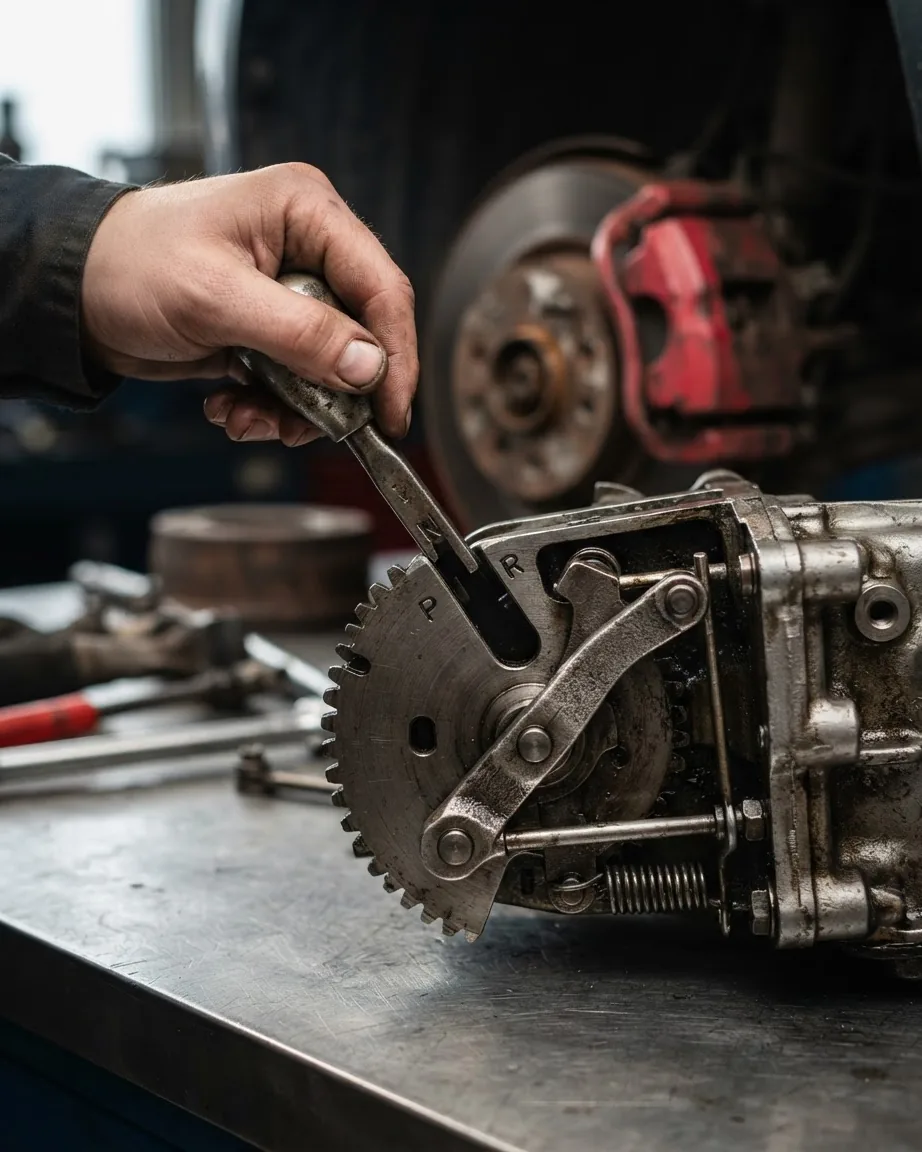
It would be easy to lump every EPB recall together. Do not. The Ford recall is a distinct failure mode with a distinct warning. As reported by FenderBender, NHTSA issued recall alerts for 272,645 Ford vehicles because, in the report’s wording, the electronic parking brake may not lock in some instances, risking rollaway. The underlying cause is described as a transmission that may not lock into Park, so the vehicle may not meet the federal Park-holding requirement.
That requirement is a hard number. Under the FMVSS 114 standard referenced in the recall, a vehicle must not move more than 150 mm on a 10 percent grade when the gear selector is locked in park. These figures are presented as components of the 272,645 total from the same reporting.
The warning you would see differs from GM’s. Ford drivers can potentially identify the problem by no illuminated range position, meaning the “P” is not lit, along with a wrench light and a shift-system fault message in the instrument cluster. That is a Park-lock signature, not the “service parking brake” harness message of the Blazer EV. One wording note worth flagging: the recall describes the defect as a transmission Park-lock issue while also using “electronic parking brake” language, an inconsistency carried in the reporting itself.
How to Check Your Own Vehicle for an Open EPB Recall
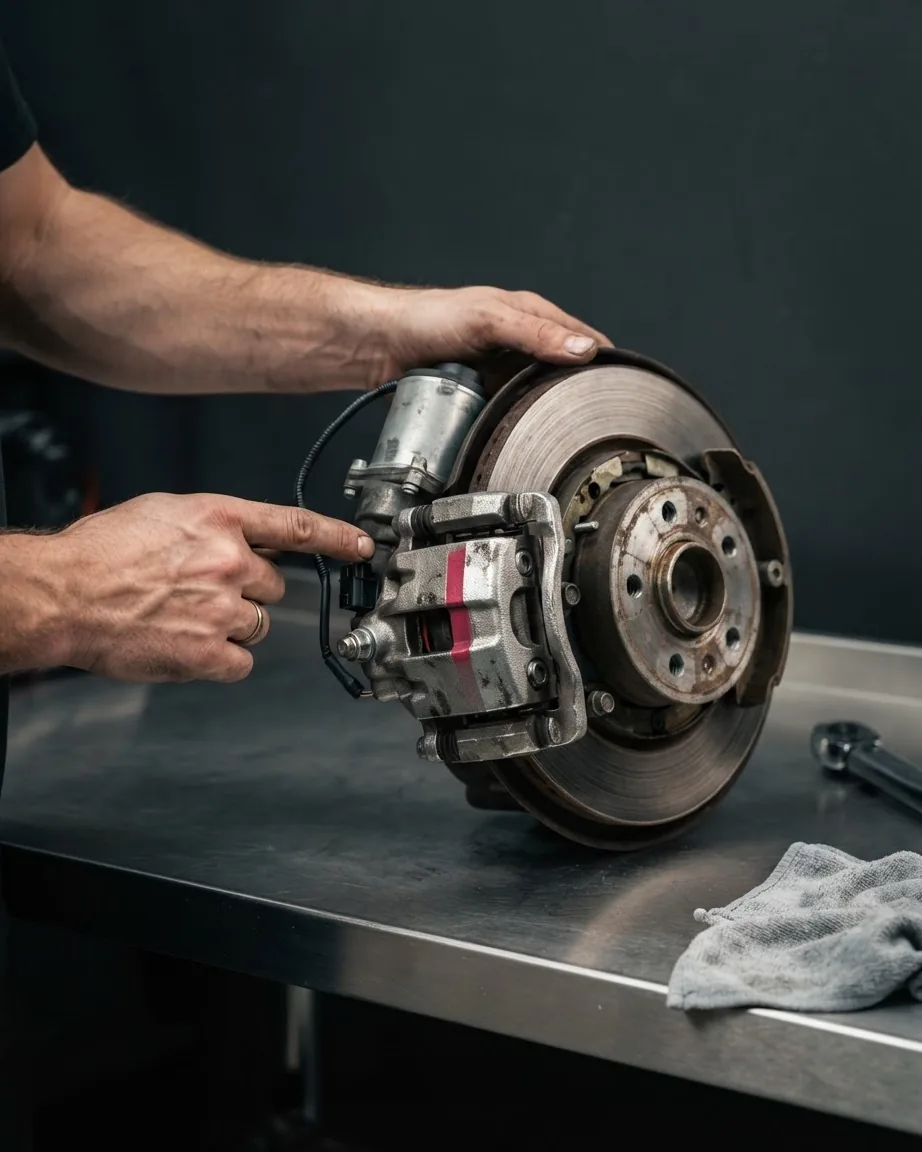
The two recalls above cover specific GM and Ford models, but an EPB fault can surface on any make, and the only authoritative way to know if yours is under an open recall is a VIN lookup. NHTSA maintains a public recall search keyed to your vehicle identification number. Punch in the 17-character VIN and the tool returns every open recall tied to that exact car, including any that have not yet reached owner notification.
Timing matters because recalls move in stages. The GM report, for instance, listed owner notification estimated to begin August 11, 2025, well after dealers were first told. A car can be affected and searchable by VIN before the letter ever lands in the mailbox. If you own one of the recalled vehicles, that lookup is faster and more reliable than waiting on mail, and the remedy is performed at no charge while the vehicle is under warranty.
Releasing a Stuck EPB and What Usually Causes It
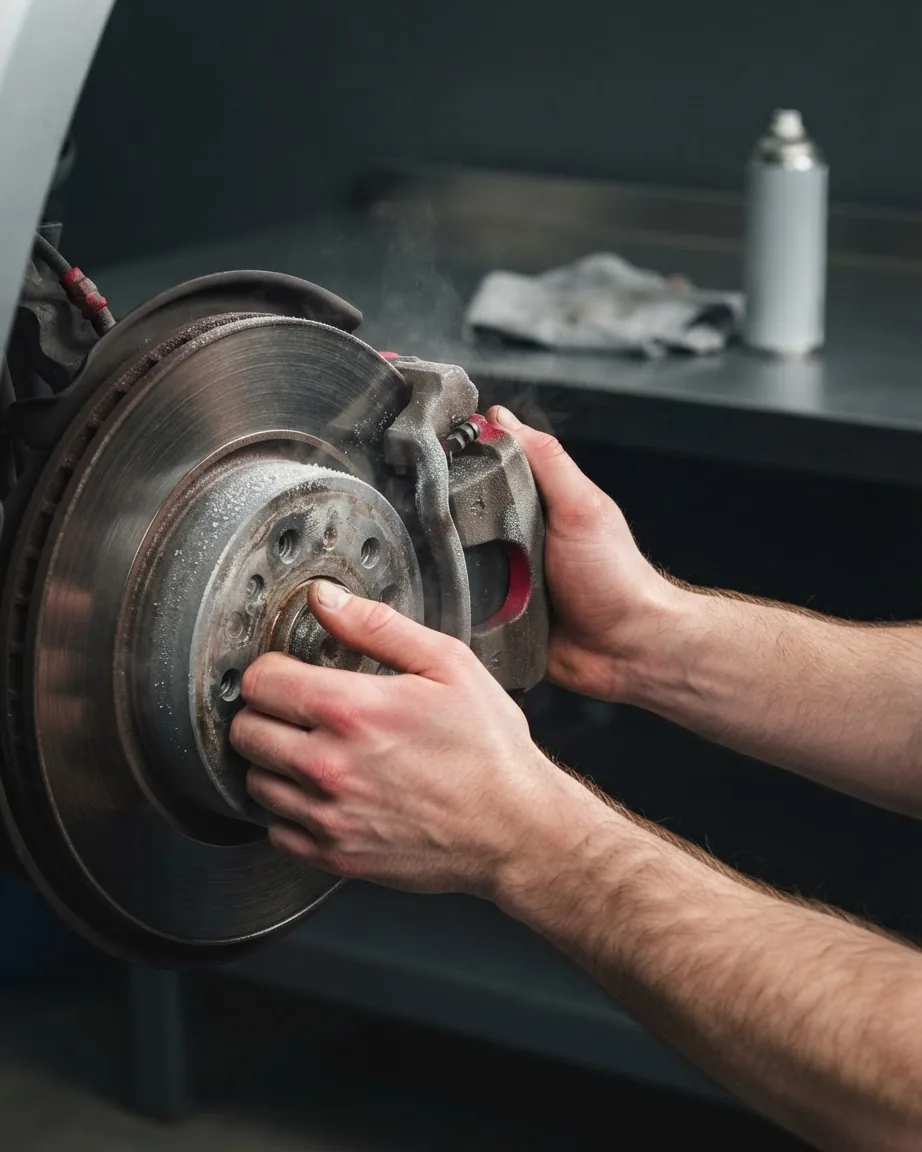
A parking brake that will not release is one of the most common EPB complaints, and the causes cluster into a few buckets. AutoZone and Rice Tire both cover the stuck-parking-brake scenario, and the usual suspects are a weak or dead battery that starves the motors, a failed release sensor or switch, corroded or broken wiring like the Blazer EV harness, mechanical binding in the caliper or cable, and freezing, where moisture in the mechanism locks it solid in cold weather after the brake sat applied.
The honest limitation: there is no single roadside release procedure that works across every make. Many EPB-equipped vehicles do have a manual emergency release, but its form varies, sometimes a tool stored near the trunk, sometimes access through unbolting the actuator motor, and the correct method lives in your vehicle’s service manual or the EPB emergency-release section of the owner’s manual. Using the wrong approach can damage the actuator. If the brake is frozen, warming the car or the rear wheel area can help; if it is electrical, the car may need a scan tool to command a release.
Two symptoms escalate this past a stuck-brake annoyance. A parking-brake warning light that stays lit after you have fully released the brake points to an electrical or mechanical fault in the actuator system. Difficulty engaging or disengaging, excessive force, jerky release, or a brake that will not hold on a slope suggests a worn or failing actuator. Neither is a wait-and-see item.
Why Rear Brake Pads Need EPB Service Mode First
Here is the detail that turns a routine rear-pad job into a tow bill. On a vehicle with an electric parking brake, the EPB motor holds the caliper piston. You cannot simply push that piston back into the caliper the way you would on an older car, because the motor is in the way and the computer does not know you are servicing the brakes.
Before the pads come off, the EPB has to be put into a service or maintenance mode that retracts the actuator and releases the piston, as BuyBrakes explains for changing rear brake pads with an electric parking brake. That mode is entered either through a menu in the vehicle or, on many cars, only with a scan tool that can command the EPB. Skip it and you risk damaging the actuator, throwing a fault, or ending up with a brake that will not re-engage. After the pads are in, the system has to be taken back out of service mode and, on some vehicles, recalibrated. This is also why a DIY rear-brake job on an EPB car is a step harder than the front, and why the right scan tool, or a shop, matters.
The flip side is a post-service symptom: an EPB or park-brake message that appears after rear-pad work, often when the actuator or caliper binds because the service procedure was not completed cleanly. Clearing it usually means re-entering service mode or running a scan-tool reset rather than replacing anything. For how the rear discs themselves wear, see our brake rotors last guide.
Electric Parking Brake Problem Repair Cost and DIY Savings
When the actuator itself is the culprit, the numbers are more predictable than the diagnosis. According to the PartCatalog actuator cost guide, a complete parking brake actuator replacement typically costs between $400 and $900 combining both the part and labor. The range is not random; it tracks the vehicle.
The breakdown runs by age and complexity. Older domestic vehicles and high-mileage commuters sit at the lower end, $400 to $550. Most Toyota, Honda, Ford, and Chevrolet models from the last 15 years land in the mid-range, $550 to $750. Diesel trucks, turbocharged engines, cars with tight engine bays, and European imports push toward $750 to $900 or higher because of labor-intensive access and specialized parts. Electronic actuators generally cost more than mechanical ones because of calibration requirements.
A few levers move the final invoice:
- Warranty coverage: Shops offering extended parts warranties, typically 12 to 36 months, or labor warranties charge slightly more upfront but protect against premature failure. Whether that is worth it depends on the car’s age and how long you plan to keep it.
- DIY savings: If you have prior brake-system experience and the confidence to follow detailed procedures, you may save $200 to $400 in labor by doing the job yourself. That is a real figure, not a guess, but the actuator is a safety-critical part requiring precise torque specifications and, on electronic units, proper electrical connections and sometimes recalibration.
- Diagnosis first: Because the actuator often fails with no warning until it stops responding entirely, a diagnostic fee may apply so the shop can confirm the actuator is the fault rather than wiring or a sensor.
Follow the vehicle’s service manual torque figures exactly on any brake fastener, and treat an inspection afterward as part of the job rather than optional. The parking brake is not the component to approximate on. For the budgeting pattern on the pads that wear alongside it, our replace brake pads guide sits in the same brake system section.
The EPB as a Backup If the Foot Brake Fails
One function gets overlooked until it matters. The electric parking brake can double as an emergency brake if the regular foot brake fails. On Mazda vehicles, Mazda North American Operations describes the function in its owner materials: continually pulling and holding the EPB switch while moving applies the rear brakes progressively, letting you slow the car when the hydraulic brakes are gone.
Two limits keep this honest. It is a backup, not a substitute, the EPB acts only on the rear wheels and brings far less stopping power than the full hydraulic system. And sustained application generates heat and wear, the same overheating risk that makes driving with the brake partially applied a bad idea. Use it to slow and stop in an emergency, not to nurse a failing brake system across town. A foot brake that has failed is a tow-and-inspect situation the moment you are safely stopped.
Reading the Warning Before You Pay for a Diagnosis
Put the pieces together and most EPB scares sort themselves into one of three boxes without a shop visit. Box one is normal behavior: motor noise from the rear and slight pedal movement when you apply or release the brake, exactly what Honda and Mazda document. Box two is a battery issue, since the EPB simply cannot operate with a dead battery, a no-response switch after the car sat is worth a battery check before a brake diagnosis.
Box three is the genuine fault, and it announces itself specifically: a named “Electric Parking Brake Problem” message, a “service parking brake” alert, a blinking parking-brake indicator, a light that stays on after release, or difficulty holding on a slope. Those get inspected, and if you drive a recalled Blazer EV or one of the affected Ford models, the VIN lookup comes first because the fix may cost you nothing. What never waits is braking that has degraded, a soft or sinking pedal, or a brake and ABS light burning together. That is the moment the article stops being about a parking brake and starts being about whether the car should move at all.
The EPB Recall Numbers, Done for You: How Many Blazer EVs Actually Carry the Defect
A 40,233-vehicle recall sounds alarming, but GM’s own report and field data show how rare the headline-grabbing “rear wheel lock-up” failures have been so far, which puts the sweeping number into context for an individual owner.
- 40,233 vehicles make up the potentially involved population swept into the recall, which is why GM still inspects every one as a precaution.
- 3.1% of reviewed complaints described a dangerous-while-driving failure: of 97 complaints, 2 reported rear wheel lock-up and 1 reported loss of parking-brake function, so (2 + 1) ÷ 97 ≈ 3.1%.
Translation for an owner: the worst-case failure – a rear wheel grabbing at speed – did occur in the field, so the fix is free under warranty and worth scheduling rather than deferring.