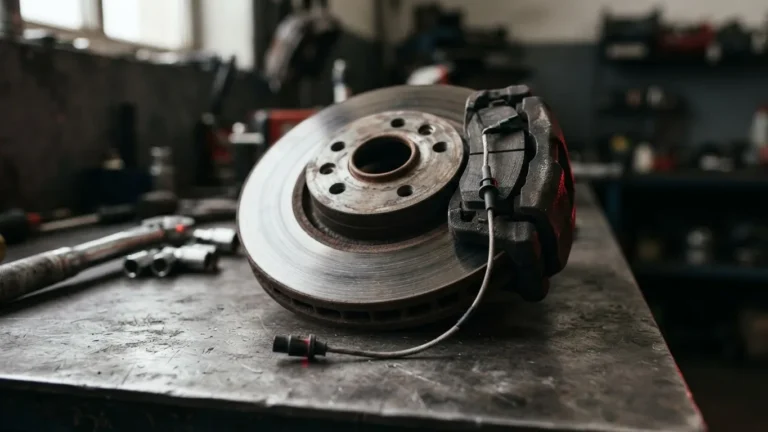
How often to replace brake pads depends on three things you can actually measure: distance driven, remaining friction material in millimeters, and how hard your right foot works in traffic. Most drivers get a usable answer from mileage alone, but mileage lies when your commute is all stop-and-go. The honest version pairs a distance window with a physical thickness check, because a pad that reads fine on paper can be scraping metal in the real world. This guide gives you both, plus what a replacement costs per axle in 2026 and which safety bodies actually govern the parts under your wheels.
That is why a straight answer matters more here than in almost any other maintenance question. Ignoring the physical health of your brake system compromises your stopping power, increases your required stopping distance, and risks long-term damage to the rotors.
Quick answer: the mileage and millimeter rule
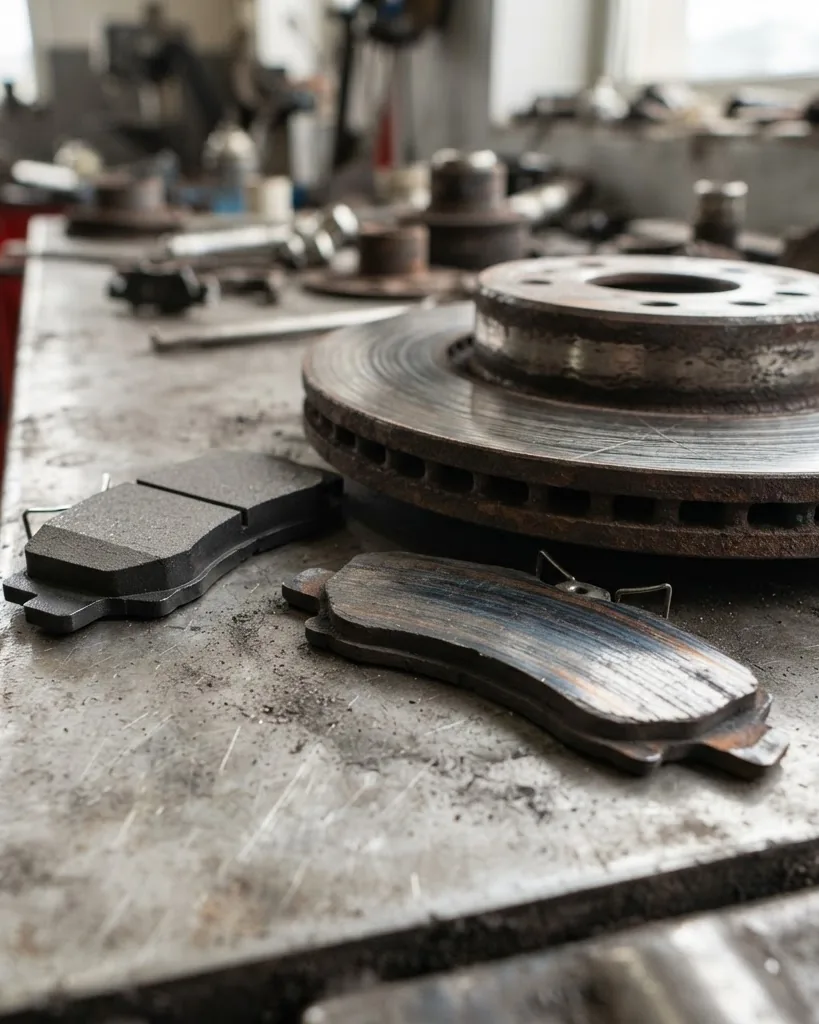
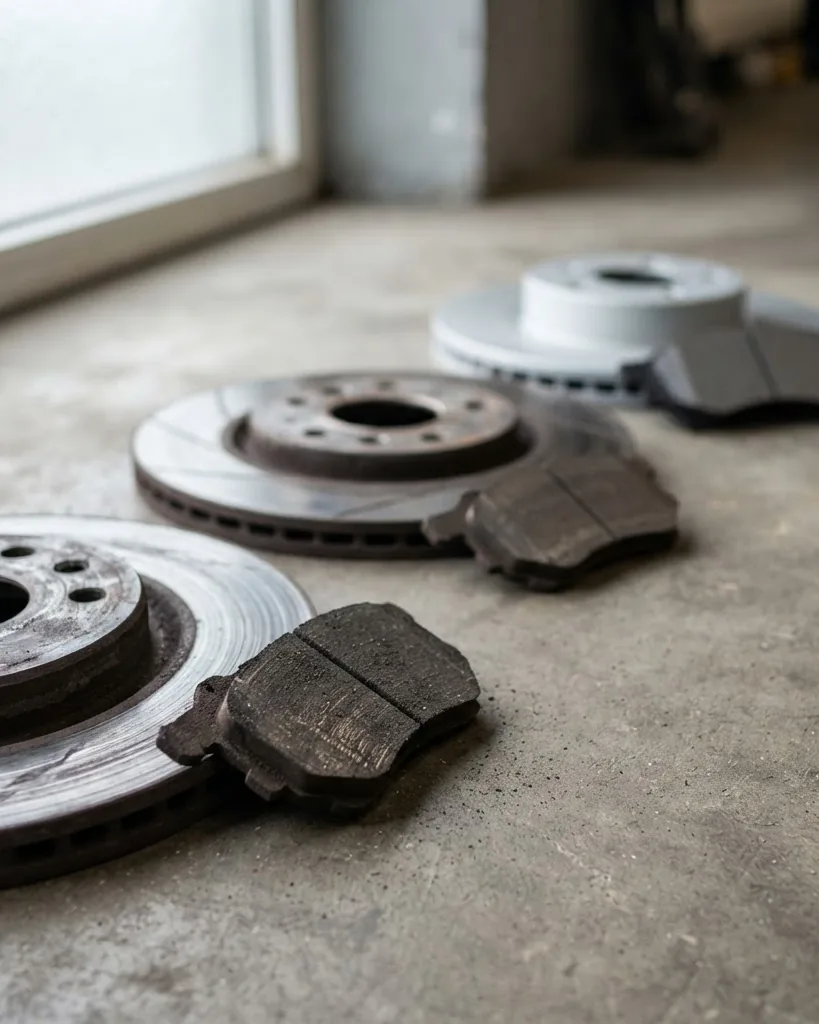
New pads typically start at 10 to 12 mm of material, and most mechanics call 3 mm the replacement point. Front pads wear about twice as fast as rear pads, so they usually hit the limit first. When in doubt, measure thickness rather than trust the odometer, because a hard urban commute can burn through a set far faster than a highway one.
If you only remember one rule, make it this one: mileage tells you when to inspect, while thickness tells you when to replace. Those two measurements together eliminate most of the guesswork that causes people to replace pads too early or far too late. Following this dual-method approach ensures you never discard functional material while also avoiding the dangerous scenario of driving on a compromised braking surface.
Why the 30,000 to 80,000 mile range is so wide
You must also account for the specific driving habits and mechanical health of your vehicle.
- Brake use: Frequent braking and riding the pedal wear material faster; engine braking in a manual car stretches pad life significantly.
- Driving environment: Urban stop-and-go wears pads faster than open rural roads due to repeated thermal cycling and physical friction.
- System condition: A worn or warped rotor chews through fresh pads and shortens their life, as the uneven surface acts like an abrasive file.
- Pad material: Semi-metallic and ceramic higher-grade compounds outlast cheaper organic pads, which often wear down under lower heat thresholds.
Because the range is so elastic, mileage alone is a starting point, not a verdict. You should treat the 30,000-mile mark as a mandatory window to perform a visual inspection, regardless of whether you feel the brakes are still responsive.
City driving versus highway driving
Two commuters can log the same annual miles and land at opposite ends of the wear curve. The city driver brakes for lights, pedestrians, and merging traffic dozens of times per trip; the highway driver may brake a handful of times over the same distance. If it is mostly open road, the pads may comfortably reach the far end of the window. In city environments, the frequent deceleration from higher speeds generates immense heat, which accelerates the degradation of the friction material compound.
If you live in a mountainous region, your descent strategy also dictates wear. Riding the brakes down a long hill generates sustained heat, which is the fastest way to glaze the pads and diminish their lifespan.
The millimeter threshold that beats mileage every time
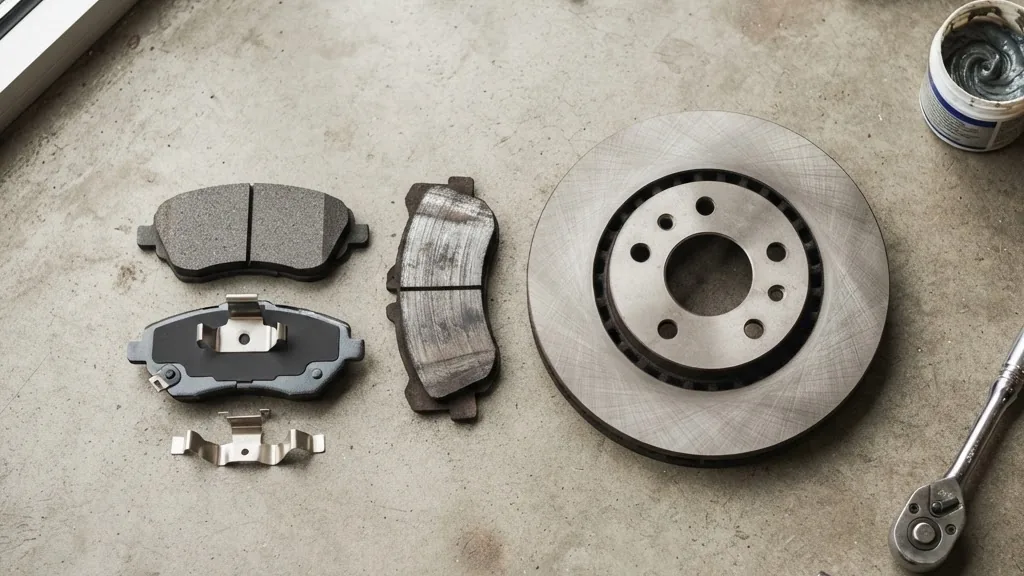
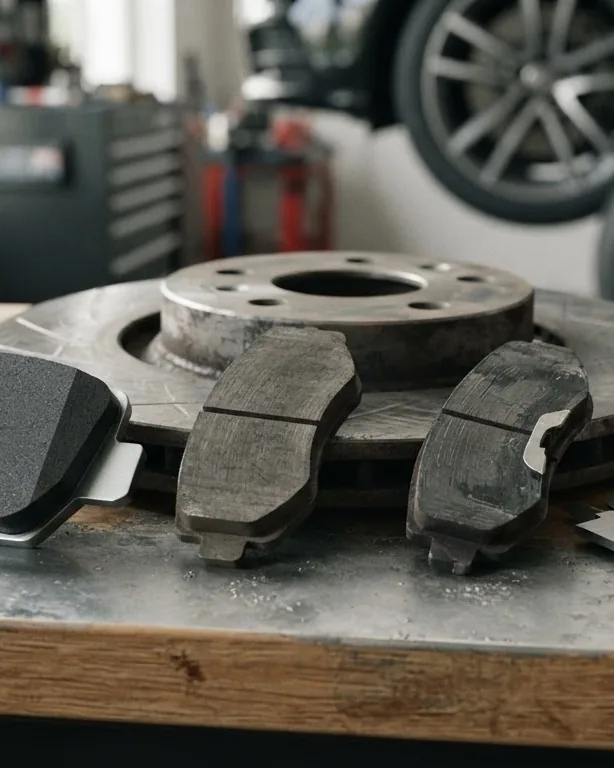
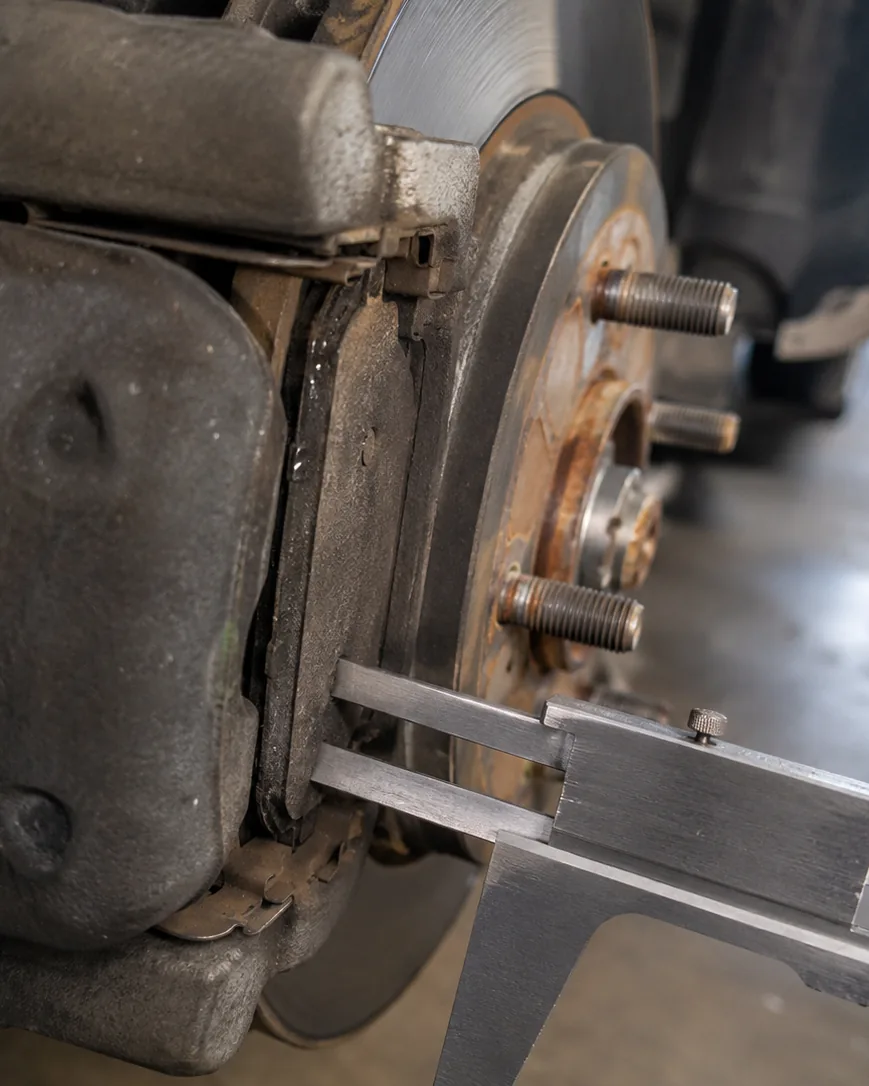
A brake pad that measures 3 mm of friction material is at or near the end of its safe service life, and thickness is a far more reliable signal than the odometer. New pads generally start at 10 to 12 mm, and most mechanics and dealers agree the replacement point sits at 3 mm, with some setting the minimum lining as low as 2 mm. Measuring beats guessing because two cars with identical mileage can have wildly different remaining material depending on driving style, terrain, and pad compound. A physical check turns a fuzzy estimate into a hard number you can act on.
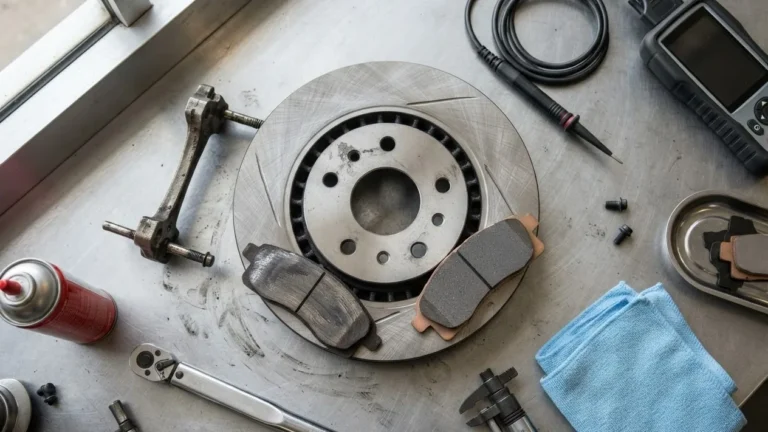
You can eyeball pad thickness through the wheel spokes on many vehicles, but a proper measurement removes the doubt. If you want to do this yourself, our walkthrough on how to measure brake pad thickness with a gauge covers the tool and technique step by step, so you are reading real numbers instead of squinting at shadows.
The math is simple once you know the endpoints. Starting from 12 mm and replacing at 3 mm means you have 9 mm of usable material to burn through over the life of the set. That is why a pad can read comfortable at one inspection and hit the limit surprisingly fast if your driving gets harder or you start carrying heavier loads.
For example, imagine an inspection finds 6 mm remaining. That does not automatically mean you have half the original mileage left. If your driving changes from mostly highway travel to heavy downtown traffic, wear can accelerate significantly. The next inspection matters more than any estimate based only on previous mileage or manufacturer claims.
How front and rear wear differ
Front pads carry more of the braking load because weight shifts forward every time you slow down. AutoZone points out that front pads wear roughly twice as fast as rear pads, which is why a front-and-rear job rarely comes due at the same moment. Expect to replace fronts first, sometimes twice, before the rears reach 3 mm. Budgeting and scheduling around this asymmetry keeps you from paying for a full set when only one axle needs attention.
This difference also explains why service invoices often list only the front axle. Replacing the front pads while leaving healthy rear pads in service is normal maintenance, not a sign that anything is wrong with the vehicle. Understanding this distribution helps you avoid being upsold on rear brake services that your vehicle does not currently require.
Visual inspection checklist
A quick inspection can often reveal whether a professional measurement is needed. Even if you cannot see every millimeter clearly, you can still spot warning signs before they become expensive repairs. Always perform these checks on level ground with the parking brake fully engaged for safety.
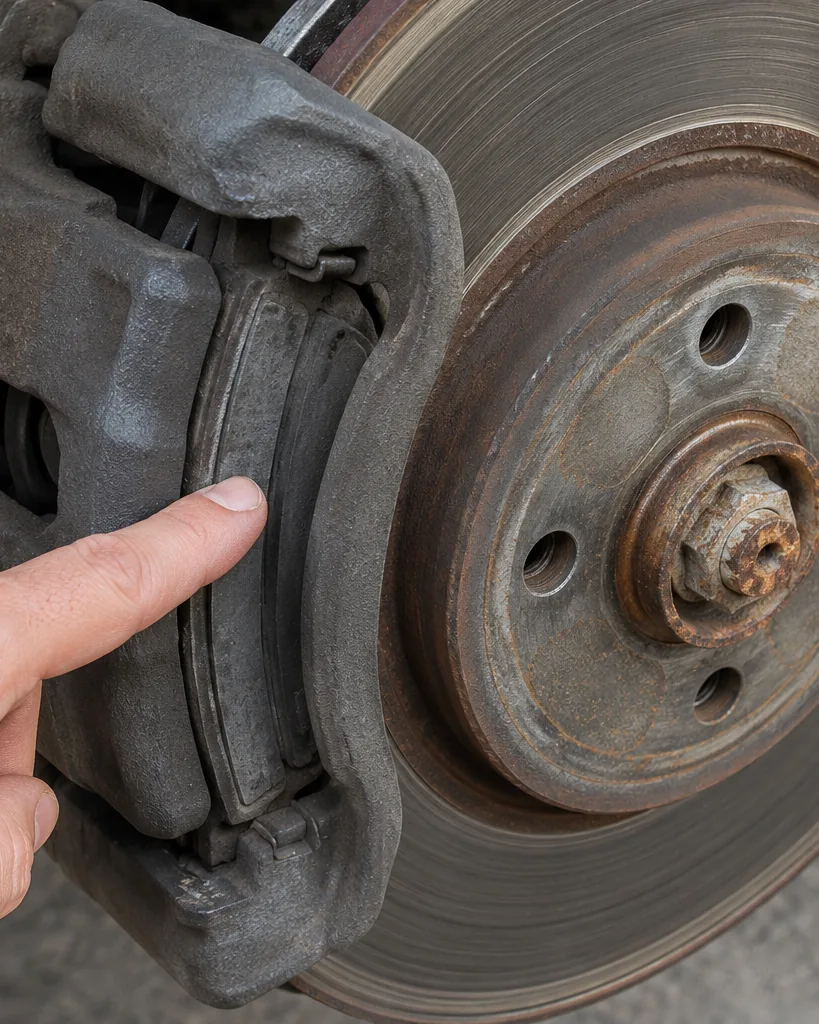
- Look through the wheel spokes for the friction material.
- Compare the visible pad to the 3 mm replacement threshold using a simple ruler or gauge.
- Check whether the left and right pads on the same axle appear to wear evenly, as uneven wear indicates a stuck caliper or slide pin.
- Listen for high-pitched squealing during low-speed stops, which signals the wear indicator.
- Watch for dashboard brake or ABS warning lights that monitor system pressure.
- Schedule a closer inspection if anything looks uneven or unusually thin.
The warning signs your ears and hands catch first
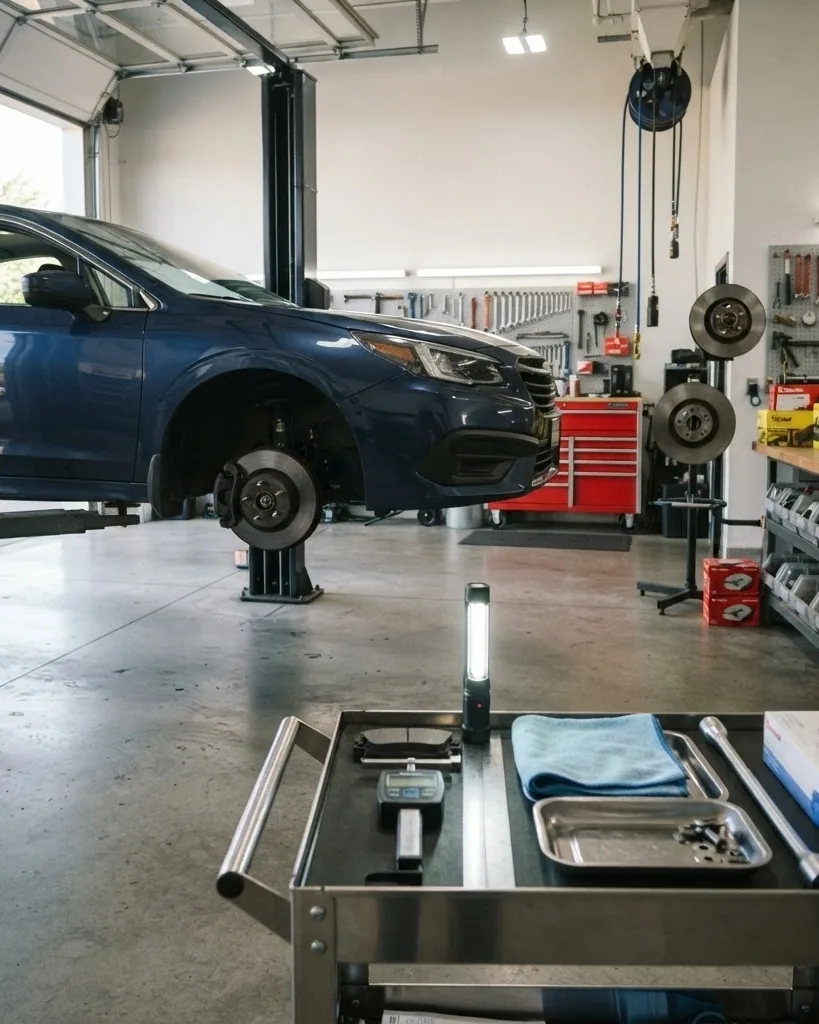
Your car usually tells you the pads are worn before a gauge does, and the earliest signal is sound. A high-pitched squeal or squeak when you brake often comes from a built-in wear indicator dragging on the rotor, and a coarse grinding noise means the material is gone and metal is meeting metal. The American Automobile Association lists five signs worth heeding: unusual noises, vibration through the pedal, a pedal that feels soft or needs more pressure, a parking brake that feels loose, and dashboard warning lights. Any one of them justifies an inspection that week, not that month.
Vibration deserves special attention. When braking sends a shudder through the pedal or steering wheel, the rotor may be warped or worn, and installing fresh pads on a bad rotor just repeats the problem by transferring the irregular surface geometry to your new parts.
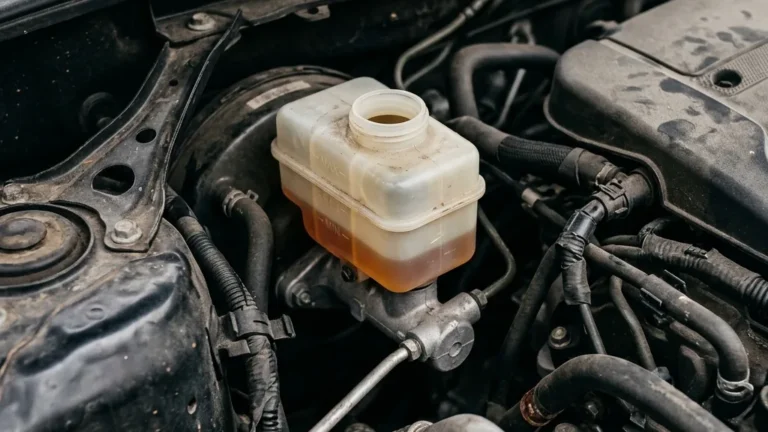
A pedal that sinks or feels spongy points at the hydraulic side rather than the pads. If the feel changes, the fluid is worth a look; the shade of the fluid itself carries clues, which our guide to what each brake fluid color means breaks down so you can tell fresh from failing at a glance.
- High-pitched squeal: Wear indicator contacting the rotor, an early warning.
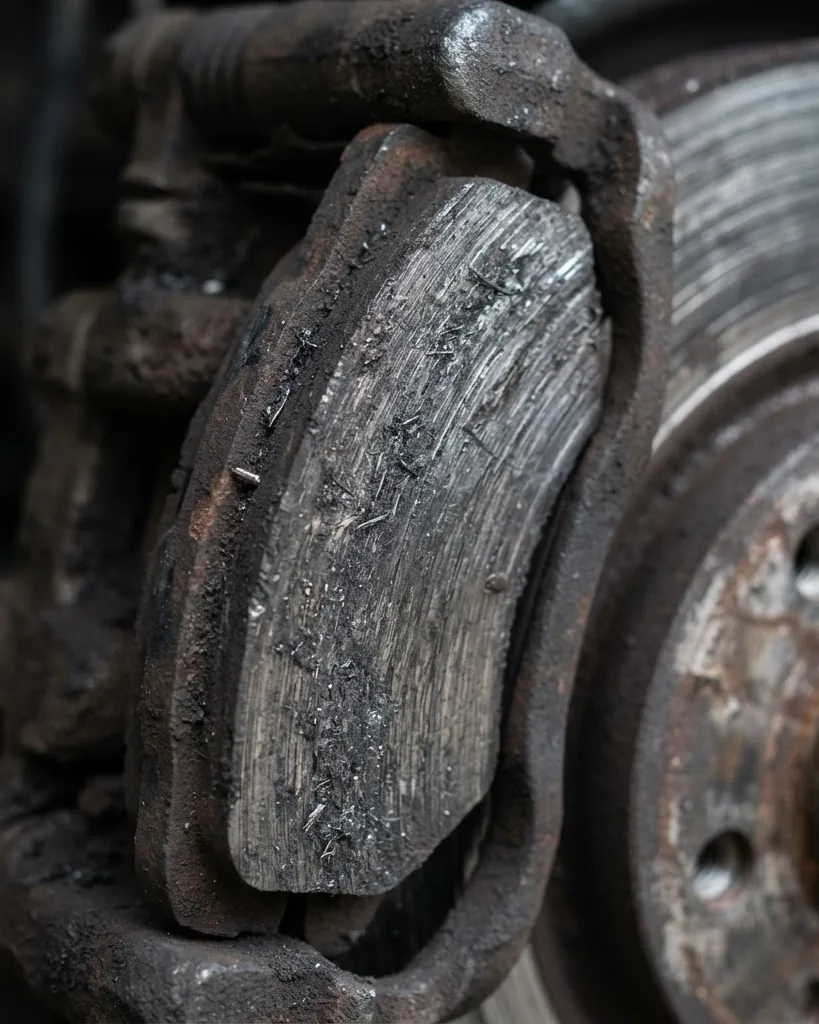
- Grinding: Friction material gone; metal-on-metal contact damaging the rotor immediately.
- Pedal vibration: Possible warped or worn rotor requiring resurfacing or replacement.
- Soft or low pedal: Needs more pressure than normal; check for air or fluid leaks.
- Dashboard light: ABS or maintenance indicator flagging the system for an urgent check.
Not every noise automatically means the pads are finished. Moisture on the rotor after rain or overnight parking can create temporary surface rust and a brief squeal during the first stop. Persistent noise, especially grinding, deserves immediate attention because continued driving can damage the rotor, turning a simple pad replacement into a complex, costlier repair job.
Inspection schedule: when to actually look
Pair the interval with a visual thickness check against the 3 mm limit, and lean toward the more frequent end if you drive in heavy traffic, tow loads, or live somewhere hilly. A five-minute look through the wheel spokes costs nothing and routinely saves the far larger bill that comes when worn pads carve grooves into the rotor.
Rotors, for context, last far longer than pads. However, they are not invincible. Every time you remove the wheels, take the opportunity to wipe off excessive brake dust and inspect the rotors for scoring, heat cracks, or deep blue discolorations that indicate overheating.
Tie the brake check to something you already do on a schedule. Many drivers fold it into tire rotations, and if you run a front-wheel-drive car, our guide to front-wheel drive tire rotation done right is a natural moment to have the wheels off and the pads in plain view.
Regular inspections also create a wear history. Recording thickness at each visit makes it easier to estimate how quickly your own vehicle consumes pads instead of relying only on generic mileage ranges that may not account for your specific driving environment.
What waiting too long actually costs you
Ignoring worn pads does not save money; it moves the cost to a bigger part. Once the friction material is gone, the metal backing plate grinds the rotor, and Bridgestone warns that letting pads run to failure damages the discs. A pad-only job on one axle is modest.
That difference becomes even larger when both front rotors require replacement instead of only new pads. Preventive inspections are inexpensive because they help catch the problem before the backing plate ever touches the disc. When you replace rotors prematurely due to neglect, you are essentially paying twice: once for the missed pad inspection and again for the unnecessary hardware replacement.
What replacement costs per axle in 2026
The spread depends on your vehicle, the pad material, and whether you pay shop labor or do the work yourself. A large SUV needs bigger, pricier pads than a compact sedan, and labor scales with how hard the wheels and calipers are to service. Luxury vehicles often require specialized, higher-friction pads which naturally command a premium price.
The single biggest lever is labor. AAA notes that a competent do-it-yourselfer can save hundreds of dollars by skipping the shop, provided the job is done correctly and safely. When using a shop, remember that you are paying for their professional tools, diagnostic expertise, and the shop liability insurance.
Because front pads wear about twice as fast as rear pads, replacing only the axle that needs it avoids paying for material you have not used yet. If you are weighing shop versus driveway, our breakdown of how long it takes to replace brake pads lays out realistic shop and DIY times so you can price your own hours against the labor you would otherwise pay.
Cost comparisons become clearer with a simple example. Replacing front pads while they are still above metal-on-metal contact may stay within the 100 to 300 dollar per axle range.
Who regulates your brakes, and what it means for you
No single rule tells manufacturers how thick a brake pad must be, but a web of federal standards governs the system it lives in, and several safety bodies shape what ends up under your wheels. The National Highway Traffic Safety Administration confirms there is no Federal Motor Vehicle Safety Standard aimed specifically at brake pads; instead, Standards No. 105, 121, 122, and 135 regulate entire brake systems, and vehicle makers must certify compliance. That distinction matters for buyers, because a pad is treated as motor vehicle equipment subject to recall, not as a separately approved part.
The National Highway Traffic Safety Administration also stresses that it does not approve or endorse aftermarket brake pads. Any pad found to carry a safety-related defect falls under federal recall provisions, and the manufacturer must notify buyers and fix it free of charge. So when a box claims to keep your car compliant, the certification is voluntary, not a government stamp.
Testing standards come from a different corner. SAE International, through its Brake Linings Standards Committee, publishes methods that shape how friction material is evaluated, including SAE J3175, which specifies an ultrasonic method for measuring the normalized elastic constant of a finished brake pad. California has leaned on SAE test methods in its own brake friction rules, showing how a private standards body feeds directly into public regulation of materials like copper content.
The bodies you will hear named at the shop
Several organizations shape brake safety without setting a pad-thickness law. The National Highway Traffic Safety Administration handles recalls and system standards. SAE International writes the test procedures. The Insurance Institute for Highway Safety runs crash and braking evaluations that push automakers toward stronger systems, including automatic emergency braking, which can impact how often your physical pads are utilized in emergency situations. The American Automobile Association publishes the consumer-facing cost and lifespan guidance most owners actually read, while the Environmental Protection Agency governs the emissions side that increasingly favors regenerative braking, impacting how modern cars utilize their foundation brakes.
Electric and hybrid vehicles change the math
Brake pads on electric and hybrid vehicles usually last far longer than on a comparable gasoline car because regenerative braking does much of the slowing without touching the friction material. When you lift off the accelerator in an EV, the electric motor runs in reverse to recover energy, decelerating the car and leaving the physical pads idle for much of normal driving. The Environmental Protection Agency oversees the fuel-economy and emissions framework that makes regenerative systems standard on these vehicles.
That longevity comes with its own catch. Pads that rarely engage can develop surface rust or glazing, so EV owners still need the same annual-to-15,000-mile inspection cadence, just to make sure the seldom-used material is clean and functional. If the pads become corroded from disuse, the resulting performance in an emergency stop may be severely compromised.
The mileage windows and the 3 mm threshold still apply; they simply take longer to reach. You must be more diligent about inspections because the absence of the typical “squeal” indicators (which rely on regular friction to keep surfaces clean) means you may have silent, hidden corrosion issues.
Hybrid drivers often fall somewhere between conventional gasoline vehicles and full battery electric vehicles. Regenerative braking reduces wear, but friction brakes still operate during stronger stops and at lower speeds. The inspection schedule therefore stays the same even if replacement intervals become much longer than those of traditional vehicles.
How to make a set of pads last longer
You can meaningfully stretch pad life by braking earlier and more gently, which is the single habit with the biggest payoff. Smooth, anticipatory braking spreads the same stopping work across a longer, gentler application instead of a hard last-second stab, and it sheds less material each time. The American Automobile Association notes that drivers who ride or slam the brakes wear pads faster than those who do not, and that engine braking in a manual car reduces how often the pads engage at all. Keeping the rest of the system healthy protects the pads too.
A worn rotor accelerates pad wear, so replacing pads on a damaged disc just shortens the life of the fresh set. Ensure that your calipers are properly lubricated and that the slide pins move freely, as stuck calipers are a leading cause of premature, uneven wear that forces unnecessary replacement.
Weight and load play a part as well. Carrying unnecessary weight in the trunk or hauling heavy loads increases the kinetic energy your brakes must dissipate. Reducing load where possible helps keep the brake system within its optimal operating temperature.
- Brake early and gradually instead of hard and late to maximize material life.
- Use engine braking on long descents where the transmission allows it to reduce pad load.
- Fix worn or warped rotors before they eat new pads.
- Choose a higher-grade semi-metallic or ceramic pad over a budget organic compound.
- Regularly check and clean the brake hardware to prevent binding or dragging.
Good maintenance habits reinforce one another. Healthy rotors, correct inspections, and smooth driving all contribute to slower wear. None of those habits changes the 3 mm replacement threshold, but together they can help you reach the upper end of the mileage window before replacement becomes necessary, saving you hundreds over the life of the vehicle.
Common mistakes drivers make
The most common mistake is assuming that every vehicle reaches replacement at the same mileage. Waiting only for a mileage milestone can leave one driver replacing pads too early while another drives well past the safe thickness limit, potentially endangering themselves. Always prioritize physical measurement over assumptions.
Another mistake is replacing pads without considering rotor condition. If the rotor is worn or damaged, installing new friction material alone may not deliver the expected braking performance and will cause the new pads to wear down to 3 mm significantly faster than a healthy setup would.
Finally, do not ignore repeated squealing, grinding, pedal vibration, or warning lights simply because the car still stops. Those symptoms are valuable diagnostic clues. Addressing them early usually limits both repair time and repair cost. Trying to get “just one more month” out of a grinding brake system almost always guarantees a more expensive final bill.
Frequently asked questions
How often should I replace my brake pads?
Because front pads wear about twice as fast as rear pads, the front axle usually comes due first. Measure thickness rather than relying only on the odometer, as driving style, terrain, and vehicle weight significantly impact the interval.
At what millimeter thickness should brake pads be replaced?
New pads start at roughly 10 to 12 mm of friction material, and most mechanics set the replacement point at 3 mm, with some allowing a minimum lining as low as 2 mm. Measuring against that limit is more reliable than mileage, since driving style and terrain change wear rates dramatically between otherwise identical cars.
How much does brake pad replacement cost?
Doing the job yourself, done correctly, can save hundreds in labor costs, but ensure you possess the proper tools and safety equipment.
Do electric vehicles need brake pad replacement as often?
Usually not. Regenerative braking slows an electric or hybrid vehicle using the motor, leaving the physical pads idle much of the time, so they often last far longer than on a gasoline car. The trade-off is that rarely used pads can rust or glaze, so EV owners still need the annual or 15,000-mile inspection.
How often should brake pads be inspected?
Check the thickness against the 3 mm limit and lean toward more frequent inspections if you drive in heavy traffic, tow, or live in hilly terrain.
What happens if I drive on worn brake pads?
Once the friction material is gone, the metal backing grinds the rotor, and Bridgestone warns this damages the discs. A pad-only job on one axle is relatively cheap, so ignoring worn pads converts a small cost into a much larger one that includes replacing expensive rotors.