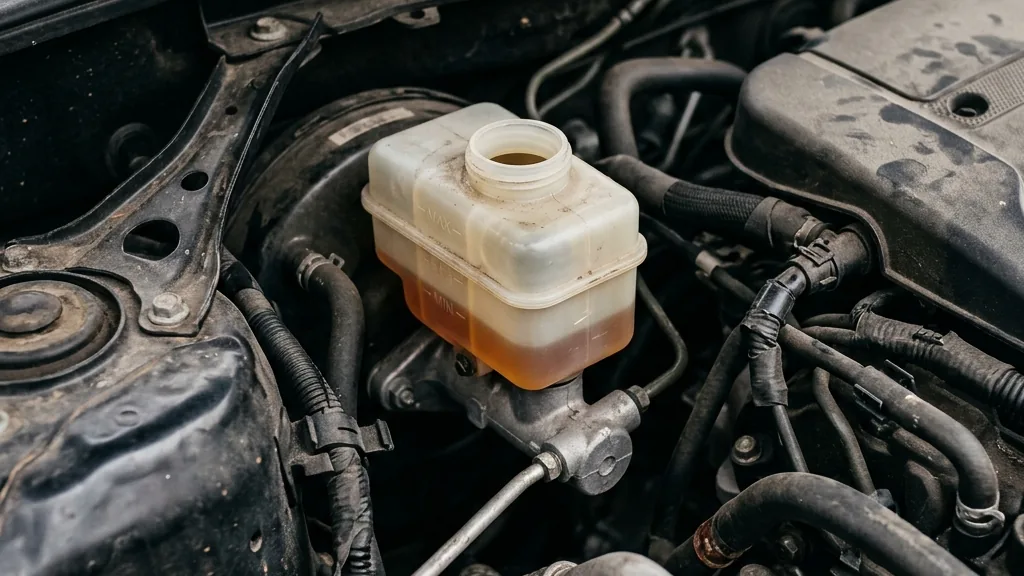
Quick version: the most common low brake fluid symptoms are a brake warning light, a soft or spongy pedal, a pedal that sinks toward the floor, longer stopping distances, and sometimes a burning smell or grinding after braking. The key is what caused the drop. A slow drop as your pads wear is normal and corrects itself at the next pad change; a fast or large drop means a leak, which is dangerous. Top up only as a stopgap with the correct fluid, and if the pedal is soft or the loss is significant, stop driving and get the brakes inspected.
The warning signs, ranked by how serious they are
Your brakes are hydraulic, so the fluid is not an accessory; it is the thing that turns your foot pressure into stopping force. When the level falls, the system tells you in a handful of ways, and they are worth knowing in order of urgency. The single most serious sign is a brake pedal that feels soft, spongy, or sinks slowly to the floor, because that means the system is struggling to build pressure and you may not be able to stop. Next is the brake warning light on the dash, which the brake fluid sensor triggers when the reservoir drops below its mark. After that come performance clues: a longer stopping distance, braking that feels delayed or uneven, and occasionally a grinding or squealing noise when low fluid lets the calipers apply unevenly. A burning smell after braking can appear when reduced hydraulic efficiency lets the brakes overheat. None of these should be filed under “later.”
Why the fluid level drops in the first place
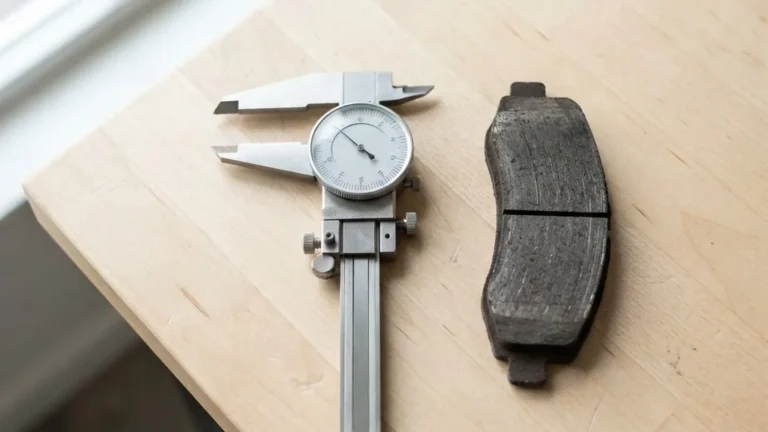
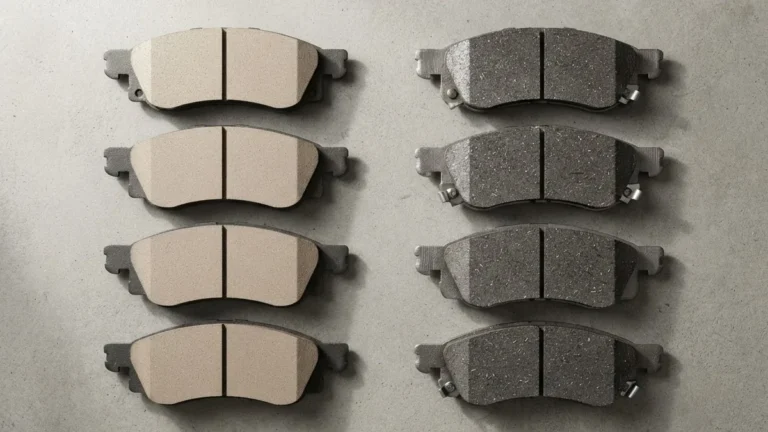
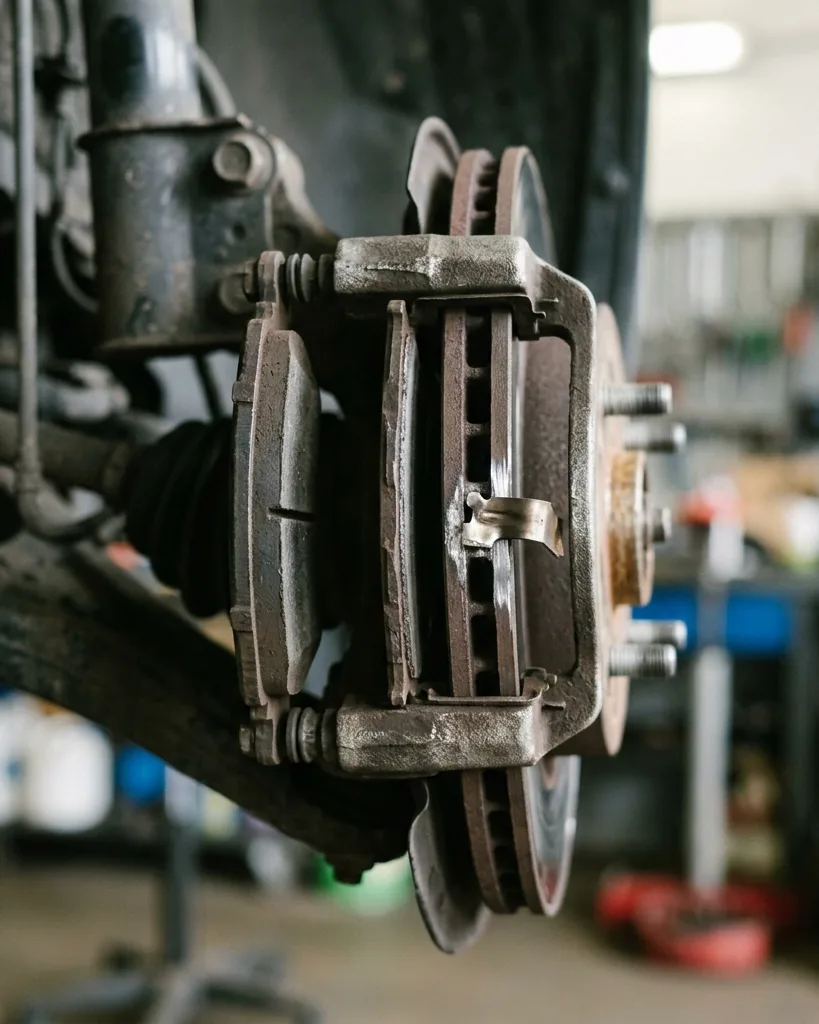
This is the part most guides skip, and it is the part that tells you whether to relax or worry. Brake fluid does not burn off or evaporate in normal use, so a low level always has a physical cause, and there are really only two. The first is benign: as your brake pads wear thinner, the caliper pistons have to extend farther to meet the rotor, and that extra travel pulls more fluid out of the reservoir to fill the space behind the pistons. The level drops slowly, in step with pad wear, and it comes right back up when you fit new pads. The second cause is the dangerous one: a leak somewhere in the hydraulic system. Knowing which one you are looking at is the whole game, and the next section is how you tell them apart.
Worn pads versus a real leak
The difference between a harmless drop and a hazard comes down to speed and amount. A wear-related drop is gradual and modest; over months the reservoir eases from the full mark toward the minimum line, and your pedal still feels firm. A leak is sudden or large: the level falls noticeably between checks, you may see fluid pooling near a wheel or under the master cylinder, and the pedal often goes soft because air and pressure loss creep into the lines. If you top the reservoir up and it drops again within days, that is a leak, not wear. Common leak points are the master cylinder, the steel brake lines, the flexible rubber hoses, and the calipers. The rule is simple: a slow drop with a firm pedal can wait for your next pad service; a fast drop, a wet wheel, or a soft pedal cannot.
How to check your brake fluid
Checking the level takes two minutes and tells you a lot. Find the brake fluid reservoir under the hood; it is a translucent plastic tank, usually near the back of the engine bay on the driver’s side, marked with MIN and MAX or LOW and FULL lines. Look at the level against those marks without opening the cap, since the system is sealed and you do not want to introduce moisture. Note the color too: fresh fluid is light and clear to gold, while dark, murky fluid signals age and absorbed water. Brake fluid is hygroscopic, meaning it draws in moisture over time, which lowers its boiling point and corrodes parts, so most manufacturers call for a fluid change roughly every 2 years or 30,000 miles regardless of level. If the level sits below MIN, treat it as a symptom, not a maintenance item, and find out why before you simply refill it.
Brake fluid types and why they matter
If you do top up, the fluid has to match your car. Most vehicles use a glycol-based DOT 3 or DOT 4 fluid, and the two have different boiling points: DOT 3 boils dry at about 401 degrees Fahrenheit and DOT 4 at about 446 degrees, with DOT 4 holding up better under heavy or repeated braking. The fluid specification is governed by standards that SAE International and the Department of Transportation publish, which is why the cap and your manual name a specific DOT grade. Never mix a glycol fluid with the silicone-based DOT 5 used in some specialty applications, and never top up with anything that has been left open, since it has already absorbed moisture. Using the wrong fluid can cause the system to lose pressure under heat exactly when you need it most, so when in doubt, match the cap and the manual.
Can you drive with low brake fluid?
The honest answer is no, and it is worth being blunt about why. The braking system trades on hydraulic pressure, and low fluid means there is not enough of it; even if the car still rolls and the brakes still bite a little, your ability to stop in an emergency is compromised. The National Highway Traffic Safety Administration treats braking faults as a core safety defect for exactly this reason, because reduced stopping power is the difference between a near miss and a collision. If your pedal is firm and the drop is small and slow, you can reasonably drive to a shop soon. But if the pedal is soft, sinks, or the loss looks like a leak, do not drive; have the vehicle towed. A car you cannot reliably stop is not a car you should be steering through traffic.
What to do, step by step
When you spot the symptoms, work through them in order rather than guessing.
- Check the reservoir against the MIN and MAX marks and note whether it is slightly low or near empty.
- Look for leaks around each wheel, along the lines, and under the master cylinder; fresh fluid is oily and clear.
- Test the pedal with the car stationary: firm is reassuring, soft or sinking is a stop sign.
- Top up only as a stopgap with the exact DOT fluid the cap specifies, and never from an opened old bottle.
- Book an inspection right away if the loss is fast, large, or paired with a soft pedal, so a technician can check the lines, hoses, master cylinder, calipers, and pads.
That order keeps you from the classic mistake of refilling a leak and driving off as if it were fixed.
How this connects to other brake warnings
Low fluid rarely travels alone, and it can set off warnings you might blame on something else. A dropping level is one of the triggers behind a lit brake warning lamp and even some electronic systems; for instance, a parking-brake fault can stem from the same low-fluid condition, which we cover in our guide to the service parking brake message. The wider point is that the brake warning light is not a single problem but a family of them, and fluid is often the cheapest and most urgent member. If you want the full map of dashboard brake alerts and what each one is asking for, start with our brake system hub. Treat any brake warning as a question about pressure first, and you will usually be looking in the right place.
Keeping the system healthy
A little routine keeps low-fluid surprises rare. Glance at the reservoir whenever you are already under the hood, so a slow drop registers before the light does. Have the fluid changed on the maker’s schedule, generally every 2 years, because old fluid both performs worse and hides corrosion that leads to leaks. When you replace pads, ask whether the fluid was topped and the system checked, since that is the natural moment for a wear-related drop to be corrected and for a hose to be inspected. And do not ignore a soft pedal that “comes back” after a pump or two; intermittent sponginess is an early leak or air in the lines announcing itself. Brakes give plenty of warning before they fail, and the cost of listening is a two-minute check.
What brake fluid does, and why a low level is a big deal
To see why a couple of inches in a plastic tank matters so much, it helps to picture the system. When you press the pedal, you push a piston in the master cylinder, which squeezes brake fluid through steel lines and rubber hoses to the calipers at each wheel, where it forces the pads against the rotors. Brake fluid is used because liquids barely compress, so almost all of your foot pressure turns into clamping force at the wheels rather than being lost. That is also why the level is so critical: if there is not enough fluid, or if air gets into the lines where fluid should be, some of your pedal effort goes into compressing that air instead of stopping the car. The result is the soft, sinking pedal drivers describe, and a measurable increase in stopping distance. A brake system is only as good as the column of fluid inside it, which is why a low reading is treated as a safety issue, not a top-up chore.
What it costs to fix the cause
Because a low level usually points to either wear or a leak, the repair bill depends on which one you are facing, and knowing the rough numbers helps you avoid being oversold. If the drop is simply worn pads, a standard pad replacement often runs about 150 to 300 dollars per axle, and the fluid level recovers on its own once the new pads seat. A leaking flexible brake hose is typically a 150 to 400 dollar job, while a failed master cylinder is more involved, commonly 300 to 700 dollars including parts and bleeding. A full brake-fluid flush, which you should budget for every 2 years regardless, is usually 80 to 150 dollars. Motoring organizations such as AAA publish repair-cost ranges and maintain networks of vetted shops, which is a useful sanity check before you approve work. The cheapest line item is always the inspection that catches a leak early, before it becomes a master-cylinder replacement.
A two-minute routine that prevents surprises
Most low-fluid emergencies are really ignored slow drops, and a light routine catches them. Once a month, or whenever you are already under the hood, glance at the reservoir and note where the level sits between the MIN and MAX marks; a level that creeps down over weeks is your early warning. Check the color at the same time, because fluid that has gone from clear-gold to dark brown has absorbed moisture and is overdue for a change, often well before the 30,000 mile mark. Keep an eye out for any damp, oily film around the wheels or under the engine bay, which is the signature of a leak. And pair the fluid check with a quick feel of the pedal on your first stop each day; a pedal that needs two pumps to firm up is telling you something. None of this takes special tools, and it turns a roadside brake scare into a planned, inexpensive repair.
Brake fluid myths that get drivers into trouble
A few persistent misunderstandings turn a simple issue into a dangerous one, so they are worth clearing up. The first myth is that brake fluid “gets used up” like washer fluid; it does not, so a falling level is always wear or a leak, never normal consumption. The second is that any brake fluid will do in a pinch. Grades are not interchangeable: a glycol-based DOT 3 or DOT 4 must never be mixed with the silicone-based DOT 5 found in some classic and military vehicles, and using the wrong one can ruin seals and cost you pressure under heat. The third myth is that a spongy pedal that firms up after a pump or two is fine; in reality that is air or an early leak announcing itself, and it tends to get worse, not better.
The fourth myth is that topping up solves the problem, when it only resets the clock on a leak you have not found. The last is that you can judge fluid health by level alone; dark, moisture-laden fluid can sit right at the MAX line and still boil under hard braking, which is why the 2 year change interval exists regardless of level.
Knowing what is false here is as protective as knowing the symptoms, because most brake-fluid emergencies start with a comforting myth rather than an obvious failure. When in doubt, trust the physics over the folklore: the fluid does not vanish, the grades do not mix, and a soft pedal never genuinely improves on its own. Treat each of those signals as the hydraulic system asking for a proper look, and you will catch problems while they are still cheap to fix rather than after they have reached the master cylinder.
Frequently asked questions
Can I just top up low brake fluid myself?
You can top it up as a temporary measure with the correct DOT fluid for your car, but topping up only hides the cause. Brake fluid does not evaporate, so a low level means either worn pads or a leak, and a leak needs a professional inspection right away.
Is it safe to drive with low brake fluid?
No. Low fluid reduces hydraulic pressure, lengthens stopping distance, and can lead to brake failure. If the pedal feels spongy or sinks to the floor, do not drive; have the car towed and inspected before using it again.
Why does brake fluid get low if there is no leak?
As brake pads wear, the caliper pistons extend farther and hold more fluid, so the reservoir level drops gradually. That drop is normal and corrects itself when the pads are replaced, unlike a leak, which shows up as a sudden or large loss.
How often should brake fluid be changed?
Most manufacturers recommend roughly every 2 years or 30,000 miles, because the fluid absorbs moisture over time, which lowers its boiling point and can corrode components even if the level still looks fine.
What does a spongy brake pedal mean?
A soft or spongy pedal usually means low pressure from low fluid, a leak, or air in the lines. It is one of the more serious symptoms because it directly signals that the system cannot build full stopping force, so it warrants immediate inspection.
Bottom line: low brake fluid symptoms are your hydraulic system asking for attention, and the smartest first question is always what caused the drop. A slow fall with a firm pedal usually just means worn pads; a fast or large loss, a wet wheel, or a soft pedal means a leak and a stop-driving situation. Top up only as a stopgap with the right fluid, and get a proper inspection rather than refilling and hoping. With brakes, the cheap, early response is always the right one.
Disclaimer: This article is general automotive information, not a diagnosis for your specific vehicle. Use the brake fluid grade specified for your make and model, and have a qualified technician inspect the car if the pedal is soft, the level drops quickly, or a warning light stays on.
Sources
- National Highway Traffic Safety Administration – braking system safety and defect guidance.
- SAE International and the U.S. Department of Transportation – brake fluid standards (DOT 3, DOT 4).
- AAA – brake maintenance and inspection recommendations.