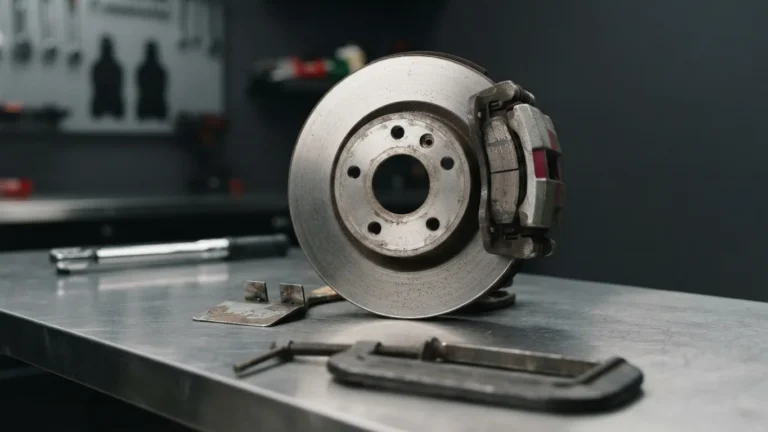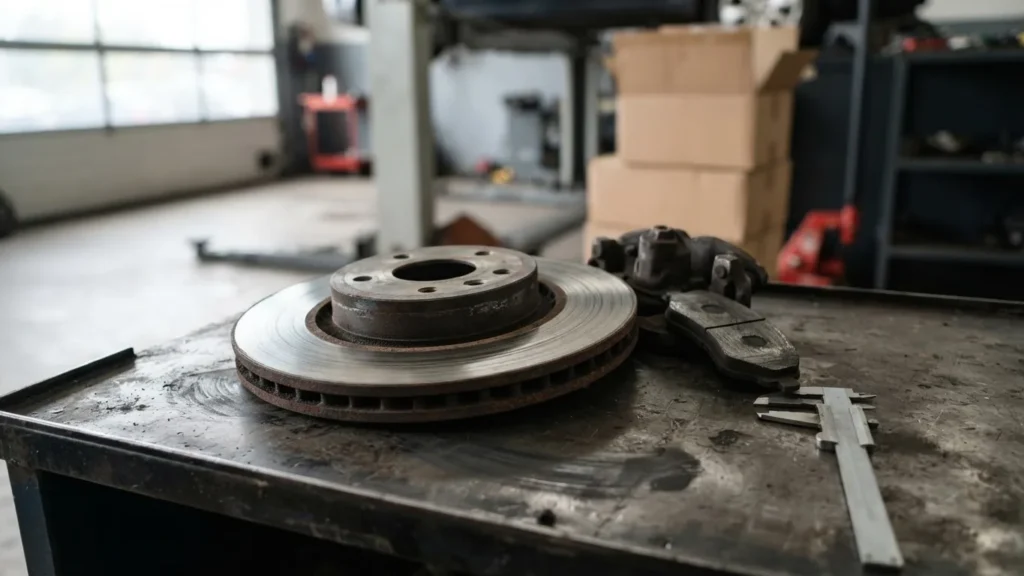
The most reliable sign of a brake rotor’s remaining life is not printed on your odometer. It is a number cast or stamped into the rotor itself: the discard thickness, sometimes marked MIN TH. People ask how long do brake rotors last and expect a mileage back, but a disc wears by friction and heat, not by distance alone, so two cars with identical mileage can land on opposite sides of the replace line. Consumer explainer Jalopnik notes that highway-driven rotors can stretch toward 60,000 miles, while aggressive braking can finish them near 20,000 miles. That spread tells you mileage is a weak predictor.
So how long do brake rotors last? There is no single figure. Highway driving can carry discs toward 60,000 miles; hard, repeated stops can wear them out around 20,000 miles. The number that governs the decision is measured thickness against the stamped discard spec, read with a micrometer at several points around the disc. When a rotor falls below its stamped minimum, or the pedal pulses under braking, book a professional inspection rather than guessing from the trip meter.
Why Published Mileage Ranges Scatter From 20,000 to 70,000
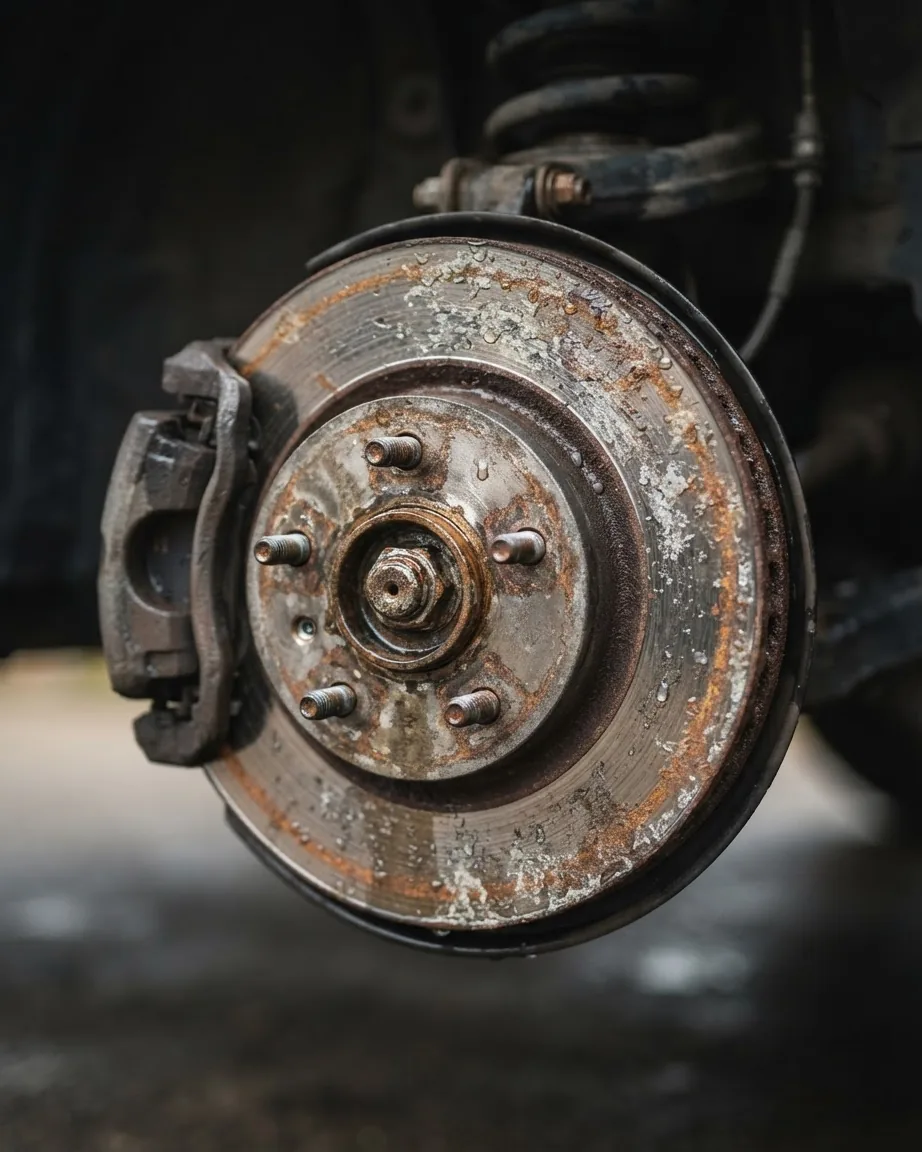
Every brake shop and parts site quotes a different window, and they are not all wrong. They are describing different populations of cars. One source puts normal rotor life around 50,000 to 70,000 miles; others start the range as low as 30,000. Jalopnik frames it as up to 60,000 miles on the highway and roughly every 20,000 miles for hard driving. None of these should be averaged into a tidy single answer, because the inputs differ: a commuter who coasts to lights heats the discs far less than someone riding the brakes down mountain grades.
Three variables move the number more than anything else. Driving style decides how much heat the disc sees per stop. Climate matters because road salt and moisture attack the braking surface. And rotor quality sets the starting material and how much of it you can safely lose. There is also a quieter trend: newer vehicles often use thinner, weight-saving steel with a smaller wear margin, so some modern cars burn through rotors faster than an older, heavier car did. A low published mileage is not automatically a sign of abuse; it can simply reflect a thinner disc.
The Discard Spec Stamped on the Rotor Decides, Not the Odometer
Here is the reframe that changes how you handle this part. A rotor is not “done” at a mileage. It is done when its measured thickness reaches the discard figure set for that exact disc. Those numbers are vehicle-specific and not transferable. Swap those figures between the two discs and you either junk a good rotor or run a dangerous one.
The usable margin is thinner than most drivers assume. An OEM disc-brake service sheet published by iFixit gives one rotor a new thickness of 26.0 mm and a minimum-allowable-after-refinish thickness of 24.5 mm. That leaves roughly 1.5 mm of material to work with across the rotor’s entire service life, resurfacing included. Lose that slim band and the disc can no longer shed heat safely; it runs hotter, fades sooner, and risks cracking under load.
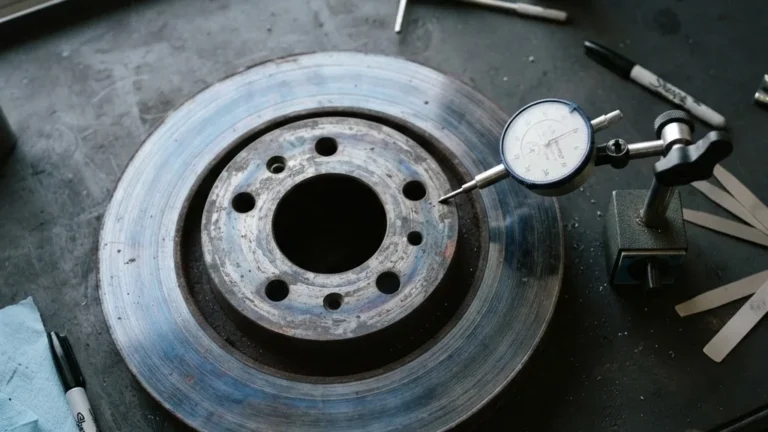
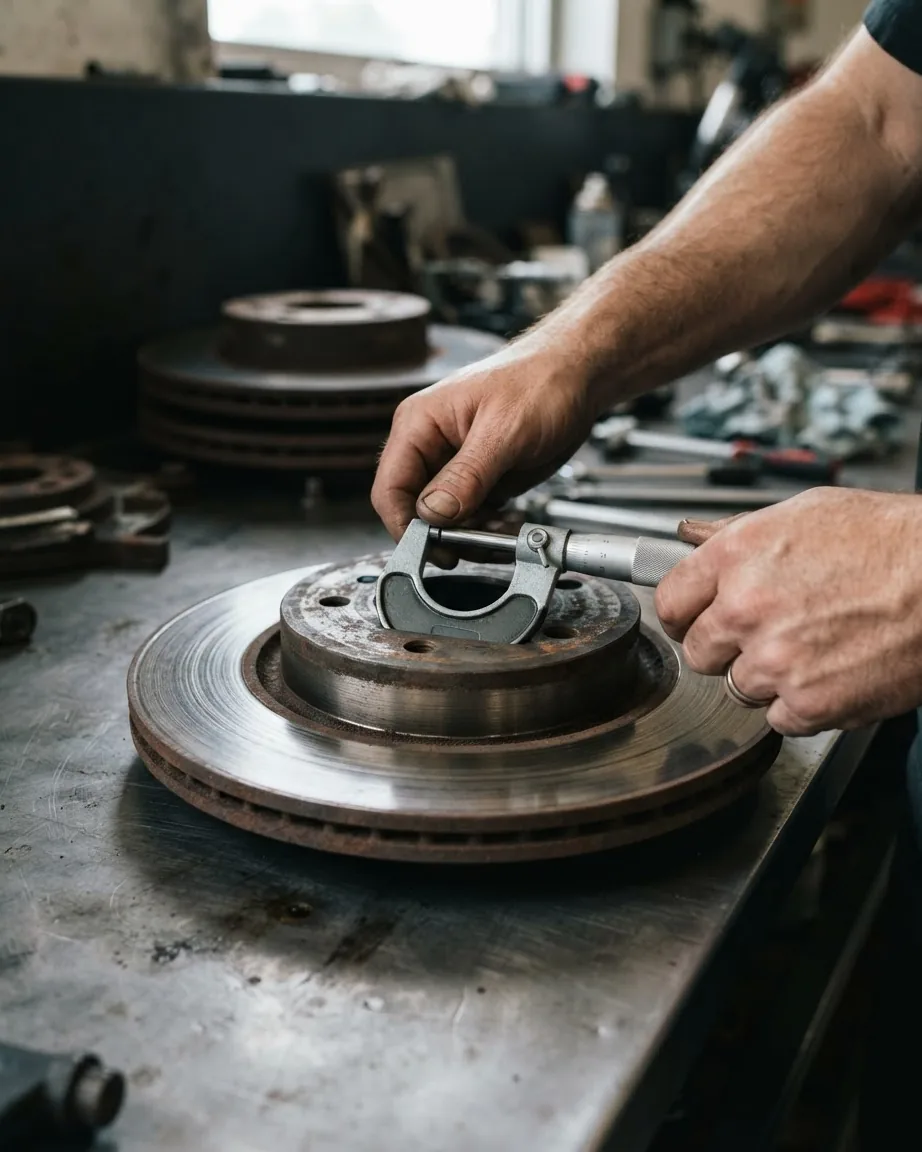
Measuring it correctly is a short job with the right tool. The same OEM sheet calls for a micrometer reading at four or more points evenly spaced around the rotor, not a single spot. One reading tells you almost nothing, because a worn disc wears unevenly. If you want to understand the dash warning that pushes many GM owners toward this exact measurement, our Service Brake Pad Monitor write-up sits alongside this one.
| Rotor / spec source | New thickness | Replace at |
|---|---|---|
| 236 mm disc (GM service data) | – | – |
| – | – | |
| OEM example (iFixit sheet) | 26.0 mm | 24.5 mm after refinish |
Read that table as a warning, not a lookup. Your car’s discard number lives on your rotor and in your service manual, and it will not match any of these unless you happen to own that vehicle.
Why a “Warped Rotor” Usually Isn’t Warped
When the pedal shudders under braking, nearly everyone calls it a warped rotor. The physics rarely support that. Trade publication Brake & Front End points out that modern discs are built to a thickness-variation tolerance under about 0.00078 inch, and that true thermal warping of the disc face is close to impossible in normal service. What you feel is almost always disc thickness variation, or DTV: high and low spots around the rotor that push the caliper piston in and out as the disc spins.
DTV usually starts with lateral runout. If the rotor does not spin perfectly flat, one patch of the face contacts the pads slightly more each rotation and wears down faster, building the thickness difference that your foot eventually detects. Brake & Front End reports that brakes begin to measurably pulsate once thickness variation reaches about 0.001 inch, which is 0.025 mm, and that checking for it properly takes 12 to 18 micrometer readings around the disc rather than a couple of spot checks.
This is why resurfacing alone often fails. If you machine a disc smooth but leave the hub runout that caused the problem, the variation comes back. Fix the runout at the hub and bearing, bed the brakes in properly, and the pulsation stays gone. Skip that step and you have paid for a repair that expires inside a few thousand miles. For the full decision path on a shuddering disc, see our warped brake rotor repair guide.
EV and Hybrid Rotors Fail From Rust, Not Wear
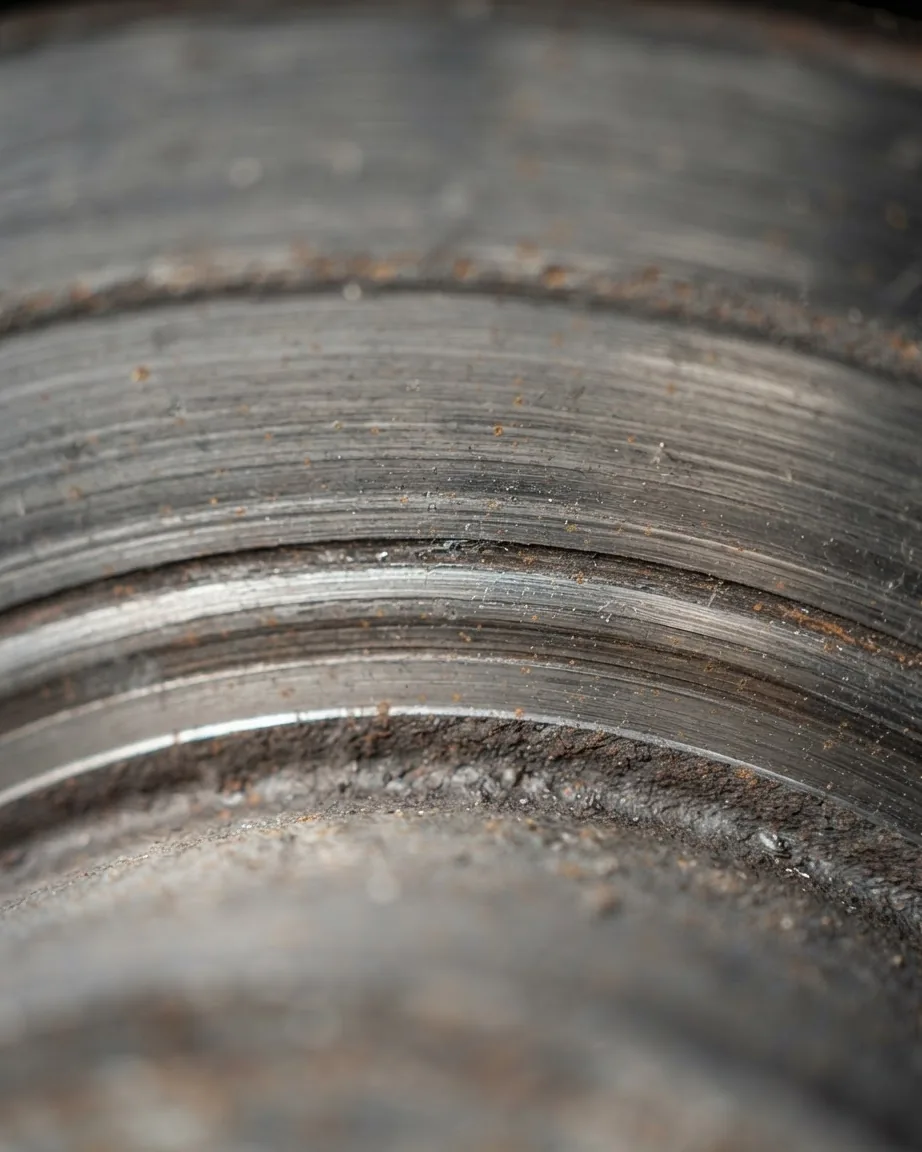
Electric and hybrid rotors break the usual rule. Regenerative braking does most of the slowing by running the motor backward, so the friction brakes barely engage in daily driving. That sounds like free longevity, and in wear terms it is. The problem is the opposite failure mode: a rotor that almost never gets scrubbed clean by the pads sits and corrodes. Surface rust builds on the braking face, pitting forms, and in bad cases the pads can seize to the disc.
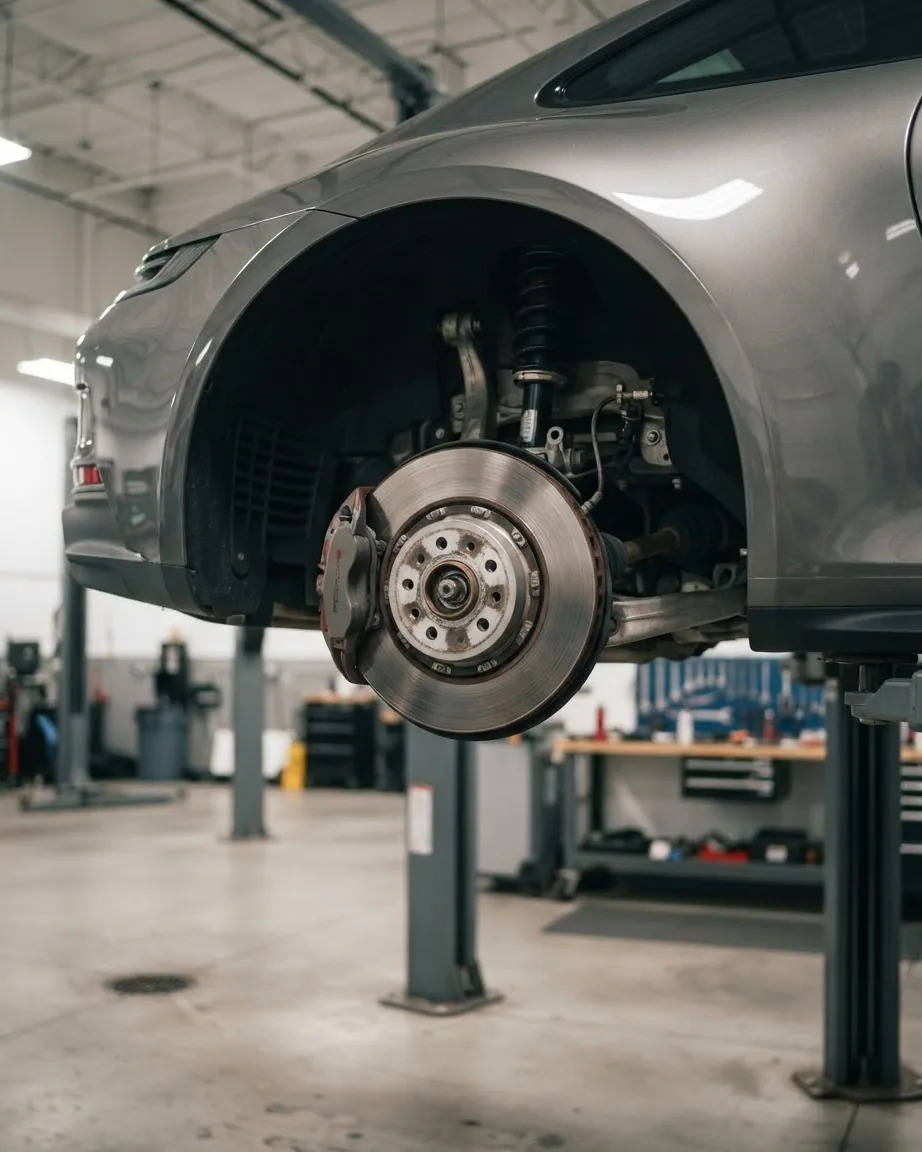
The inspection implication is specific. On a conventional car you can often spot a badly worn rotor through the wheel spokes by the lip at its outer edge. On a regen-heavy EV or hybrid, the damage is corrosion across the contact band, and a glance through the wheel will miss it. These need a wheel-off inspection so a technician can see the full face and check whether the rust is cosmetic or load-bearing. TheDrive has flagged the longevity upside of regen braking, but low wear and good health are not the same thing here, and an aging EV rotor can need replacement for rust long before it ever hit its discard thickness.
Resurface or Replace: Run the Shop Math First
Resurfacing used to be the obvious money-saver. That has quietly reversed for a lot of cars. Jalopnik lists replacement at roughly $250 to $500 per axle, bare rotors at $40 to $80 each, and resurfacing at about $15 to $45 per rotor excluding labor. On paper the machining looks cheaper, but excluding labor is the catch. Parts-and-trade coverage from Counterman notes that a single machining pass removes about 0.015 inch of material, and once you add shop labor, the bill on an economy rotor often tops the price of simply fitting a new one.
So the honest decision depends on who does the work. If you own a lathe and machine the disc yourself, resurfacing can win. In a shop charging labor, a budget rotor frequently undercuts the machining cost, and you start fresh with full thickness instead of eating into that thin 1.5 mm band. Two hard rules survive regardless: never machine a brand-new rotor to “true” it, and never resurface a disc that is already near its minimum, because a pass can push it under the discard spec. Machining also cannot fix hub runout; that fault lives behind the rotor, not on it.
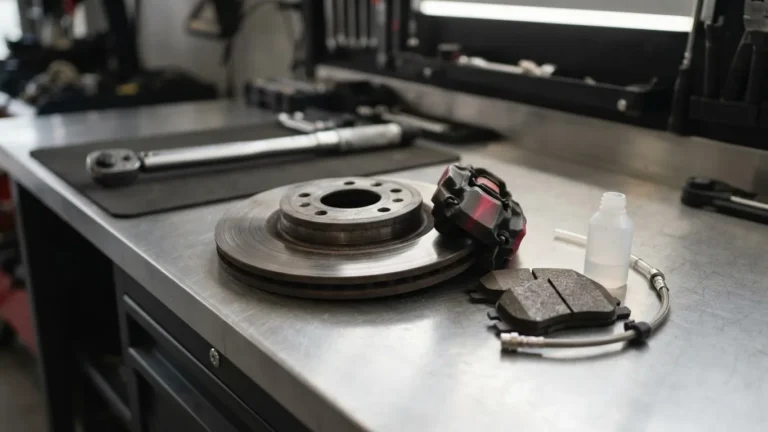
Weigh it against your pad budget too, since discs and pads are usually serviced together. The wider service area lives on our brake pads section if you want the companion parts in one place.
Read Your Pad History to Predict Rotor Life
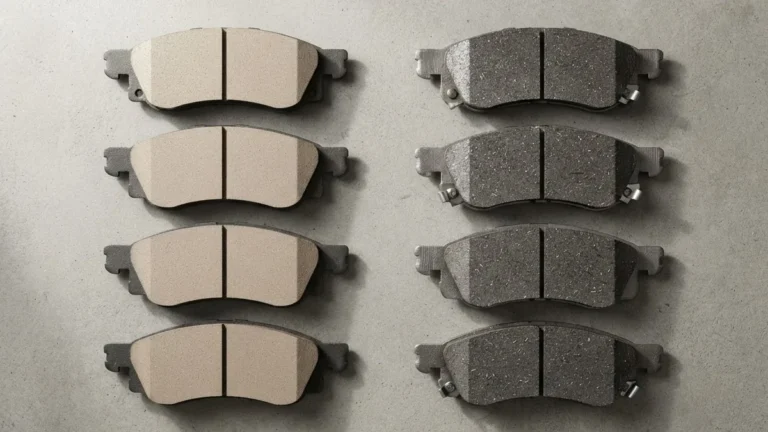
If you want a rough forecast without pulling a wheel, use your pad record. Jalopnik puts typical pad replacement somewhere in the 35,000 to 80,000-mile window. Brake maker Brembo states that under normal conditions a set of pads lasts about half the duration of a disc, and its parts arm advises replacing discs during every other pad change as a general rule. That ratio gives you a planning anchor: if you are on your second set of pads, the rotors are getting close to a serious measurement.
There is also a no-tools check between inspections. Run a fingernail across the braking surface. A smooth face is fine; a deep groove or a pronounced lip at the edge means the disc is wearing unevenly and should be measured. It will not give you a number, but it tells you whether to stop guessing and get the micrometer out. Pad discipline protects rotors directly here: letting pads wear to the backing plate drags metal on metal and scores the disc past saving, turning a pad job into a pad-and-rotor job.
Manufacturer Minimums Don’t Transfer Between Cars
The word “minimum thickness” does not mean the same thing across brands, and mixing the figures is how good rotors get scrapped or bad ones get kept. Brembo treats a reading below the marked MIN TH as a straight replace. BMW of North America, in a 2018 service bulletin archived by NHTSA, splits the idea in two: there is the stamped minimum used during brake service, and a separate motor-vehicle-inspection criterion of nominal thickness minus 2.4 mm for standard discs, or minus 1.6 mm for M vehicles and perforated discs. Those inspection figures are a BMW formula; apply them to another make and the math is meaningless.
Volkswagen, in a U.S.-only bulletin covering 2014 to 2022 vehicles released in early 2022, takes a machining-specific line: if a rotor cannot be resurfaced and still stay above its minimum spec, it must be replaced. One more scope rule changes the bill. Brembo advises replacing both discs on an axle even when only one has dropped below the wear limit, so you keep braking balanced side to side. Budget for pairs, not singles, when you plan the job.
A Brake-Inspection Cadence Built Around Thickness and Fluid
Mileage ranges fail as a schedule, so anchor your routine to inspection intervals and measured numbers instead. Brembo’s guidance is to check brakes “every 15,000/20,000 kilometres,” which puts eyes on the discs well before any discard spec is in play. Pair that with a thickness measurement whenever pads come off, since the wheel is already removed and the micrometer takes minutes.
Fluid belongs in the same plan even though it is not a rotor. TheDrive notes brake fluid is generally recommended every two to three years. Old, dark fluid and a pedal that sinks toward the floor under steady pressure are both reasons to get the system looked at, because a soft pedal can mask whether your braking problem is the disc, the fluid, or the hydraulics. If you are weighing fluid types while you are in there, our DOT 5 Brake Fluid guide covers the silicone question.
None of this replaces a certified mechanic for the safety-critical call. Measuring thickness, chasing down hub runout, and deciding keep-versus-replace on a disc near its limit are jobs where a wrong number has real consequences. Use the figures here to know what questions to ask and what the shop should be measuring, then let a professional put the car on a lift and confirm it before you drive on the result.
Put the two tolerance numbers from this article side by side and the result is sobering. A modern rotor is built to a thickness-variation tolerance under about 0.00078 inch, yet the pedal starts to measurably pulsate once that variation reaches roughly 0.001 inch (0.025 mm). Subtract one from the other and the entire buffer between a factory-perfect disc and one you can feel through your foot is just 0.00022 inch – about 0.0055 mm, or barely a quarter past the build tolerance.
In practical terms, the pulsation threshold is only about 1.28× the tolerance a new rotor is machined to. This is why spot-checking at one or two points misses the problem, and why the article stresses taking 12 to 18 micrometer readings: the entire fault develops inside a band thinner than a human hair, so a single lucky measurement can read perfectly even on a disc that has already crossed the line.
- Factory build tolerance: under 0.00078 inch of thickness variation.
- Felt-pulsation threshold: about 0.001 inch (0.025 mm).
Frequently Asked Questions
Can you judge rotor wear by looking through the wheel?
Sometimes, but not reliably. A heavy outer lip is a visible clue on many cars. On regenerative-braking EVs and hybrids the damage is corrosion spread across the contact band, which hides where the pad sits, so a glance through the spokes misses it. A wheel-off inspection with a micrometer is the only way to confirm what the disc actually has left.
Do cheaper rotors wear out sooner than premium ones?
Rotor quality is one of the main reasons published life ranges scatter so widely. Lower-grade discs can start with less usable material and handle heat less well, shortening their window. Newer weight-saving designs compound it with thinner steel and a smaller safe-wear band, so a budget or lightweight rotor may hit its discard figure at a mileage that would barely touch a heavier disc.
How long do drum brakes last compared with rotors?
Drums outlast discs by a wide margin because they usually sit on the rear axle and do less of the stopping work. TheDrive reports that brake drums can last up to around 150,000 miles or more. That longevity is one reason a car can need front rotors several times over its life while the rear drums stay original, so inspect each system on its own schedule.