The honest answer is one no plug manufacturer or tire authority will guarantee: it depends, and it can fail without warning. Firestone Complete Auto Care puts the range starkly, saying a plug “might hold for a day, or it might last several months,” depending on plug quality, the size and shape of the puncture, and how and where you drive. So how long does a tire plug last in practice? Long enough, at best, to get you off the shoulder and to a repair shop – and that is exactly how the people who make and repair tires want you to treat it.
If you are reading this from a parking lot with a plug already in your tread, take a breath. You are not stranded, and you have time to make a good decision. What you do not have is a permanent repair.
How long does a tire plug last before it fails?
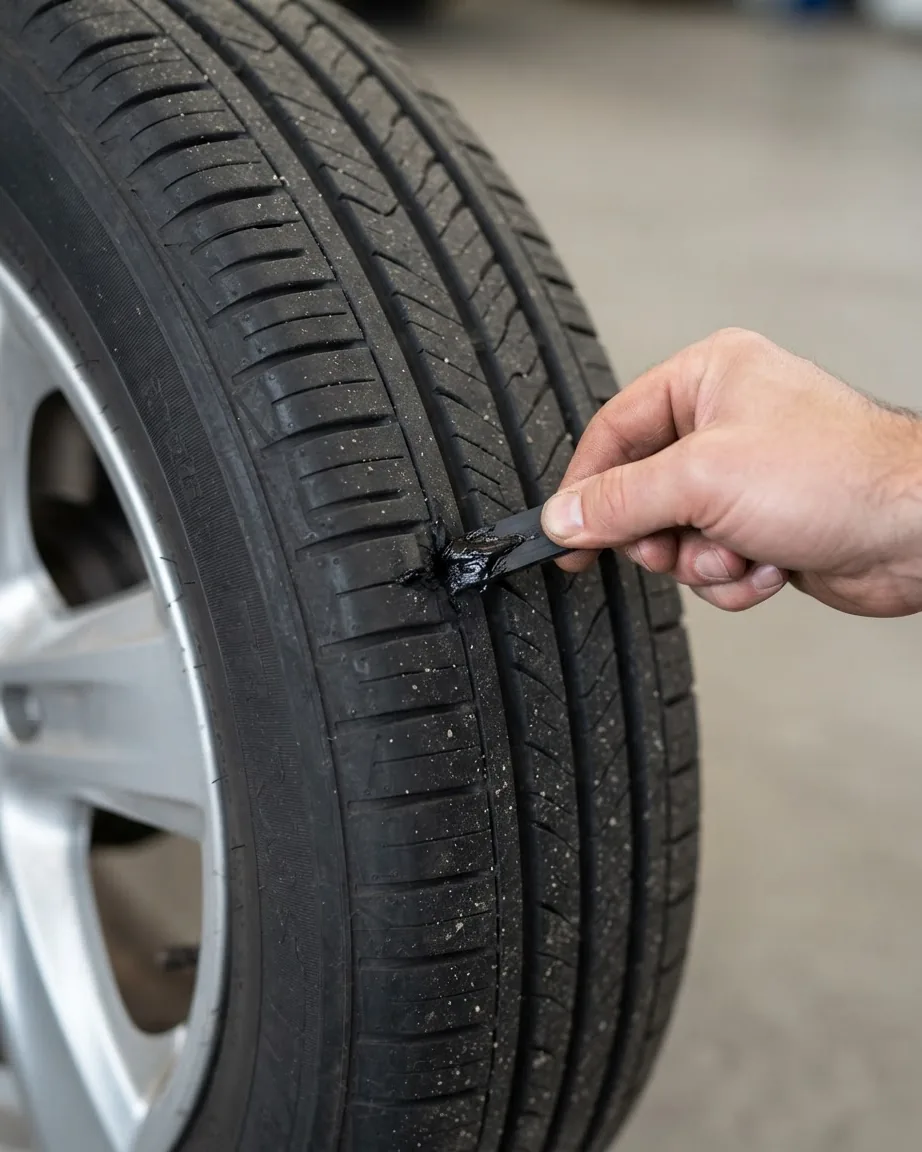
A tire plug has no fixed lifespan. It might seal for a single day or hold for several months, and it can fail suddenly with no warning sign. Treat it strictly as an emergency measure to reach a repair shop, not as a finished job. The one operating ceiling worth memorizing: drive under 50 mph and only far enough to get the tire inspected. A plug alone does not seal the tire’s innerliner, so even a plug that is “holding” may be hiding internal damage. Stability over weeks says nothing about safety at highway speed.
Why “it’s held for months” doesn’t mean the plug is permanent
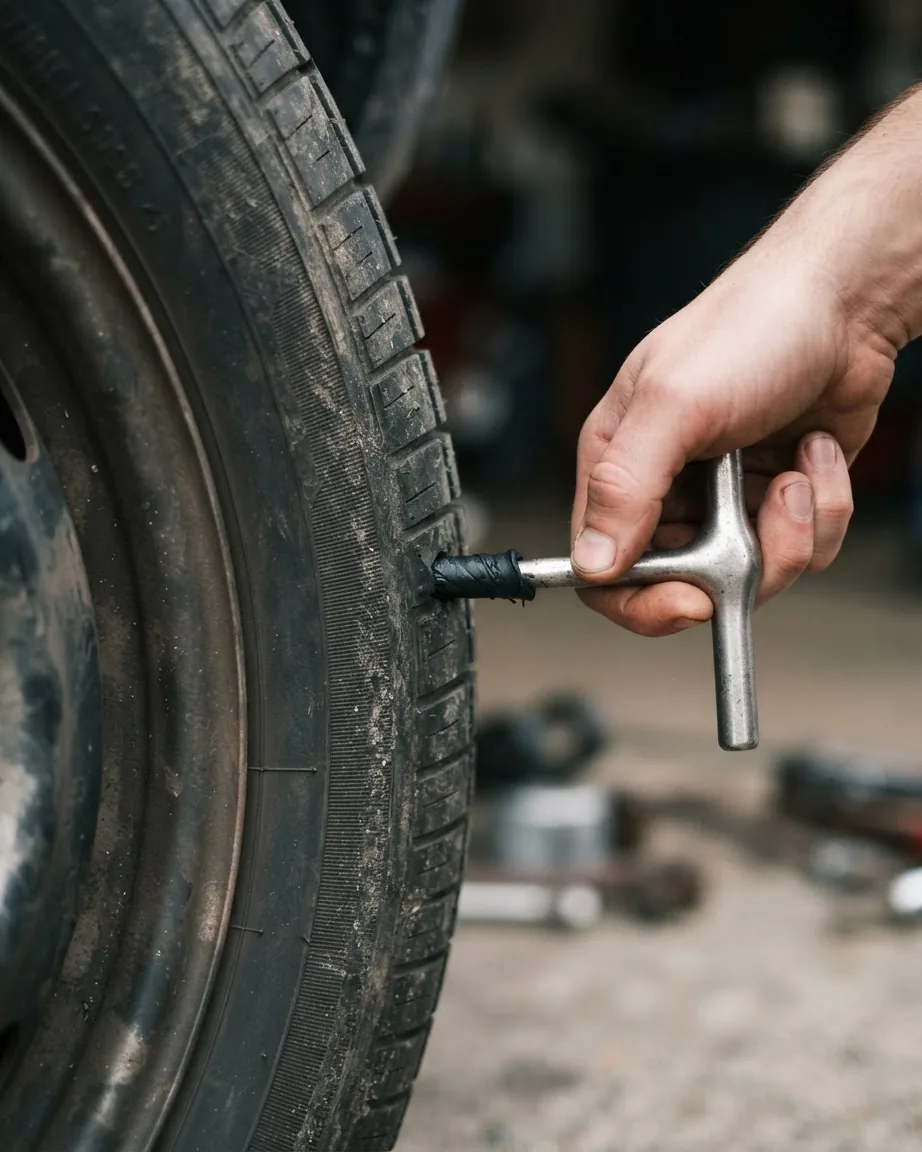
Here is where drivers talk themselves into trouble. A plug that keeps air for weeks feels like proof it worked. The tire industry reads the same situation differently. AAA notes that the U.S. It is not a permanent fix!”
The gap between “holding air” and “repaired” is the whole problem. A plug pushed into the tread from the outside fills the visible hole. It does nothing for the innerliner – the airtight membrane on the inside of the tire. According to Michelin’s repair guidance, a plug inserted through the tread without removing the tire from the wheel is considered an improper repair, full stop. Time on the road does not upgrade it.
Plug vs. patch vs. the plug-and-patch combination
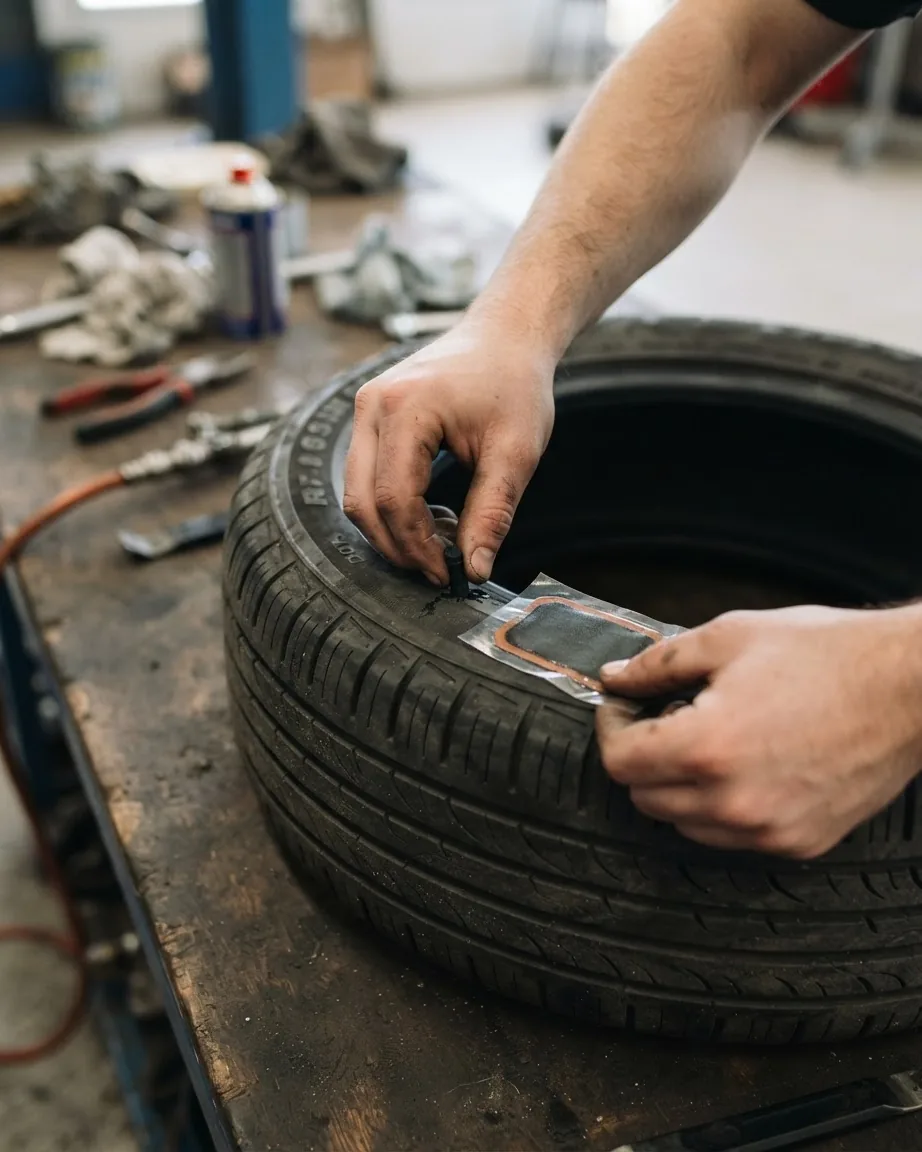
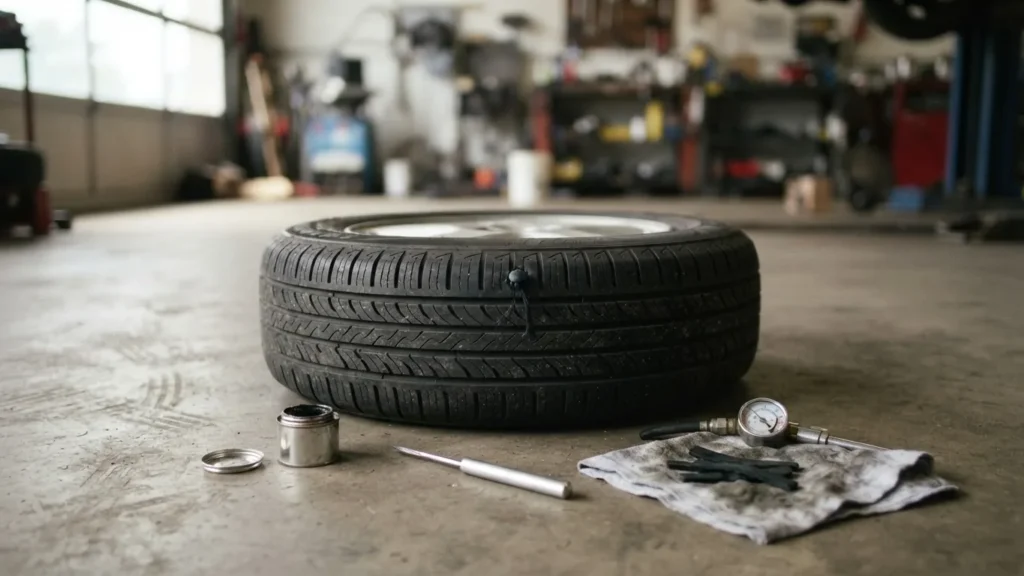
The disagreement people imagine between plugs and patches isn’t really a debate at the manufacturer level. The accepted repair uses both. A rubber plug fills the puncture channel; a patch, applied to the inside, seals the innerliner. One without the other leaves a job half done.
The Tire Industry Association states the reasoning plainly: a plug by itself or a patch by itself is not acceptable, “because the plug does not permanently seal the innerliner and the patch does not fill the void left by the penetrating object.” Cooper Tire’s position is the same – “a proper tire repair must include both a plug and a patch,” and “never use only a plug or stem.” USTMA’s repair basics describe the method identically: a rubber stem to fill the injury, a patch to seal the innerliner, both performed from inside the tire.
Even agricultural engineers land in the same place. Purdue University Extension’s tire guide tells readers that the correct method for tubeless tires is to put a plug in the puncture and apply a patch, both from inside the tire, and “you want to be certain the tire is plugged and patched, not just one or the other.” When a dairy-equipment publication, a tire maker, and a national trade group all describe the same two-piece repair, that is your answer.
How fast and how far you can drive on a plugged tire
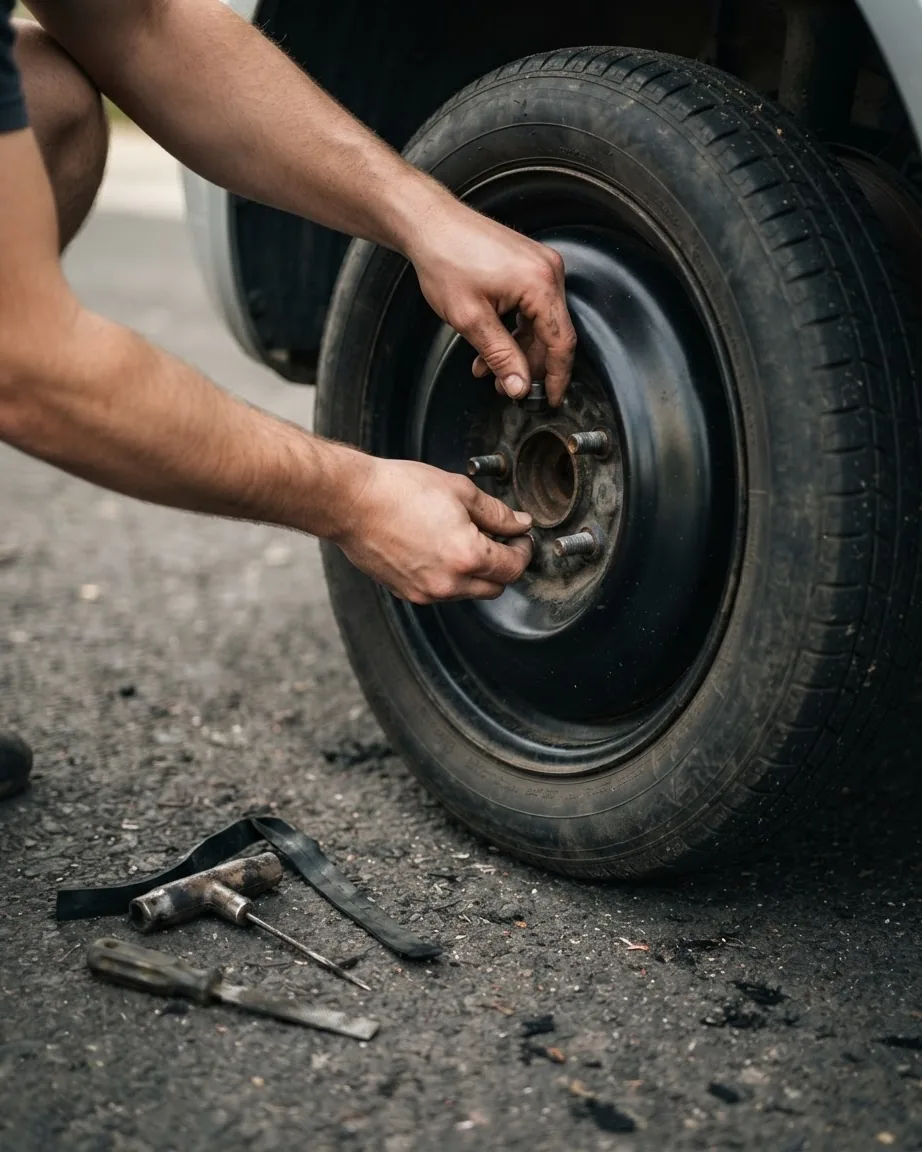
AAA gives the clearest operating rule for a tire with a temporary plug: drive “with extreme caution, staying under 50 mph and only for the distance it takes to get directly to a repair shop.” That is not a suggestion to push to the edge of 50 – it is a hard ceiling with a short errand attached. The route is from where you are to the nearest shop, not across the county.
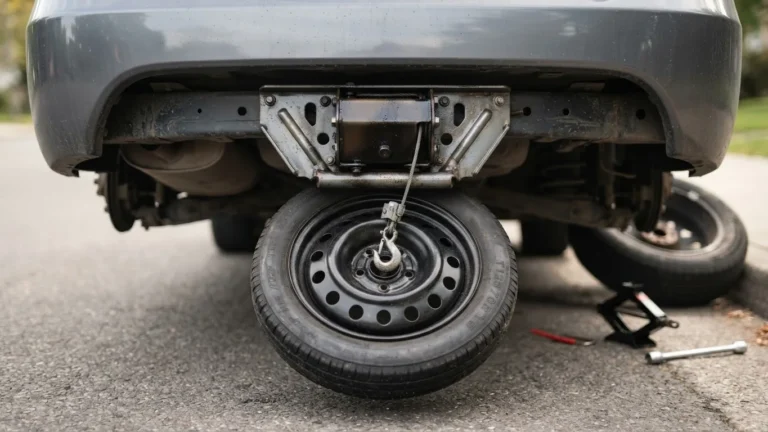
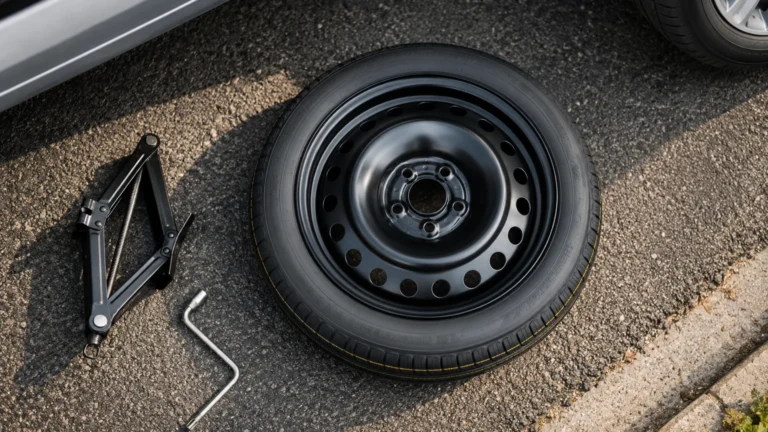
Keep highway merging, long grades, and sustained speed off the itinerary until a technician has had the tire off the rim. If the shop is far enough that the drive worries you, mounting your temporary spare for the trip is the more defensible choice. For the speed, distance, and inflation limits that govern that spare, see our donut spare tire guide.
Never drive on a tire that went fully flat
Speed is one risk; running on a deflated tire is a separate one. A flat is not something to nurse a few more miles. Michelin warns that “even a short distance driven while completely flat can cause internal damage to the sidewall and carcass that won’t show on the outside.” That hidden damage is what disqualifies a tire from repair later – the outside can look fine while the structure underneath is compromised.
If you feel the thud of a flat, pull over as soon as it is safe and swap on the spare or call for assistance. The goal through all of this is one thing: get the tire to a shop as soon as possible, before a slow problem becomes a fast one.
How a plug alone fails: steel-belt corrosion and tread separation
A plug that leaks is a nuisance. A plug that fails the structure is dangerous, and the two don’t look different from the driver’s seat. Because an outside-in plug does not seal the innerliner, it leaves an open channel through the tire. AAA describes the chain of events: moisture penetrating that channel “can rust the tire’s internal steel belts, leading to tread separation and catastrophic failure.”
The ending is the same – the tread peels away, often at speed, and you are buying a new tire instead of a repair. This is why the mental model matters. The question is not “will it leak,” it is “what is rusting while it holds.”
When a tire cannot be plugged at all
Some punctures aren’t repairable by any method, and no plug changes that. The industry draws hard lines, and they agree almost word for word.
- Puncture size. The maximum repairable injury is 1/4 inch (6mm) in diameter. AAA notes that beyond 6mm, the puncture “has damaged the internal steel belts beyond the point of a safe repair.”
- Location. Repairs are limited to the tread area. USTMA instructs technicians not to repair where the injury extends into the shoulder or belt-edge area. Sidewall punctures are not repairable – they go to a professional for judgment, not a plug kit.
- Multiple punctures. AAA notes repairs must be at least 16 inches apart to maintain the tire’s structural balance. Two holes close together can disqualify the tire.
- Driven flat. A tire run while fully deflated may carry invisible carcass damage, which rules out repair regardless of the puncture’s size or location.
One more category belongs with a professional by default: run-flat tires. Their construction and any internal damage from being driven low are not something to assess from the outside. Take those to a shop that repairs them to manufacturer standards.
Why the tire has to come off the rim first
The reason a roadside plug can never equal a shop repair is the inspection you can’t do with the wheel on the car. USTMA is direct: repairs must be performed “by removing the tire from the rim/wheel assembly to perform a complete inspection to assess all damage that may be present,” and technicians should “NEVER perform an outside-in tire repair or on-the-wheel repair.”
That inspection catches the damage a plug would seal over – belt rust starting, a cut in the innerliner, the quiet carcass injury from a mile driven flat. Firestone’s technical operations team, which the company describes as ASE-certified with over 70 years of combined experience, follows the same tire-off standard. That tire-off process is the difference you are paying for: not just a filled hole, but a verdict on whether the tire is safe at all.
Does Fix-a-Flat or sealant count as a repair?
A canister of sealant is a roadside tool, not a fix. The Tire Industry Association states that sealants and emergency inflators containing a sealant “are not recommended as long-term solutions to a flat tire” – for the same reasons a standalone plug falls short. They can get you moving. They do not seal the innerliner, they do not let anyone inspect the inside of the tire, and they can complicate the proper repair later. Use one to reach help if you must, then let a technician take it from there.
What a proper repair actually lasts
Here is the payoff, and it reframes the whole question. The right repair doesn’t come with a nervous countdown. When a puncture falls within the industry limits and is fixed with a plug-and-patch combination, the Tire Industry Association says “you can expect the tire to continue to deliver thousands of miles of safe and reliable performance” – effectively the tire’s remaining tread life.
Watch the word “thousands,” though, because it describes two different things. AAA uses it for the gamble: a standalone plug that “may hold for thousands of miles” or fail suddenly. TIA uses it for the certainty of a correct repair within limits. ifespan of about 3 years anyway, you will likely replace the tire long before a well-installed repair fails. Same number, opposite confidence. That split is the real answer to how long a plug lasts: as an emergency plug alone, no guarantee; as part of a proper combination repair, the life of the tire.
Once the tire is back in service, keep it healthy with the rest of your maintenance. NHTSA notes that only 19 percent of consumers properly inflate their tires, and that properly inflated tires can extend the average life of a tire by 4,700 miles. If your car is all-wheel drive, pairing a fresh repair with a sensible AWD tire rotation protects more than one corner. And for the wider set of roadside and backup-wheel questions this touches, our spare tires section goes further. See also our guide to tire size measurements.
The only lifespan number you can actually plan around
Notice what the authorities refuse to put a number on: how long a plug lasts. Firestone gives you “a day” to “several months,” AAA says “thousands of miles” or sudden failure. None of that is plannable. What the sources do pin down applies to the correct repair, not the plug by itself:
- The repairable-size limit is 1/4 inch (6mm). A puncture larger than that, AAA says, “has damaged the internal steel belts beyond the point of a safe repair” – so the decision at the shop turns on measurement, not optimism.
The trade is lopsided and that’s the point: a correct repair buys the “thousands of miles” of safe service the industry attaches to it. A roadside plug costs you minutes and buys a drive to the shop at under 50 mph – nothing more. If you’re weighing whether to keep nursing a plug, weigh it against this: the fix that actually solves it is a proper shop repair, not a gamble.
FAQ
Is it illegal to drive on a plugged tire?
The concern authorities raise is safety, not legality. Tire makers classify an external, outside-in plug as temporary and improper because it leaves the innerliner unsealed. The practical rule is to keep speed under 50 mph and drive only to a shop. A tire that cannot pass a proper off-rim inspection should be repaired or replaced, not kept in daily rotation.
Can a shop replace my DIY plug with a proper repair?
Sometimes. A technician removes the tire from the wheel and inspects the inside for belt rust, innerliner cuts, or carcass damage. If the injury is 6mm or smaller, sits in the tread, and the inside is clean, they can install the plug-and-patch combination. If driving on it already rusted the belts or the tire was run flat, replacement is the safe call.
What if I have two nails close together?
Spacing decides it. Each repairable injury must sit at least 16 inches from any other to keep the tire’s structural balance. Two punctures closer than that, even if each is under the 6mm size limit and both are in the tread, can rule out repair entirely. A technician measures the gap during the off-rim inspection before committing to any fix.
How soon do I need to get to a shop?
Treat it as the next errand, not next week’s. The channel left by a bare plug lets moisture reach the steel belts, and that corrosion starts working the moment you drive away. There is no safe number of days to wait. Book the appointment before you leave the parking lot, and keep the trip there short and slow.