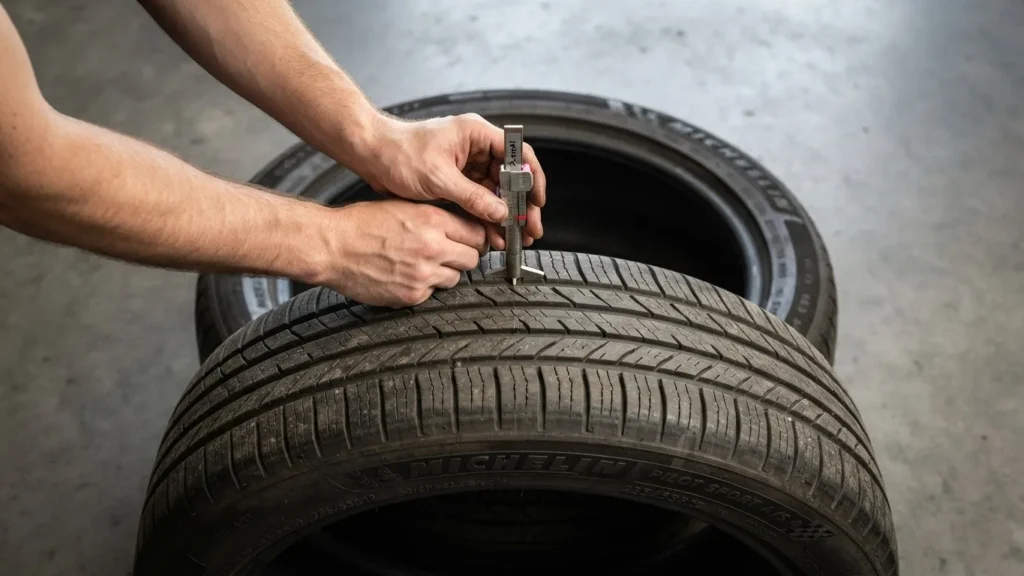
On an all-wheel-drive car, a single worn tire is not just a tire problem. It forces the center differential or viscous coupling to spin at a slightly different speed than the others, continuously, until that part overheats. That is why AWD tire rotation runs on a shorter clock than the schedule for a front- or rear-wheel-drive car, and why skipping it can cost far more than a set of tires. Two franchised dealers answer the interval question the same way, and their number is tighter than the general figure most tire makers publish.
Below is the short version, then the reasoning, the correct pattern, the matching tolerances that differ by brand, and the symptoms that mean you already have driveline damage.
How often to rotate AWD tires: 3,000 to 5,000 miles
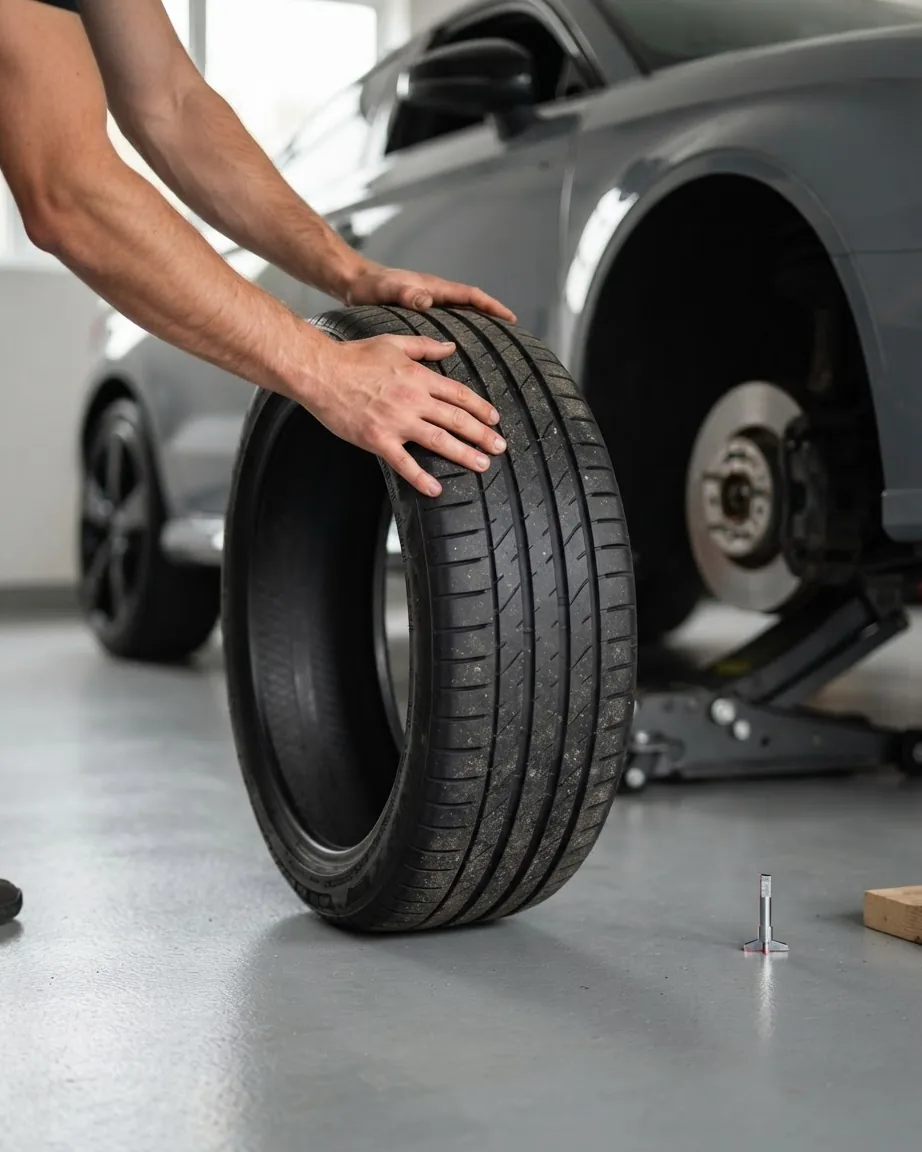
Rotate the tires on an all-wheel-drive vehicle every 3,000 to 5,000 miles. The service departments at Earl Stewart Toyota and Porsche Kansas City both put AWD in that band, following a set pattern each time. Keep all four tires matched in size and wear. The owner’s manual is the final authority on both the interval and the matching tolerance for your specific car. If one tire is damaged and the others are worn, you usually replace all four or shave the new one to match, because mismatch can wreck a differential before you feel anything.
That 3,000-to-5,000-mile figure comes from dealer service pages, and it is deliberately tighter than the broad guidance a tire manufacturer gives. A Bridgestone/Firestone maintenance document filed with the National Highway Traffic Safety Administration tells owners to “rotate tires as recommended by the vehicle manufacturer or every 5,000 miles (8,000 km),” and notes that AWD and 4WD should go 5,000 miles or less. The document carries a general interval, not an AWD-specific one. Where the dealers and the general guidance differ, the dealers are describing the stricter end of the same range, and the owner’s manual settles the rest.
There is a separate reason to be early rather than late on a new set. Bridgestone points out that fresh tread wears unevenly if left alone, calling it “especially important to rotate new tires by 5,000 miles because deep, fresh tire tread is more susceptible to uneven wear.” On AWD, that first rotation matters more, because the wear has to stay even across all four corners, not just across one axle.
The X-pattern for AWD, and the two cases it doesn’t fit
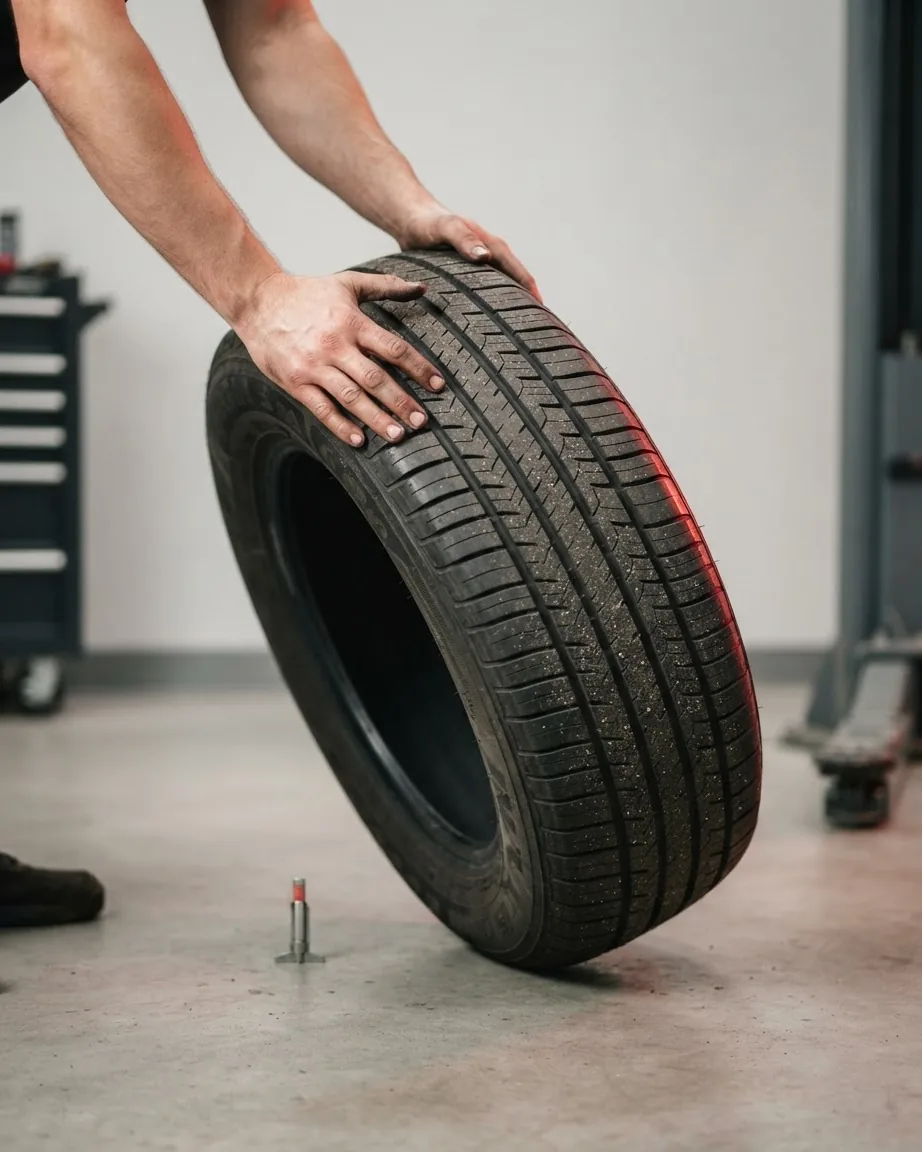
For an all-wheel-drive car running the same non-directional tires at all four corners, the pattern is the X, also called the full cross: each tire moves to the opposite corner, fronts to the rear on the diagonal and rears to the front on the diagonal. Bridgestone attributes this recommendation to the Tire and Rim Association, the standardizing body for the tire industry, and the Toyota and Porsche service pages above assign the same X-pattern to AWD and 4WD.
Not every retailer labels it this way. One Ford dealer’s service page calls the X-pattern well-suited for front-wheel drive and assigns a rearward cross to four-wheel drive instead. That disagreement is real, and it is not resolved by splitting the difference. The Tire and Rim Association recommendation, echoed by Bridgestone and by both dealers above, is the one to follow for AWD: the full X. Treat the conflicting label as the outlier it is, and check your own manual if you want the final word for your car.
The X-pattern assumes two things that are not always true:
- Directional tires have a tread designed to spin one way. They can only move front-to-back on the same side of the car, never across it, or they’d be running backward. Crossing them means demounting and remounting the tire on the wheel, which defeats a quick rotation.
- Staggered sizes – a different size on the front axle than the rear, common on performance cars – can only swap side-to-side within the same axle. Front stays front, rear stays rear, left and right trade places.
So the shortcut “AWD means X-pattern” holds only for matched, non-directional tires. For the specifics of a single drivetrain layout, see our Front Wheel Drive Tire Rotation guide.
Why AWD punishes a skipped rotation when FWD and RWD forgive it
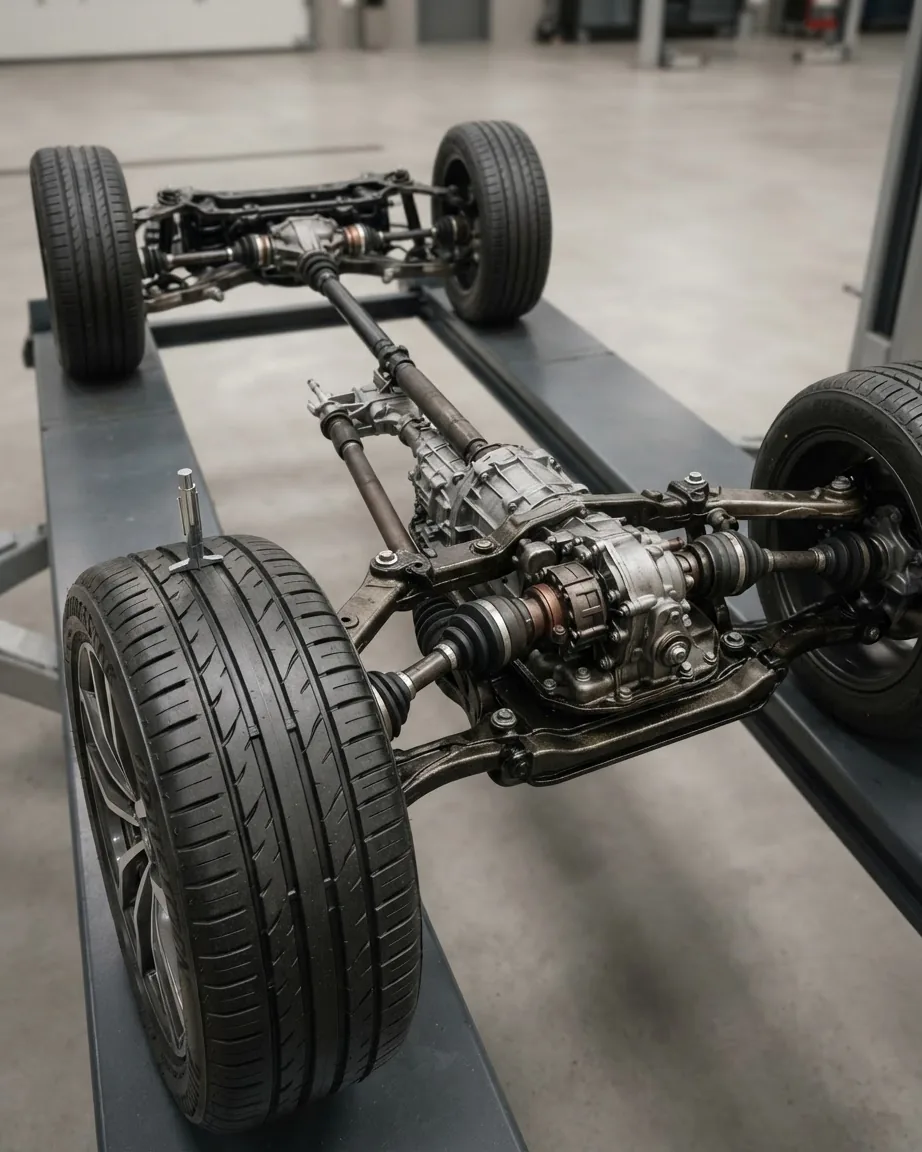
A front-wheel-drive car sends power to two wheels and lets the other two roll free. An all-wheel-drive car mechanically couples all four. Power reaches every corner, which spreads wear across all four tires but also means no tire is allowed to spin at its own pace. That coupling is the reason AWD rotation is protective maintenance for the driveline, not only a way to stretch tire life.
Here is the chain, as described by an independent shop. When one tire is smaller in diameter than the others – from wear, from a mismatch, or from low pressure – it has to turn faster to cover the same ground. The center differential or viscous coupling tries to absorb that difference. On a car that couples all four wheels, it can’t simply let the fast tire free-spin, so the coupling works continuously, heats up, and eventually fails. Rotating on schedule keeps all four diameters close, which keeps that coupling idle instead of fighting itself.
The cost asymmetry is the part that catches owners off guard. A tire is a known, modest expense. A differential or transfer case is not. On AWD, letting the tires drift out of match to save a rotation can hand you a repair bill many times the price of the tires you were trying to protect.
Do all four AWD tires have to match? The tolerance depends on your brand
Yes, all four should match – but “match” is not one universal number, and the belief that every AWD car must stay within 2/32 inch is wrong. Manufacturers set the tolerance in different units entirely, and a tread-depth figure and a circumference figure cannot be swapped for each other. Tire Rack gathers several OEM specs, and they do not line up on a single basis:
- Subaru – circumference of all four tires within 6mm or 1/4 inch of each other.
- Audi – the rolling radius of all four must stay the same, or within 4/32 inch of each other in remaining tread depth.
- Nissan GT-R – when replacing fewer than four, every tire staying in service must have at least 6/32 inch (5 mm) of remaining tread depth.
- Others – some ask that circumferences stay within 1/4 to 1/2 inch of each other, or that all four stay within 2/32, 3/32, or 4/32 inch in tread depth, or within 30% of each other in relative remaining tread depth.
Those are four different measurement systems. The widely repeated Subaru “2/32 inch” rule is a tread-depth figure, while Tire Rack’s Subaru spec is a 6mm/1/4-inch circumference figure – different quantities, not the same rule in different clothes, and not convertible into each other without geometry the published pages don’t provide. Find the one that applies to your car in its owner’s manual and ignore the generic number.
One more trap: identical printing on the sidewall does not guarantee a match. Two tires marked the same size can still roll slightly taller or wider because of construction, tread design, rubber compound, or inflation. Tire Rack’s own example shows how precise this gets – a new 225/45R17 has a calculated diameter of 24.97 inches, a circumference of 78.44 inches, and rolls 835 times each mile. A worn version of that same tire covers the mile in a different number of turns, and on AWD that gap is exactly what the coupling cannot tolerate.
If you want to understand what each figure on the sidewall actually governs, our Tire Size Measurements Explained guide walks the whole stamp.
Reading the sidewall so you can match tires correctly
Matching AWD tires starts with reading the code on the sidewall, because that code is what you compare against the number on the driver’s door-jamb sticker. Take the example above, 225/45R17, with a load index and speed rating that follow it:
- 225 – section width in millimeters, measured across the widest part of the tire.
- A lower number means a shorter sidewall.
- R – radial construction.
- 17 – rim diameter in inches, the wheel this tire fits.
- Load index – a coded number for the maximum weight each tire can carry.
- Speed rating – a letter for the maximum sustained speed the tire is built for.
The door-jamb sticker lists the size, load, and pressure the carmaker specified for that vehicle. On AWD, matching matters at both the start and the replacement: buy the size on the sticker, and when you replace, keep all four within the tolerance your manual sets. A size that reads correct on paper but differs in rolling radius still puts the driveline under the same strain described above.
Tread depth, the 4/32-inch threshold, and sidewall damage
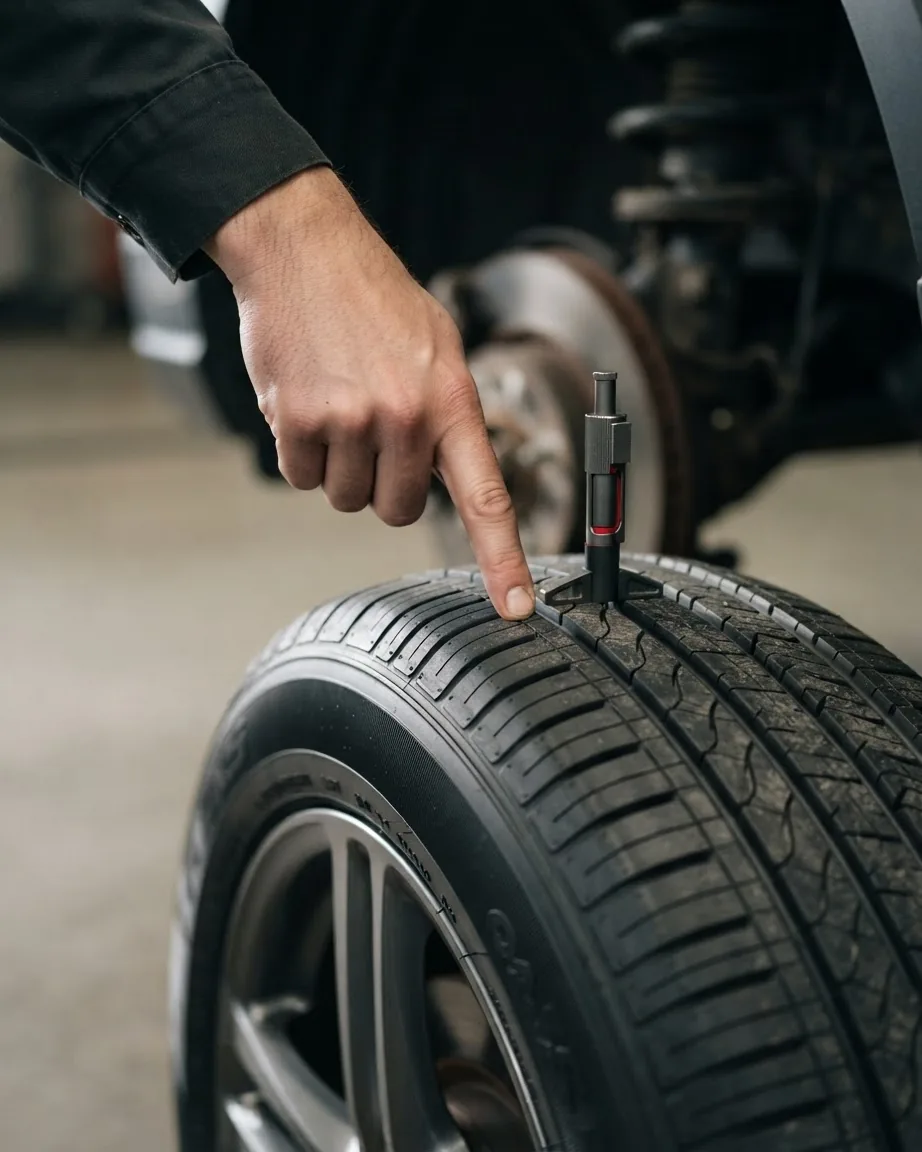
Tread depth is where matching turns into a measurable number. The legal floor is 2/32 inch (1.6 mm) – the Bridgestone/Firestone document filed with NHTSA marks replacement at the point “when the tire is worn to the built-in indicators at 2/32 inch (1.6 mm) or less tread groove depth.” That is the point of no further use, not the point to start shopping.
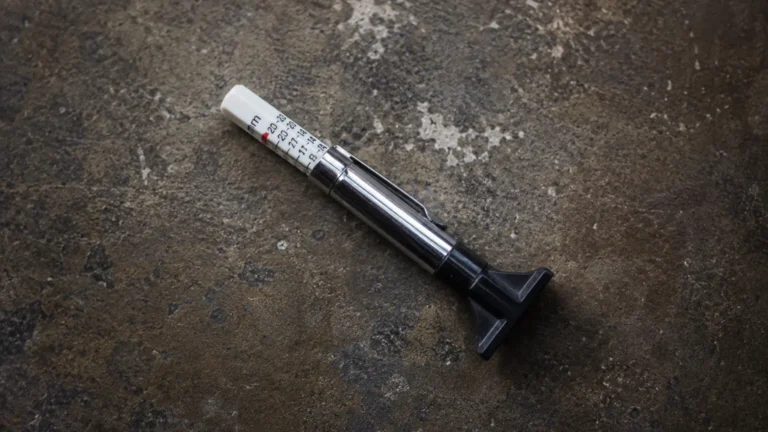
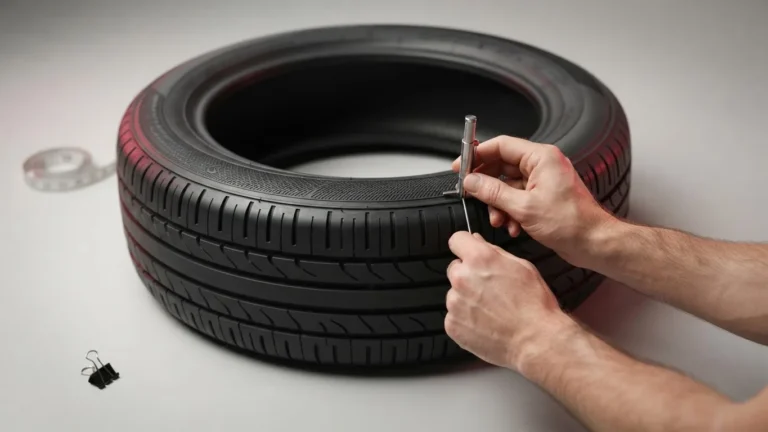
The safer threshold sits higher. AAA recommends replacing tires at 4/32 inch rather than waiting for the 2/32-inch legal minimum, because wet-weather grip and stopping distance fall off well before the legal limit. You can check depth with a tread gauge or with the quarter trick: insert a quarter with Washington’s head pointing down into a groove, and if the top of his head stays visible, you are below roughly 4/32 inch and shopping time has arrived.
Tread is only half the inspection. Look at the sidewalls for bulges, cracks, cuts, or any bubble in the rubber. A sidewall problem is not a wear problem – it is a structural one, and no rotation fixes it. Any sidewall damage, or uneven wear whose cause you can’t identify, goes to a tire professional before you drive far on it. On AWD, uneven wear is also a clue that one corner has been out of match long enough to put the driveline at risk.
What to do when one AWD tire is wrecked and three are half-worn
This is the decision that actually costs money. You pick up a nail or curb one tire, the other three have thousands of miles on them, and a single new tire would now be taller than its neighbors – exactly the mismatch an AWD coupling cannot absorb. You have two realistic routes:
- Replace all four. The clean fix. Every tire matches, the driveline is safe, and you reset the wear clock. The cost is four tires when only one failed.
- Shave the single new tire down to match the others. Tire Rack runs a street tire shaving service that machines a new tire’s tread to the depth of your worn set. It runs $25 to $35 for each tire, a fraction of buying three extra tires.
Shaving makes sense when your three good tires still have meaningful life and the price gap between shaving and a full set is large. It stops making sense when the worn three are near replacement anyway – you’d be shaving a new tire to match tires you’ll scrap soon. Weigh either option against the quiet risk: an undetected mismatch can damage the driveline before any symptom appears, and that repair can exceed what the tires cost.
Will you feel AWD mismatch damage before it’s serious?
Usually not early, which is the dangerous part. An AWD car with a growing mismatch often drives normally while the coupling and differentials quietly absorb the strain. By the time the car tells you, the damage tends to be advanced. Watch for these:
- A shudder or vibration on acceleration, especially when turning.
- Noise from the driveline or transfer case – whine, hum, or grinding that tracks with speed.
- Axle windup or binding in tight turns, where the car seems to fight itself in a parking lot.
- Warning lights, which on these systems tend to come on late rather than early.
If any of these show up, don’t keep driving to “see if it gets worse.” Get it to a shop. The whole reason the 3,000-to-5,000-mile interval exists is to keep the diameters matched so the coupling never starts down this road in the first place.
The spare, TPMS, and the checks that come after every rotation
A full-size matching spare should join the rotation from the very first one, so all five tires wear together and you never end up dropping a fresh, tall tire onto an AWD axle in an emergency. That advice applies only to a full-size spare that matches the four road tires in size, load rating, and type – a compact or temporary spare stays out of the rotation entirely. If the spare carries a tire-pressure sensor, mounting it means the car needs a TPMS re-learn so the system reads the new position correctly.
Two checks belong at the end of every rotation. First, reset the tire pressures by position, because the recommended pressure can differ front to rear on some vehicles, and a tire that moves from back to front may now need a different number. Second, if any tire showed irregular wear, have the alignment checked – uneven wear with no obvious cause is an alignment symptom, and on AWD it doubles as an early warning that the tires drifted out of match. For the warning lamp that often appears around pressure changes, see our Service Tire Pressure System guide.
These habits sit inside the broader routine of tire care, but on an all-wheel-drive car they carry extra weight: the rotation interval, the matching tolerance, and the post-rotation pressure reset are what stand between an even set of tires and a differential repair.
What tire-shaving a full AWD set actually costs
When one tire is fresh and the others are worn, the article’s two fixes are replacing all four or shaving the odd tire down to match. Tire Rack prices its street tire-shaving service at $25 to $35 per tire. If you shave a full set of four to bring every corner into tolerance, that works out to a known range rather than a guess.
- At the low rate: $25 × 4 = $100 for all four tires.
- At the high rate: $35 × 4 = $140 for all four tires.
Shaving a single tire runs $25 to $35, so even the full-set figure stays a small fraction of a new differential or transfer case the matching rule is meant to protect. The per-tire price is quoted by Tire Rack; the four-tire totals are the arithmetic.
FAQ
Does the 3,000-5,000 mile interval apply to a part-time AWD crossover too?
The dealer figure covers vehicles that drive all four wheels with a mechanical coupling. Some crossovers only engage the rear axle when slip is detected and behave like front-drive the rest of the time. Even so, keeping diameters close protects the coupling when it does engage, so staying inside that band costs little and removes a failure path your manual may still require.
Can I just replace two AWD tires on the same axle instead of four?
Only if the two you keep still sit inside your car’s tolerance against the new pair – Subaru asks for 6mm circumference, Audi for matched rolling radius or 4/32 inch of tread, and the GT-R demands 6/32 inch left on continuing tires. If your worn pair falls outside those, two-tire replacement reintroduces the mismatch the coupling can’t absorb.
Do I still rotate on mileage?
Low annual mileage doesn’t exempt you. Tires age and wear unevenly from parking, camber, and sunlight even when the odometer barely moves. Rotate by whichever limit arrives first, the 3,000-to-5,000-mile mark or the time interval in your manual, and inspect the rubber for cracking that mileage alone won’t reveal on a car that sits.