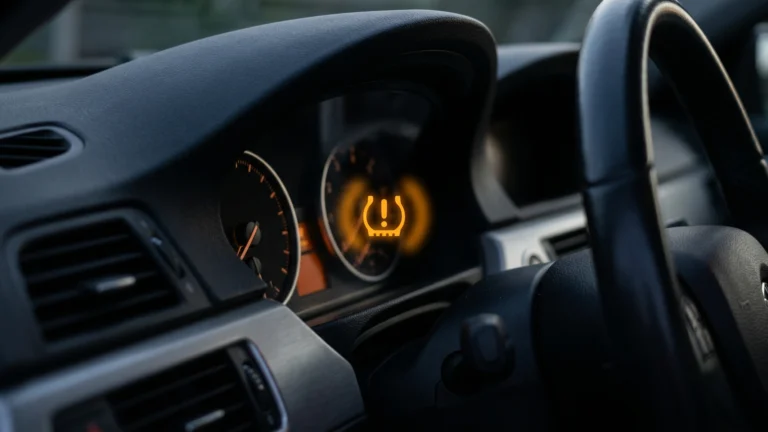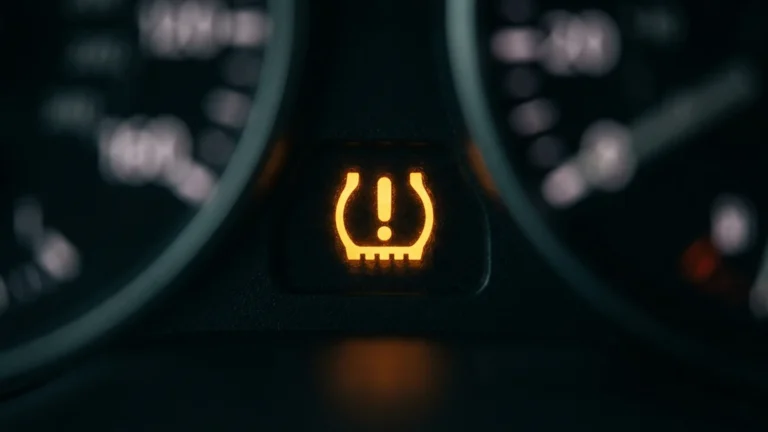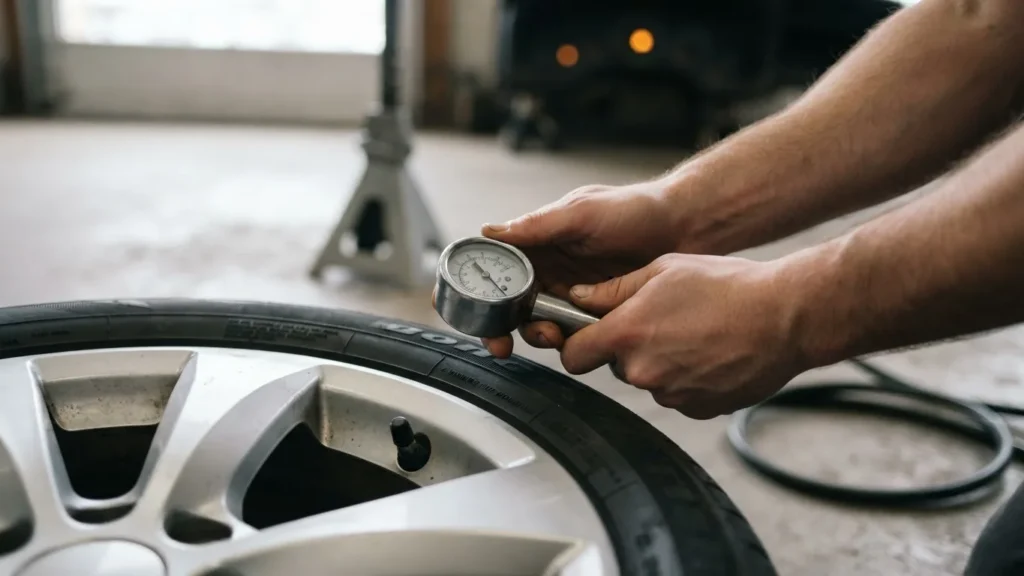
A flash of the horseshoe-shaped symbol, followed by the lamp staying lit after the flashing stops, is the one signal most drivers misread. That pattern does not mean a tire is low. It means the system itself has a fault, and it repeats at every start-up until the cause is fixed. The National Highway Traffic Safety Administration documents exactly this behavior. A service tire pressure system warning sits in a different category than the steady low-air icon, and treating the two as the same thing is how people waste money at an air pump while a dead sensor keeps the dash lit. This guide separates the two signals, walks the reset, and pins down the only pressure number you should trust.
Quick answer: A “service tire pressure system” or “service tire monitor system” message points to a monitoring fault – most often a dead sensor battery, a damaged sensor, or a position mismatch after rotation – not simple underinflation. A steady low-pressure icon means add air; a flash that then stays lit means the system needs service. Reset or recalibration clears the memory and relearns sensor positions, but it cannot revive a dead sensor. Set pressure to the figure on the driver’s door-jamb sticker, read cold, never to the tire sidewall maximum. Book a shop if a warning returns.
Is “Service Tire Pressure System” the Same as the Low-Air Light?
No, and the distinction decides what you do next. The tire pressure monitoring system produces two different signals by design. One is a steady low-pressure symbol telling you a tire is underinflated – you add air and it clears. The other is a malfunction signal telling you the system cannot trust its own readings.
NHTSA describes the malfunction signal precisely: the symbol flashes, then the warning lamp remains illuminated after the flashing sequence ends, and it repeats at each start-up until the fault is repaired. If you see that flash-then-stay-lit pattern, adding air will not clear it.
Carmakers label these two signals differently, which is where confusion creeps in. Spruce Pine Chevrolet treats a “Service Tire Monitor System” message as its high/low pressure alert and the plain TPMS light as the sensor-malfunction alert, while NHTSA frames the standard symbol as the pressure alert and the flash as the malfunction alert. These describe the same two-signal design under different names. The practical rule: read the behavior, not the badge. A steady icon points to air; a flash-then-solid lamp or a spelled-out “service” message points to the hardware. Do not assume a brand’s wording carries over to another make.
- Steady low-pressure icon – at least one tire is significantly underinflated. Check and inflate.
- Flash, then stays lit – system malfunction per NHTSA. Air will not fix it.
- Spelled-out “service” or sensor message – the monitor cannot read one or more sensors.
Pressure Is Fine but the Message Won’t Clear
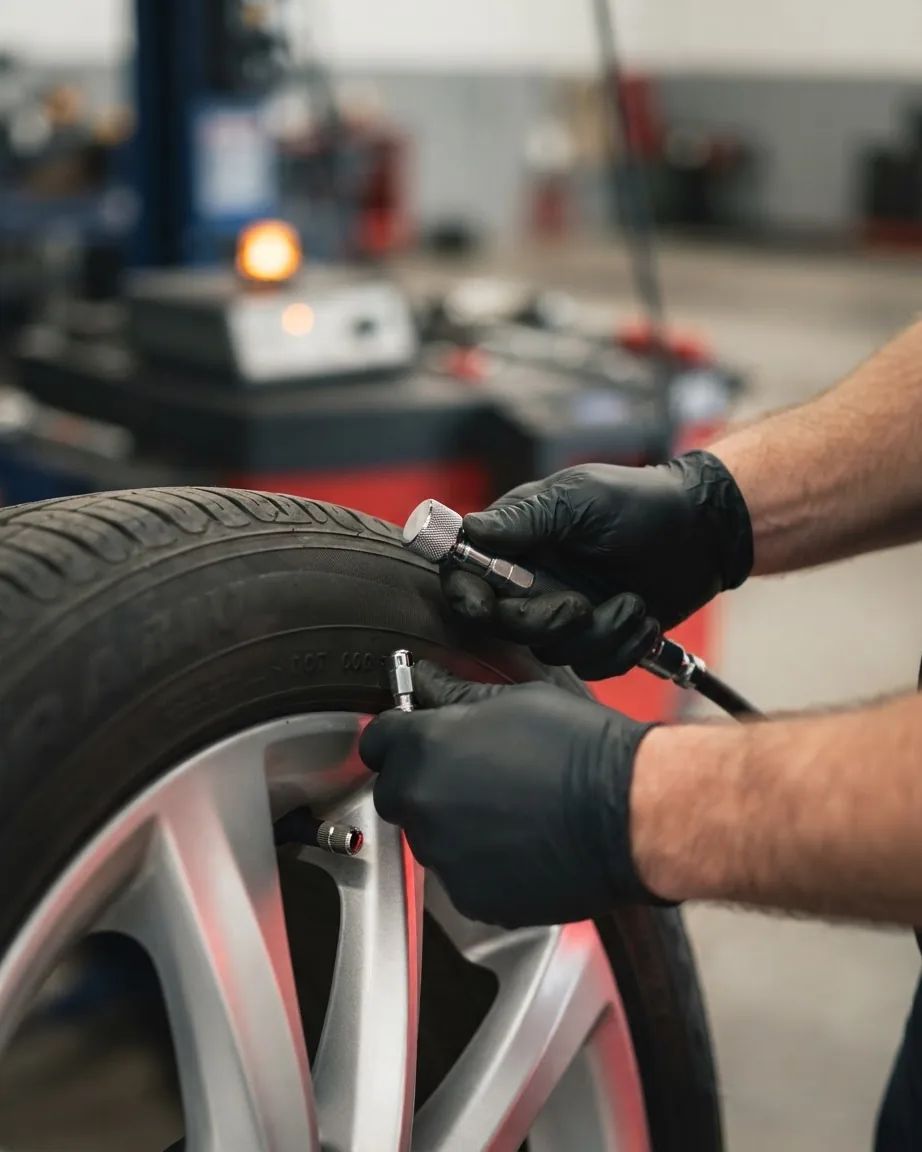
This is the scenario that sends people in circles. All four tires read correctly, yet the warning persists. The usual culprits are a dead sensor battery or a sensor position mismatch after a rotation – and a reset addresses neither.
Direct-system sensors run on a sealed battery that cannot be recharged or replaced on its own. Starling Buick GMC puts the lifespan at 5 to 10 years, after which the battery dies and the only remedy is replacing the sensor. No reset, relearn, or battery-disconnect trick revives a dead cell. If your vehicle is approaching or past the 10-year mark and the light stays on at correct pressure, a dying sensor is the leading suspect.
The second cause is mechanical, not electrical. After tires are rotated, the system may still think the sensors sit at their old positions, and a direct system often needs a relearn procedure or a shop tool to map them again. Professional TPMS service costs vary depending on the issue, per Fleetio. A sensor replacement belongs at a tire shop – this is not a roadside fix. For context on a GM dash message that works the same way, see our Service Brake Pad Monitor explainer.
How to Reset the Service Tire Pressure System Light
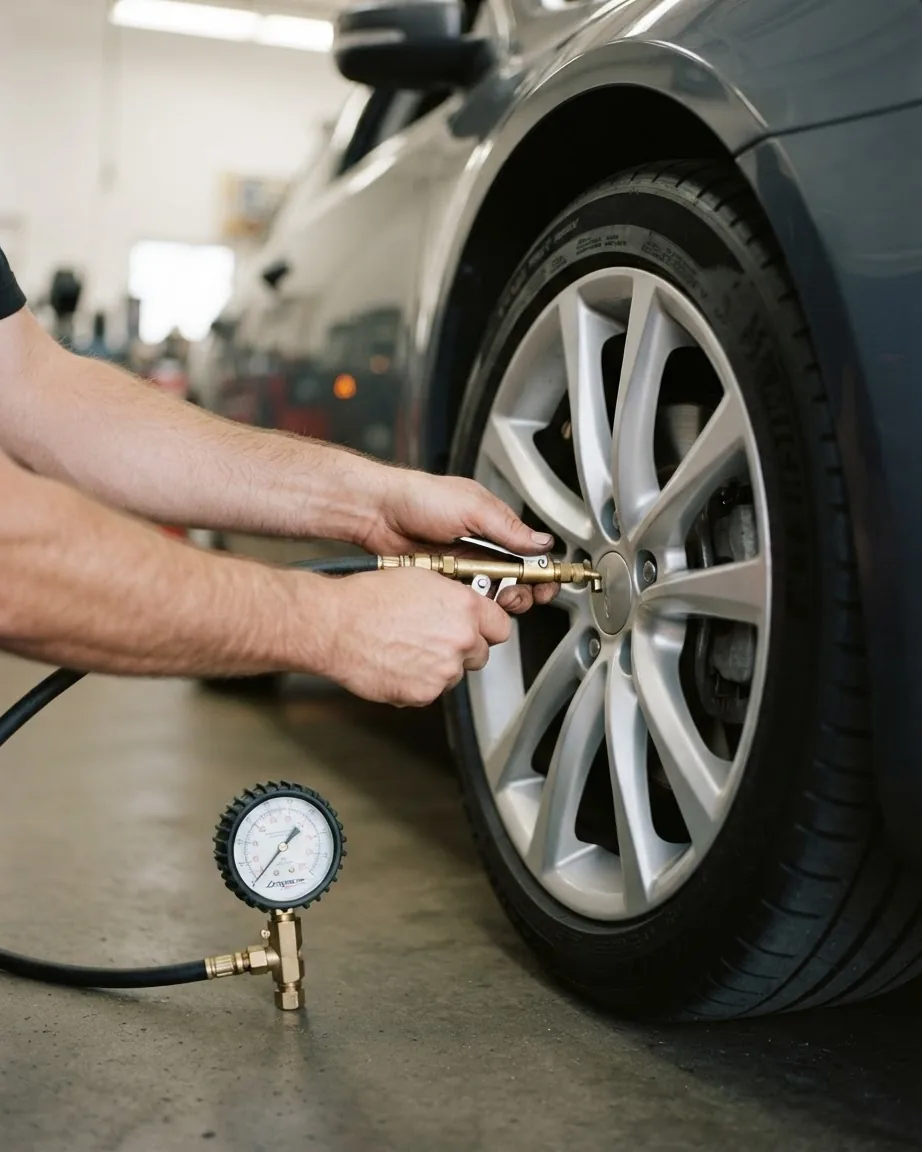
A reset clears the stored fault and lets the system relearn current readings. It is useful after you have corrected low pressure or had a good sensor reinstalled. It is not a repair for a leak or a dead sensor, and presenting it as one only delays the real fix.
The simplest path is to drive. Starling Buick GMC says many vehicles auto-recalibrate if you drive at a steady 50 mph (80 km/h) or higher for roughly 10 to 15 minutes. Fleetio lists the drive differently: start the vehicle and drive 5 to 10 minutes to let the system reset, or drive at least 15 minutes at 30-plus mph so it can relearn sensor positions. These figures do not agree – speeds of 50 mph versus 30-plus mph, and times ranging from 5 to 10 minutes up to 15 minutes or more. Because the numbers conflict across sources, the safe move is to follow your owner’s manual for your exact vehicle, and treat the longer drive at highway speed as the more thorough option when the manual is silent.
Some vehicles carry a reset button or a menu item in the driver information display; others relearn automatically. As a last resort, Starling Buick GMC describes disconnecting the negative battery terminal for 10 to 15 minutes to let the computer reset – a step that also wipes your clock and radio settings, so use it only when nothing else works.
- Inflate first. Set every tire to the door-jamb figure before resetting anything.
- Drive to relearn. Steady highway speed for 10 to 15 minutes (per Starling) or 15-plus minutes at 30+ mph (per Fleetio).
- Use the menu or button if your vehicle has a TPMS relearn function.
- Battery disconnect for 10 to 15 minutes only as a last resort.
A DIY reset costs nothing. If the warning returns after a proper reset, stop resetting and book the shop – a light that keeps coming back is telling you the air is leaving, not that the computer forgot.
What Direct vs. Indirect TPMS Changes About the Reset
The reset you need depends on which system your car uses, and the two behave differently after a tire rotation. Direct TPMS places a pressure sensor inside each wheel. J.D. Power notes that with sensors installed within each tire, the system activates the light when pressure drops below 25 percent. That 25 percent figure comes from J.D. Power, not from federal rule – NHTSA states only that the warning fires when a tire is “significantly” underinflated, without naming a percentage. Treat 25 percent as a useful ballpark for direct systems, not a legal threshold.
Because direct sensors are tied to specific wheel positions, Starling Buick GMC notes that rotating tires can leave the system mapping sensors to the wrong corners, so a direct system often needs a relearn procedure or a scan tool afterward. Indirect TPMS has no in-tire sensors at all; it infers pressure from the ABS wheel-speed sensors, watching for a tire that spins faster because it is smaller when low. An indirect system usually recalibrates through a reset-menu selection followed by a stretch of normal driving. If you are not sure which type you have, the owner’s manual states it, and the behavior after rotation is a clue – a direct system is the one that tends to need a tool.
The Only PSI Number to Trust: Door Jamb, Not Sidewall
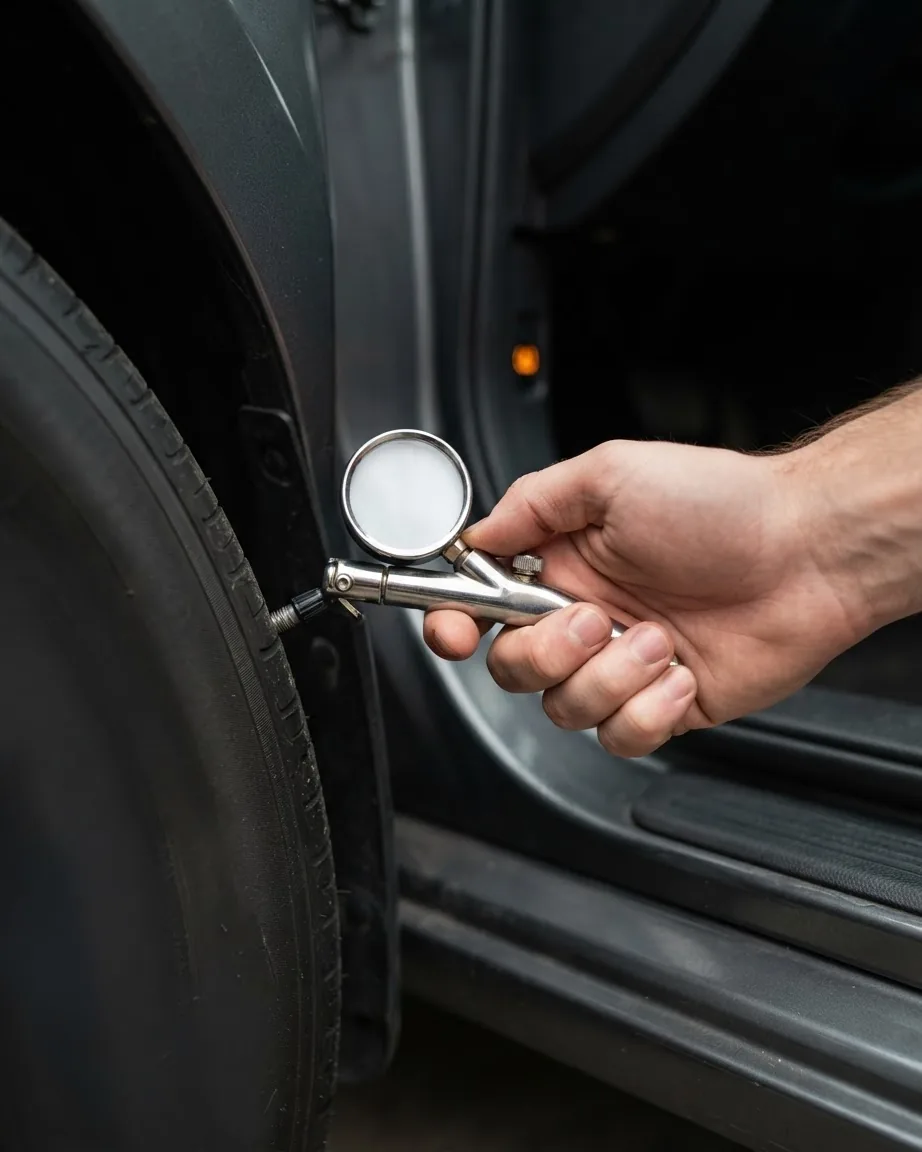
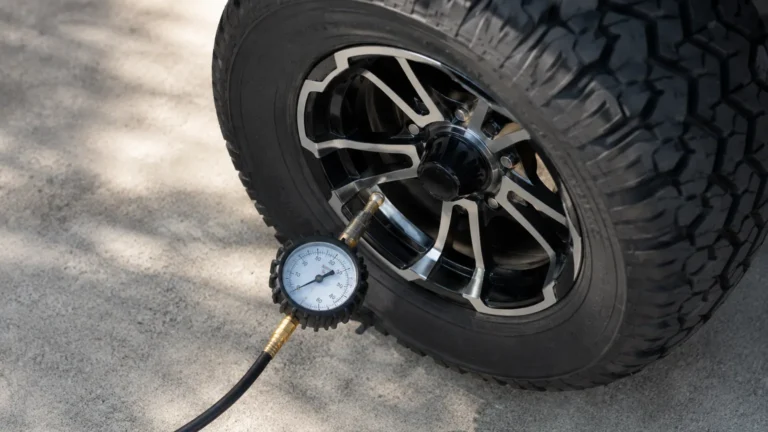
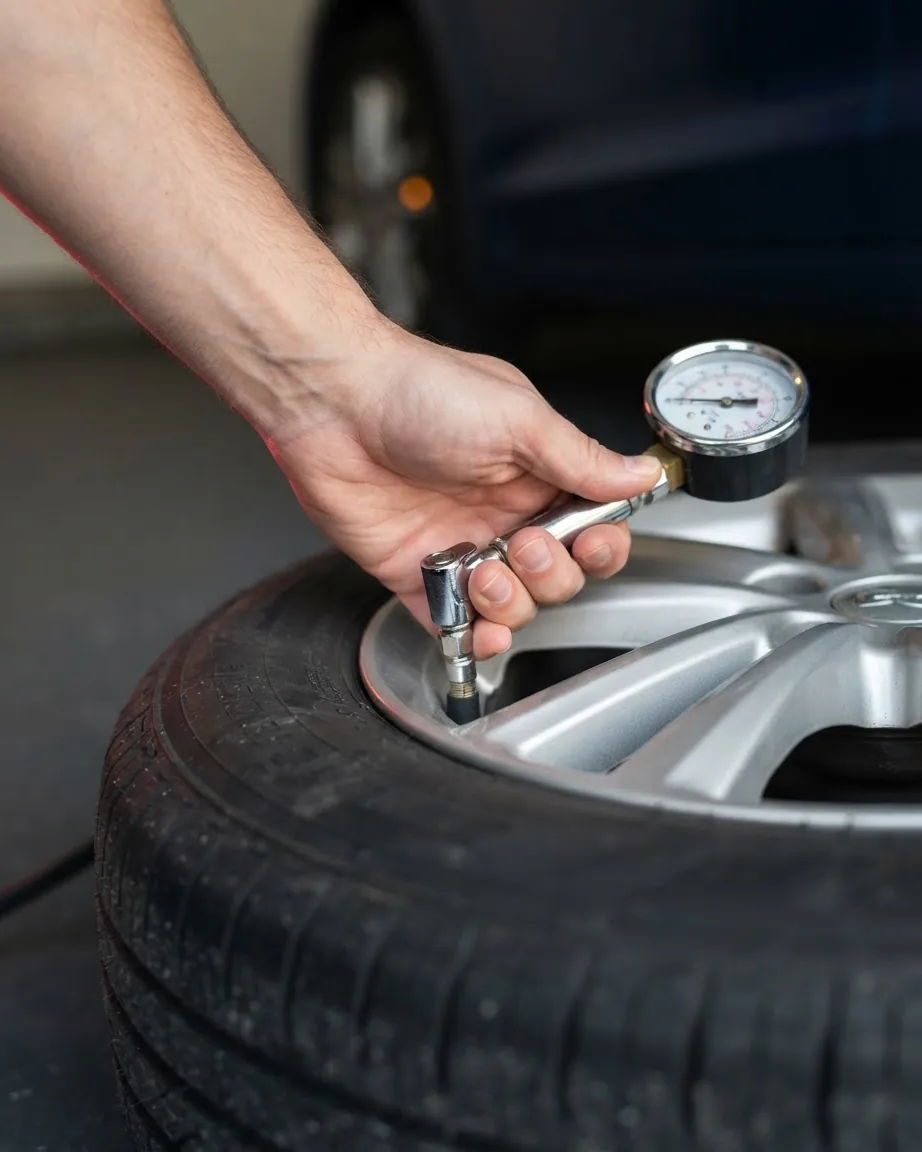
The number molded into the tire sidewall is the maximum pressure that tire can hold, not the pressure your car is designed to run. Those are different values, and inflating to the sidewall max rides hard and wears the tire’s center. Bridgestone points drivers to the vehicle’s recommended pressure, which lives on a sticker in the driver’s-side door jamb and in the owner’s manual.
Timing matters as much as the number. NHTSA specifies reading pressure when a tire is cold – meaning it has not been driven on for at least three hours. Driving heats the air inside and raises the reading, so a “correct” check after a highway run can mask an underinflated tire. Check in the morning, before you drive.
The payoff is not trivial. NHTSA reports that properly inflated tires can extend the average life of a tire by 4,700 miles. For the wider set of pressure guides on this site, see our tire pressure section.
Why the Light Appears on Cold Mornings and Clears by Afternoon
If the warning shows up at dawn and disappears once the day warms, nothing is broken – physics is doing exactly what it should. Air pressure falls as temperature drops, so a tire sitting right at the warning threshold overnight can dip below it by morning and climb back above it by afternoon. The monitor is reporting a real, if temporary, low reading.
This is the same reason the cold-reading rule exists. Because NHTSA ties correct pressure to a cold tire that has not been driven for at least three hours, the honest reading is the cold one, not the warmed-up afternoon number. If the light appears on cold mornings, your tires are probably a few PSI under the door-jamb spec; top them up to the recommended figure and the morning warnings stop. Our guide on front wheel drive tire rotation is worth a look if you also handle your own wheel swaps.
Can You Keep Driving With the Warning On?
It depends on which warning, and the answer carries real stakes. NHTSA reports that in 2024, a total of 511 people died on the road in tire-related crashes – the reason these alerts exist and the reason they should not be ignored.
A malfunction warning (the flash-then-solid lamp) means the system cannot watch your tires, so you are driving blind to pressure loss. That is not an emergency by itself, but get it diagnosed soon. A steady low-pressure light means a tire is already significantly under – check it and inflate before more driving. The one situation that overrides everything: if pressure is dropping fast, if you feel a pull or a wobble, or if a tire is visibly going flat, pull over somewhere safe and stop. A rapid loss can mean an active leak or imminent failure, and highway speed is the worst place to find out.
Do not lean on the monitor as your only check. The system fires only at significant underinflation, which is why a monthly manual check with a gauge still matters. A fast, severe pressure drop deserves the same stop-now caution as a check engine light blinking on the dash.
Is TPMS Required, and What If It’s Still On After Checking All Four Tires?
TPMS is not optional equipment on newer vehicles. A persistent warning is worth taking seriously rather than dismissing as a glitch.
Here is the trap that catches careful drivers: you check all four road tires, they are all correct, and the light stays on. The missed spot is often the spare. A full-size spare can carry its own sensor, and if that spare is low, Starling Buick GMC notes it can trigger the alert just like a road tire. Check the spare’s pressure before you conclude the system is faulty.
- All four road tires correct, light still on – check the full-size spare’s sensor.
- Still lit after that – suspect a dead sensor (5 to 10 years) and head to a shop.
When the Reset Fails: Signs It’s a Sensor, Not a Setting
Resetting is cheap and worth trying, but some symptoms tell you to stop and call a tire shop. If the warning clears after a reset and returns within a drive or two at correct pressure, the sensor or a slow leak is the cause, not the computer’s memory. If your vehicle is past the 5-to-10-year sensor window and the light is steady at proper inflation, plan on sensor replacement rather than another relearn. And if a single tire keeps losing air no matter how often you top it up, that is a puncture or bead leak for a professional, not a monitoring issue at all.
A reset is a bookkeeping step, not a repair. Spend on a shop when the hardware is the problem – it is cheaper than the mileage and safety you lose running on a tire that keeps going soft.
How Far You Actually Have to Drive to Auto-Recalibrate
Starling Buick GMC frames its auto-recalibration advice in speed and time – “a steady speed of 50 mph (80 km/h) or higher for approximately 10 – 15 minutes” – but you drive by the odometer, not a stopwatch. Converting their own two figures to distance gives you a concrete target: hold 50 mph and you need roughly 8 to 12.5 miles (about 13 to 20 km) of uninterrupted driving. If your trip is shorter than that, the system never gets its window to relearn, which is a common reason a light that “should have cleared” stays on.
- At 50 mph for 10 minutes: about 8.3 miles.
- At 50 mph for 15 minutes: about 12.5 miles.
- In metric: roughly 20 km over the full 15-minute window at the stated 80 km/h.
Note: these are Starling’s figures only. Fleetio gives different speeds and times, and the sources do not agree – so when in doubt, follow your owner’s manual for your exact vehicle.
FAQ
How long should the warning flash before I treat it as a system fault?
Watch the timing at start-up. Per NHTSA, a malfunction shows as a flash, after which the lamp stays lit and the pattern returns every time you start the car. A brief flicker that settles into nothing is normal self-test behavior; a sustained flash followed by a steady lamp is the fault signal that air cannot resolve.
Will a battery disconnect permanently fix the light?
Rarely. Pulling the negative terminal for 10 to 15 minutes clears the computer’s stored codes, but it also erases your clock and radio presets and does nothing for a dead sensor battery or an active leak. If the underlying hardware is the problem, the warning comes back once the system rereads the tires. Use it only after simpler resets fail.
Does the 25 percent trigger apply to every car?
No. That figure describes direct systems and comes from J.D. Power, not from regulation. Federal rules require the alert when a tire is significantly underinflated without fixing a single percentage, and indirect systems detect low pressure through ABS wheel-speed differences instead. Treat 25 percent as a rough guide for in-tire sensors, not a universal number.
Why does my pressure look right but the dash still complains?
Three things cause that mismatch: a sensor whose sealed battery has died after 5 to 10 years, a position scramble left over from a recent rotation, or an unchecked full-size spare carrying its own low sensor. None of those respond to adding air. Verify the spare first, then budget a shop visit if the mileage age points to a worn-out sensor.