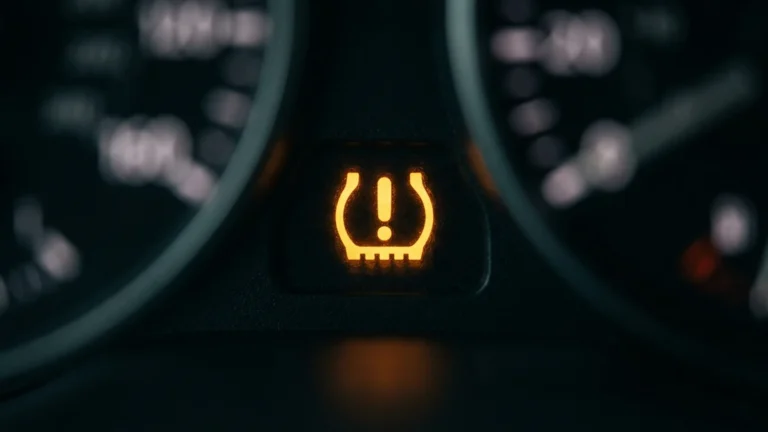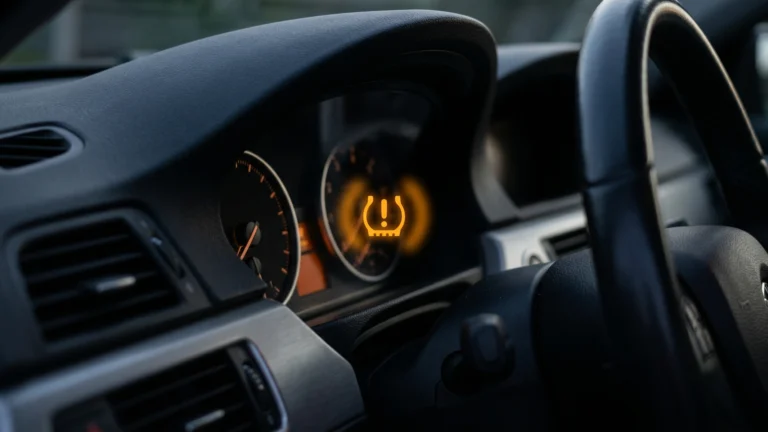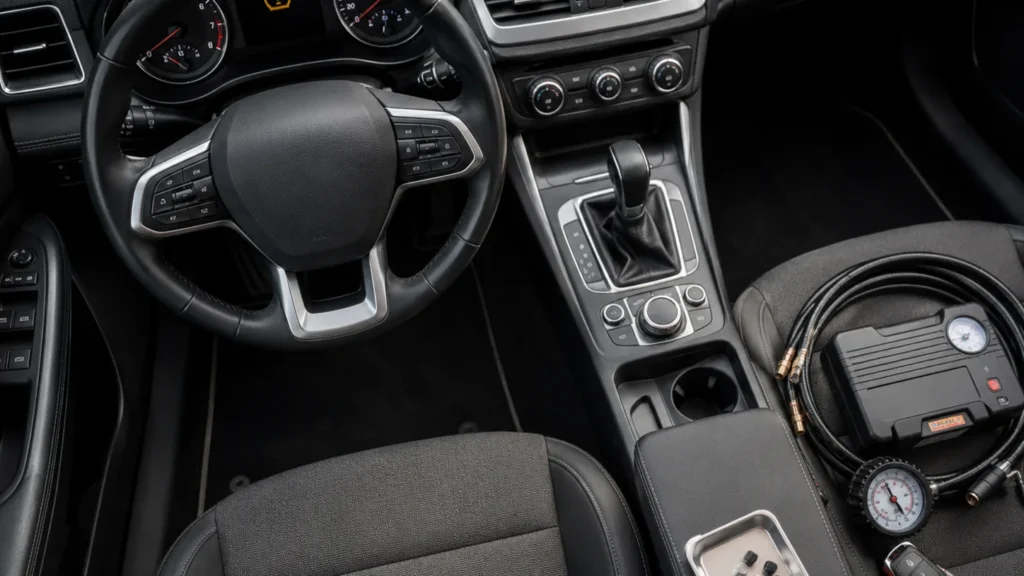
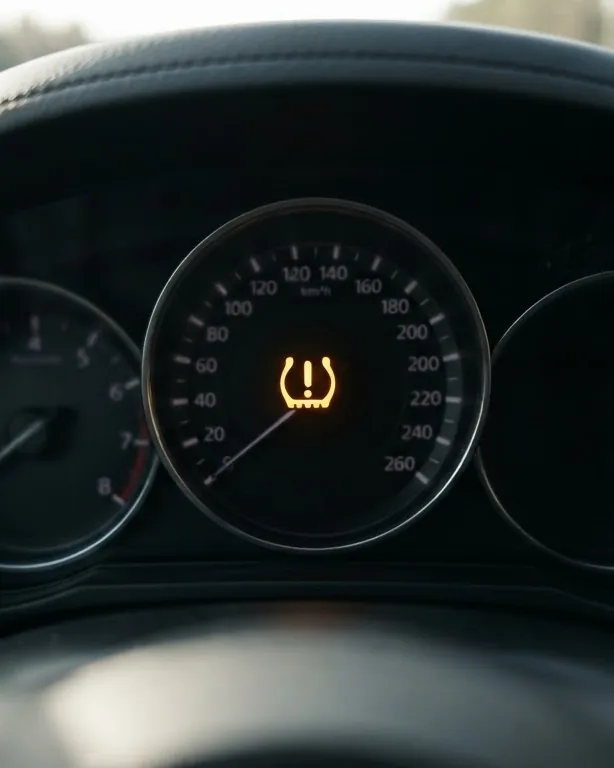
Learning how to reset tire pressure light warnings comes down to one honest first step that most quick guides skip: fix the pressure before you touch anything else. That little horseshoe-shaped glow on the dash is not a nuisance to be silenced. It is a sensor doing its job, and in most cases it turns off on its own within about 10 minutes of driving once every tire is set to the correct pressure. The reset tricks below only help after the air is right.
This guide from the BrakeTireGuide team is educational and is not a substitute for a qualified tire technician or your vehicle’s owner manual. Tire pressure and monitoring systems are a safety item, so follow your manufacturer specifications, use the pressure on your door placard, and when a warning will not clear or the light blinks, have a professional confirm the cause before you keep driving on it.
Short version: inflate all four tires (and the spare if it carries a sensor) to the door-placard psi with a cold, accurate gauge. Drive at a steady 15 to 20 mph or faster for about 10 minutes. If the light stays on, use your reset button or relearn procedure. If it still will not clear, you likely have a real low tire or a failed sensor, not a software glitch.
By Garrett Stowe, tire and wheel systems lead at BrakeTireGuide. Last reviewed July 7, 2026.
Most articles give you one reset trick. This guide lays out all the methods in the order you should try them, an original comparison of direct versus indirect TPMS, the door-placard-versus-sidewall distinction that trips people up, and the cold-weather math behind most false alarms, so you fix the cause and not just the symbol.
What the tire pressure light is telling you
The tire pressure light is the dashboard face of your tire pressure monitoring system, or TPMS. Federal rule FMVSS No. 138, written and enforced by NHTSA, has required this system on new passenger cars and light trucks sold in the United States since full compliance took effect on September 1, 2007. That is why nearly every 2008 and newer vehicle, and many 2007 models, will light up when a tire runs low.
The trigger point is not vague. The regulation says the warning must come on when a tire drops to 25 percent or more below the recommended cold inflation pressure printed on your door placard. So if your placard calls for 35 psi, the light is designed to warn you by the time a tire falls to roughly 26 psi. That is already low enough to hurt handling, braking, and fuel economy, which is the whole reason the mandate exists. The National Highway Traffic Safety Administration estimates that properly inflated tires prevent a meaningful share of crashes and blowouts every year.
Because the light is a warning and not a switch, resetting it without fixing the underlying pressure is like turning off a smoke alarm while the toast is still burning. The right order is always the same: confirm the air, correct the air, then reset. If the tire monitoring warning is flashing rather than glowing steady, that is a different problem, and our deeper explainer on why the tire pressure monitoring system light is flashing walks through the fault codes behind it.
Solid light versus a blinking light
How the light behaves tells you which job to do. The difference is easy to read once you know what to watch for in the first minute or two after you start the engine.
- Solid, steady light. A light that comes on and stays on usually means at least one tire is 25 percent or more below its target pressure. This is the common case, and it is the one a reset actually addresses once you have added air. Cold mornings, a slow leak, or a nail are the usual reasons.
- Blinking light that then stays on. A light that flashes for about 60 to 90 seconds at startup and then settles into a solid glow is a system or sensor fault, not simply a low tire. Common causes are a dead sensor battery, a damaged or missing sensor, or a module that has lost a signal. No amount of adding air will clear this one.
If yours blinks, do not spend an afternoon chasing reset procedures. A flashing pattern points at the hardware, and the fix is diagnosis and often a sensor replacement followed by a relearn, which we cover further down. Treat a steady light as a pressure task and a blinking light as a repair task.
Direct versus indirect TPMS
Before you pick a reset method, it helps to know which type of system your car uses, because they reset differently. There are two designs on the road, and the reset steps that work on one can do nothing on the other.
A direct system puts a battery-powered pressure sensor inside each wheel. Each sensor measures actual air pressure and radios it to the car’s computer, which is why a direct system can show you a live psi number per tire. An indirect system has no sensors in the tires at all. It borrows wheel-speed data from the anti-lock brake system and infers that a tire is low because an underinflated tire has a slightly smaller rolling diameter and spins a touch faster. Standards bodies such as SAE International helped define the engineering behind both approaches, which is why the behavior is consistent across brands.
| Feature | Direct TPMS | Indirect TPMS |
|---|---|---|
| How it senses | Battery sensor inside each wheel | ABS wheel-speed comparison |
| Shows exact psi per tire | Yes, on many vehicles | No, warning only |
| Battery to fail | Yes, about 5 to 10 years | None in the tire |
| How you reset it | Drive relearn, reset button, or scan tool | In-menu set or calibrate after airing up |
| Needs relearn after rotation | Often yes | Recalibrate, no sensor mapping |
If your dash can display the pressure in each individual tire, you almost certainly have a direct system. If it only shows a warning symbol with no per-tire numbers, you likely have an indirect one that resets through a button on the dash or a menu on the driver display. Knowing which you have keeps you from hunting for a reset button that your car does not have.
Step one: set every tire to the door placard psi
This is the step that clears the light most of the time, so do it carefully before any reset. The target is the pressure on the placard in the driver door jamb, not the maximum number molded into the tire sidewall. The sidewall figure is a ceiling for the tire, while the placard is the pressure the vehicle was engineered to run.
- Check cold. Measure before you have driven more than a mile or two, ideally first thing in the morning. Driving heats the air and adds a few psi, which hides a real low reading. The placard number is a cold pressure.
- Find your target. Open the driver door and read the placard, usually 30 to 35 psi for a passenger car. Use that exact number for the front and rear, since some vehicles call for different pressures front to back.
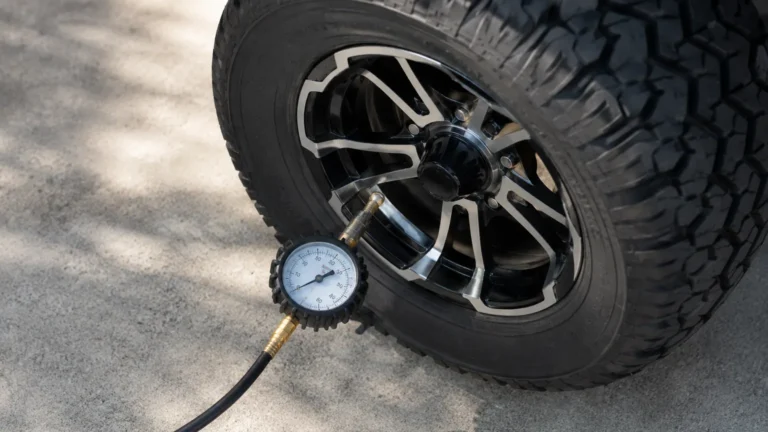
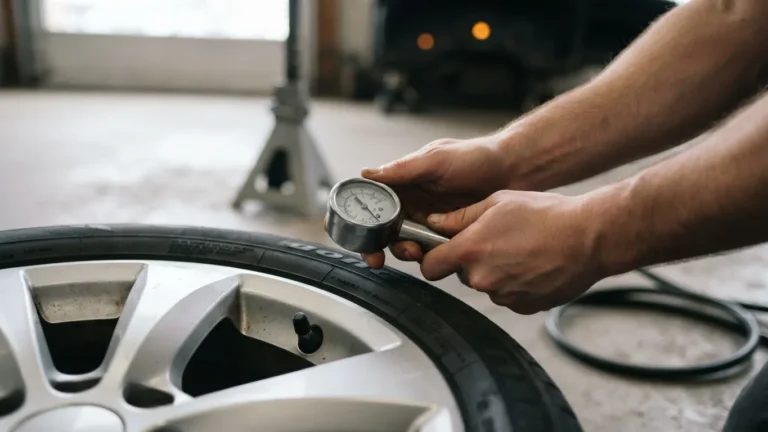
- Use an accurate gauge. A dependable dial or digital gauge beats a gas-station stick that has been kicked around for years. Set each tire to the placard psi, including the spare if it has a sensor.
- Recheck after filling. Air pumps read high while running. Top off, then measure again with your own gauge to confirm you landed on target rather than a few psi over.
Pro tip: Cold weather is the most common false alarm. Air contracts about 1 psi for every 10 degree Fahrenheit drop, so a cold morning can trip the light even when nothing leaked. Top the tires back up to the placard psi and the light usually clears itself after a short drive.
The U.S. Tire Manufacturers Association and AAA both recommend checking pressure at least once a month and before long trips, because tires lose a little air naturally over time even with no leak. Get the air right first, and on many cars the light clears itself during the next short drive with no further steps at all.
Method 1: the drive-to-reset relearn
The simplest reset is the one that needs no buttons. Most systems recheck pressure and clear a stale warning on their own once you drive for a bit at road speed, provided the tires are now correctly inflated.
- Inflate first. Confirm all tires are at the placard psi. This method only works if the low condition is actually gone.
- Drive at a steady speed. Keep to about 15 to 20 mph or faster. On many vehicles a stretch between 30 and 50 mph works best because it gives the sensors clean, steady data.
- Give it about 10 minutes. Ten to twenty minutes of continuous driving usually lets the system confirm good pressure and switch the light off. Stop-and-go city blocks count for less than open, steady miles.
- Watch for the light to clear. If it goes out during or shortly after the drive, you are done. If it is still on after two or three trips, move to the button or relearn method.
This is the method to try first because it costs nothing and it is what the car wants to do anyway. In our experience, a light that appeared on a cold morning very often clears itself this way by mid-drive once the air is topped up and the tires warm back toward normal pressure.
Method 2: the TPMS reset button
Many vehicles include a dedicated reset button that tells the system to relearn current pressures as the new baseline. The button hides in different places depending on the make, so check your owner manual if you cannot find it.
- Locate the button. Look below the steering wheel, in the glovebox, in the center console, or inside a menu on the driver display. It is often labeled with the TPMS symbol.
- Turn the ignition to on. Put the key or push-button ignition in the on position without starting the engine. On a push-button car, press start twice without a foot on the brake.
- Hold the button. Press and hold the reset button until the tire pressure light blinks about three times, then release it. That blink is the system acknowledging the relearn request.
- Start and drive. Start the engine and drive for roughly 20 minutes at a steady speed so the sensors report in and the system stores the new baseline.
The button does not fix a low tire. It tells the computer to accept the pressures it currently reads, so if you press it while a tire is genuinely low, you are telling the car to ignore a real problem. Always air up to the placard first, then use the button to clear a warning that lingered after the fix.
Safety warning: A blinking tire pressure light that stays flashing for 60 to 90 seconds at startup is a system fault (often a dead sensor battery), not a low tire, and resetting will not fix it. And never use the reset button to silence a light while a tire is actually low. Driving on a tire 25 percent under the placard psi raises the risk of a blowout.
Method 3: the ignition-cycle and over-inflate relearn
Some vehicles, especially those without a labeled reset button, relearn through an ignition sequence or through a deliberate pressure change. These are the fallbacks when the drive and button methods do not apply.
The over-inflate relearn works on a number of direct systems. Add about 3 psi above the placard number to every tire, then let each one back down to the exact placard pressure. The swing in pressure prompts some sensors to report fresh data and reset the baseline. On certain cars you can go a step further and briefly deflate all four tires, then reinflate them to spec, which forces every sensor to transmit a new reading.
The ignition-cycle method varies by brand but generally looks like turning the key to on without starting, then cycling it off and on a set number of times, sometimes paired with pressing the brake or the accelerator in a pattern the manufacturer specifies. Because the exact sequence differs so much between makes, this is the one time your owner manual is worth reading word for word rather than guessing. If your dash shows a service message rather than a simple light, our guide to the service tire monitor system message explains what that wording means and when a scan tool is required.
Method 4: disconnecting the battery (last resort)
Disconnecting the vehicle battery can clear a stubborn soft warning by forcing the body computer to restart. We list it last on purpose, because it is a blunt tool that also wipes radio presets, clock settings, and sometimes learned transmission or idle data. Only reach for it when the pressure is confirmed correct and the gentler methods have failed.
- Turn everything off. Shut off the engine and remove the key so nothing is drawing power.
- Disconnect the positive terminal. Loosen and lift the positive cable off the battery post with the correct wrench, keeping metal tools away from surrounding metal.
- Discharge residual power. Press and hold the horn for about 3 to 5 seconds to bleed off any charge left in the system so the reset actually takes.
- Reconnect and restart. Reattach the positive cable snugly, start the car, and drive a short steady stretch so the TPMS relearns current pressures.
If the light returns right after a battery reset, that is a strong sign the problem is a real low tire or a failed sensor, not a software hiccup. At that point stop resetting and start diagnosing. Repeatedly clearing a warning that keeps coming back only hides a fault the system is correctly reporting.
Reset methods compared
Each method suits a different situation. The table below lines them up so you can pick the least invasive one that fits your car and your problem.
| Method | Best for | Effort | Time |
|---|---|---|---|
| Drive to reset | Most cars after airing up | None, just drive | About 10 to 20 minutes |
| Reset button | Cars with a labeled TPMS button | Low | A few minutes plus a drive |
| Over-inflate relearn | Direct systems, no button | Medium | 10 to 15 minutes |
| Ignition-cycle relearn | Brand-specific procedures | Medium | Varies by make |
| Battery disconnect | Last resort, soft codes only | Higher | 15 minutes plus resets |
| Scan-tool relearn | After a new sensor or wheel swap | Shop tool needed | 15 to 30 minutes at a shop |
Work down the list from the top. Start with the drive method, step to the button, and only escalate to the battery or a shop scan tool when the simple approaches genuinely do not clear a light on tires you have confirmed are at the correct pressure.
Why the light keeps coming back
A warning that returns after every reset is not a broken system nagging you. It is a working system that keeps finding the same problem. Three causes account for most repeat lights.
Cold weather is the seasonal culprit. Tire pressure falls about 1 psi for every 10 degrees Fahrenheit that the temperature drops, because the air inside contracts as it cools. A car parked overnight through a fall cold snap can lose enough pressure to trip the light by morning even though nothing is leaking. The pressure often climbs back as the day warms and the tires heat up with driving, but the honest fix is to top the tires up to the placard psi in the cold rather than wait and hope.
A dead sensor battery is the age-related culprit. The sensors in a direct system run on a sealed coin-cell battery that lasts roughly 5 to 10 years, with about 7 years being a common average. The battery is not replaceable on its own, so when it dies the whole sensor is swapped. A car past the 7 to 10 year mark that throws a blinking light is very often telling you a sensor has simply reached the end of its life. A slow leak from a nail or a corroded valve is the third common cause, and that one needs a plug or patch, not a reset.
When to see a mechanic
Plenty of tire pressure lights are a five-minute driveway fix, but some findings call for professional tools and eyes. See a qualified tire technician when any of these apply.
- The light blinks and then stays solid. That startup flash is a fault signature. A shop can read the sensor IDs and confirm whether a battery has died or a sensor has failed.
- The light returns within a day of every reset. A warning that will not stay off on correctly inflated tires points to a leak or a sensor problem that needs diagnosis, not another reset.
- You replaced a sensor, rotated, or changed wheels. Many direct systems need a scan-tool relearn so the computer maps each sensor to the right wheel. Without it, the light stays on even with perfect pressure.
- A tire keeps losing air. If one tire drops faster than the others, have it inspected for a nail, a bead leak, or a cracked valve stem before you trust it on the highway.
- You are simply not sure. On a safety system, a professional check is inexpensive next to a blowout. When a reading or a warning looks off, let a pro confirm it.
None of this replaces the basics you can do yourself. A monthly cold-pressure check, correct inflation to the placard, and a quick look at the light on startup will catch most problems early. The shop is there for sensor faults and leaks that a reset can never fix.
Sources and further reading
The safety framing, figures, and standards referenced above draw on the following authorities. Each link points to the organization’s current homepage so it stays valid over time.
- National Highway Traffic Safety Administration (NHTSA), federal tire and vehicle safety standards and recalls: https://www.nhtsa.gov/
- U.S. Tire Manufacturers Association (USTMA), industry tire safety and maintenance guidance: https://www.ustires.org/
- SAE International, engineering standards and test methods behind tire and vehicle systems: https://www.sae.org
Frequently asked questions
Will the tire pressure light reset itself after I add air?
Often yes. On most vehicles, once every tire is back at the door placard psi, the light clears on its own after about 10 minutes of steady driving above 15 to 20 mph. If it is still on after two or three short trips, use your reset button or relearn procedure to clear the stale warning.
How long do I need to drive to reset the tire pressure light?
Plan on roughly 10 to 20 minutes of continuous driving at a steady speed, ideally somewhere between 30 and 50 mph, so the sensors send clean data to the computer. Short stop-and-go trips count for less. If two or three proper drives do not clear it, the tires may still be low or a sensor may be failing.
Why is my tire pressure light blinking instead of glowing steady?
A light that flashes for about 60 to 90 seconds at startup and then stays solid signals a system or sensor fault, not just a low tire. The usual causes are a dead sensor battery, a damaged sensor, or a module error. Adding air will not fix a blinking light, so have the system scanned.
Can cold weather turn on the tire pressure light?
Yes. Tire pressure drops about 1 psi for every 10 degrees Fahrenheit that the temperature falls, so a cold night can trip the light by morning even with no leak. The pressure often recovers as the day warms, but the correct fix is to top the tires up to the placard psi while they are cold.
Do I use the pressure on the tire sidewall or the door placard?
Use the door placard in the driver door jamb. That number is the pressure your vehicle was engineered to run and the value the TPMS is calibrated against. The higher figure molded into the sidewall is the tire’s maximum, not the recommended setting, and filling to it can make the ride harsh and the wear uneven.
How long do TPMS sensors last?
The battery-powered sensors in a direct system typically last about 5 to 10 years, with roughly 7 years being a common average. The battery is sealed inside the sensor, so a dead one is replaced rather than recharged. A car past that age that shows a blinking light is often reporting a sensor that has reached the end of its life.
Does disconnecting the battery reset the tire pressure light?
It can clear a soft warning by restarting the body computer, which is why we list it as a last resort after the drive and button methods. It also erases radio presets and other settings, and if the light comes right back, you have a real low tire or a failed sensor. Fix the cause rather than resetting again.
Getting the light to stay off
The reliable path is the same every time. Set the air to the door placard psi with a cold, accurate gauge, drive a steady 10 to 20 minutes, and let the system clear itself, reaching for the reset button or a relearn only if it lingers. When a light blinks, returns fast, or follows a sensor change, treat it as a repair rather than a reset and let a technician confirm the cause. Do that, and the tire pressure light goes back to being what it should be, a quiet sensor that only speaks up when a tire actually needs your attention.