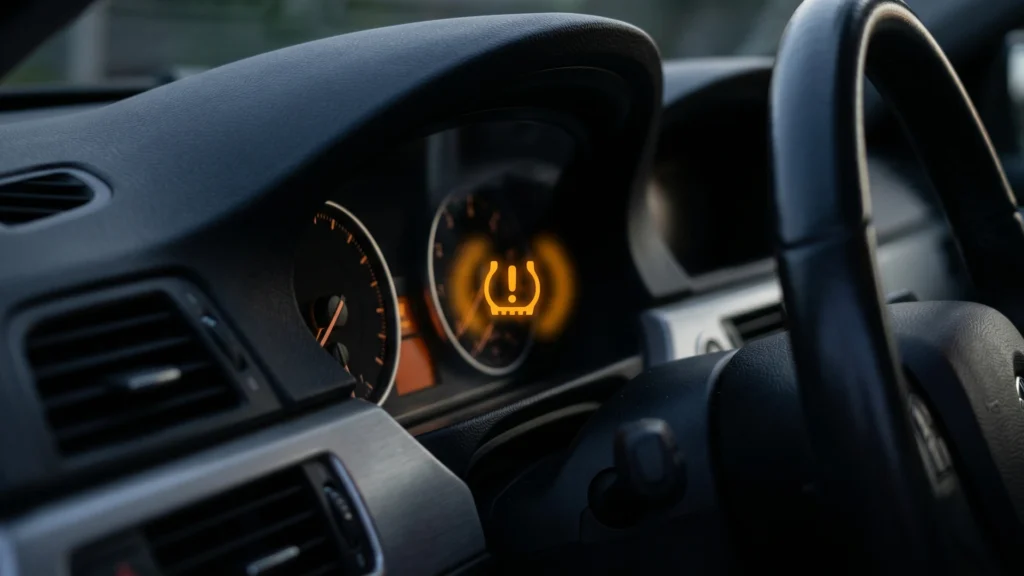
When you see your tire pressure monitoring system light flashing, most drivers assume a tire is going flat and pull into the nearest gas station. That instinct is reasonable, but it misses something important: a light that blinks is telling you something completely different from one that simply stays on. Getting these two signals mixed up can lead you to chase the wrong problem for days – or worse, ignore a legitimate fault in the system entirely. This article focuses specifically on the flashing or blinking behavior, what causes it, and what you should actually do about it.
The blinking pattern most commonly reported – around 60 to 90 seconds of rapid flashing at startup, followed by the light staying on solid – is a recognized signature of a TPMS malfunction, not just low air. That timing is not a coincidence; it is how the system signals that it tried to communicate with its sensors and failed. Understanding that distinction can save you money and real frustration.
Flashing vs. Solid: What the Light Is Actually Saying
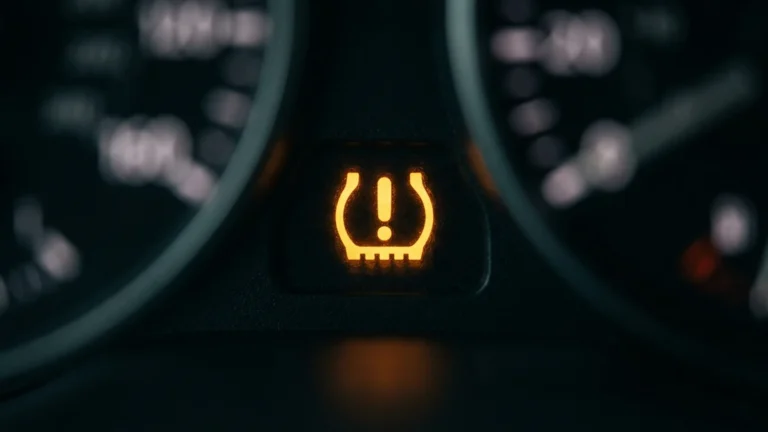
The TPMS warning icon – that cross-section of a tire with an exclamation point – looks the same whether it is flashing or steady. The behavior, though, carries two completely different messages.
A solid, steady light means the system successfully read at least one tire’s pressure and found it low – typically 25 percent or more below the vehicle manufacturer’s recommended inflation. If you have a 32 psi recommendation and one tire drops to 24 psi, the light comes on solid. Top off that tire and the light should go out on its own after you drive a few miles, or you can manually reset it per your owner’s manual.
A flashing light – especially one that blinks for roughly 60 to 90 seconds after you start the car and then holds steady – almost always points to a system fault. The sensor transmitters inside your wheels send small radio-frequency signals to a receiver in the car. If the car cannot pick up those signals, or if a sensor’s battery has died, the system lights the warning and blinks it to get your attention. The vehicle is essentially saying: “I cannot read the sensors, so I cannot tell you what your pressures are.”
That nuance matters because the appropriate response to each situation is totally different. Check the table below for a quick reference.
| Light Behavior | What It Means | First Step |
|---|---|---|
| Solid / Steady On | One or more tires is low on air | Check and inflate all four tires to spec |
| Flashing at Startup (60-90 sec) Then Steady | TPMS system fault or sensor not found | Check pressures manually; schedule TPMS diagnosis |
| Flashing Continuously While Driving | Sensor signal lost in motion; possible interference or dead sensor | Same as above; do not rely on TPMS for pressure info |
| Turns On Then Off Again | Borderline pressure – fluctuating with temperature | Check pressures cold, inflate to spec |
The Six Most Common Causes of a Flashing TPMS Light
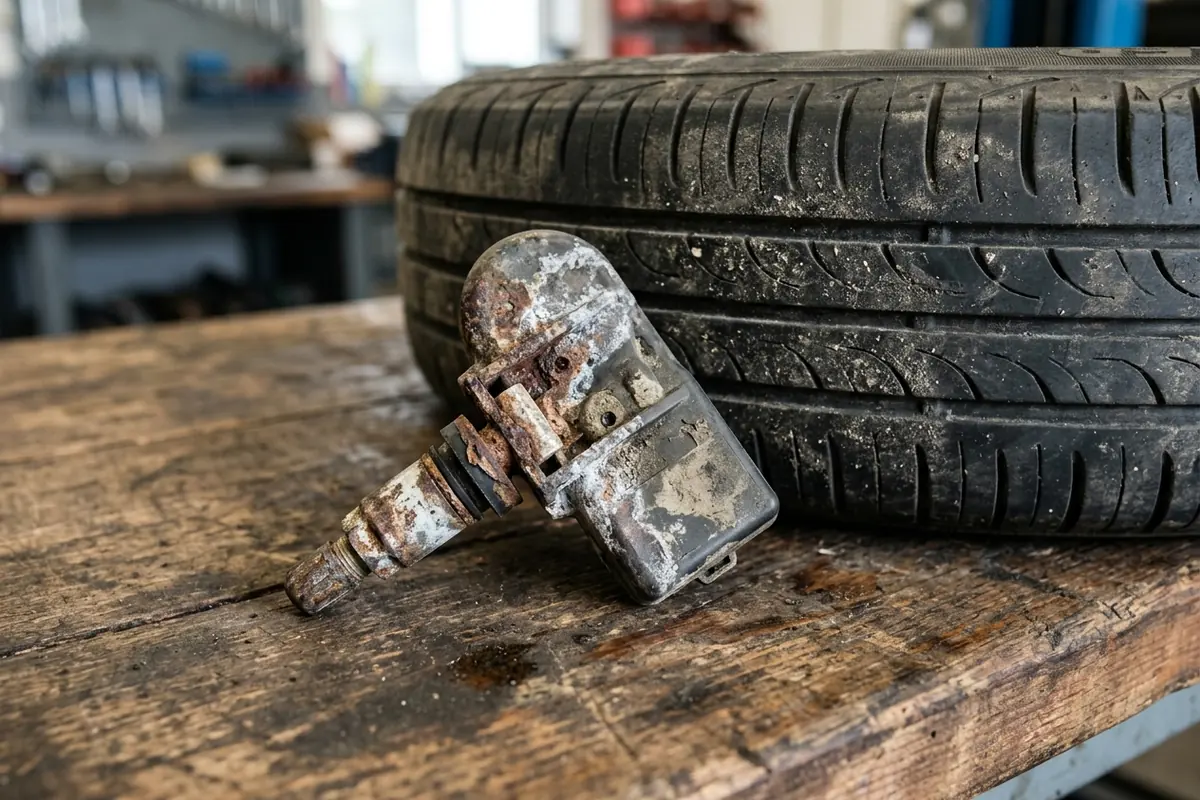
Once you understand this is a system fault rather than a flat tire, the next question is obvious: what broke? There are half a dozen causes that show up regularly.
Dead or Dying Sensor Battery
Every TPMS sensor runs on a small lithium battery sealed inside the sensor body, which is mounted to the wheel rim. These batteries are not replaceable – when they die, you replace the whole sensor. Typical lifespan is 5 to 10 years, or roughly 100,000 to 150,000 miles, depending on how much the sensor transmits. In cold weather, battery voltage drops temporarily, which is why you might see a flashing light on a January morning that disappears in warmer months before the sensor finally gives out completely.
Battery death is the single most common cause of a flashing TPMS light on vehicles more than seven or eight years old. If your car is in that range and the light just started blinking, the odds favor a dying sensor rather than some expensive system failure.
Sensor Not Detected After Tire Rotation or Replacement
When tires are rotated, the sensors physically move to new wheel positions. Many vehicles use a positional TPMS relearn – the car needs to be told which sensor ID corresponds to which corner. Without a relearn, the system may lose track of one or more sensors and flash the warning light. The same happens if a sensor is replaced and its new ID has not been programmed into the vehicle’s receiver module.
A proper tire rotation should always include a TPMS relearn. Many shops skip this step, especially quick-lube operations focused on speed over thoroughness. If your light started flashing right after a rotation, that is almost certainly the cause.
Winter Tire Set or Spare Without Sensors
If you mount a set of winter wheels that do not have TPMS sensors installed, the car’s receiver immediately notices it cannot find any sensor signals and the tire pressure monitoring system light flashing begins almost instantly after startup. Spare tires – especially the compact “donut” type – rarely have sensors either.
The solution is to either add sensors to your winter wheels (which costs money upfront but pays off over several seasons) or accept that you will have a flashing TPMS light all winter and must check pressures manually with a gauge throughout the cold months.
Radio-Frequency Interference
TPMS sensors broadcast at 315 MHz or 433 MHz depending on the vehicle. Occasionally, local RF sources – certain tire shop equipment, aftermarket alarm systems, or even some industrial equipment near a parking area – can temporarily jam the signal. This is an uncommon cause of persistent flashing but can explain an intermittent or location-specific blink that goes away on its own.
Faulty Receiver Module
Less common but worth knowing: the TPMS receiver module inside the car can fail. When the module itself is bad, it cannot decode signals from any sensor. All four sensors may be working perfectly, but the car reports a system fault. A scan tool will usually show multiple sensor errors at once rather than a single dead sensor, which points the technician toward the receiver rather than the wheels.
Corroded or Damaged Sensor Body
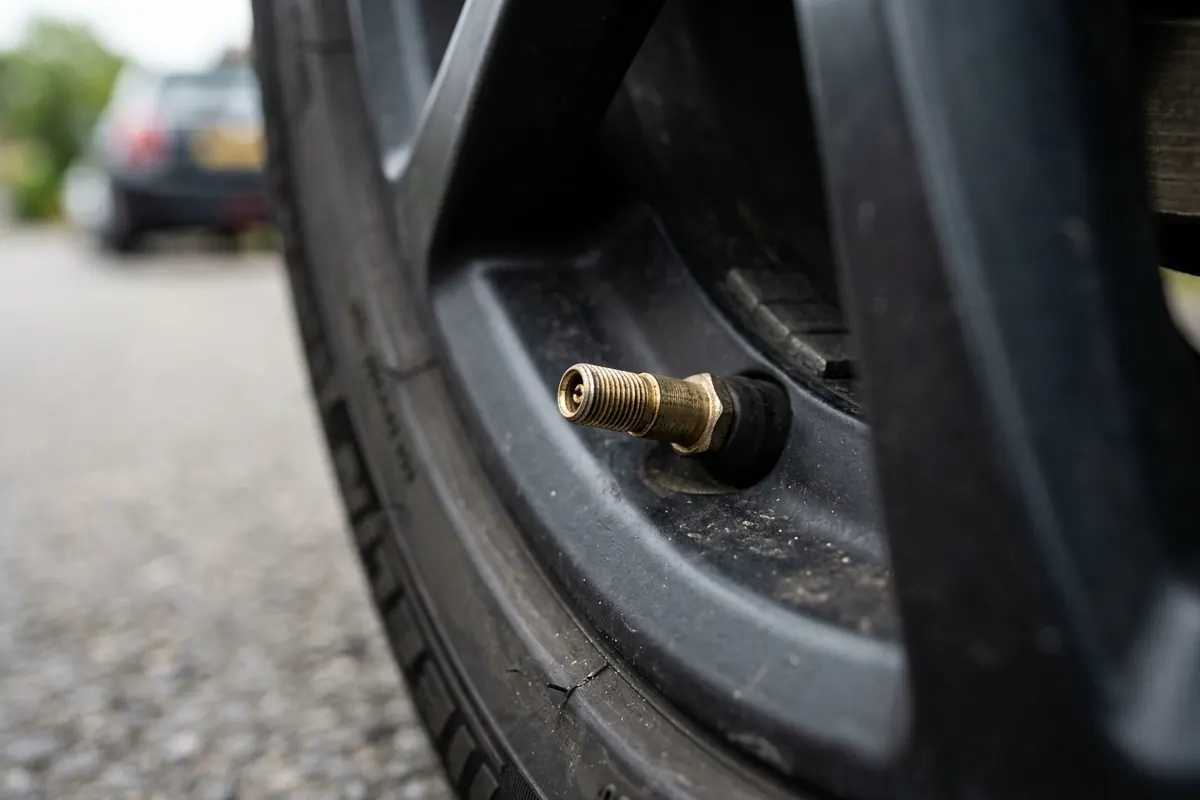
The sensor sits on the valve stem inside the wheel and is exposed to brake dust, road salt, and moisture. Corrosion at the sensor’s metal band can damage the electronics or cause the valve stem to snap, especially during a tire change if the technician is not careful. A sensor physically broken during a tire swap will produce a flashing TPMS warning the same way a dead battery will.
Is It Safe to Drive With a Flashing TPMS Light?
Short answer: cautiously, for a limited time, if you have confirmed the actual tire pressures are correct. The danger with any TPMS warning is that you no longer have an automatic safety net. If a tire starts losing air while the system is faulted, you will not get the usual low-pressure alert. You are flying without a net.
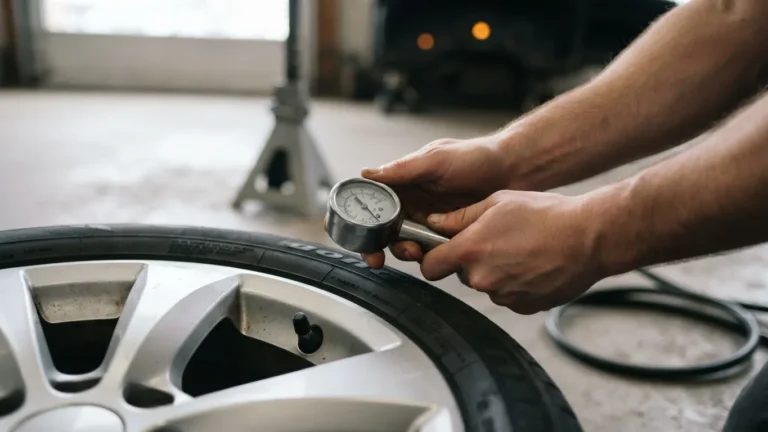
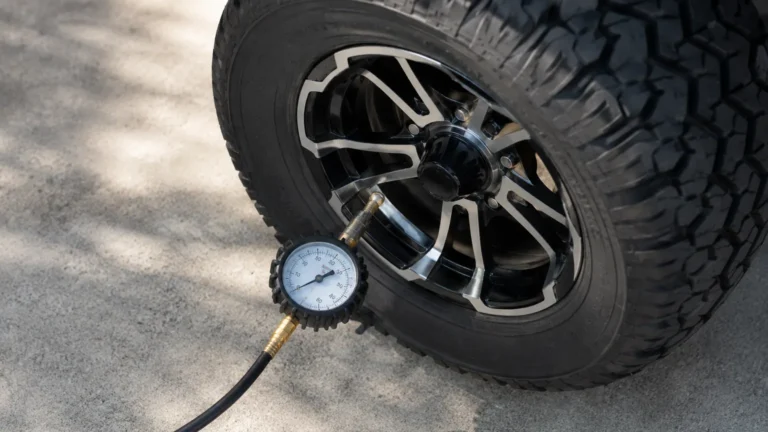
Before you drive anywhere after noticing a flashing TPMS warning, pull out a tire pressure gauge – a quality stick gauge or digital gauge, not the cracked freebie from a gas station – and check all four tires. If they match your vehicle’s recommended inflation (usually printed on the door jamb sticker, not the tire sidewall), you can drive to a shop without immediate danger. Keep the trip short and avoid highway speeds if you can.
For good background on why maintaining correct inflation matters beyond just the warning light, the tire care section of this site covers the full picture, from tread wear to seasonal pressure adjustments. The Tire Industry Association also publishes technician training resources that explain sensor protocols in detail if you want to go deeper on the technical side.
One thing to be clear about: never treat a flashing TPMS light as something to ignore indefinitely. Even if the tires are fine today, the system is broken and cannot protect you if something changes tomorrow.
The Relearn Procedure: When It Fixes Everything
A relearn is the process of re-synchronizing the sensor IDs to the correct wheel positions in the vehicle’s computer. There are three main types, and which one applies to your car depends on the make, model, and year.
Automatic Relearn
Many modern vehicles will relearn sensor positions on their own after you drive for about 10 to 20 minutes above 15 mph. You inflate the tires to spec, drive, and the computer sorts itself out. If this is your vehicle type, a TPMS light after rotation should go out on its own within one normal drive cycle. Check your owner’s manual under “TPMS reset” or “relearn” to confirm.
Stationary Relearn
Some vehicles require a specific button press or menu sequence while parked. You navigate to the TPMS menu on the instrument cluster or infotainment screen and follow the prompts, often pressing each valve stem in a specific order. This type is common on older GM and Chrysler vehicles.
OBD-II Tool Relearn
The most capable method – and the only one that works for new sensor IDs – requires an OBD-II TPMS scan tool that can read sensor IDs and write them to the vehicle’s ECU. Tire shops and dealerships use these routinely. If a sensor was replaced, this is the path. You cannot skip it and expect the light to go off on its own because the new sensor has a different unique ID that the car does not yet recognize.
Doing a relearn after every tire rotation is good practice regardless of whether the light is on. It costs nothing if the shop includes it – just ask.
Cost to Fix a Flashing TPMS Light
Costs vary quite a bit depending on what actually caused the fault.
| Repair Type | Typical Cost Range | Notes |
|---|---|---|
| TPMS relearn only | $0 to $50 | Often free at the shop that did the rotation; DIY with correct tool = free |
| Single sensor replacement | $50 to $150 per sensor | Includes OEM or aftermarket sensor + relearn; parts alone run $20-$80 |
| Full set of four sensors | $200 to $600 | Makes sense if multiple sensors are aging; bundle labor |
| Receiver module replacement | $150 to $400+ | Less common; dealership diagnosis often needed to confirm |
A few years ago I had a 2014 sedan where the TPMS light started blinking every winter, then stopped as the weather warmed. The shop confirmed one sensor’s battery was borderline – cold dropped it below threshold, heat brought it back. Replacing that one sensor, with labor and programming, ran about $85 at an independent tire shop. Two years later, a second sensor died the same way. Having a shop check sensor battery health as part of a routine tire service would have flagged both sensors earlier.
For broader context on what routine tire service should include, Consumer Reports has published useful guidance on evaluating tire shop quality and what to expect in service documentation.
Flashing TPMS vs. the “Service Tire Monitor System” Message
Some vehicles – particularly GM trucks and SUVs – display a text message rather than or in addition to the TPMS icon. “Service Tire Monitor System” is a step further than a simple flashing light; it typically indicates the system has run a diagnostic and confirmed a hardware fault. If you see that specific message, there is a separate guide for it that covers GM-specific diagnosis steps. The flashing-light behavior discussed throughout this article applies across makes and models more broadly.
The connecting thread: both signals mean the system has lost confidence in its ability to monitor pressure, and both require checking your tire pressure manually and then diagnosing the underlying fault.
Preventing TPMS Faults Before They Happen
Sensor batteries die eventually, and there is no way to stop that entirely. What you can do is reduce unnecessary wear on the system and catch issues early.
Ask your shop to scan TPMS sensor battery levels annually – many TPMS scan tools report remaining battery health, not just whether a sensor is alive right now. If sensors are reading below 30 percent battery, scheduling a replacement before the next winter avoids a mid-January headache. Proactive replacement at 8 to 10 years on high-mileage vehicles is cheaper than an emergency diagnosis.
Use metal valve stem caps instead of plastic ones. Plastic caps corrode onto the sensor’s valve stem in wet climates, and a technician forcing a stuck plastic cap can snap the sensor body. It is a small thing but surprisingly common as a source of sensor damage.
When mounting winter tires, either invest in sensors for the winter set or build a habit of checking pressures manually every two weeks through the cold season. Cold air contracts – pressures can drop 1 to 2 psi for every 10-degree Fahrenheit temperature decrease – so winter is exactly when you want a functioning monitor or a disciplined manual check routine. AAA recommends checking tire pressure at least once a month and any time the temperature drops significantly.
For a complete overview of dashboard warning lights beyond TPMS, including ABS and brake system alerts, the brake system section covers what each signal means and which ones demand immediate attention.
FAQ
Why does my tire pressure monitoring system light flashing happen only at startup and then go solid?
This is the system’s standard fault communication pattern. When the vehicle starts, the TPMS receiver broadcasts a request to all four sensors. If one or more sensors do not respond – because the battery is dead, the sensor is missing, or there is a signal problem – the light blinks for roughly 60 to 90 seconds during the scan attempt, then holds steady to indicate the fault is confirmed. It is not a glitch; that blink-then-hold sequence is the intended behavior for a system malfunction.
My tires are all at the correct pressure but the TPMS light is still flashing. What is wrong?
Correct pressure rules out low air as the cause, which means you almost certainly have a sensor fault. The most likely causes are a dead or nearly dead sensor battery, a sensor that was not reprogrammed after a rotation or replacement, or – less commonly – a faulty receiver module. Have a shop run a TPMS scan to read each sensor’s ID and battery status. That single test usually identifies the problem in a few minutes.
Is a flashing TPMS light more serious than a solid one?
In practical terms, yes. A solid light means a tire is low but the system is working. A flashing light means the monitoring system itself is broken, so you have no automatic protection if a tire starts losing air. The underlying mechanical problem may not be urgent, but the loss of protection is real. Check your pressures manually and get the fault diagnosed soon.
How much does it cost to fix a flashing TPMS sensor?
If the fix is just a relearn after a tire rotation, it can cost nothing to about $50. A single dead sensor replacement typically runs $50 to $150 depending on the vehicle and whether OEM or aftermarket parts are used. If multiple sensors need replacement – which often makes sense when one fails on an older vehicle – expect $200 to $400 or more for the full set with programming. A faulty receiver module is the most expensive scenario, generally $150 to $400 or higher.
Can I drive with the TPMS light flashing?
You can drive carefully if you have verified that all four tires are at the correct inflation using a manual gauge. Keep the drive short, avoid extended highway trips, and get the system checked promptly. Do not treat a flashing TPMS light as a minor nuisance to ignore indefinitely – with the system faulted, you will not get a low-pressure alert if a tire develops a slow leak.
Will the TPMS light go off on its own after I add air?
If the light was solid – indicating low pressure – it should go out after you inflate the tires to spec and drive for 10 to 20 minutes. If the light is flashing, adding air will not fix it, because the problem is a sensor or system fault rather than low pressure. Inflating to spec is still the right first step to rule out a pressure issue, but the flashing will continue until the underlying fault is resolved through a relearn or sensor replacement.
The bottom line
A tire pressure monitoring system light flashing at startup is not the same thing as a tire going flat. That 60-to-90-second blink-then-hold pattern is a system fault signal, most often caused by a dead sensor battery, a missed relearn after rotation, or a winter wheel set without sensors installed. The appropriate response starts with manually checking tire pressures with a gauge – never skip that step – and then scheduling a TPMS scan to pinpoint the fault. Repairs range from a free relearn to a modest sensor replacement, usually well under $200 for a single sensor. What is not safe is ignoring a flashing TPMS light for weeks, because a faulted system cannot protect you from a slow leak. Check the pressures, get a diagnosis, and restore the safety net.