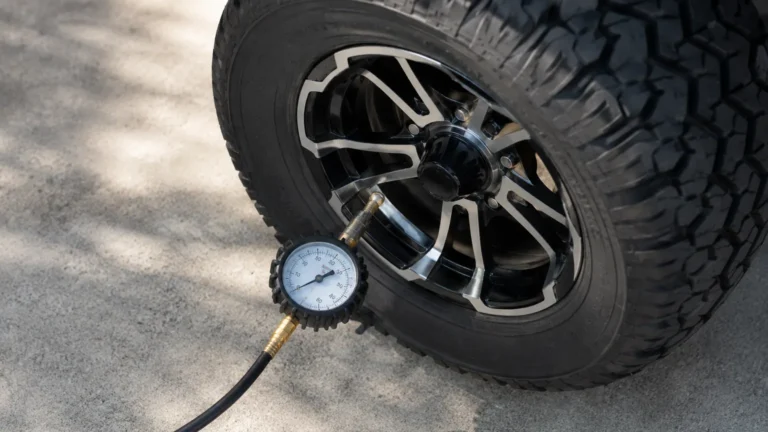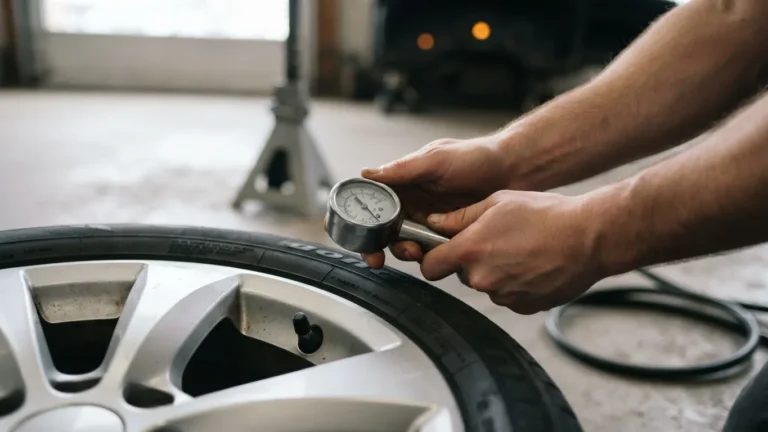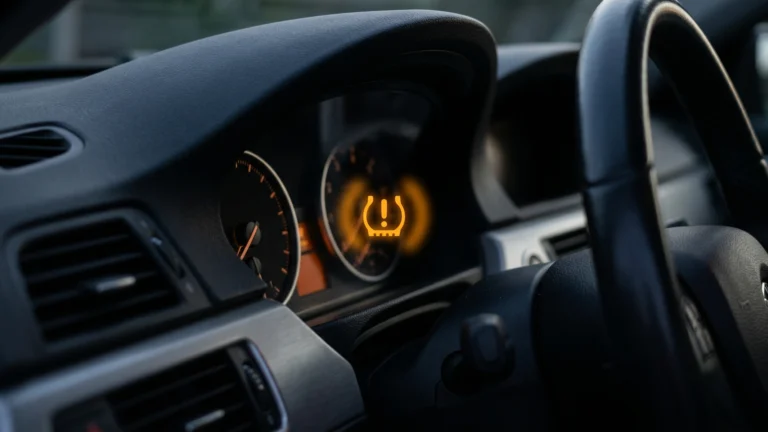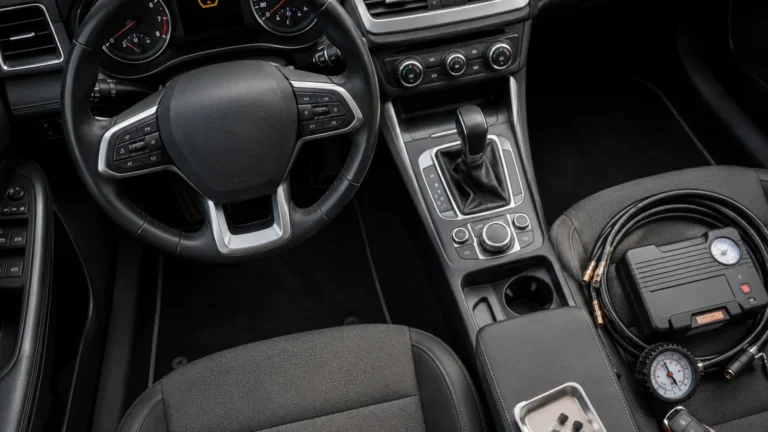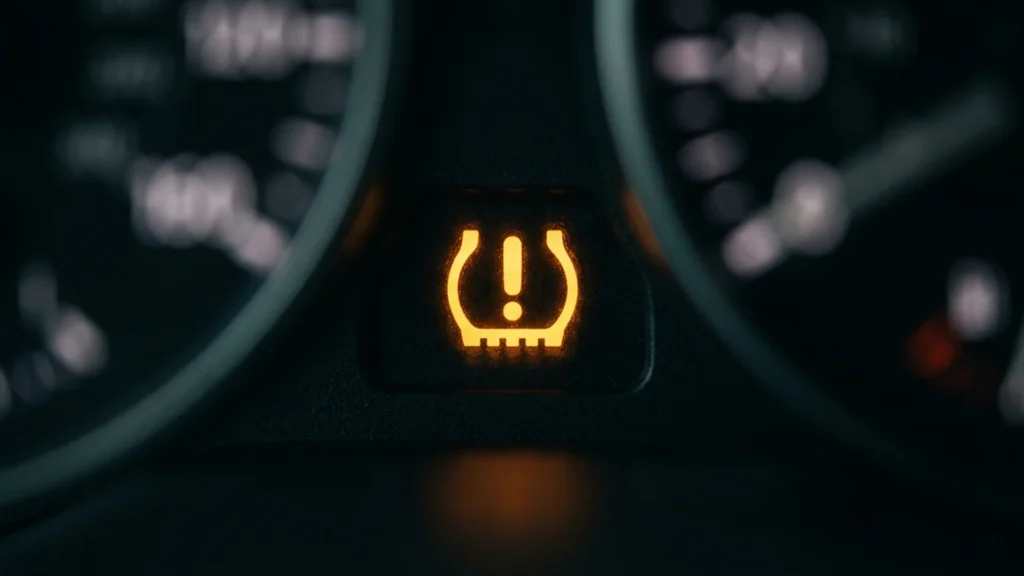
When your dashboard lights up with “service tire monitor system,” that is not a low-pressure warning – it is telling you the tire pressure monitoring system itself has a problem that needs attention. The distinction matters because ignoring it means you lose the system’s protection entirely. A simple low-tire warning disappears once you inflate the tires; this message stays on until the underlying hardware or software issue is resolved. Most drivers have never heard of a TPMS relearn, have no idea sensors have batteries that die, and end up paying for diagnostics they could have avoided with a little background knowledge. This guide covers exactly what causes the service message, how the system works under the hood, and what your realistic repair path looks like – including the three relearn procedures shops use and what each sensor replacement actually costs.
What TPMS Actually Does – and Why It Has Two Different Warnings
A tire pressure monitoring system does one job: alert you when a tire drops roughly 25 percent below its recommended inflation. For most passenger vehicles that threshold lands somewhere between 28 and 35 PSI. When a tire hits that threshold the system triggers a solid amber tire icon on the dash – the standard low-pressure light.
The “service tire monitor system” message is a separate alarm. It means something inside the monitoring apparatus itself is broken, misconfigured, or uncalibrated. The system cannot do its job, so it flags that fact for you rather than silently failing.
Direct vs. Indirect TPMS
There are two fundamentally different designs, and knowing which one your vehicle uses matters when diagnosing problems.
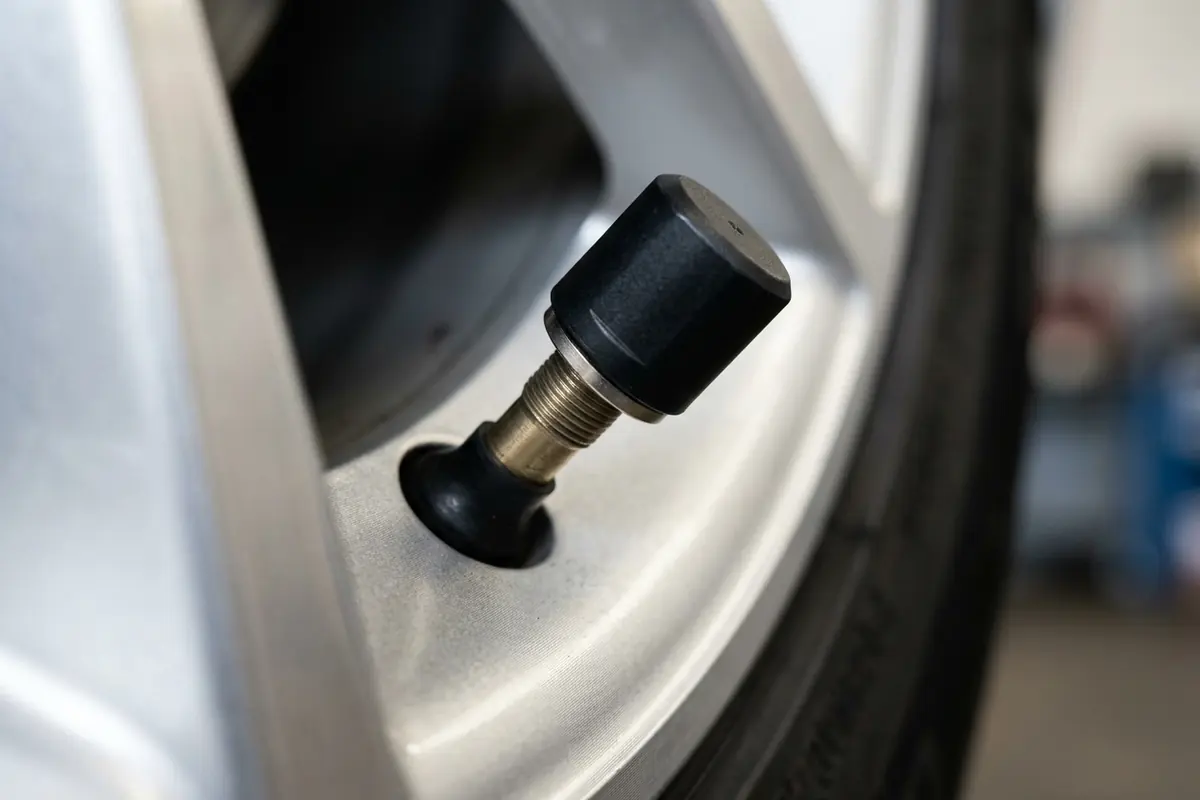
Direct TPMS places a battery-powered radio-frequency sensor on each wheel – usually mounted to the valve stem or banded to the rim. Each sensor broadcasts a pressure and temperature reading to a receiver module roughly once per minute while driving. General Motors popularized this design in the late 1990s, and federal law mandated TPMS on all new passenger vehicles sold in the US after September 2007. Direct sensors are accurate but they have batteries that die, and they can be physically damaged.
Indirect TPMS uses the ABS wheel-speed sensors already on the car. A slightly underinflated tire has a marginally smaller rolling circumference and spins fractionally faster than a properly inflated one. The system detects that discrepancy. Indirect TPMS has no battery to die, but it needs recalibration after every tire rotation or inflation adjustment – you usually do that by pressing a reset button. An indirect system going out of calibration is one of the most common reasons the service message appears on vehicles that use it.
The Six Most Common Causes of the Service Tire Monitor System Message
The message almost always traces back to one of six sources. Some are cheap and easy. Others require a shop visit and a new sensor. Here is a breakdown:
| Cause | Direct or Indirect | Fix | Typical Cost |
|---|---|---|---|
| Dead sensor battery | Direct only | Replace sealed sensor unit | $50-$100+ per sensor installed |
| Sensor damaged during tire change | Direct only | Replace sensor, relearn | $50-$100+ per sensor installed |
| System needs relearn after rotation | Both | Relearn procedure | $0-$40 at shop |
| Aftermarket wheels without sensors | Direct only | Install compatible sensors | $50-$100+ per wheel |
| Faulty TPMS receiver module | Direct only | Diagnose with scan tool, replace module | $100-$400+ for module |
| Indirect system out of calibration | Indirect only | Reset/recalibration procedure | $0 (owner-initiated) |
The Sealed Battery Problem
Direct TPMS sensors are sealed units. The battery is not replaceable – when it dies, the whole sensor goes with it. Battery life runs roughly 5 to 10 years or 100,000 miles under normal use, though extreme cold can accelerate the drain. If your vehicle is between seven and twelve years old and you have never replaced TPMS sensors, a dead battery is the most likely cause of the service message. According to the Tire Industry Association, sensor battery failure is one of the leading reasons vehicles cycle through TPMS service at high mileages. Sensors do not give a gradual warning – one day they transmit fine, the next they go silent and the service light appears.
How a Tire Change or Rotation Can Trigger the Message
This is the scenario that catches drivers most off guard. You go in for a routine tire rotation or a new set of tires, and you drive off the lot with a service message glowing on the dash. The shop did not necessarily break anything – though physical damage is possible. The more likely explanation is that the system needs a relearn after the sensors were moved to different wheel positions.
On direct systems, each sensor broadcasts a unique ID. The receiver module stores which ID belongs at which corner of the car. Rotate the tires and move the front-left sensor to the rear-right position and the module is now receiving a signal from an ID it does not associate with that corner. Depending on the vehicle, it may flag that mismatch as a system fault.
Physical damage is also real. TPMS sensors mount to the inside of the rim or thread through the valve stem hole. A careless tire iron during a manual dismount can snap a sensor or crack its housing. A damaged sensor will stop transmitting, and the service message follows within a few miles. Good tire maintenance includes asking your shop specifically whether they have checked TPMS sensor condition whenever tires are changed.
The Three Relearn Methods – and Which One You Need
A TPMS relearn is the process of teaching the receiver module where each sensor sits. There is no one universal method. The approach depends on the vehicle make, model year, and whether you have access to a scan tool.
Auto-Relearn by Driving
Some vehicles – particularly certain Honda, Toyota, and Subaru models – will re-associate sensor positions automatically after you drive at highway speeds for 20 to 30 minutes. The system picks up each sensor’s ID from the wheel-speed correlation data and updates its memory without any input from you. If your vehicle supports this method, the service light will extinguish on its own once the drive cycle completes. Check your owner’s manual under “tire pressure monitoring system” to see if your vehicle lists an auto-relearn procedure.
OBD Relearn Tool
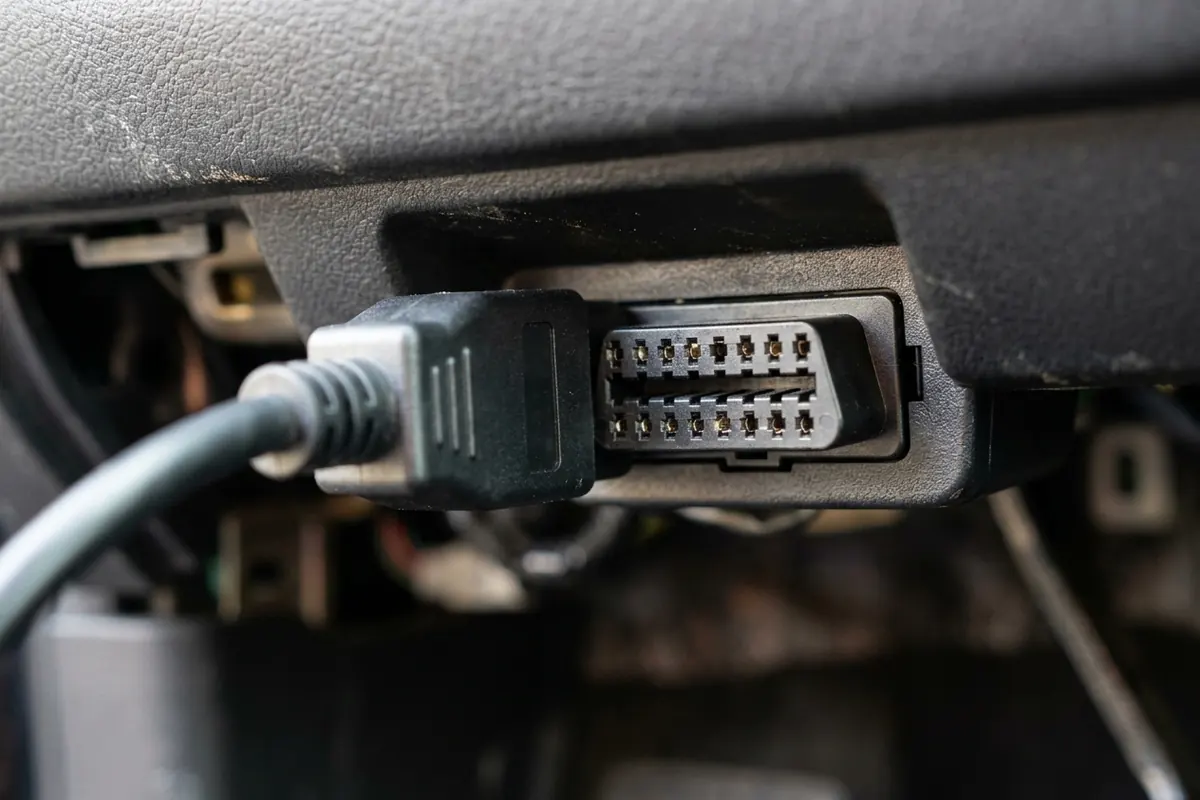
A TPMS relearn tool plugs into the OBD-II port under the dash. Many shops use dedicated TPMS tools from brands like Autel or Bartec. You activate each sensor in sequence – usually by holding the tool near the valve stem to trigger a signal – and the tool communicates the new position assignments to the vehicle’s receiver. This is the most reliable method across most makes and models, and it works after new sensor installations as well as rotations. Consumer Reports has consistently noted that TPMS service is a repair category where DIY-capable owners can save money by purchasing a relearn tool if they change tires themselves regularly – entry-level tools run $30 to $60 for basic relearn functions.
Magnet or Manual Relearn
A handful of older vehicle platforms support a magnet-based relearn. You hold a TPMS activation magnet against each valve stem in a specific sequence – front-left, front-right, rear-right, rear-left, or whatever order the manual specifies – and each sensor chirps an acknowledgment through the horn or hazard lights. This requires no powered tool and costs almost nothing beyond the magnet itself, but the sequence must be exact or the procedure fails. It was more common on early-2000s GM and Ford platforms.
If you are unsure which method applies to your car, a tire shop or dealership can run the relearn in 10 to 15 minutes and confirm whether a dead or damaged sensor is also involved. Do not assume driving around for a day will clear a service message on a vehicle that requires an OBD relearn – it will not, and you will simply drive without functioning TPMS the whole time.
Getting Sensors Scanned Before You Pay for Replacements
Before spending money on new sensors, have the system scanned. A basic TPMS scan identifies which sensor – if any – is failing to transmit. If only one sensor has gone silent, you replace that one. If the scan shows all four sensors transmitting correctly, the problem may be the receiver module or a wiring issue rather than the sensors themselves. Replacing four sensors when one module is the culprit is an expensive mistake.
Most tire shops, dealerships, and many auto parts stores will scan TPMS sensors at no charge or for a nominal fee. The scan takes under five minutes. Bring your car in for a scan first, get the sensor ID of the failed unit, and then decide on a repair path.
One thing worth knowing: aftermarket “universal” sensors and OEM sensors behave differently in relearn procedures. Some vehicles accept only OEM sensors; others work fine with programmed aftermarket units that are less expensive. Your shop should know this for your specific vehicle, but asking explicitly – “will an aftermarket sensor work on my car?” – is reasonable before approving any repair.
Proper tire pressure management and a functioning TPMS work together; one without the other leaves you partially blind to developing problems.
Sensor Replacement Costs – What to Actually Expect
Sensor pricing varies by vehicle and sensor type. Here is a realistic breakdown based on 2024-2025 market rates:
| Sensor Type | Parts Cost (each) | Installation Labor | Total Per Sensor (installed) |
|---|---|---|---|
| Aftermarket universal (programmable) | $15-$35 | $20-$40 | $35-$75 |
| OEM replacement | $40-$100 | $20-$40 | $60-$140 |
| Dealership OEM (luxury or Euro) | $80-$200+ | $30-$60 | $110-$260+ |
Labor cost reflects the time to demount the tire, install the sensor, remount, balance, and run the relearn. If you are already having tires replaced, bundling sensor replacement at the same time saves on labor because the tires are already off the rims. Replacing all four sensors in a single visit when the vehicle is six or more years old often makes financial sense – sensors age together, and a second shop visit in two years costs more in total than doing all four now.
If you own a full-size spare tire mounted on a steel rim without a sensor, keep in mind that swapping to the spare may also trigger the service message. Some vehicles will tolerate a missing spare-wheel sensor; others will not.
Should You Be Worried? When to Act Fast vs. When to Wait
The service tire monitor system message is not an emergency in the way a temperature warning or oil pressure drop is. You can drive on it. But you should resolve it soon, because a non-functioning TPMS means you have no automatic warning if a tire starts losing pressure. That matters most at highway speeds, where a slow leak can escalate to a blowout in the time it takes to notice the handling has changed.
AAA notes that underinflated tires are a significant contributor to roadside tire failures, and TPMS exists precisely to catch gradual leaks before they become dangerous. Driving without a working system puts that safety net back in your hands – which means checking tire pressure manually every few weeks until the system is repaired.
If the service message appeared alongside a flashing TPMS light – rapid blinking for about 60 to 90 seconds then holding solid – that specific combination suggests a broader system fault rather than just a single dead sensor. That scenario deserves its own diagnostic path, which is covered in a dedicated guide on TPMS light flashing behavior. The service message alone, without the flashing pattern, is more straightforward and almost always resolves with sensor replacement or a relearn.
FAQ
What does “service tire monitor system” mean exactly?
It means the tire pressure monitoring system has detected an internal fault – not just low pressure in a tire. Something in the hardware or calibration is broken: a dead sensor battery, a physically damaged sensor, the system needing a relearn after tire work, a faulty receiver module, or wheels that lack sensors entirely. The vehicle cannot monitor tire pressure reliably until the fault is corrected.
Can I keep driving with the service tire monitor system message on?
Yes, it is not an immediate safety emergency. The vehicle drives normally. However, your TPMS is not functioning, which means you have no automatic alert if a tire loses pressure. Check tire pressure manually every one to two weeks until the system is repaired, and pay attention to any change in handling. Do not leave it unaddressed for months.
Will the message clear on its own after I inflate my tires?
No. Inflating tires clears a standard low-pressure warning, but the service message points to a system fault – not a pressure reading. The light will not go away until the underlying problem is fixed, whether that is a relearn procedure, a sensor replacement, or a module repair. Adding air will not help.
How long do TPMS sensors last before the battery dies?
Sensor batteries typically last 5 to 10 years or roughly 100,000 miles under normal driving conditions. Cold climates can shorten that range. Since sensors are sealed units, a dead battery means replacing the entire sensor – there is no way to swap just the battery. Vehicles older than seven years that have never had sensor service are prime candidates for a battery-related service message.
Does a tire rotation require a TPMS relearn?
On many direct TPMS vehicles, yes. Moving sensors to different wheel positions can confuse the receiver module, which stores each sensor’s ID mapped to a specific corner of the car. Whether your vehicle requires a relearn after rotation depends on the make and model – some re-associate positions automatically, others need a tool or manual procedure. Ask your shop explicitly whether they perform a TPMS relearn with every rotation.
How much does it cost to fix the service tire monitor system message?
Cost depends entirely on the cause. A relearn after a tire rotation may cost nothing if the vehicle does it automatically, or $20 to $40 at a shop. A single failed sensor runs $50 to $100 or more installed, depending on whether you use an aftermarket or OEM part. Replacing all four sensors on an older vehicle can run $200 to $400 total. A faulty receiver module is less common but can add $100 to $400 or more. Start with a free scan at a tire shop to identify exactly what failed before committing to repairs.
The Bottom Line
A “service tire monitor system” message is your vehicle telling you the monitoring hardware needs attention, not just air in a tire. The most common fix is a dead sensor battery on a vehicle older than seven or eight years, followed by a relearn procedure after tire work. Neither is an expensive repair, especially if you catch it early and bundle sensor work with a scheduled tire change. Get the system scanned before authorizing any parts replacement – that single step frequently saves money by identifying which sensor is at fault. If you are not comfortable with the diagnostic or relearn process, take the car to a tire shop and ask them to walk through the service message with you. Driving with a non-functional TPMS is manageable short-term but not a situation to leave unresolved for long.