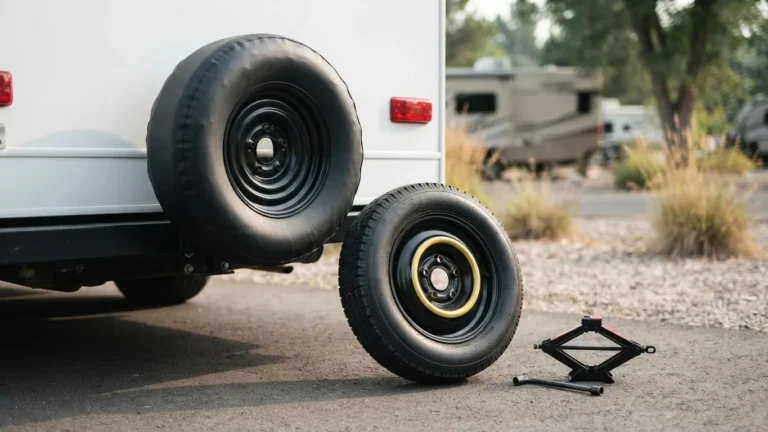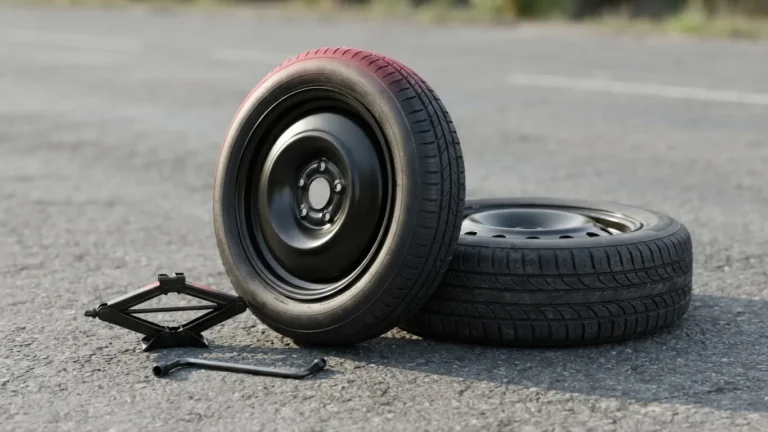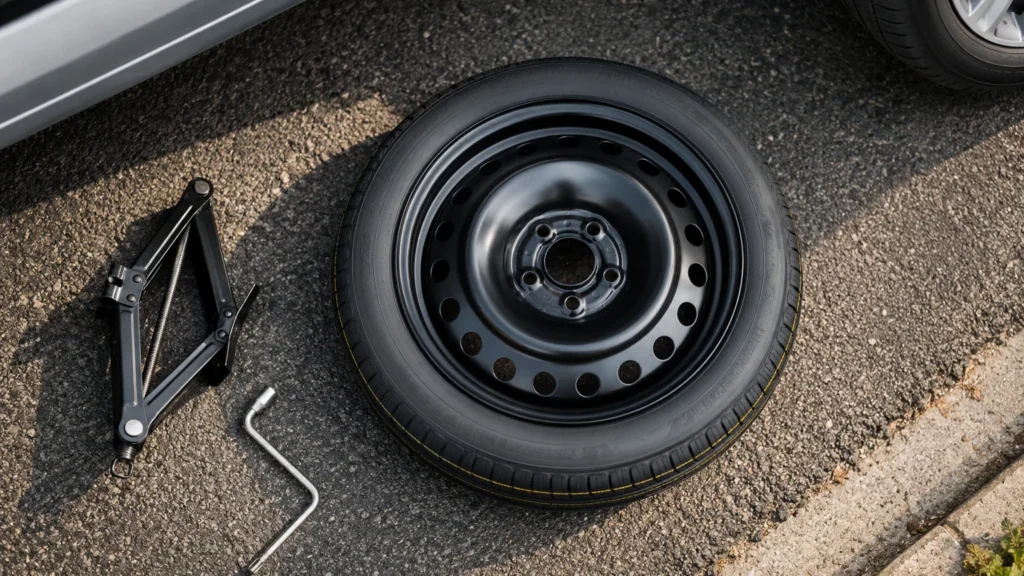
Quick version: how long can you drive on a spare tire depends on the type, but the safe default is the 50/50 rule: on a compact “donut” spare, drive no more than about 50 to 70 miles and stay under 50 mph. A donut is an emergency tire built to reach a repair shop, not to live on your car. Full-size spares can go farther if they are in good shape, and run-flats give you roughly 50 miles at reduced speed. On all-wheel-drive vehicles, swap back to a proper tire as fast as possible to avoid drivetrain damage.
The 50/50 rule, and why it exists
The quickest answer drivers actually need is the 50/50 rule: with a donut spare, keep your distance under about 50 miles and your speed under 50 mph. Most carmakers put the real range at 50 to 70 miles and cap the speed near 50 mph, and those numbers are not arbitrary caution. A donut is small, narrow, and built to save trunk space, with a shallow tread and a lightweight structure that was never meant for sustained use. It cannot shed heat the way a full-size tire does, so the faster and farther you push it, the hotter it gets, and heat is what destroys tires. Treat 50/50 as a ceiling, not a target: less is always safer, and the goal is simply to reach a shop.
Why a donut cannot do what a real tire does
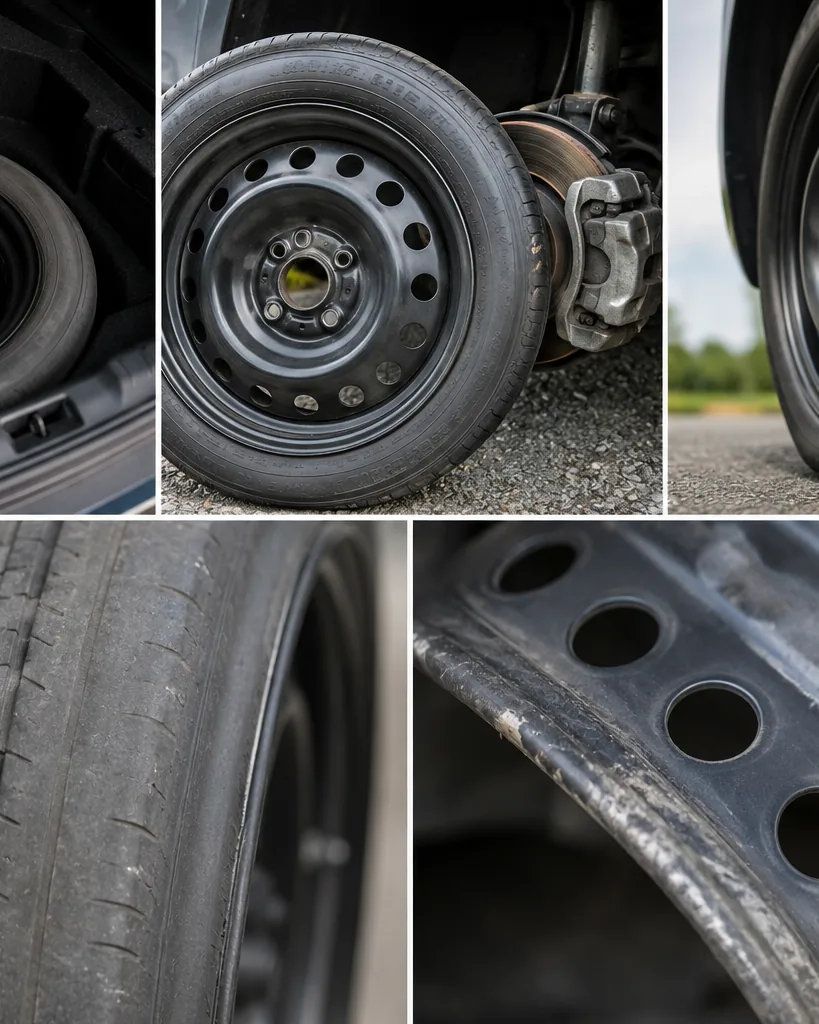
It helps to understand what you are actually rolling on. A standard tire is engineered for high speeds, heavy loads, and tens of thousands of miles, with deep tread for grip and a robust casing that manages heat. A donut throws all of that out to fit in a small well in your trunk. The narrow contact patch gives you less grip, the shallow tread handles water poorly, and the thin construction builds heat quickly at speed. That combination is why exceeding the limits is genuinely dangerous rather than merely against the rules: an overheated donut can suffer a blowout, and a blowout on a small tire that is already low on grip is how drivers lose control. The tire is a tool for a single job, getting you off the shoulder and to a repair, and it does that job well only within its limits.
Donut, full-size, and run-flat: different limits
Lumping every spare together is the mistake most articles make, because the limits genuinely differ.
| Spare type | Distance | Speed |
|---|---|---|
| Compact “donut” | ~50-70 miles | Under 50 mph |
| Full-size spare | Longer, if tread and pressure are good | Normal, with caution |
| Run-flat (no spare) | ~50 miles | Reduced, often ~50 mph |
A full-size matching spare can effectively replace a damaged tire for a while, though you should still check its age, tread, and pressure since it has likely been ignored for years. A run-flat is not a spare at all but a tire designed to keep going briefly after a puncture, typically about 50 miles at reduced speed. Knowing which one your car carries changes how much breathing room you have.
The all-wheel-drive warning
If your vehicle is all-wheel drive or four-wheel drive, a donut is more than an inconvenience; it is a clock. A compact spare has a smaller diameter than your other three tires, so it spins faster to cover the same ground, and that mismatch forces the center differential and drivetrain to constantly compensate. Over even modest distances that can overheat and damage expensive components and may trigger an AWD or traction warning lamp. The practical rule is to drive the shortest distance possible, at the lowest reasonable speed, straight to a shop, and to make the full-tire repair a priority rather than something you put off for a week. What is a minor errand on a front-wheel-drive car can become a transmission bill on an AWD one.
Check the spare’s pressure before you trust it
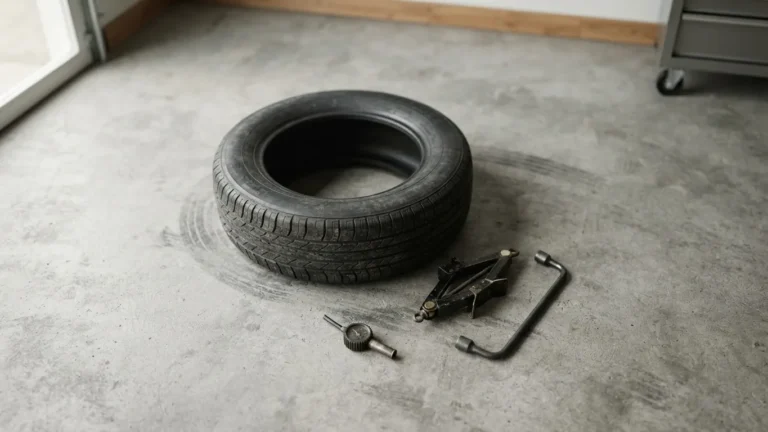
Here is the step almost everyone forgets in the panic of a roadside change: the spare has been sitting in your trunk losing air for months or years, so check its pressure before you rely on it. Many compact donuts call for a much higher pressure than regular tires, often around 60 psi, which is printed right on the sidewall, and an underinflated donut overheats and wears even faster than a properly filled one. Keep a small gauge in the glovebox and confirm the pressure when you fit the spare, then top it up at the first gas station if it is low. The National Highway Traffic Safety Administration ties underinflation directly to blowouts and loss of control, and a donut is the least forgiving tire on your car to run soft. Two minutes with a gauge can be the difference between reaching the shop and a second emergency.
How to drive safely while on a spare
Once the donut is on, change how you drive for the rest of the trip. Stay off highways and high-speed roads where you would be tempted past 50 mph, and stick to surface streets where lower speeds are natural. Brake earlier and corner gently, because the narrow tire offers less grip and your anti-lock and stability systems are working with a compromised wheel, which lengthens stopping distances. Avoid heavy loads and skip the road trip; this is a drive to the repair shop, not the start of your week. Wet, icy, or uneven surfaces multiply the risk, so slow down further when traction drops. Groups such as AAA stress that the spare buys you a safe, short transit and nothing more, and driving it like a normal tire is exactly how that safety margin disappears.
Spares, sensors, and your tire warnings
A spare also interacts with your car’s monitoring, which surprises people. Most donuts have no tire-pressure sensor, so fitting one can leave the tire-pressure warning lit until your full tire is back on, which is normal rather than a fault. If you want to understand what that dashboard light is actually telling you, our explainer on the tire-pressure warning and our guide to reading tire sidewalls both help you separate a real pressure problem from a missing-sensor quirk. The broader habit worth building is checking all your tires, including the spare, on a schedule, so the emergency tire is actually ready the day you need it. For more on keeping your tires road-ready, the tire care hub pulls the routine together.
When to get the real tire fixed
The honest answer to “how long” is “as briefly as you can manage,” so plan the repair immediately. Drive directly to a tire shop or schedule same-day service rather than parking the car on the donut overnight and forgetting it. Have the original tire repaired if the damage is a simple tread puncture within the repairable zone, or replaced if the sidewall is cut, the puncture is large, or the tire ran flat. Ask the shop to reset any tire-pressure or AWD warnings and to confirm your spare is reinflated and stowed for next time. The spare did its one job; finishing the repair quickly is how you keep a flat tire from turning into a bigger, costlier problem down the road.
Changing to the spare safely on the roadside
Getting the spare on without becoming a second emergency is its own skill, and a few habits matter. Pull completely off the road onto firm, level ground, switch on your hazards, and if you carry them, set reflective triangles 10 to 50 feet behind the car so traffic sees you early. Apply the parking brake and, on an automatic, leave it in Park before you lift anything. Loosen the lug nuts a quarter turn while the tire is still on the ground, then jack the car at the reinforced jacking point shown in your manual, never on body panels. Swap the wheel, hand-tighten the nuts in a star pattern, lower the car, and only then torque the nuts fully, again in a crisscross order. The whole job takes most drivers 15 to 30 minutes, and rushing it on a soft shoulder is how a flat tire turns into a fall off the jack. If the location feels unsafe, stay belted in the car and call for roadside assistance instead.
Full-size spares: the longer-term option
Not every car carries a donut, and if yours has a full-size matching spare you have more room, with caveats. A full-size spare is a normal tire, so it can in principle run at normal speeds and for normal distances, which is why trucks and some SUVs use them. The catch is that a spare which has sat untouched for years is rarely road-ready: the rubber ages whether or not it is used, the pressure has almost certainly bled down, and the tread may not match your other three tires, which affects handling and, on all-wheel drive, the drivetrain. Treat a full-size spare as a strong stopgap rather than a free pass: check its age via the sidewall date code, confirm pressure, and rotate it into service properly if you end up keeping it on. The standards governing tire markings and load ratings come from SAE International and the Department of Transportation, and the date code on the sidewall tells you whether your “spare” is actually a decade-old liability.
Repair or replace: what it costs after the spare
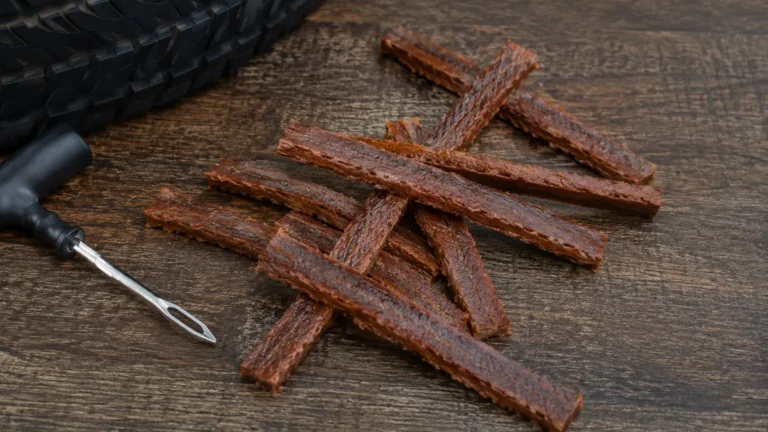
The spare only buys time, so it helps to know what waits at the shop. A simple tread puncture within the repairable central zone is usually a 20 to 40 dollar patch-and-plug, and a good shop will repair rather than replace when the damage allows. A tire that ran flat, has a sidewall cut, or has a puncture larger than about a quarter inch generally needs replacing, which runs anywhere from 100 to 300 dollars per tire depending on size and type. On all-wheel-drive vehicles you may be advised to replace more than one tire to keep the diameters matched, which is a real cost worth understanding before you are surprised by it. Budgeting for the repair the moment the spare goes on, rather than driving on the donut for days, keeps a flat from snowballing into avoidable damage.
Common mistakes drivers make on a spare
A handful of avoidable errors turn a manageable flat into a hazard. The biggest is treating the donut like a real tire and merging onto the highway at 70 mph, which is exactly the heat-and-speed combination donuts are not built for. The second is forgetting to check the spare’s pressure before driving, then wondering why it feels vague. The third is leaving the donut on for weeks because the car “drives fine,” which quietly risks AWD damage and leaves you with no spare at all if you get a second flat. The fourth is ignoring the spare during routine maintenance, so the one time you need it, it is flat or rotted. And the fifth is over-tightening or under-tightening the lug nuts by skipping the torque step, which can warp a rotor or, worse, let a wheel work loose. Avoid these five and the spare does its job cleanly.
What if your car has no spare at all?
Many newer cars ship without any spare to save weight and space, and drivers are often surprised to learn it the hard way. Instead, you may find a tire inflator and sealant kit, or the car may ride on run-flat tires. A sealant kit can plug a small tread puncture temporarily by pumping a liquid and air into the tire, and it typically gets you about 50 miles at reduced speed to reach a shop, but it does nothing for a sidewall cut or a blowout and it makes a proper repair messier afterward. Run-flat tires let you keep driving on a punctured tire for roughly 50 miles at up to about 50 mph thanks to reinforced sidewalls, but they cannot be driven on indefinitely and usually must be replaced rather than repaired. If your car has neither a spare nor run-flats, the safest backup is a membership with a roadside service or a compact inflator kit kept in the trunk. The key is to find out what your car carries before you need it.
Take five minutes this week to open your trunk, lift the cargo floor, and confirm exactly what is there: a compact donut, a full-size spare, a sealant and inflator kit, or nothing at all. While you are there, check that the jack and lug wrench are present and that a donut, if you have one, holds its roughly 60 psi. Knowing your setup in advance changes your roadside options entirely, because the response to a flat is completely different depending on whether you can mount a spare, plug the tire with sealant, limp home on a run-flat, or simply need to call for a tow. Discovering you have no spare at 11 p.m. on a dark shoulder is the worst possible moment to learn the difference, and a single check now removes that surprise for good.
Frequently asked questions
How many miles can you drive on a donut spare?
Follow the 50/50 rule: most manufacturers limit a donut to about 50 to 70 miles and a top speed of 50 mph. It is an emergency tire meant to reach a repair shop, not for extended or highway driving.
How fast can you drive on a spare tire?
Keep a donut under 50 mph. It is small and narrow, heats up far faster than a normal tire, and exceeding the limit raises the risk of a blowout and loss of control, especially on wet or uneven roads.
Is driving on a spare bad for an all-wheel-drive car?
Yes. A donut’s smaller diameter forces the differential and drivetrain to work unevenly and can cause expensive damage, and may trigger an AWD warning. On AWD or 4WD vehicles, change the spare as quickly as possible.
What pressure should a donut spare be?
Often around 60 psi, much higher than a normal tire, and the exact figure is printed on the spare’s sidewall. Check it before you drive, because a spare that has sat for months is usually low, and an underinflated donut overheats quickly.
Can you use a full-size spare permanently?
A matching full-size spare can serve longer than a donut, but treat it as a stopgap: verify its age, tread depth, and pressure, and still get your damaged tire repaired or replaced so you keep a usable spare.
Bottom line: how long you can drive on a spare comes down to the type and the 50/50 rule, with a donut good for roughly 50 to 70 miles under 50 mph. Check its pressure before you trust it, drive gently and off the highway, and treat all-wheel drive as an urgent reason to swap back fast. A spare is a bridge to a repair, not a destination; use it that way and it will do exactly what it was built to do.
One habit ties all of this together: think about the spare before the flat, not during it. The drivers who handle a blowout calmly are the ones who already know what is in their trunk, what its limits are, and where the nearest tire shop is. The spare is a tool for a single emergency, and like any emergency tool, it only works if you have checked it before the moment you need it.
Disclaimer: This article is general automotive information, not specific to your vehicle. Always follow the distance, speed, and pressure limits printed on your spare and in your owner’s manual, and have your original tire repaired or replaced promptly.
Sources
- National Highway Traffic Safety Administration – tire pressure, underinflation, and blowout safety.
- AAA – spare tire and roadside safety guidance.
- SAE International and vehicle manufacturers – temporary spare speed and distance ratings.