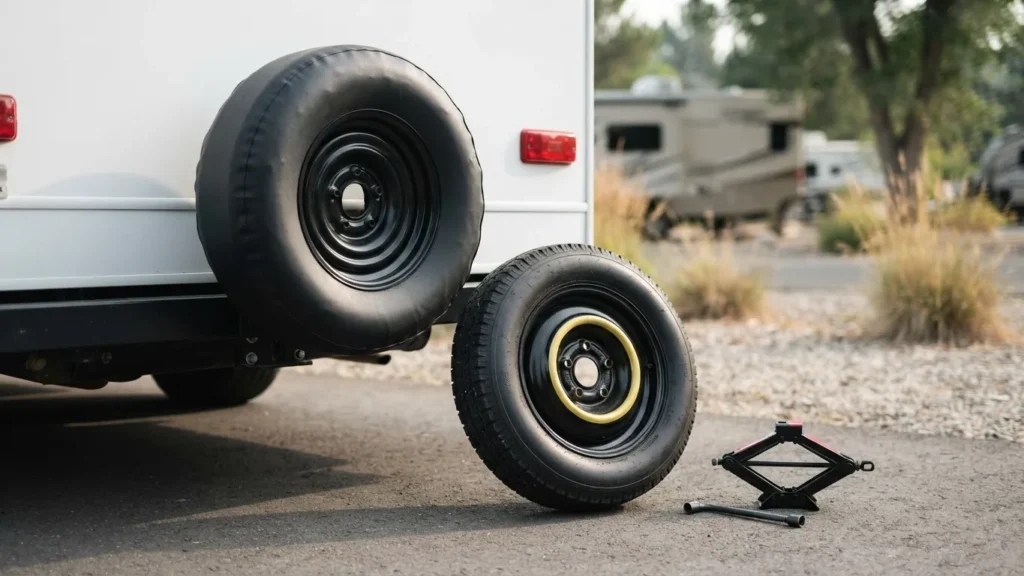
A cover that is one inch off its tire looks sloppy and won’t stay put above 55 mph, according to Jeep Decal Store. That single tolerance is where most buyers go wrong before they ever think about color or fabric. Choosing a cover for a spare tire on a camper is really two decisions stacked together: get the diameter right so the thing holds at highway speed, then pick a material matched to your climate rather than to whichever seller you happen to be reading. And there is a third fact neither decision touches, which is that the spare underneath has an age limit a cover slows but never stops.
This guide handles all three. It reconciles the competing ways to size a cover, lays out vinyl against polyester-nylon against canvas without taking a seller’s word for it, and pins down when the spare itself must go regardless of how clean it looks.
Covers are sized by tire diameter, not by vehicle type: a 30-inch cover fits any 30-inch spare, whether it rides on a Jeep, a travel trailer, or a truck camper. Measure the mounted spare directly by standing it upright, measuring ground to top of tread, doubling that number, and rounding up to the nearest inch. Most travel trailers and fifth wheels run ST225/75R15 (about 28 inches) or ST235/80R16 (about 30 inches), taking a 28- or 30-inch cover. Expect to pay roughly $20 to $100. Hold the error under one inch so it stays on above 55 mph.
Three Ways to Size a Cover for a Spare Tire on a Camper, and Which One to Trust
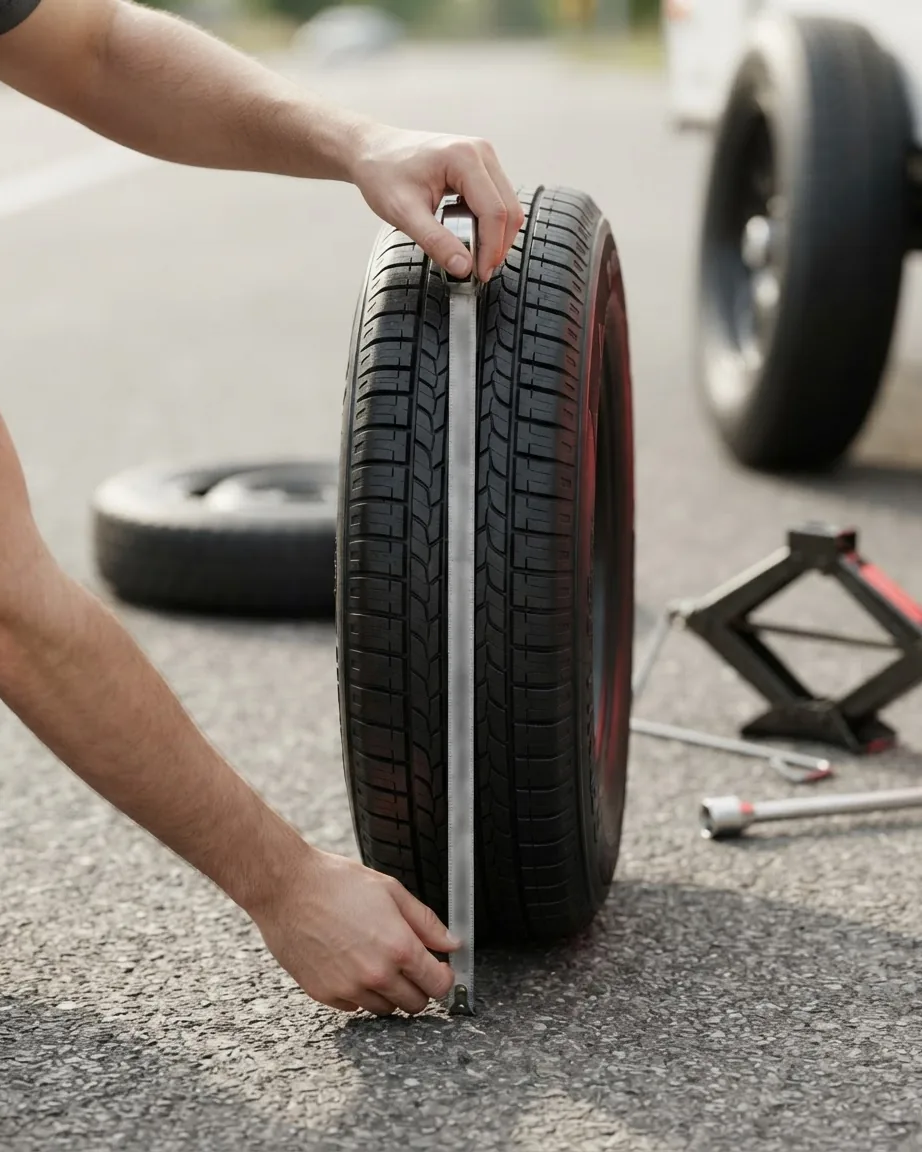
You will run into three different methods, and they don’t always land on the same number. The most conservative is the direct measure: stand the tire upright, measure from the ground to the top of the tread, and double that figure. Jeep Decal Store recommends this over the rim size stamped in your owner’s manual precisely because RV and trailer tires vary more than passenger tires do. The number on the sidewall tells you the tire, not the finished outside diameter you actually need to cover.
The second route reads the printed tire-size code into a calculator. AirSkirts describes noting the code on the tire, something like ST235/80R16, and plugging those numbers in to get a diameter. On a code like that, SpareCover breaks down what each figure means: the first number is section width in millimeters, the middle number is the aspect ratio as a percentage, and the last is rim diameter in inches. Useful, but it computes a nominal size, not the slightly larger real-world diameter a mounted, inflated tire shows.
The third route skips math entirely and buys by a discrete lettered size. Pick the letter that matches your measured diameter.
When these disagree, trust the direct measure and round up. It is the only method that accounts for a mismatched or oversized RV spare the manual never anticipated. The sidewall calculator is a fine cross-check; the lettered chart is convenient once you know your real diameter. If two routes differ by more than an inch, go with the larger, because a loose cover is the failure mode that leaves you fishing it off the shoulder of the interstate.
Why a Camper Spare Needs a Cover at All: Dry Rot, Heat, and Theft
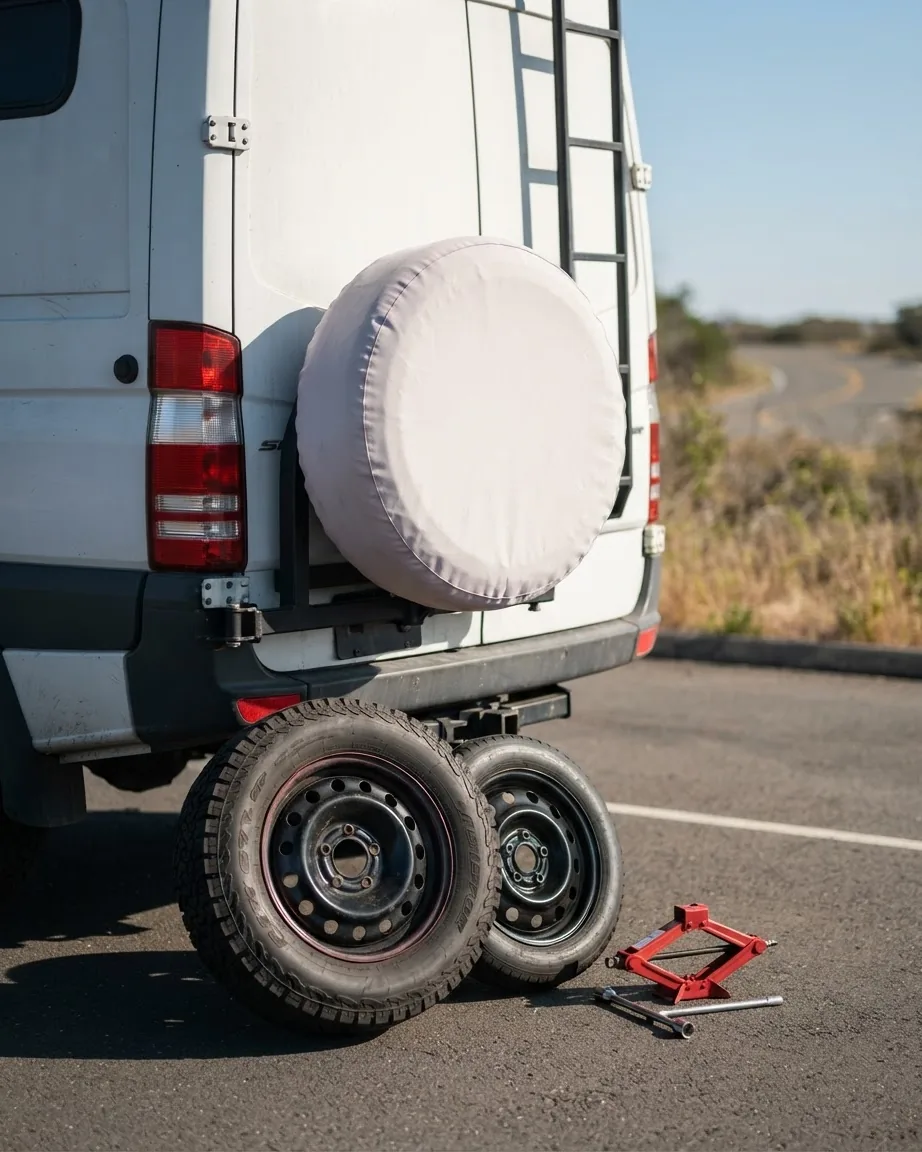
The threat a cover answers is not dirt. It is ultraviolet light. RV LIFE describes dry rot as the process of UV radiation evaporating the oils in the rubber and leaving it cracked and damaged. Jeep Decal Store makes the consequence concrete: the sidewall develops surface cracks that compromise structural integrity, often before the tread shows any wear. A spare that looks full and new can be failing on the part you don’t inspect.
Here is the correction that trips up buyers who assume any cover is strictly protective: color matters. RV LIFE warns against a black spare tire cover because it traps heat and makes the tire even hotter than its surroundings. Since heat cycling is one of the forces that drives dry rot in the first place, a dark cover can work against the tire it is meant to protect. Choose a lighter shade for a rig that bakes in the sun.
Beyond aging, a cover keeps the spare clean and adds a small barrier against casual theft. None of that is dramatic, which is exactly why the real argument for a cover is the slow, invisible damage, not the visible kind.
Vinyl vs Polyester-Nylon vs Canvas: Match the Material to Your Climate, Not the Seller
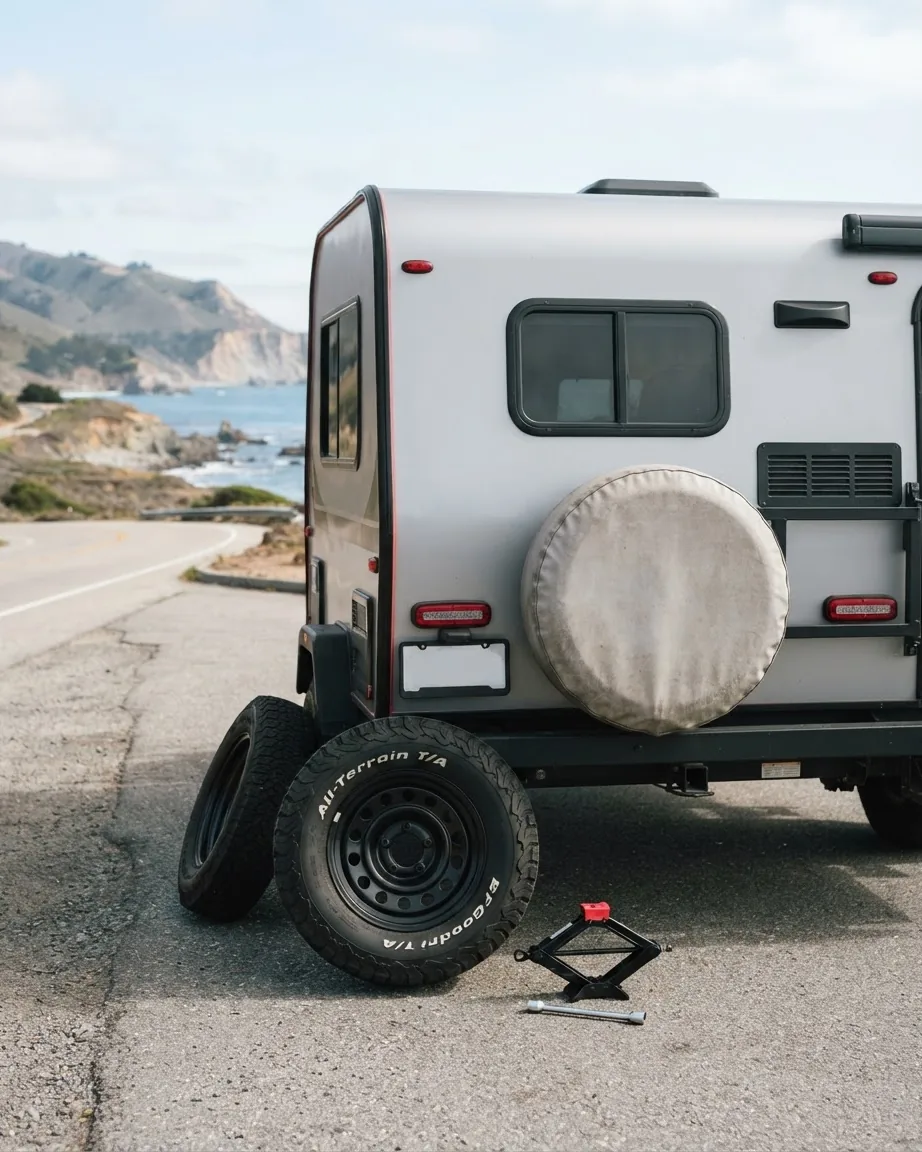
The material advice you find online is mostly seller-biased, and two of the loudest voices flatly disagree. SpareCover, which sells vinyl, argues vinyl is the only material that provides full UV protection, waterproofing, and fade resistance. Jeep Decal Store, which sells a polyester-nylon weave, counters that vinyl covers are stiffer, heavier, and more prone to cracking in freezing temperatures. Both are commercial sellers advocating their own product, so neither verdict settles the question on its own.
What actually settles it is grade and climate. If your camper lives in strong sun, rain, or coastal salt air, a marine-grade vinyl earns its keep. If you store in hard winter cold, vinyl’s tendency to stiffen and crack in freezing temperatures is a genuine drawback, and a coated polyester-nylon weave stays lighter and more flexible. Canvas is breathable and tough but absorbs moisture and stains more easily, which makes it a reasonable pick for a garaged rig in a mild climate and a poor one for anything parked outside in the wet.
Durability tracks the choice. Jeep Decal Store reports that cheaper single-layer vinyl covers often fade or crack within 12 to 24 months of full outdoor exposure, while a quality polyester-nylon weave with UV-resistant printing typically lasts 4 to 7 years with basic care. Price spans the same gap: RV LIFE notes some covers run as cheap as $20 while others reach up to $100.
One manufacturer sidesteps the climate trade-off by treating for both. Covercraft states its ADCO Ultra RV spare tire covers are UV and cold-crack treated and backs them with a 3-year warranty. If you can’t predict where the camper will spend its years, a cover engineered against both sun and freeze removes the gamble.
Keeping the Cover On at Highway Speed: The One-Inch Rule and the Re-Seat
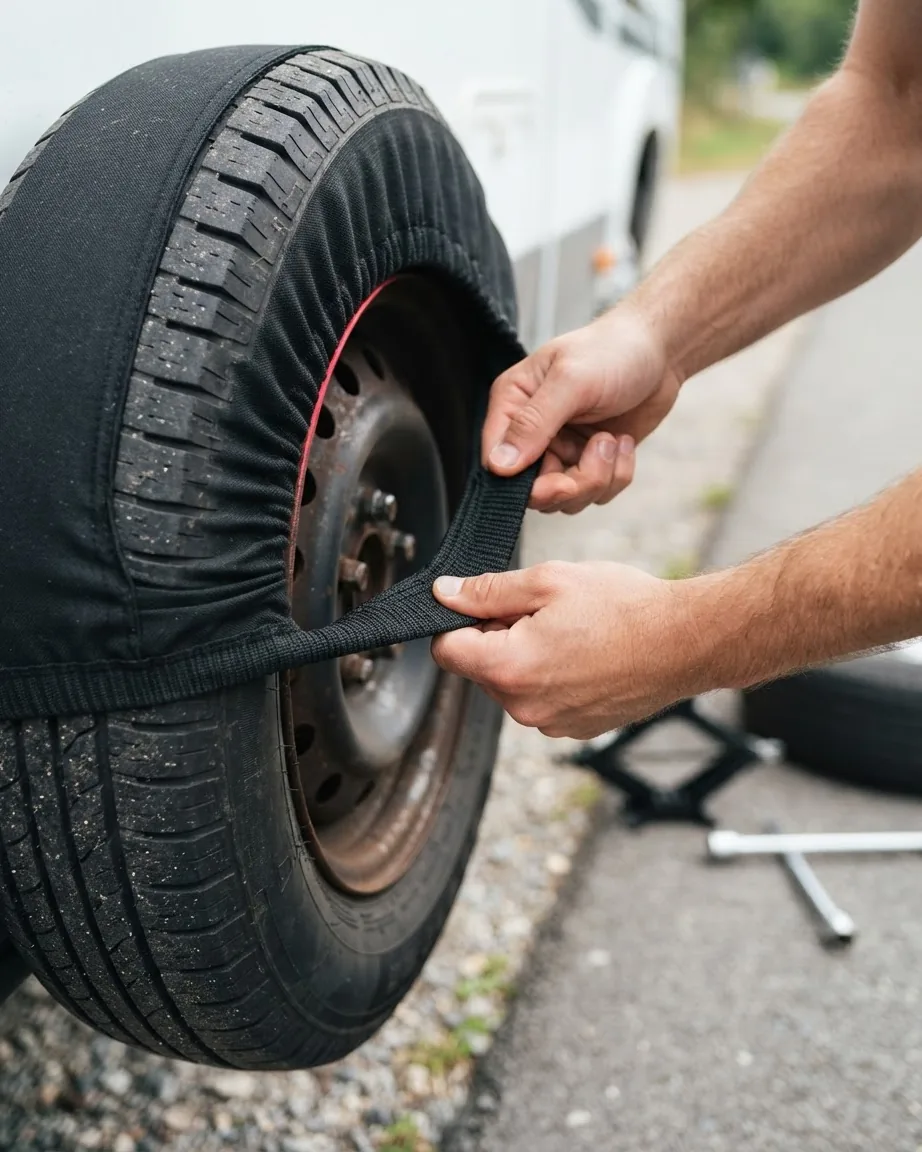
A cover that departs at speed is worse than no cover, so installation is not an afterthought. Start with the tolerance already named: Jeep Decal Store warns that a cover one inch off won’t stay put above 55 mph. Size it tight, seat the elastic hem behind the tread edge all the way around, and then do the step most people skip.
Check the fit after your first highway drive. The elastic settles slightly on that first run and may need a quick re-seat. A cover that felt snug in the driveway can loosen just enough on the interstate to start flapping, and the drive is what reveals it. Build that re-check into the trip rather than discovering the problem in a mirror at 65.
Oversized tires need more than elastic. For trailer tires 35 inches and up, or a rig that parks in high-traffic urban areas, Jeep Decal Store recommends adding a bungee cord or cable-lock system for extra security, which doubles as theft deterrence. The sequence, then, is simple: hold the error under an inch, seat the hem, re-check after the first drive, and add a tether on anything large or parked in the open.
Cleaning the Cover and the Spare So Both Last
Maintenance here is light but specific. For the spare itself, SpareCover advises cleaning with mild soap and water and avoiding petroleum-based tire shines, which can accelerate rather than prevent the oil loss behind sidewall cracking. The same gentle approach suits the cover. Skip the harsh solvents; they shorten the life of the UV-resistant coating that makes a fabric cover worth its price.
Dry rot, as SpareCover describes it, happens when rubber loses oils and flexibility over time, driven by UV, heat cycles, weather, ozone, and simple lack of use. A spare that never turns is a sitting target for all five. Cleaning won’t reverse that chemistry, but keeping petroleum products off the rubber and keeping a light-colored cover over it slows the clock.
The Age Ceiling on a Camper Spare That No Cover Can Reset
This is where the cover decision ends and the safety decision begins. A spotless, well-covered spare can still be too old to trust, and the authorities that set tire-safety policy are clear that age is a separate clock from appearance. NHTSA states plainly that you cannot detect tire aging simply by looking at your tires, and that spare tires on all vehicles are prone to aging because they seldom get replaced. RV use, sun exposure, and warm climates all raise the risk.
On the hard number, the sources differ in firmness, and that difference is worth keeping rather than flattening. Michelin draws a firmer line: its ten-year guideline applies to spares as well, with an inspection recommended after five years. Jeep Decal Store lands in between, advising inspection of any tire over 6 years old for sidewall cracking regardless of tread depth.
Read together, they point the same direction: inspect by year five or six, and plan to replace by year ten even if the tread looks untouched. A cover slows the UV and heat damage that ages the rubber, but it cannot reset the manufacture date. Budget for the spare’s eventual replacement alongside the $20 to $100 cover, because one is a consumable and the other is not.
Pressure belongs on the same schedule. NHTSA recommends checking the pressure of all tires, including your spare, at least once a month when the tires are cold, and Michelin adds that spares age on the same timeline as regular tires whether used or not, with its pressure checked at least yearly. As NHTSA puts it on the scale of the problem, “only 19 percent of consumers properly inflate their tires.” A spare you never look at is a spare that fails the day you need it. Related guide: spare tires, donut spare tire.
When the Spare Underneath Fails Inspection
Suppose you pull the cover for your yearly check and find the sidewall crazed with fine cracks. That spare is done, cover or no cover, because surface cracking compromises structural integrity before the tread ever wears. Do not wait for a blowout to decide. A spare is the one tire you are guaranteed to mount under bad conditions, often on a shoulder, often in a hurry, and it has to hold.
If you are unsure whether the cracking you see is cosmetic or structural, treat the age number as the tiebreaker and have a tire professional make the call. The replacement spare should then be read correctly before you buy; our guide to tire size measurements walks the sidewall code. Match the new spare’s diameter to a fresh cover, and start the maintenance clock over, this time with the dates written down so the next inspection isn’t a guess.
Does a spare tire really need a cover if the camper is only used a few months a year?
Yes, and seasonal storage makes it more important, not less. Lack of use is itself a dry-rot driver alongside UV and ozone, so a spare sitting exposed through a long off-season ages without ever rolling. A light-colored cover during those idle months blocks the sun that evaporates the rubber’s oils fastest.
Can I reuse my old cover on a replacement spare?
Only if the diameters match within an inch. A new spare of the same size code usually works, but a different tire often measures a hair larger or smaller, and anything beyond that one-inch window risks a cover that flaps loose past highway speed. Re-measure the mounted replacement before assuming the old cover fits.
Why does cold weather matter for cover material?
Single-layer vinyl grows brittle enough to crack in hard freezes, which is the core of the seller disagreement. In a cold-storage climate, pick a coated polyester-nylon weave or a cover rated cold-crack treated rather than a thin vinyl that may split before spring.
Is a more expensive cover actually worth it?
It depends on exposure. A $20 single-layer vinyl can fade or crack inside 12 to 24 months outdoors, while a quality fabric cover running toward the $100 end stretches to 4 to 7 years. For a garaged rig in a mild climate, the cheap option may outlast your spare; for full outdoor exposure, the pricier weave usually pays back.
Cost per Year: Why the Cheap Vinyl Cover Can Be the Expensive One
Sticker price hides the real cost of a camper spare tire cover, because the two material tiers in this guide wear out on completely different clocks. The cheap single-layer vinyl cover fades or cracks in 12 to 24 months of full outdoor exposure, while a quality polyester-nylon weave lasts 4 to 7 years. Run the price range ($20 to $100) against those lifespans and the bargain pick looks a lot less like a bargain.
- A $20 vinyl cover lasting its best-case 24 months (2 years) works out to about $10 per year of service.
re for a quarter as long.