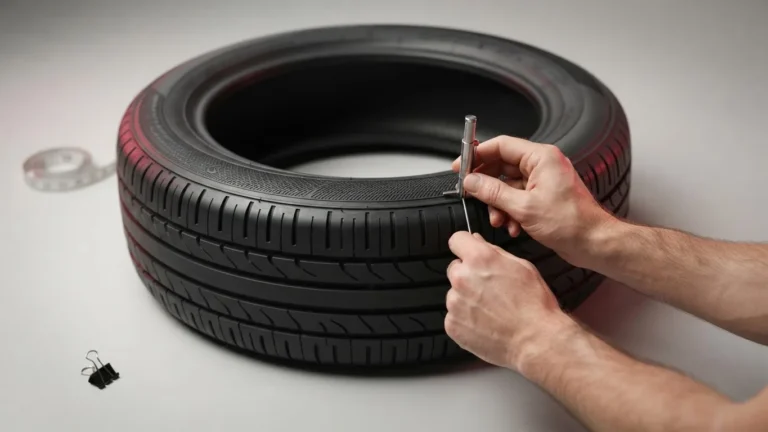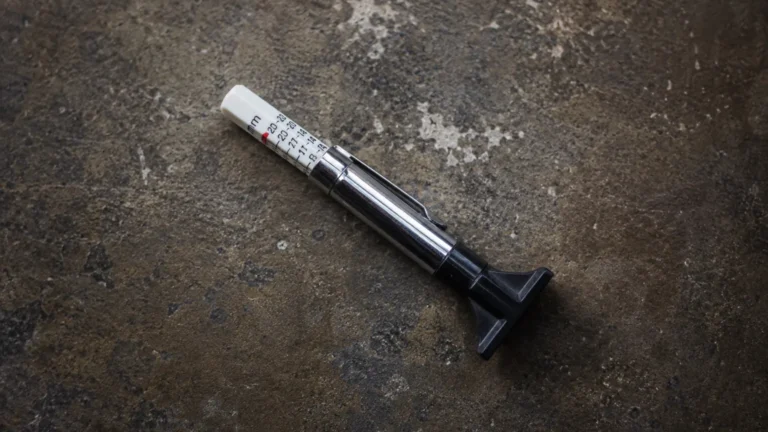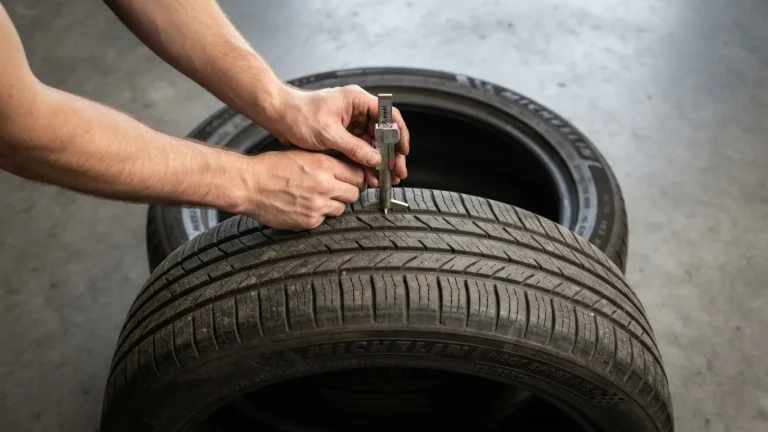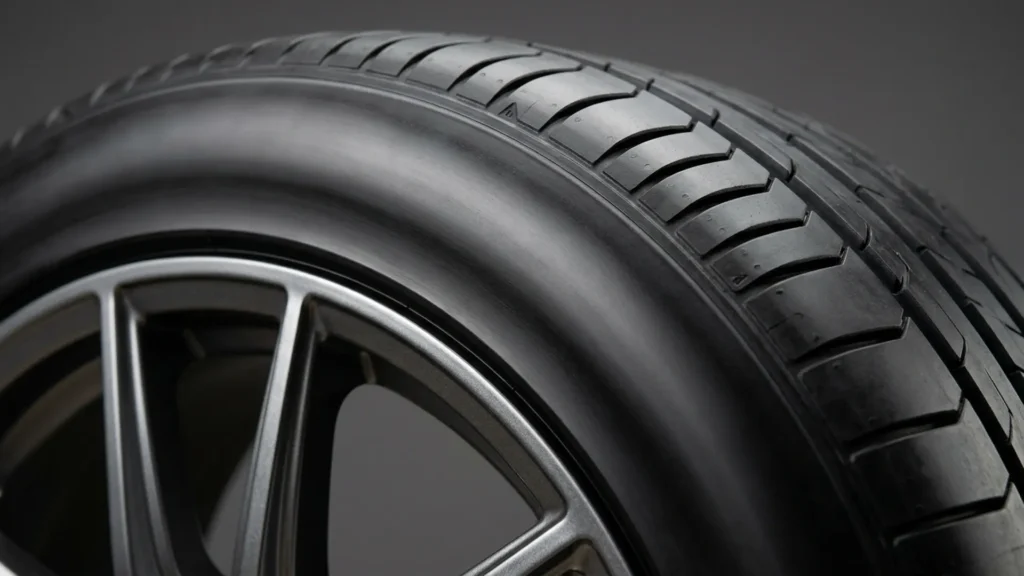
Tire sidewalls are the vertical face of your tire – the rubber wall that runs from the wheel rim up to the tread – and most drivers barely glance at them. That is a mistake. The sidewall carries every critical spec your tire was built with, and it also shows the earliest signs that a tire is about to fail. A bulge on the sidewall means the internal cords have already broken. A crack running along the shoulder means the rubber has aged past its safe service life. Knowing how to read and inspect tire sidewalls takes about ten minutes to learn and can genuinely prevent a highway blowout. This article walks through everything: what the sidewall actually does structurally, how to decode every number and letter stamped on it, what kinds of damage are immediately dangerous, and when age alone makes a tire unsafe regardless of how much tread is left.
I check the date code first because I have found tires with plenty of tread but manufactured eight years ago sitting on used cars at dealerships. Tread depth tells you about wear. The date code tells you about time. Both matter.
What the Sidewall Actually Does
Most people think of the sidewall as just rubber skin, but it is a structural component. The sidewall flexes constantly as the tire rolls, absorbs the lateral forces of cornering, and carries the weight of the vehicle between the tread contact patch and the wheel rim. Inside every sidewall are layers of cord fabric – usually polyester, rayon, or aramid – embedded in rubber. These cords run at precise angles and give the sidewall both its strength and its controlled flexibility.
That flexibility is not a weakness. A tire that flexes slightly as it rolls generates less rolling resistance and absorbs road vibration more efficiently than a rigid structure would. But there is a specific range of flex the cords are designed to handle. Run the tire chronically underinflated and those cords bend at extreme angles on every rotation, generating heat and eventually separating from the rubber matrix around them. The result is a bubble – a visible lump where the outer rubber has lost its cord backing.
The sidewall also protects the tire casing from curb impacts, road debris, and UV radiation. The rubber compound used on sidewalls is formulated differently from tread compound – it is more flexible and contains antiozonant chemicals that slow down the oxidation process that causes cracking. Over time, those chemicals get depleted. That is why old tires develop surface cracking even when stored indoors.
Understanding the sidewall as a structural part – not just a label – is the right starting point for inspecting and caring for your tires. A problem on the sidewall is almost always more serious than the same size problem on the tread.
How to Read the Sidewall Markings
Every tire sold in the United States carries a standardized set of markings molded into the sidewall. Once you know the system, you can read any tire in about thirty seconds. Here is what each marking means.
Tire Size and Construction Code
The most prominent marking is the size designation, typically formatted like 225/65R17. Breaking that down: 225 is the section width in millimeters measured from sidewall to sidewall. The number 65 is the aspect ratio – the sidewall height expressed as a percentage of the section width. So on this tire, the sidewall is 65 percent of 225 mm, which works out to about 146 mm tall. The R means radial construction (standard on virtually all passenger tires today). The 17 is the wheel diameter in inches the tire is designed to fit.
A lower aspect ratio number – say 45 instead of 65 – means a shorter, stiffer sidewall. Performance vehicles often run low-profile tires with aspect ratios of 35 to 45. They handle crisply but are more vulnerable to pothole damage precisely because there is less sidewall to flex and absorb impact.
Load Index and Speed Rating
After the size code you will see two more characters – a two or three-digit number followed by a letter. An example might look like 94H. The number 94 is the load index, a standardized code that maps to a maximum carrying capacity per tire. Load index 94 corresponds to 1477 pounds. The letter H is the speed rating, indicating the maximum sustained speed the tire is designed for – H means 130 mph. Never replace a tire with one that has a lower load index or speed rating than the original equipment specification for your vehicle.
DOT Code and Manufacture Date
The DOT code begins with the letters DOT and is followed by a series of characters ending in a four-digit number. That four-digit number is the manufacture date. The first two digits are the week of the year and the last two are the year. A tire stamped 3219 was made in the 32nd week of 2019. A tire stamped 0824 was made in the 8th week of 2024.
This date matters more than most drivers realize. Rubber ages from the inside out, and a tire can look fine on the surface while the internal rubber has already hardened and cracked microscopically. Some manufacturers recommend evaluating tires starting at six years from manufacture and replacing them by ten years regardless of tread depth. That recommendation holds whether the tire has been on a vehicle the whole time or sitting in a garage. Age is age.
UTQG Ratings
UTQG stands for Uniform Tire Quality Grade and covers three separate grades: treadwear, traction, and temperature. Treadwear is a relative number – a tire rated 400 should last roughly twice as long as one rated 200 under standardized test conditions. Traction is graded AA, A, B, or C, measuring wet-road stopping performance. Temperature is graded A, B, or C and reflects how well the tire dissipates heat at sustained speeds. An A grade on traction and temperature is best. These ratings help you compare tires but are not direct substitutes for real-world performance data.
The table below summarizes the main sidewall markings and what they tell you.
| Marking | Example | What It Means |
|---|---|---|
| Size Code | 225/65R17 | Width 225 mm / Aspect ratio 65% / Radial / 17-inch rim |
| Load Index | 94 | Max load per tire (94 = 1477 lb) |
| Speed Rating | H | Max sustained speed (H = 130 mph) |
| DOT Date Code | 3219 | Week 32 of year 2019 |
| UTQG Treadwear | 500 | Relative wear life index (higher = longer lasting) |
| UTQG Traction | AA / A / B / C | Wet stopping performance (AA is best) |
| UTQG Temperature | A / B / C | Heat dissipation at speed (A is best) |
| Max Inflation | 51 PSI MAX | Structural pressure limit (not the recommended operating pressure) |
One note on that last entry: the MAX PSI molded into the sidewall is the structural limit, not what you should actually inflate to. Your vehicle’s recommended tire pressure is on the sticker inside the driver’s door jamb, and it is almost always lower than the tire’s maximum. Running at max sidewall pressure is not recommended and can cause a rough ride, uneven wear, and reduced traction.
Sidewall Damage: What Each Type Means
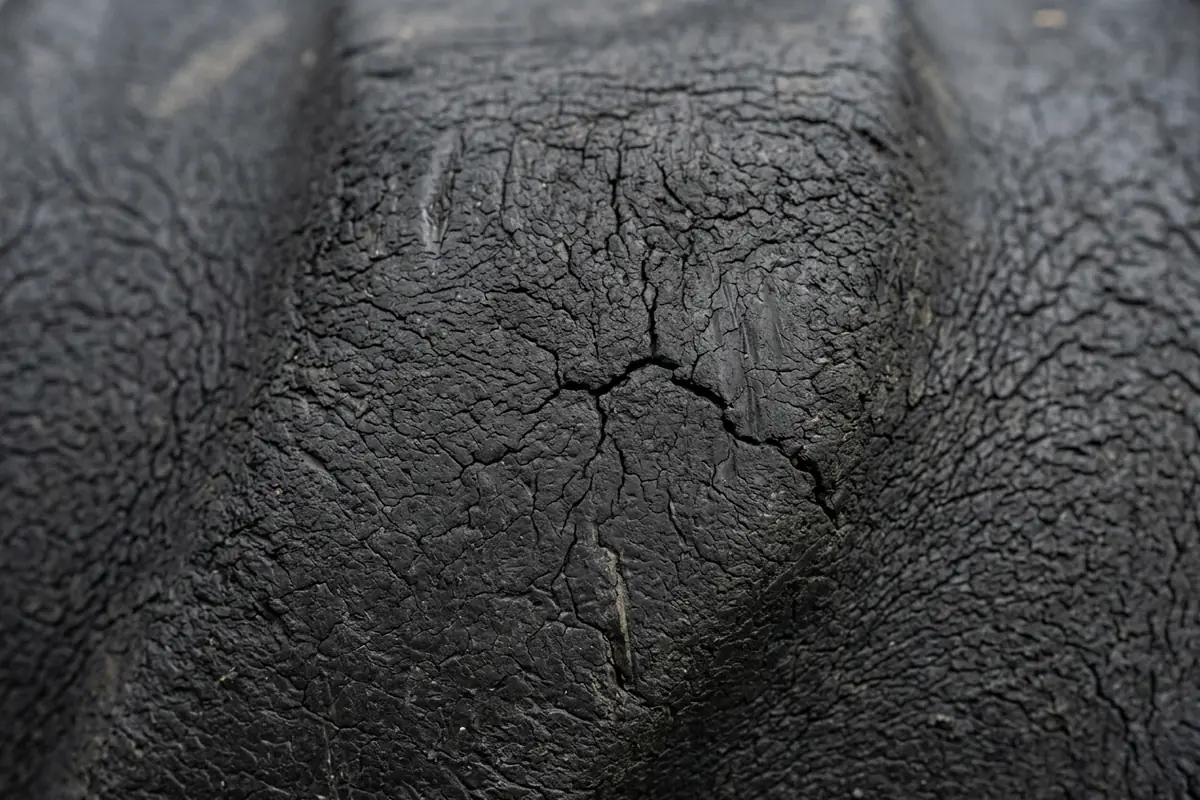
There are four main categories of sidewall damage, and they are not equally serious. Some require immediate action. Others need monitoring. Understanding the difference keeps you from either ignoring a real hazard or panicking over surface cosmetics.
Bulges and Bubbles
A bulge or bubble on the sidewall is the most dangerous finding. When you see a pronounced lump pushing out from the sidewall surface, it means the internal cord structure has separated. The outer rubber layer is now the only thing containing the air pressure. That rubber layer was not designed to do that job alone. At highway speeds, on a hot day, over a pothole – a bulge can rupture without warning.
There is no repair for a sidewall bulge. None. The tire must be replaced. Drive on it only as far as needed to reach a safe stop or a tire shop, at reduced speed if possible. This is not a “monitor it” situation. The Tire Industry Association is unambiguous that any tire with a visible bulge or bubble should be removed from service immediately.
Bulges most commonly result from impact damage – hitting a sharp curb edge hard, dropping into a pothole at speed, or running over a large piece of road debris. Chronically low tire pressure accelerates the cord fatigue that makes impact damage more likely.
Cuts and Punctures
A cut or puncture in the sidewall is a different problem from a tread puncture, and the difference is critical. When a nail or screw punctures the tread area, a plug or patch can often create a safe, lasting repair because the tread is relatively stable and the repair material has solid rubber to bond with on all sides. The sidewall flexes constantly. A patch or plug placed in the sidewall is subjected to that flex on every rotation, and it will not hold reliably over time.
The universal recommendation among tire professionals is that a sidewall puncture cannot be safely repaired. Not “should not” – cannot. Any tire shop that offers to plug a sidewall puncture is not following industry-accepted practice. Replace the tire. If the cut is shallow and has not penetrated to the cords, a tire professional can assess whether it is a cosmetic issue or a structural one – but that judgment call is theirs to make in person, not something to guess at on the road.
Cracking and Dry Rot
Surface cracks in the sidewall rubber are a sign of age and UV degradation. The antiozonant chemicals in sidewall rubber slowly migrate out of the compound over time, and exposure to sunlight, ozone, and heat accelerates the process. Small surface cracks that do not penetrate deeply are sometimes called weathering cracks and are common on older tires.
The question is how deep the cracking goes. Shallow surface crazing may be cosmetic. Cracking that reaches the fabric cords underneath is a different matter – it creates pathways for moisture and oxygen to attack the cord material, weakening it progressively. Consumer Reports has consistently highlighted aging and cracking as an underappreciated source of tire failure, particularly on vehicles that are not driven regularly. A trailer tire or a spare tire that sits unused for years can develop dangerous dry rot while appearing to have adequate tread.
Abrasions and Curb Rash
Curb rash – the scraping that happens when a wheel is turned too sharply into a curb while parking – typically affects the rim more than the tire, but severe abrasion can remove rubber from the sidewall and expose the cord fabric beneath. Once cords are exposed, moisture and road chemicals can attack them directly. Minor surface scuffing with no cord exposure is usually cosmetic. Anything that has removed enough rubber to reveal fabric should be evaluated by a tire professional.
How to Inspect Your Tire Sidewalls
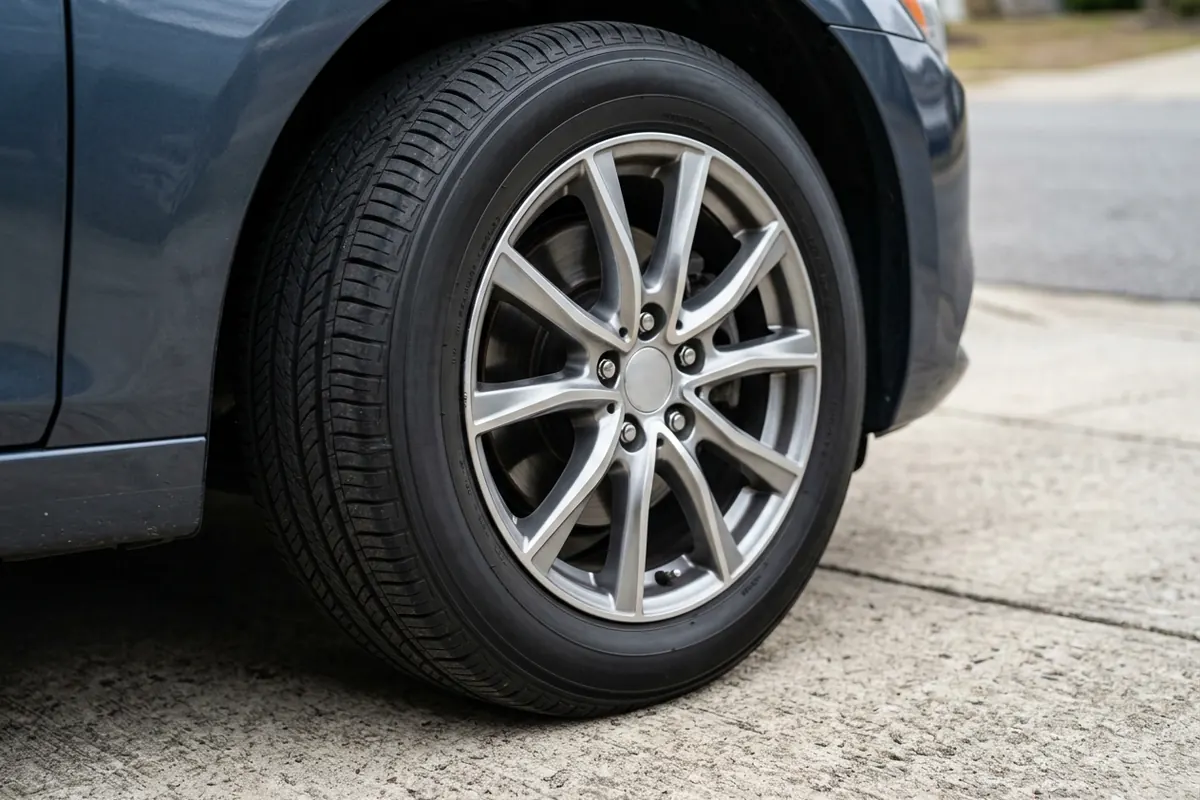
A proper sidewall inspection takes about five minutes per vehicle and requires nothing more than good lighting and a clean rag. The best time to do it is whenever you are checking your tire pressure, which should be monthly at minimum.
Park on a flat surface and turn the wheels all the way to one side, then the other, to get a full view of the inner and outer sidewall faces. Run your hand slowly across the entire sidewall surface, feeling for any raised areas, lumps, or depressions you cannot see. Sometimes a small bubble is easier to feel than to see, especially in low light. Use the rag to wipe away dirt and road grime before you look – a thin coat of mud can hide cracking entirely.
Check both the outer sidewall (the side facing outward when the tire is mounted) and the inner sidewall if you can access it. On some vehicles, especially those with wide body cladding or tight wheel wells, the inner sidewall is difficult to see without a flashlight. It is worth the extra effort. Inner sidewall damage from road debris or pothole strikes can go unnoticed for months.
What you are specifically looking for: any visible lump or bulge, any cut deeper than about 2 mm, cracking that follows the circumference of the tire or radiates outward from the bead, and any area where the rubber appears scuffed or abraded down to a lighter color or visible fabric texture. Also note whether the sidewalls look notably different in stiffness or color from one another – that can indicate uneven aging or an earlier repair attempt.
Proper tire care includes this kind of visual check as a routine habit, not just something done after a specific incident. A blowout on the highway is almost never a surprise to the tire – the damage was there beforehand.
Tire Age and Sidewall Integrity
The six-year and ten-year guidance that most tire manufacturers publish is widely misunderstood. Drivers often assume it refers to tread life or to how long a tire can be used before it wears out. It does not. It refers to the chemical aging of the rubber itself, regardless of tread depth or miles driven.
Rubber is a polymer, and polymers degrade over time through oxidation. Heat accelerates the process. A tire kept in a hot climate – southern states, parked in direct sun regularly – may age significantly faster than the same tire in a cooler, shaded environment. Vehicle manufacturers including Ford, Volkswagen, and Chrysler have published maintenance recommendations advising that tires be inspected carefully after six years from the manufacture date and replaced by ten years even if they appear serviceable.
The date code on the sidewall is how you know. Read the last four digits of the DOT code. If your tires have a date code ending in 16 or earlier – meaning manufactured in 2016 or before – they are at or past the ten-year threshold. That is true even if they still show 6/32nds of tread. The Tire Industry Association and many independent testing organizations support this guidance.
One practical complication: tires are sometimes sold from inventory after sitting in a warehouse for one or two years. A tire you buy as “new” may already be two years old. Always check the date code on new tire purchases, not just on tires already on your vehicle.
For your spare tire, the same age rules apply. Many people never check the spare until they need it, then discover it is fifteen years old. A spare tire that fails under emergency conditions is worse than useless. Add the spare to your regular inspection routine.
Inflation’s Role in Sidewall Health
Tire pressure and sidewall condition are directly connected. A tire running 8 to 10 PSI below its recommended inflation pressure is effectively being asked to operate in a way it was not designed for. The sidewall must flex through a greater range of motion on every rotation, which generates excess heat and accelerates cord fatigue. This is the primary mechanism that creates bulges from impact damage – the cords are already weakened by heat cycling when the impact occurs, and they give way where they might otherwise have survived.
Overinflation has the opposite problem. The sidewall is held too rigidly and cannot flex to absorb impact. The result is that impacts transfer more energy into the cords at once rather than spreading it through controlled flex, making the tire more likely to suffer sudden cord separation from a single pothole strike.
The recommended operating pressure for your vehicle is specific to your car, not your tire. Check the driver’s door sticker, not the number molded into the tire sidewall. A common specification might be 32 or 35 PSI. The MAX 51 PSI number on the tire is the safe structural limit, not the target. Running at the door sticker pressure, checked cold monthly, is the single most effective maintenance step you can take for sidewall longevity.
A second table below maps pressure conditions to their likely effects on the sidewall over time.
| Pressure Condition | Effect on Sidewall | Risk |
|---|---|---|
| Correct (door spec) | Normal flex range, even heat distribution | Lowest |
| 8-10 PSI low | Excessive flex, heat buildup in sidewall | High – accelerated cord fatigue |
| 20+ PSI low (near flat) | Extreme flex, rapid internal heat, cord failure | Critical – likely blowout |
| 5-8 PSI over spec | Reduced flex, stiffer impact response | Moderate – higher impact damage risk |
FAQ
Can a sidewall puncture be repaired with a plug or patch?
No. A sidewall puncture cannot be safely repaired. Unlike a tread puncture, where a plug or patch sits in a stable, thick rubber section, the sidewall flexes constantly as the tire rolls. Any patch or plug placed in the sidewall is subject to that repeated bending and will not maintain a reliable seal over time. Industry practice is clear: a punctured sidewall means the tire must be replaced.
What does a bubble on the sidewall mean?
A bubble or bulge on the sidewall means the internal cord structure has separated from the rubber matrix. The outer rubber layer is now unsupported in that area and is holding back air pressure on its own. This is an immediate safety risk. The tire could fail without further warning. Stop driving on it as soon as safely possible and have it replaced. There is no repair for a sidewall bubble.
How do I find out how old my tires are?
Look at the DOT code molded into the sidewall. It is a string of letters and numbers starting with DOT. The last four digits are the manufacture date: the first two digits are the week of the year, the second two are the year. For example, 3219 means the tire was made in the 32nd week of 2019. If your date code ends in a number from 15 or earlier, the tire is more than ten years old and should be replaced regardless of tread depth.
How often should I inspect my tire sidewalls?
Once a month is a good baseline, ideally when you check your tire pressure. After any incident – hitting a pothole hard, scraping a curb, driving over road debris – inspect the affected tire immediately. Do not wait for your next scheduled check. Sidewall damage from impacts can develop into a dangerous bulge quickly, sometimes within a single drive.
What is the difference between treadwear rating and sidewall age?
Treadwear rating measures how quickly the rubber on the tread surface wears away under use. Sidewall age is about the chemical degradation of the rubber compound over time, which happens whether the tire is driven or not. A tire with a high treadwear rating can still have aged-out sidewalls. Both factors matter for safety, but they measure completely different things. A tire can have plenty of tread left and still be unsafe due to age-related hardening and cracking of the sidewall rubber.
Is sidewall cracking always dangerous?
Not always, but it needs to be assessed carefully. Very fine surface crazing on an otherwise sound tire may be cosmetic. Cracking that is deep enough to see the lighter-colored rubber beneath the surface layer, cracking that reaches the cord fabric, or cracking that runs along the circumference of the tire in a continuous line – those are warning signs that warrant a professional evaluation. When in doubt, have a tire professional look at it in person. Consumer Reports recommends erring on the side of replacement when sidewall cracking is pronounced, especially on tires more than six years old.
The Bottom Line
Tire sidewalls do more structural work than most drivers appreciate, and they carry more information than most drivers ever read. A quick monthly check – running your hand across each sidewall, checking the date code once a year, keeping pressure at the door spec – catches the problems that turn into highway emergencies. Bulges mean replace immediately. Sidewall punctures mean replace, full stop. Cracking on a tire older than six years means get a professional opinion. The date code is your friend: four digits that tell you whether time has made the rubber unreliable regardless of how much tread remains. If you are ever uncertain about what you are looking at, see a qualified tire professional. The stakes are high enough that a second set of trained eyes is always worth the trip.