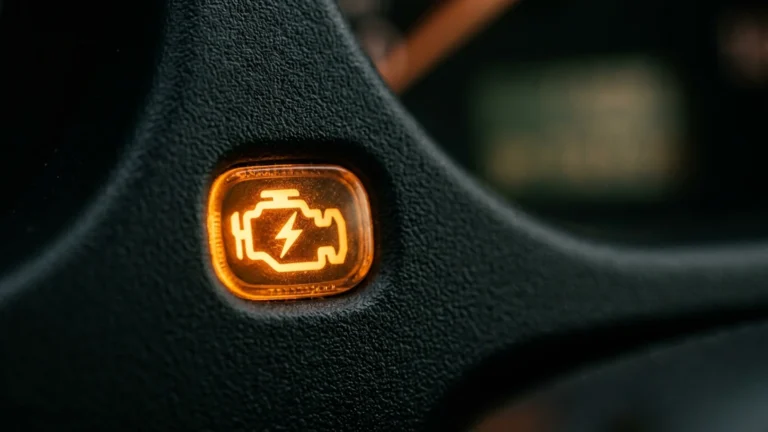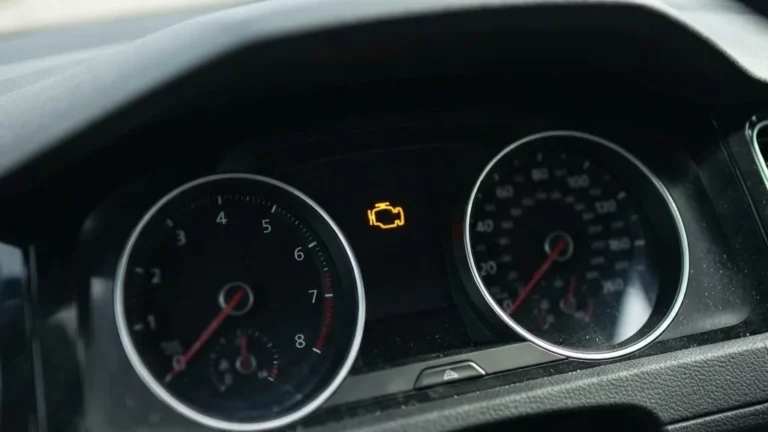
The one detail that decides your next ten seconds is whether that amber lamp is holding steady or blinking. A steady light means a fault that could push your tailpipe past federal emissions limits by 1.5 times, according to the explanation published by NYVIP3, New York’s inspection program – not an emergency, but not something to ignore. A blinking one means raw fuel is likely reaching the exhaust. Knowing what to do if the check engine light comes on starts there, with that single visual distinction, and everything that follows hangs on it.
This guide treats the lamp as the emissions-only signal it actually is on every modern car, walks through the free checks before any paid ones, scopes each reset method so you use the right one, and marks the exact points where clearing a code hides a real fault instead of fixing it.
Quick answer: If the check engine light is flashing, stop driving and get the car towed – a misfire is dumping unburned fuel that can wreck the catalytic converter. If it is steady and the car drives normally, tighten the gas cap, then have the code read. Many auto parts stores scan for free. A steady light is not a crisis, but a stored code points at a system, not a single part, so diagnose before you replace anything. Never clear a code just to kill the light; the fault – and often the light – comes right back.
Flashing vs. Steady: The Triage That Decides Whether You Keep Driving
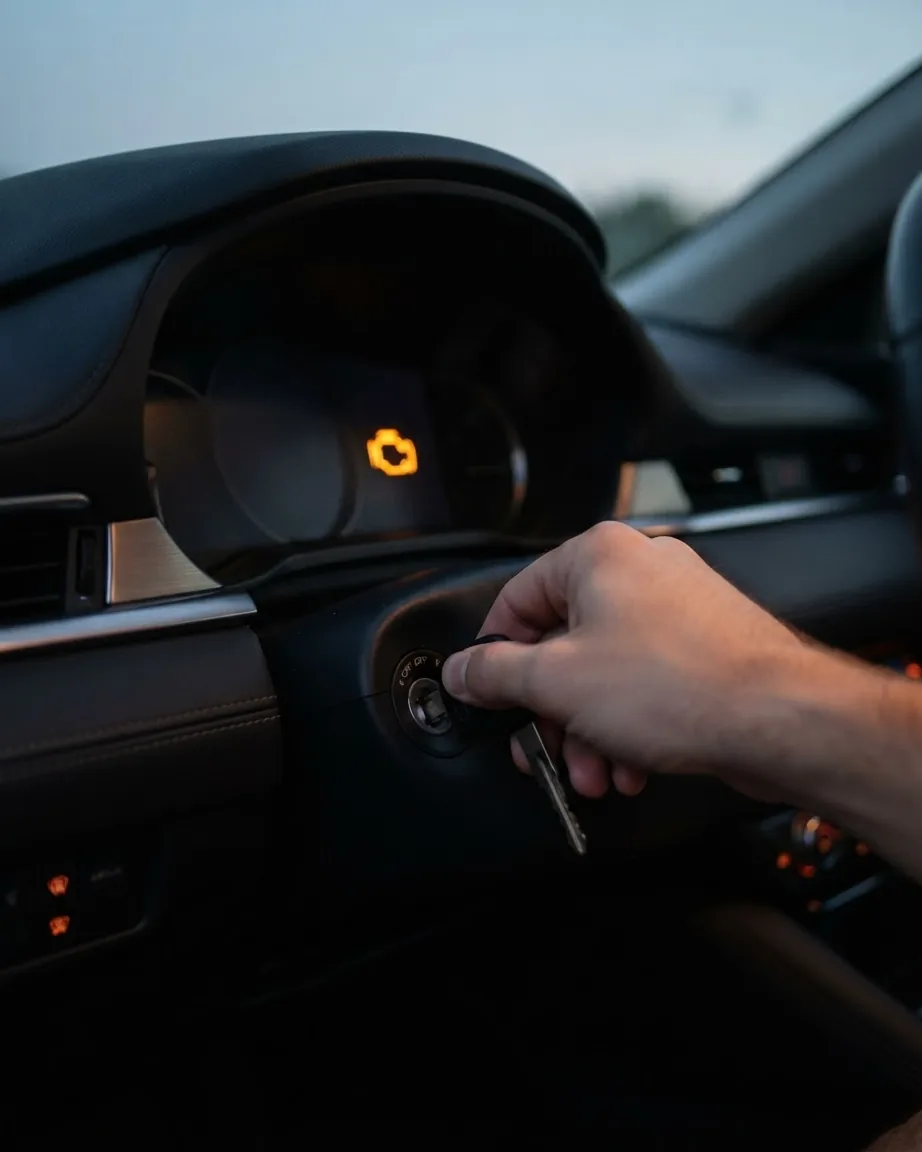
The powertrain control module runs the lamp, and it chooses between two behaviors on purpose. A continuous light, per NYVIP3’s breakdown, flags a fault that could cause the vehicle to exceed federal limits by 1.5 times. The language in that same source is blunt about the alternative: when the module detects the possibility of a serious malfunction, it commands the light to flash, and that condition requires immediate attention.
The physical reason a blinking light is worse comes down to where the extra fuel goes. A misfire sends unburned gasoline into the exhaust, where it ignites against the catalytic converter’s ceramic substrate and overheats it. That is a four-figure part – more on the cost below – so the trade is stark: pull over now, or risk turning a cheap repair into an expensive one.
If you’re driving when the light starts flashing, reduce load immediately: ease off the accelerator and get to a safe shoulder. Watch for shaking, lost power, or a strange smell. Those signs plus a blink mean shut the engine off and arrange a tow rather than nursing it home. Our guide to a check engine light blinking goes deeper on the misfire mechanism.
Is it safe to keep driving on a steady light?
Sources frame this differently, and the gap is worth naming. Both Carfax and AAA permit short-distance driving on a steady light when nothing is noticeably wrong. Penske Automotive takes the more cautious posture, advising drivers to consult the dealership regardless of whether the light is steady or blinking. The practical resolution: a steady light with normal drivability buys you time to schedule a shop visit, but it is not permission to drive for months. A fault left alone tends to cascade.
The One Thing the Check Engine Light Never Means
A persistent myth is that the lamp covers oil, coolant, or a dying battery. On any vehicle built to the OBD-II standard, it does not. NYVIP3 states plainly that with OBD-II the check engine light illuminates only for emissions-related failures, and that separate warning lights handle low oil pressure, overheating, and charging-system problems. Airbags, ABS, and tire-pressure monitoring each get their own dedicated indicator too.
This matters because it narrows your search. If the amber engine symbol is lit, you are looking at the fuel, ignition, or emissions system – not a quart of oil. One caveat worth flagging honestly: AAA’s own list of causes includes a weak battery, on the logic that low voltage can trigger electrical faults the module notices. That sits in tension with the emissions-only principle. Treat a charging issue as something its own dash light should announce first, and don’t assume the engine lamp is reporting your battery.
Free Checks Before You Pay Anyone
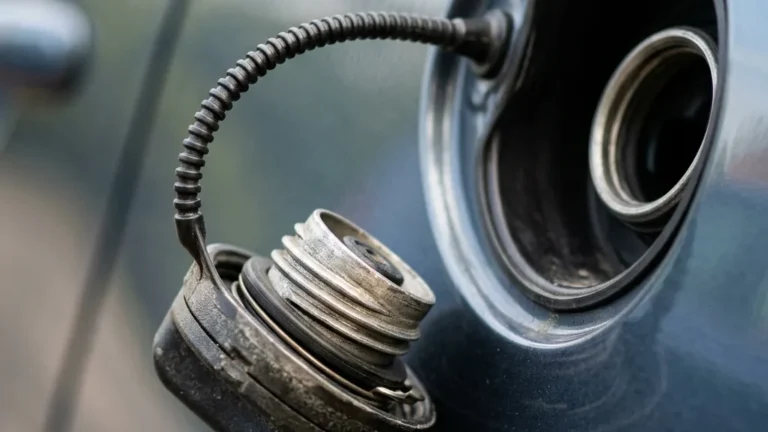
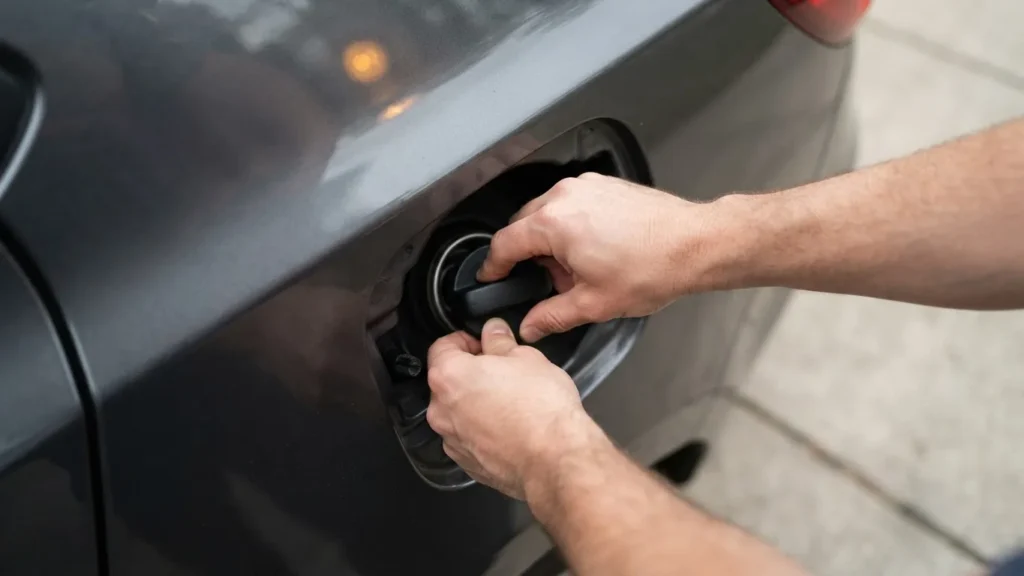
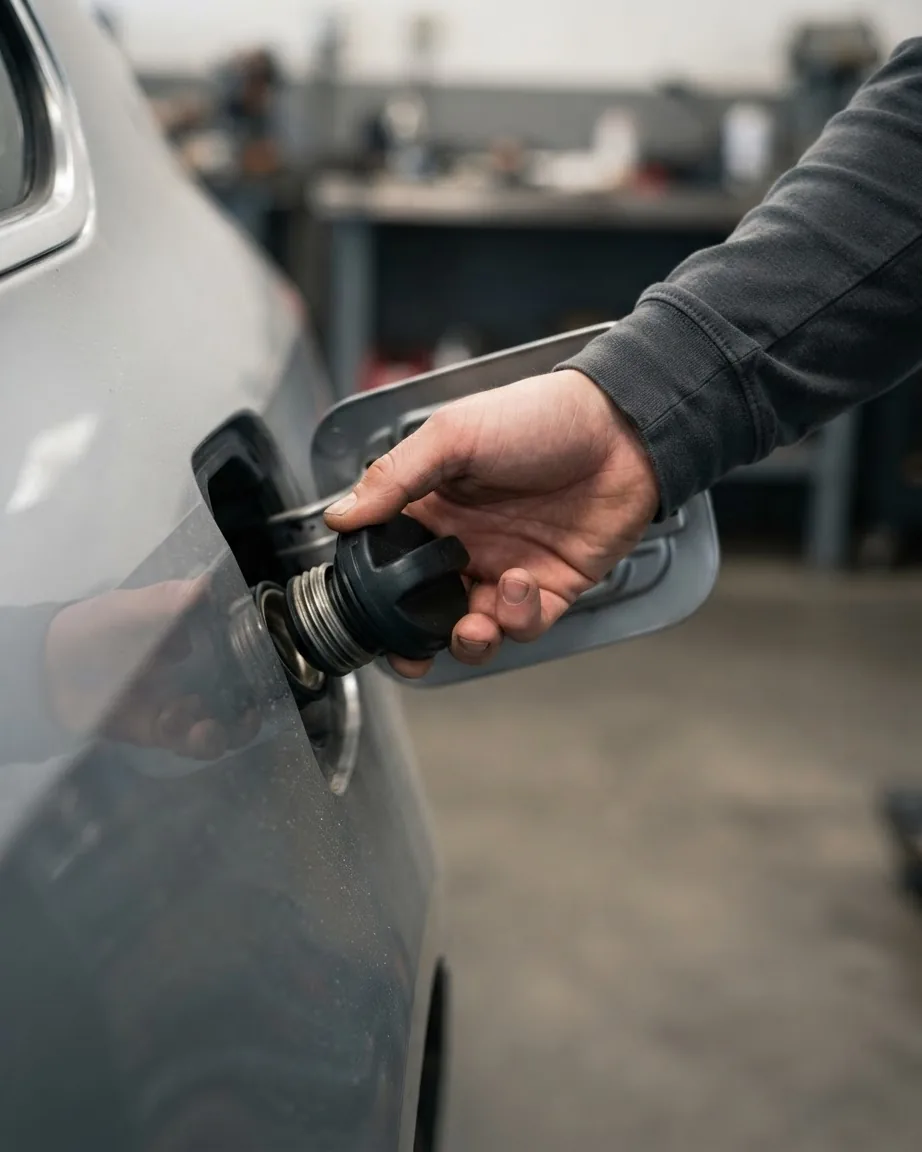
The cheapest fix on the list costs nothing. A loose or worn gas cap – logged as code P0457 in Carfax’s rundown – breaks the fuel-vapor seal and sets the light. Before anything else, remove the cap, reseat it until it clicks, and give the car a few drives. The evaporative system can re-seal itself and command the light off on its own.
AAA’s self-diagnosis list adds two more no-cost moves. Check your recent service history: if the car just came back from a shop, a technician may have left a reminder unreset, and a phone call settles it. And scan your senses – a fuel smell, rough idle, or hesitation on acceleration tells you whether you’re dealing with a minor emissions hiccup or something that warrants a tow. These checks rule out the most common trivial causes before a diagnostic fee enters the picture.
Reading the Code: The OBD-II Port, the Scanner, and What a DTC Won’t Tell You
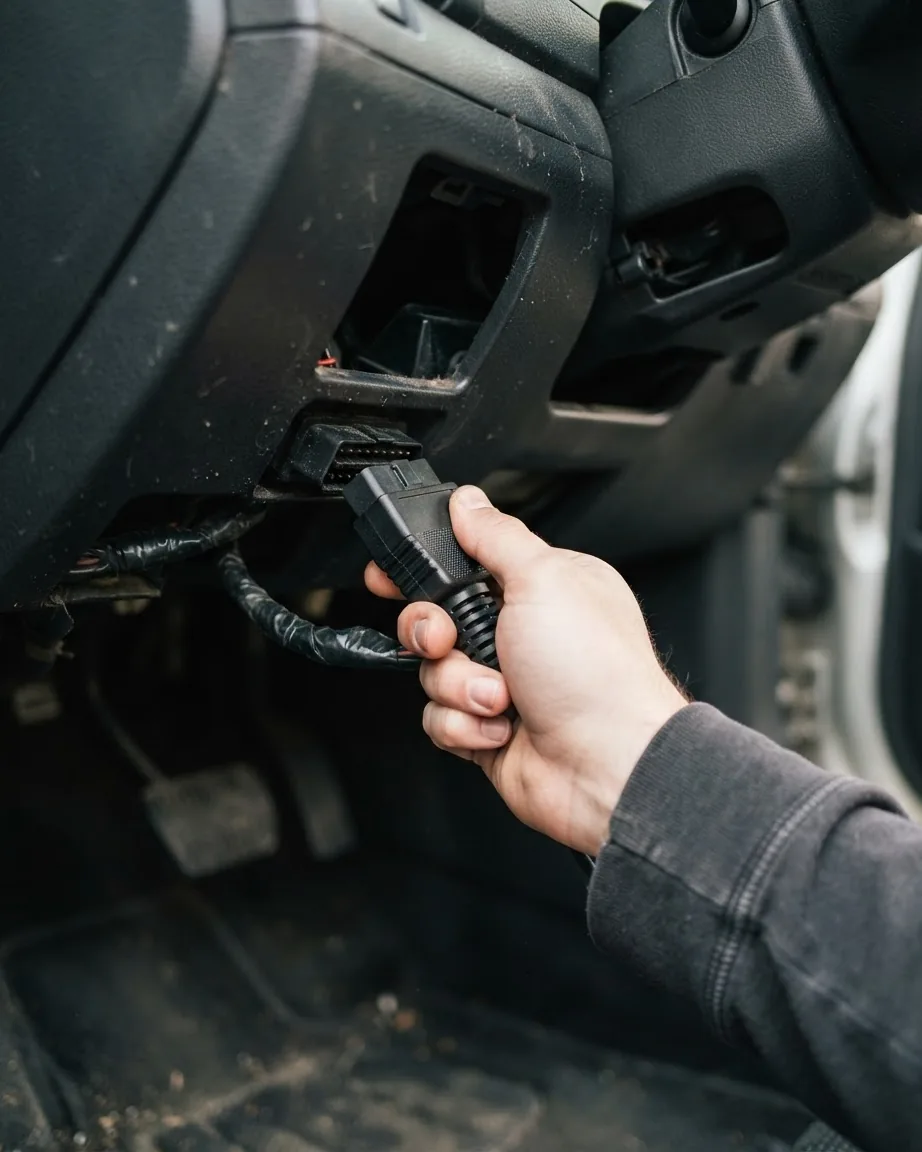
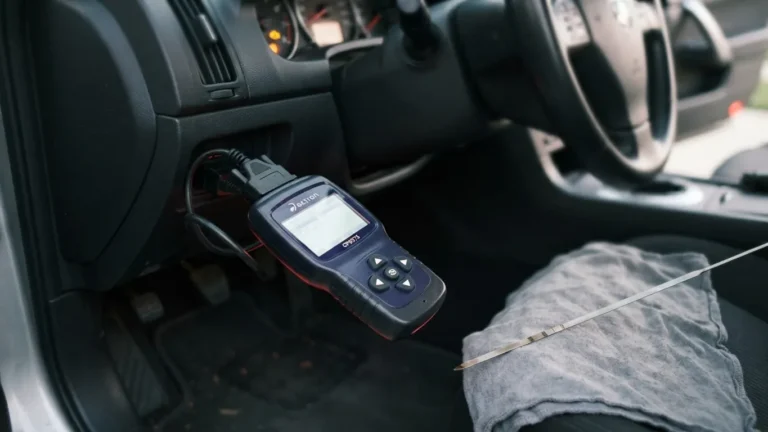
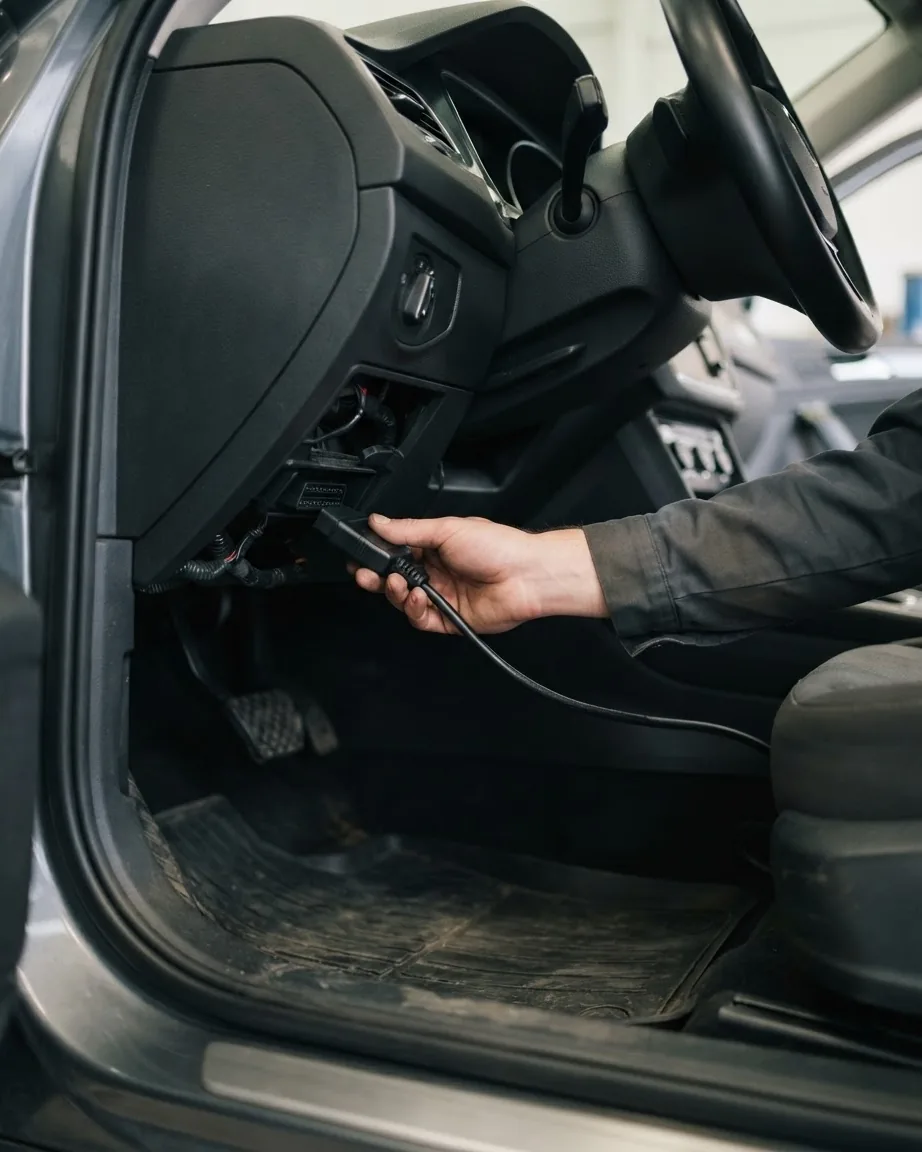
Every car and light truck sold in the U.S. since 1996 carries an onboard diagnostic system that stores a code pointing to where the malfunction occurred, per Carfax. AAA describes exactly where to plug in: the scanner connects to an electrical port underneath the dash on the driver’s side, and the tool works on most vehicles made after 1996. That connector is the SAE J1962 standardized port, which is why one inexpensive reader fits almost any modern car.
You have two ways to get the code without a shop. Many auto parts stores scan OBD codes for free, and Carfax notes you can buy a code reader and do it yourself. Either route gives you a diagnostic trouble code – a string like P0420.
Here’s the limitation nobody tells you until after they’ve bought a part: a DTC names a system, not the exact broken component. A P0420 reports catalytic-converter efficiency below threshold, but the root cause is often an upstream oxygen sensor or an exhaust leak, not the converter itself. AAA makes the same point – when the converter code sets, the real problem is frequently elsewhere, and replacing only the converter often won’t fix it. Read the code to aim your diagnosis, not to order parts.
Common Codes and What the Repair Actually Costs
These dollar figures come from a single source, Carfax, and are national approximations rather than quotes for your zip code – treat them as a planning range, not a bill. They are listed as separate repairs, not a running total; adding them together would invent a number that means nothing.
- Loose gas cap (P0457): free if you simply tighten it. The first thing to rule out.
- Oxygen sensor: replacement cost per Carfax.
- Catalytic converter (P0420 or P0430): the costliest common repair on the list.
- Spark plugs: replacement is often a DIY job on accessible engines.
For diagnosis itself, a shop’s fee covers finding the fault, not the parts or the labor to fix it. That is the decision point: a free parts-store scan plus the gas-cap check costs nothing and may solve a trivial light, while a shop diagnostic is money well spent once a symptom (misfire, stalling, lost power) tells you the fault is real. For components you can measure yourself, see our note on how often to replace brake pads.
How to Reset the Check Engine Light – and When Each Method Is Right
Let the car clear it. For an intermittent fault, the module clears the light on its own once the problem stops recurring. NYVIP3 gives the specific rule: if the light is on because of a misfire or a fuel-delivery problem, and it does not recur after three drive cycles under the same driving conditions, the check engine light will be commanded off. Fixed a loose gas cap? Drive normally and let the system confirm the repair. This is the method to prefer whenever possible, because it verifies the fix rather than masking it.
OBD-II scanner clear. A scan tool can erase stored codes, which is appropriate right after a genuine repair – you replace an oxygen sensor, clear the old code, and watch whether it stays off. NYVIP3 warns of the catch: erasing codes also resets every readiness monitor back to zero, so the car needs time to re-run its self-tests before it can pass inspection.
Battery disconnect. The old-school method wipes the module’s memory, including stored codes and all previous monitor results – NYVIP3 likens it to resetting the clock to zero. It can take several days or even weeks of driving before every monitor runs again. Use it as a last resort, and never right before an inspection.
What none of these do is fix anything. Clearing a code to hide a fault is the one move to avoid: the underlying problem remains, the light usually returns within a few drives, and you’ve erased the diagnostic trail a mechanic needs.
The Code-Clearing Trap That Fails Your Emissions Inspection
This is where clearing a light backfires in a way most drivers never see coming. When you erase codes, the readiness monitors – the self-tests your car runs while you drive – all flip to “not ready.” An OBD-II vehicle cannot pass inspection until the required monitors read “ready” again.
The tolerance is tight. EPA guidelines, as published on the New York DMV page, limit how many monitors may sit in a “not ready” state, with stricter allowances for newer model years. Clear your codes the morning of an inspection and you can fail on readiness alone – even with no active fault.
Resetting the monitors requires a drive cycle, and the DMV publishes a generic one. New York issues a 10-day extension if readiness was the only reason for a failure, so you can legally drive while completing the cycle and return to the inspection station within 10 days for re-inspection.
Two cautions on jurisdiction: the monitor allowances cite federal EPA guidelines and apply broadly, but the 10-day extension and the re-inspection fee structure are specific to New York – your state’s procedures may differ. And cars older than 25 years do not receive emissions inspections at all, per the same DMV page.
No-Start and Fluid Checks: Separating the Engine Light From Everything Else
Because the check engine light is emissions-only, a car that won’t start is almost always telling you something the engine lamp isn’t. The two usual suspects are the battery and the starter, and they behave differently. A dead or weak battery gives you dim dash lights, a slow or silent crank, and sometimes nothing but a click – electrical symptoms. A failed starter typically shows normal electrical power but a single loud click or no crank when you turn the key, because the motor that spins the engine isn’t engaging. The difference tells you whether a jump start has any chance of helping.
On fluids, timing matters. Checking engine oil is done cold or after the engine has sat, with the car level, so the reading settles on the dipstick. Coolant is the opposite hazard: never open the radiator or pressurized overflow cap on a hot engine, because the system holds scalding fluid under pressure and can erupt. Let it cool first.
Brake fluid runs hotter than most drivers realize – DOT 4 can reach the low 400s Fahrenheit under hard use, which is why its condition changes over time. Our guide on how often to change brake fluid covers the interval. For the wider topic, see our engine light section.
When a Stored Code Means See a Mechanic, Not a Reset
Some situations are past the point of DIY scanning, and clearing the code only delays the fix while the fault worsens. Send the car to a professional, not a parts-store scanner, when any of these apply:
- The light is flashing. A misfire severe enough to blink the lamp risks catalytic-converter damage. Tow it; don’t drive it in to save a fee.
- A no-start with an unknown cause. If you can’t tell a battery symptom from a starter symptom, a technician can test both without guesswork.
- The code returns immediately after a repair. That means the first fix missed the root cause – the system, not the part.
- Drivability symptoms accompany a steady light: stalling, hesitation, lost power, or a fuel odor. The emissions threshold is already being crossed.
- A converter code (P0420/P0430) on a car under warranty – because the next section may mean the repair is covered.
Emissions Warranty: The Coverage That Can Make the Repair Free
Before you authorize a four-figure converter job, check your vehicle’s age and mileage against federal emissions warranty coverage – a cost angle most check-engine guides skip entirely. Manufacturers have been required by federal law to provide emission control coverage since 1972, and the EPA fact sheet lays out two distinct warranties that still apply.
The Performance Warranty covers repairs required during the first 2 years or 24,000 miles (whichever comes first) when the vehicle fails an emission test. The Design and Defect Warranty covers specified major emission control components for the first 8 years or 80,000 miles. On 1995-and-newer vehicles, three components carry that longer 8-year/80,000-mile coverage: catalytic converters, the electronic emissions control unit, and the onboard diagnostic device. Other emission-related parts are covered for 2 years or 24,000 miles.
State rules can be more generous. Under the California emissions warranty provisions, which states such as Vermont have adopted, all emissions-related parts are covered for 3 years or 50,000 miles – a year and 26,000 miles longer than the federal baseline, as documented by the Vermont Department of Environmental Conservation. Which figure applies to you depends on where the car was sold and registered. The practical move is identical either way: a P0420 on a vehicle inside these windows may be a covered repair, so call the dealer before paying out of pocket.
My car’s “Service Engine Soon” light is on – is that the same thing?
It depends on the badge your manufacturer chose. Take 5 Oil Change notes that on some vehicles “Service Engine Soon” functions as a scheduled-maintenance reminder tied to mileage. On OBD-II cars, though, NYVIP3 treats the malfunction indicator lamp – which some automakers happen to label “Service Engine Soon” – as emissions-only. Both can be true across different vehicles. Check the owner’s manual to learn which convention your dash follows before assuming it’s just an oil reminder.
The light went off by itself – is the problem fixed?
Maybe, maybe not. For an intermittent misfire or fuel-delivery issue, the module extinguishes the lamp after three clean drive cycles under similar conditions, so a self-correcting light can genuinely signal a resolved fault. But the stored code often lingers in memory even after the lamp goes dark, and a borderline fault can re-trigger it. If the light cycled off on its own, a free scan confirms whether a pending code is still waiting to resurface.
Can a parts-store scan replace a shop diagnosis?
For a simple, symptom-free light it often does, and it costs nothing versus what a shop charges to pull codes. The limit shows up with faults that set several codes at once, or an intermittent problem that isn’t present during the scan. A free reader hands you the number; interpreting whether P0420 means the converter or an upstream sensor is where a technician earns the fee.
DIY Scan vs. Shop Diagnostic: What the Code Actually Costs You
Reading the code yourself is cheap, and the math shows exactly how cheap. Carfax puts a code reader and a shop’s diagnostic fee side by side. That single tool is priced to pay for itself the first time you plug it in:
- At the low end: a code reader can match a shop’s diagnostic fee – you break even on the very first use, then every scan after is free.
- At the high end: a diagnostic fee weighed against the reader price means buying the tool can pay off on that one visit alone.
- Still free: many auto parts stores scan the code at no charge, which beats both the reader and the shop fee when you only need the code once.
None of this replaces a mechanic’s labor to fix the fault; the diagnostic fee covers finding the problem, not repairing it. But for simply getting the code that aims your diagnosis, a free parts-store scan or a one-time reader purchase is the smart first move.