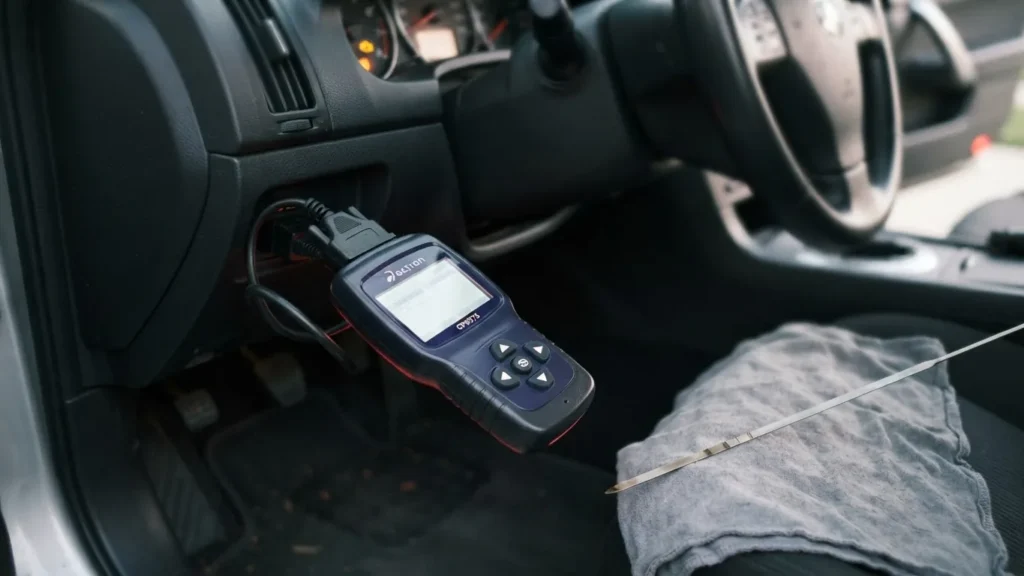
Three major carmakers give three different instructions for the same task. Mazda tells you to warm the engine to normal operating temperature, shut it off, and wait. Volvo says the most accurate measurement comes from a cold engine before you start it. Mercedes-Benz splits the difference and makes the wait time depend on temperature. So the honest answer to whether you should check engine oil hot or cold is that your vehicle decides, not a blog and not a shop rule of thumb – and the deciding document is sitting in your glovebox. What follows is how to read that decision correctly, how long to wait before you trust the dipstick, and the overfill mistake that a rushed reading quietly sets up.
There is no universal hot-or-cold rule. Your owner’s manual sets the method because the dipstick is calibrated for a specific condition – warm, cold, or temperature-dependent. Mazda directs owners to check the CX-5 warm, five minutes after shutoff. Volvo says a cold engine before starting gives the most accurate reading on its V40. Whichever your manual names, the non-negotiable rule is to wait: the oil has to drain back into the pan first. Check too soon and the level reads falsely low. Then you add oil you did not need, and overfilling carries its own engine risk. Park on level ground, let it settle, wipe and reinsert the dipstick, and read the second pull.
Hot or Cold Oil Check: What Each Manufacturer Actually Says
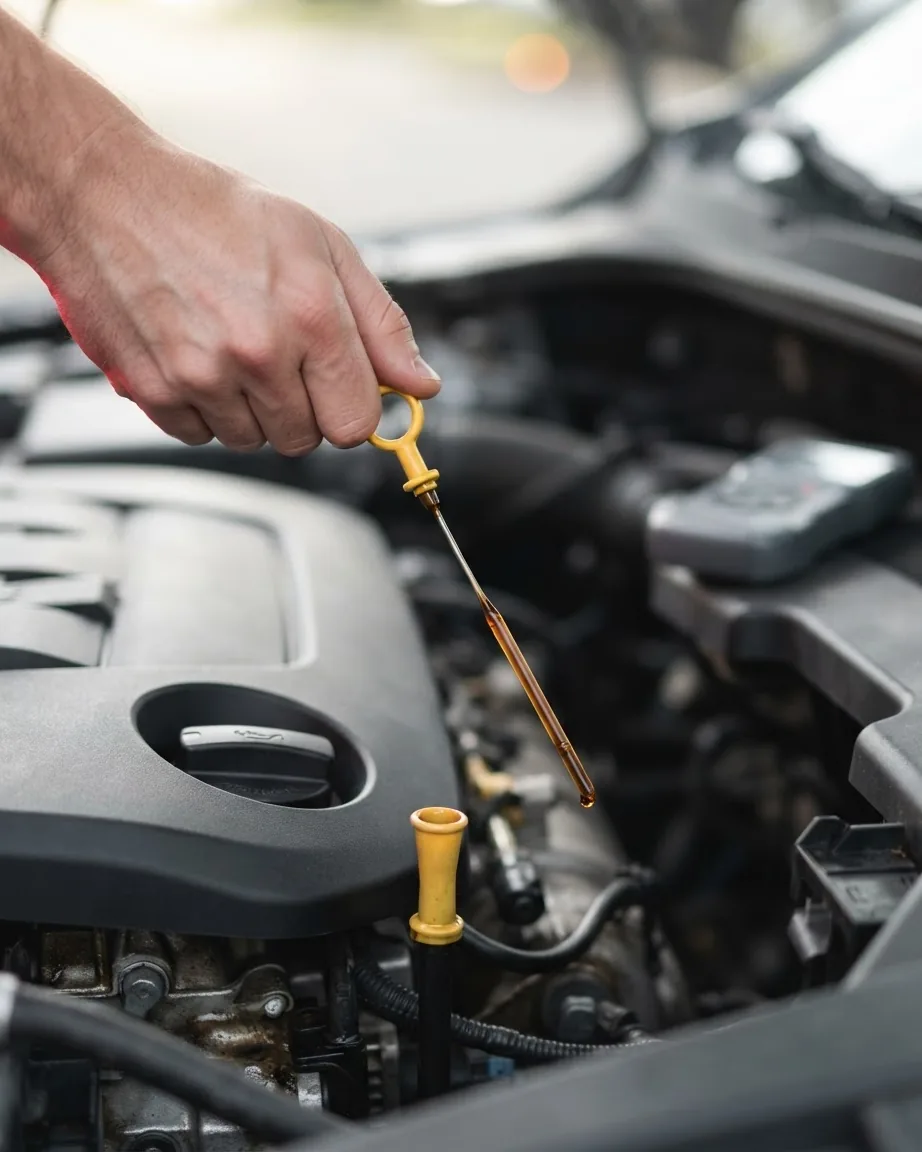
This is where generic advice falls apart. There is no single correct temperature because carmakers calibrate their dipsticks differently, and the primary manuals prove it.
The 2026 Mazda CX-5 Owner’s Manual is explicit: warm up the engine to normal operating temperature, turn it off, and wait at least five minutes for the oil to return to the oil pan before reading. That is a warm-check vehicle. Mazda wants the oil at running temperature when you pull the stick.
Volvo takes the opposite stance. The V40 user manual states that the most accurate measurements are made on a cold engine before starting. Volvo designed that dipstick to read true when the oil is cold and settled.
Mercedes-Benz makes it conditional. The 2018 G-Class operator’s manual says to switch the engine off for approximately five minutes if it is at normal operating temperature – but if the engine is not at operating temperature, for instance if it was only started briefly, wait approximately 30 minutes before measuring. Mercedes-Benz is telling you the dipstick’s accuracy depends on how hot things are.
These are not three people arguing about one truth. They are three engineering choices for three different vehicles. Copying Mazda’s warm-check onto a Volvo, or Volvo’s cold-check onto a CX-5, puts the oil at the wrong temperature for how that stick was marked. Look up your own make before you trust anyone’s blanket answer.
How Long to Wait After Shutdown Before Reading the Dipstick
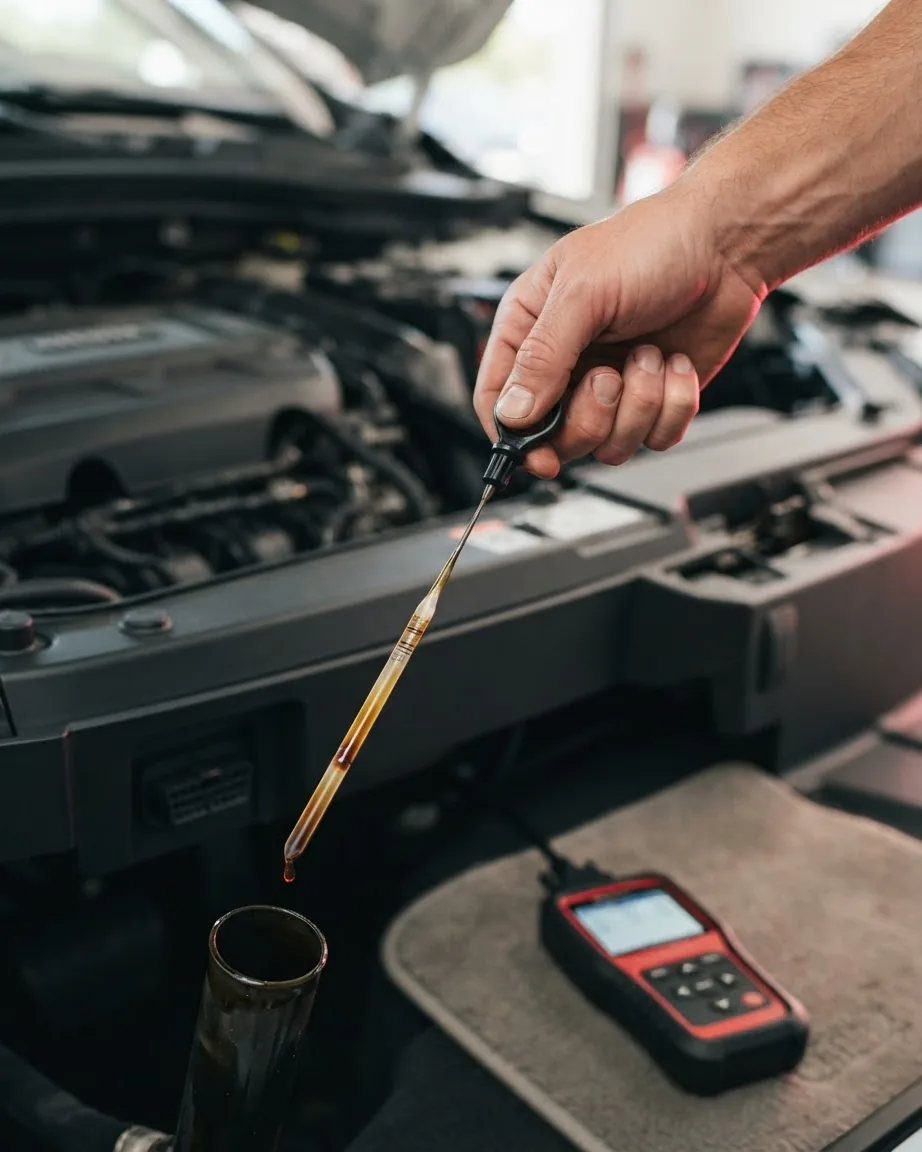
Checking the instant you kill the engine is the most common way to get a bad reading. Oil clings to the top of the engine and in the galleries; it has not finished draining to the pan, so the dipstick shows less than you actually have. The published wait times vary by vehicle, and that variation is real, not noise.
- Mazda (2026 CX-5): at least 5 minutes after shutoff at operating temperature.
- Mercedes-Benz (2018 G-Class): approximately 5 min at normal operating temperature, or approximately 30 minutes if the engine is not warmed up.
- Hyundai: warm the engine, shut it off, remove the filler cap, pull the dipstick, and wait 15 minutes for the oil to return to the pan.
- Firestone: turn off the engine and wait 10 to 15 minutes for it to cool down.
- Les Schwab: wait about 20 minutes before checking for an accurate reading.
- Chloe’s Auto Repair & Tire: wait 5 to 10 minutes for oil to drain back into the pan.
Hyundai’s own procedure specifies a 15-minute drain-back; see the Hyundai instruction for checking the engine oil level. On the general-advice side, Firestone Complete Auto Care lands on 10 to 15 minutes, while Les Schwab suggests about 20 minutes. The shortest window comes from a Chilton guide cited on a mechanics’ forum – run the engine a few minutes, then allow 2 to 3 minutes of drain-down. Treat that 2 – 3 min figure as the bare floor for a quick warm check, not a target. When numbers spread this far apart, the one that governs your car is the one in your manual. Everything else is a reasonable default for when you have lost the book.
Why Temperature Changes the Reading: The Thermal-Expansion Math
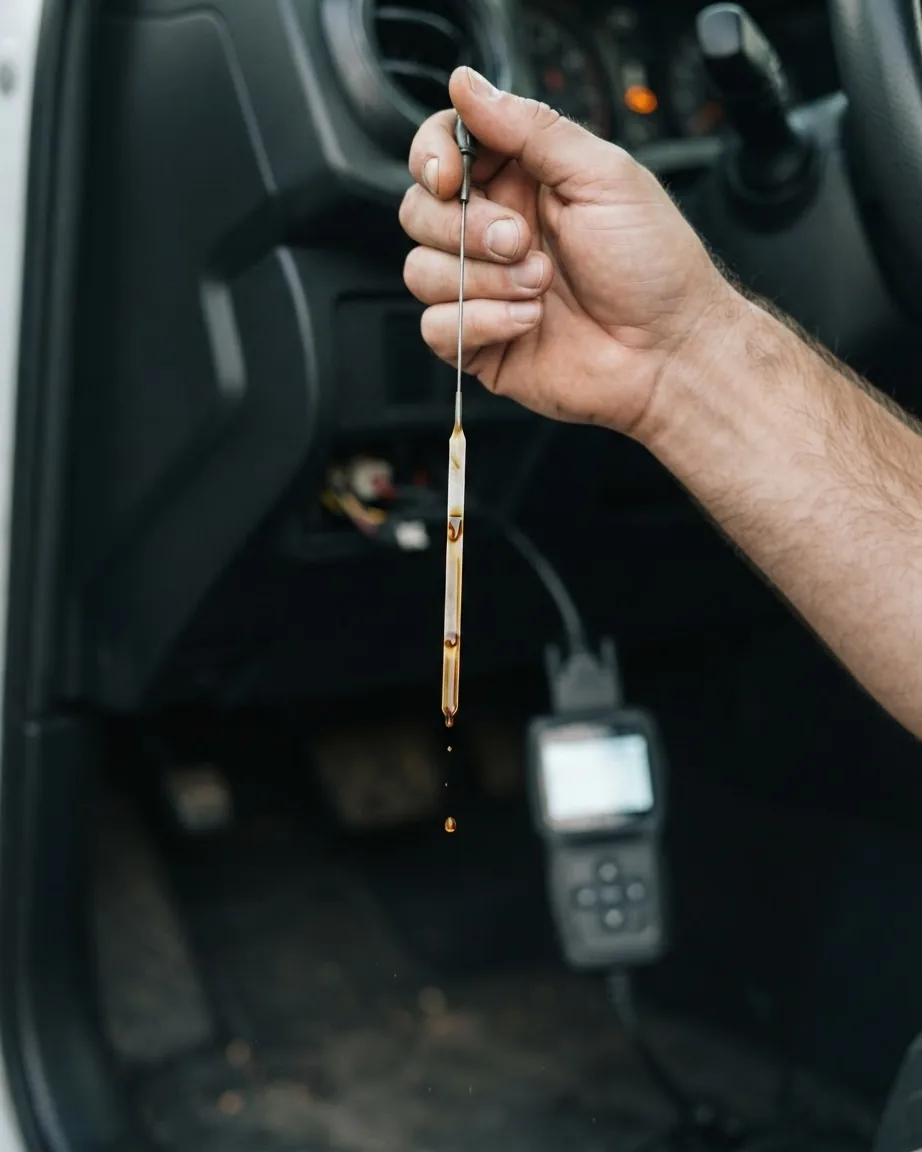
Oil takes up more room when it is hot. That is the whole reason manufacturers calibrate a dipstick for one specific condition: the same quantity of oil sits at a different height on the stick depending on its temperature. Heat it and the volume grows, so a warm engine’s oil climbs higher than the identical charge would read stone cold.
One illustration of the magnitude circulates on a mechanics’ Q&A forum, where a user works through the coefficient of thermal expansion and concludes that 4 liters of oil when cold would be about 4.2656 liters when hot, a difference of roughly a quarter liter. Treat that strictly as a back-of-envelope sketch from a user-generated post, not a manufacturer specification. The Stack Exchange thread is useful for showing that the effect is real and small, not for supplying an exact number for your car. The raw calculation fragments posted alongside it are incomplete mid-sentence quotes and should not be read as finished figures.
The practical takeaway does not depend on the arithmetic. Because cold oil reads slightly higher and warm oil slightly lower, checking at the wrong temperature for your dipstick’s calibration shifts the level on the stick. That is exactly why the hot-or-cold instruction is not interchangeable between makes.
The Correct Dipstick Procedure, Step by Step
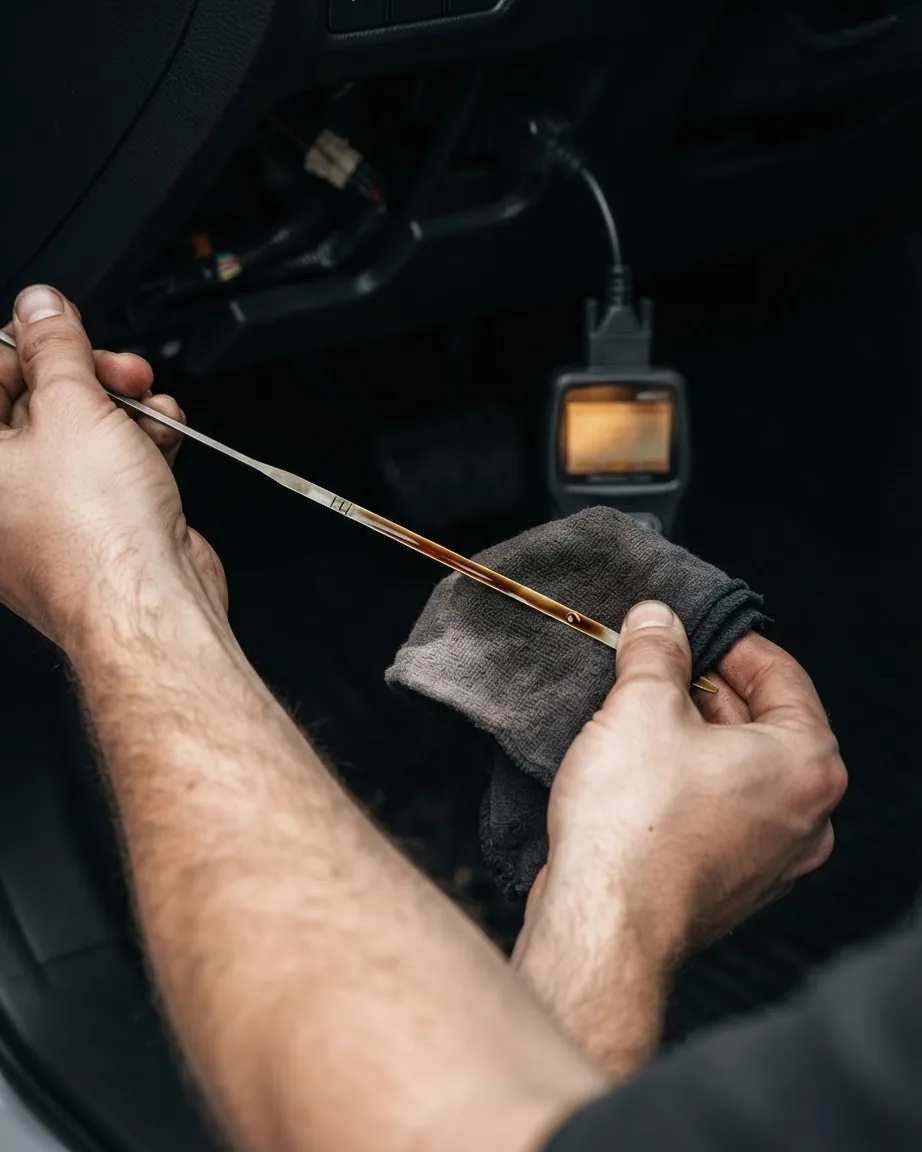
Once the engine is off and you have waited the interval your manual names, the mechanics are the same on nearly every car. Park on level ground first; a slope tilts the pan and skews the level. Then find the dipstick, usually a loop-handled stick near the front of the engine, and pull it out.
The first pull is unreliable. Oil has splashed up the stick, so wipe it clean with a rag or paper towel, reinsert it fully, pause, and pull it a second time. Read that second pull. The film left on the stick between the two marks is your level. On a typical dipstick the lower line indicates the oil is one quart low and the upper mark indicates full, a convention Car and Driver spells out. Your goal is a reading at or just below the upper mark, never above it.
If the level sits at or near the lower mark, add oil in small amounts rather than dumping in a full container. Les Schwab’s guidance to pour only one-quarter of a quart at a time, then re-check, keeps you from overshooting. It is far easier to add a little more than to remove excess.
Checking Too Soon, Overfilling, and Why the Two Are Linked
These two failures feed each other. Check before the oil has drained back and the stick reads low. Believing the car is down a quart, you top it off. But the oil was never actually low, so now the engine is overfilled. That is how a rushed reading quietly turns into too much oil in the pan.
Overfilling is not harmless. When the level rises high enough, the spinning crankshaft whips the oil into foam. Aerated oil cannot be pumped or distributed properly, which can starve bearings and surfaces of lubrication. The fix is simple and free: wait the full interval, read the second pull, and add conservatively. Patience at the dipstick prevents a problem that adding oil cannot solve.
Dipstick Cars Versus Electronic Oil-Level Sensors
Not every vehicle has a dipstick to pull. Some use an electronic oil-level sensor and report the level through a dashboard menu instead, and the procedure for those is entirely different. You are not waiting a few minutes after shutoff; you are meeting conditions the sensor needs to read accurately.
Volvo’s V40 guidance illustrates this well. For the dipstick method it says to wait five minutes after switching off so the oil runs back to the sump. But for an accurate electronic indication, the car must have been driven approximately 30 km, then stood stationary for 2 hours with the engine off on level ground before the reading is correct. That is a far longer settling window than any dipstick check, and it only applies to the sensor system. If your car reports oil level on a screen, follow the electronic procedure in your manual, not the five-minute dipstick habit.
Grade and Change Interval: What the Government Sources Actually Address
Official U.S. maintenance guidance stays silent on the hot-or-cold question and on waiting times, but it does speak to two things worth getting right: oil grade and change interval. On grade, fueleconomy.gov, run by the U.S. Department of Energy and the U.S. Environmental Protection Agency, notes that using the manufacturer’s recommended grade of motor oil can improve gas mileage by 1 to 2 percent, and that using 10W-30 in an engine designed for 5W-30 can lower mileage by the same 1 to 2 percent. Fueleconomy.gov ties the right grade to real fuel savings.
On interval, CalRecycle, the California Department of Resources Recycling and Recovery, states that the old 3,000-mile standard is out of date and no longer applies to most cars; many vehicles, even older models, can run 5,000, 7,500, 10,000, or even 15,000 miles between changes. CalRecycle also notes that a single gallon of used motor oil can ruin a million gallons of water, so recycle what you drain.
None of this replaces your manual’s numbers. The grade stamped in your owner’s manual and the interval it specifies are the figures that govern your engine, exactly as the manual governs whether you check hot or cold.
The Bottom Line
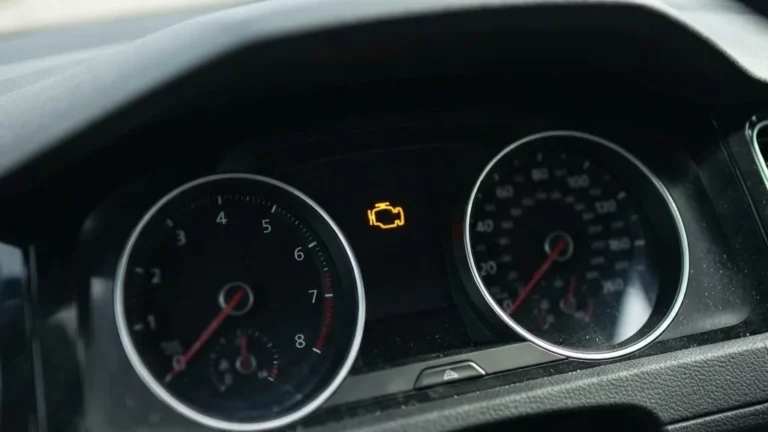
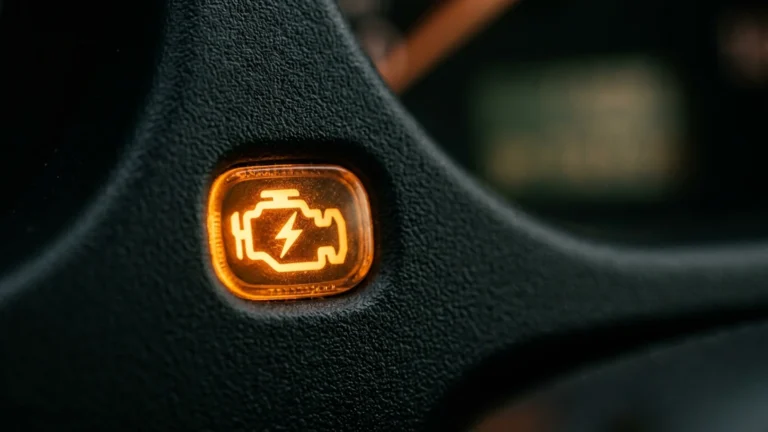
Whether you check engine oil hot or cold is not a matter of opinion or a universal trick; it is a setting your manufacturer chose and printed in your owner’s manual. Mazda says warm, Volvo says cold, Mercedes-Benz says it depends on temperature, and each is right for its own car. Find your make’s instruction, wait the interval it names so the oil drains back, read the second pull on level ground, and add conservatively. Do that and you avoid the falsely low reading, the overfill that follows it, and the guesswork that sends people looking for a rule that was never universal to begin with. If a warning light, not the dipstick, is what brought you here, start with what to do when the check engine light comes on; and if you are working through other routine checks, here is how to check brake pads.
The Wait-Time Spread: How Much Longer a Cold Engine Needs
The published wait times in this article aren’t small variations on one number – they’re calibration choices that swing by a factor of ten. Running the arithmetic on the figures already quoted shows exactly why borrowing another car’s wait time (or a generic “wait a few minutes”) can hand you a falsely low reading and set up an overfill.
- Same vehicle, 6× the wait when cold. The 2018 Mercedes-Benz G-Class tells you to wait about 5 minutes at normal operating temperature but about 30 minutes if the engine isn’t warmed up.
- The published guidance spans 18 minutes. Across the sources here, the shortest quoted window is the Chilton-style 2 – 3 minute bare floor and the longest is Les Schwab’s about 20 minutes. From floor to ceiling that’s 20 − 2 = 18 minutes of spread – and the longest advice is 20 ÷ 2 = 10 times the shortest.
The practical point: with the numbers spread this far, no single “wait X minutes” rule is safe to copy across cars. Wait too little and the oil hasn’t drained back, the stick reads low, and you top off oil you never needed – the overfill trap this article warns about. The only wait time that governs your car is the one printed in your own owner’s manual.