Drafted with AI language models. How this page was made
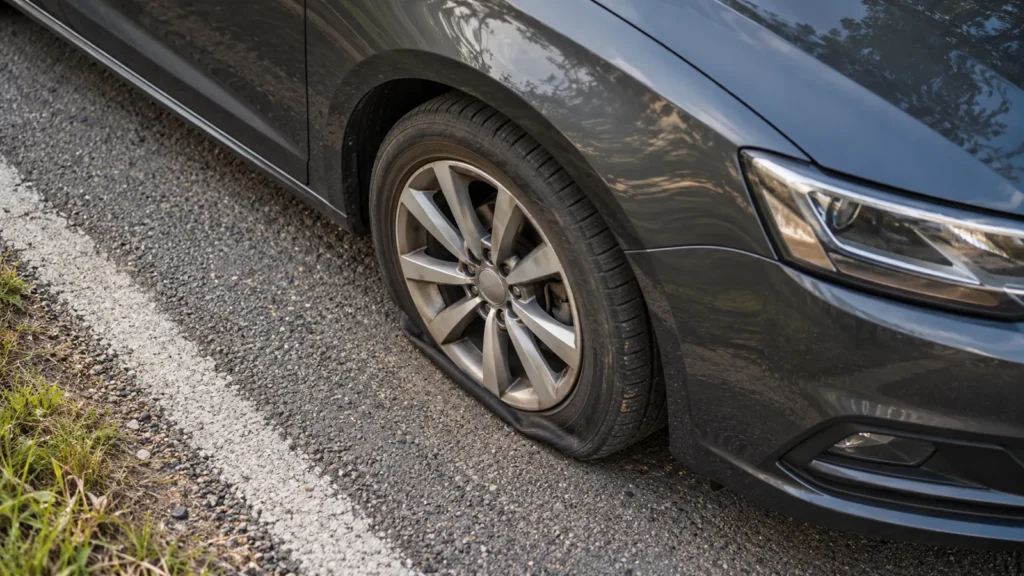
Can I drive on a flat tire? Generally, no. The only movement any tire authority sanctions is enough to reach a safe stopping point, and for a conventional tire that means a short crawl, not a trip. Virginia Tire & Auto puts the ceiling at no more than a few hundred yards or half a mile, and Walser frames the same limit in feet, not miles. Run-flats and temporary spares follow different numbers, which is where most of the confusion starts.
The short answer: A conventional tire should not be driven flat at all; if you must move it, keep it to a few feet and only to get off the road. On a flat conventional tire, never go more than half a mile, and only to reach a safe spot. A true run-flat is built to keep going after air loss, but temporary spares are capped near 55 mph and under 50 miles. Driving on a flat can destroy the rim and leave the tire beyond repair even when the puncture itself looked fixable. If your car is parked, do not drive it: change the tire in place or call a tow.
Can i drive on a flat tire
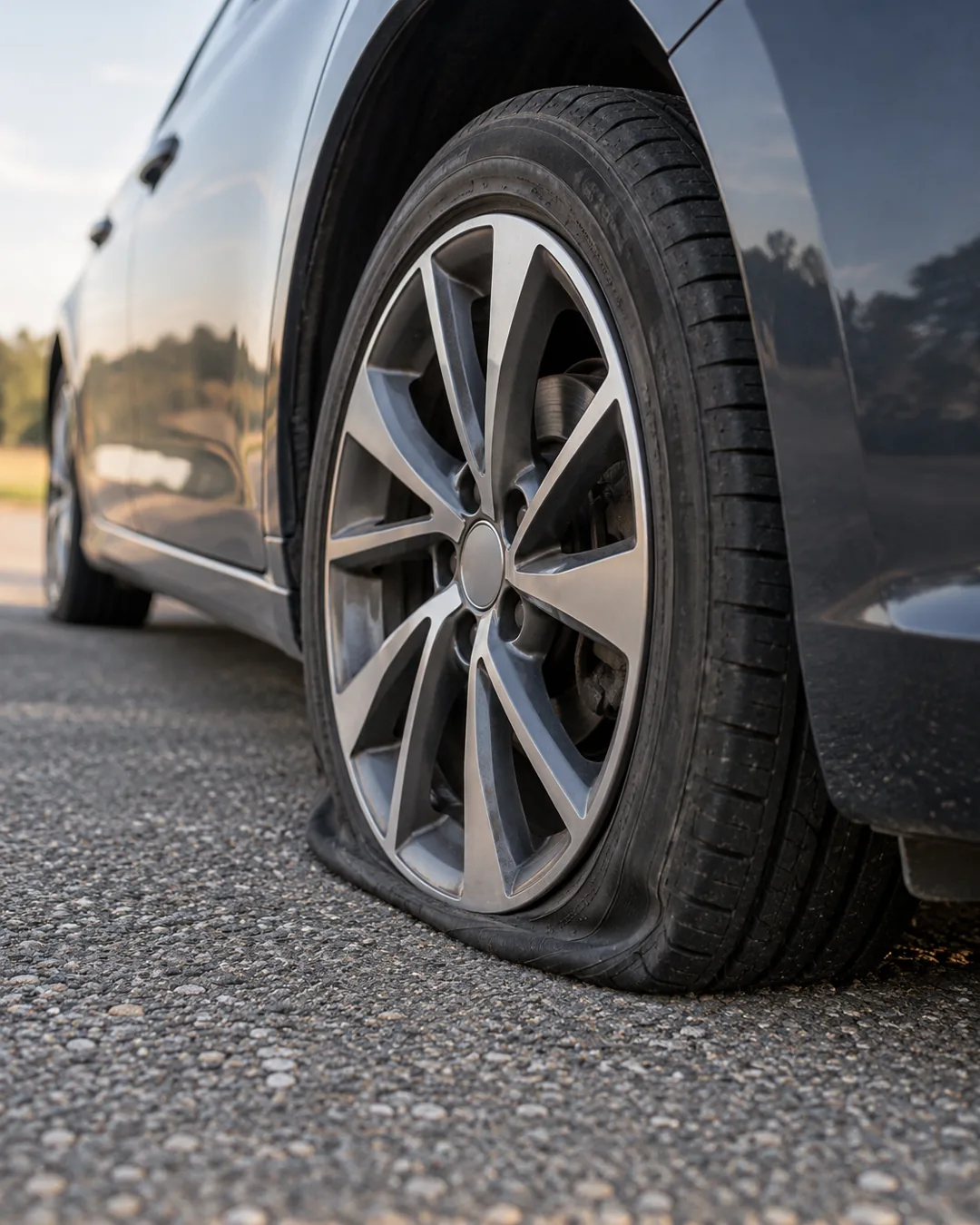
Virginia Tire & Auto answers the core question in a single word: “No.” If your car is already parked somewhere safe, their guidance is to stay put (change the tire there or call a tow truck rather than roll on the deflated tire). The limit, when you have no choice but to move, is “Never drive more than a few hundred yards/half a mile on a flat tire”, and only far enough to clear traffic. Read their full write-up at Virginia Tire & Auto.
Walser lands in the same place with different wording: if you absolutely must move the car, keep it to a few feet rather than a few miles. These are framing differences, not a numeric disagreement: both agree the only purpose of any motion is reaching a safe place to stop.
How Far You Can Drive Depends on Which Tire You Have
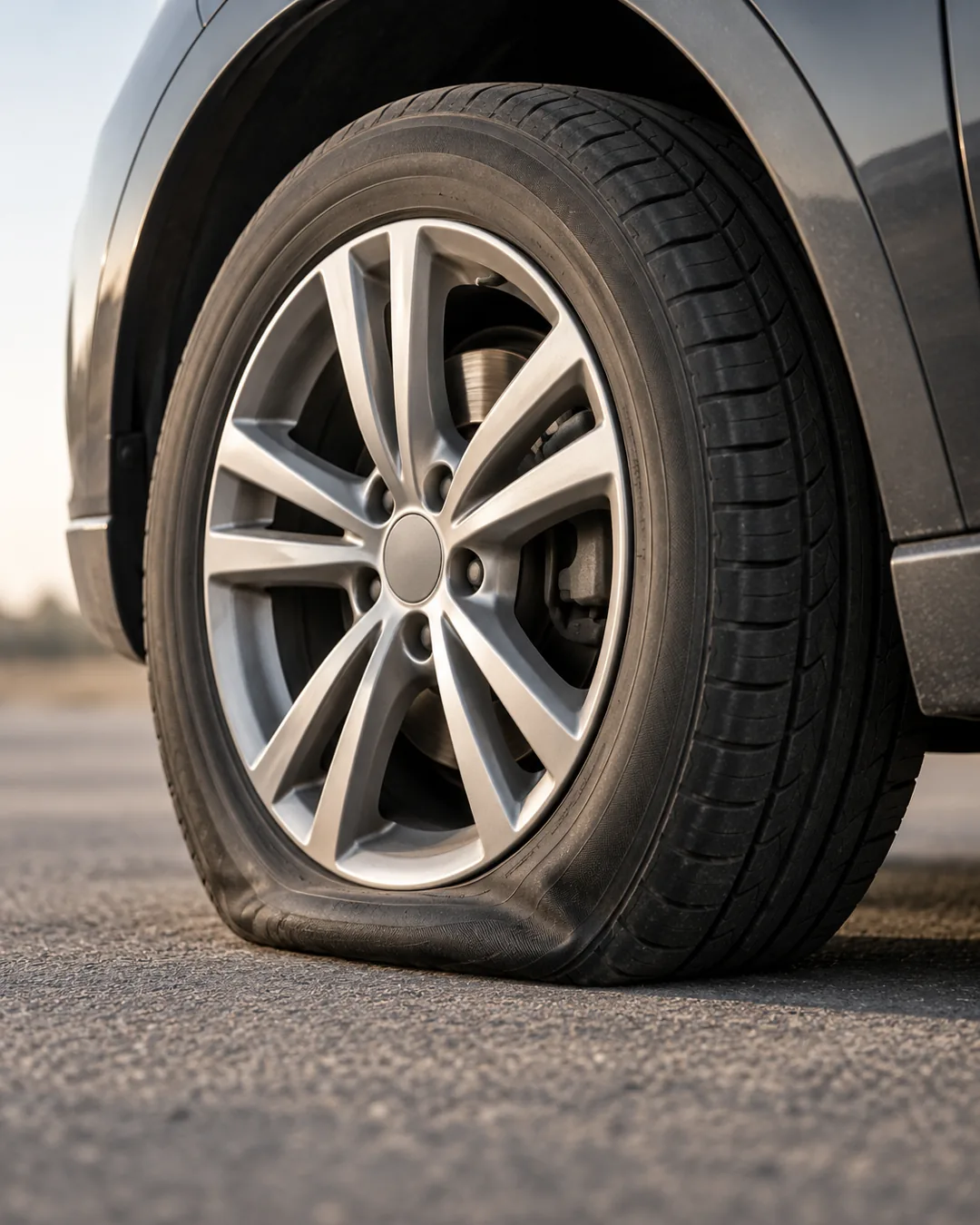
The reason “how far can I go” has no single answer is that three very different situations get lumped together. A conventional flat, a run-flat after air loss, and a temporary spare each have their own cap, and the numbers are not interchangeable.
| Situation | Distance limit | Speed limit | Condition |
|---|---|---|---|
| Conventional flat tire | Half a mile max | Slow, cautious crawl | Only to reach a safe stopping point |
| Run-flat after air loss | Up to 50 miles | Up to 50 mph | Manufacturer-specific; needs TPMS |
| Temporary spare | Under 50 miles | Under 55 mph | Temporary; get to a shop |
The “50 miles at 50 mph” figure people quote belongs only to run-flats. Bridgestone describes its run-flats as letting you “keep driving after a loss of inflation pressure for up to 50 miles (80 km) at speeds up to 50 mph (80 km/h)” (Bridgestone). That is a nominal per-manufacturer limit, not a universal guarantee: check your own vehicle’s specs, and note that run-flats are only sanctioned on a car equipped with a working tire pressure monitoring system, since without it you may not know the tire has lost air.
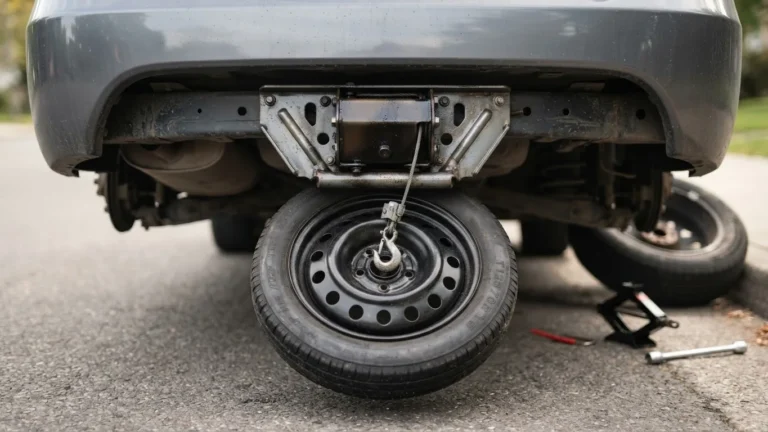
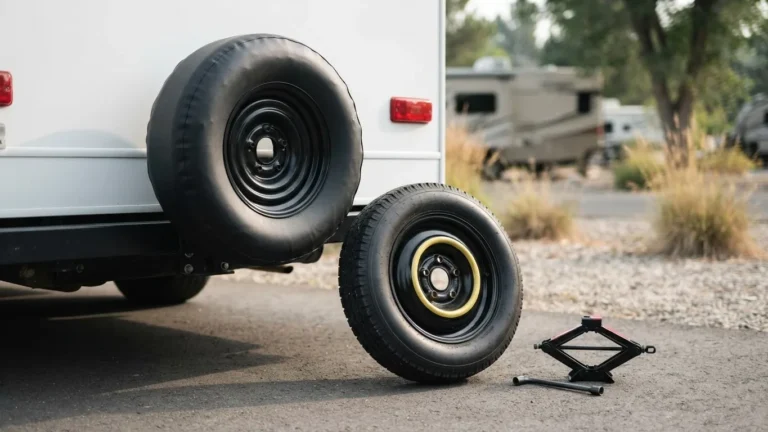
A temporary spare (the compact “donut”) is a separate case again. Virginia Tire & Auto advises driving on it “less than 50 miles at less than 55 miles per hour”. For a deeper look at how long that stopgap wheel really stays trustworthy, see our spare tires section.
What Happens If You Drive on a Flat Tire: The Damage Chain
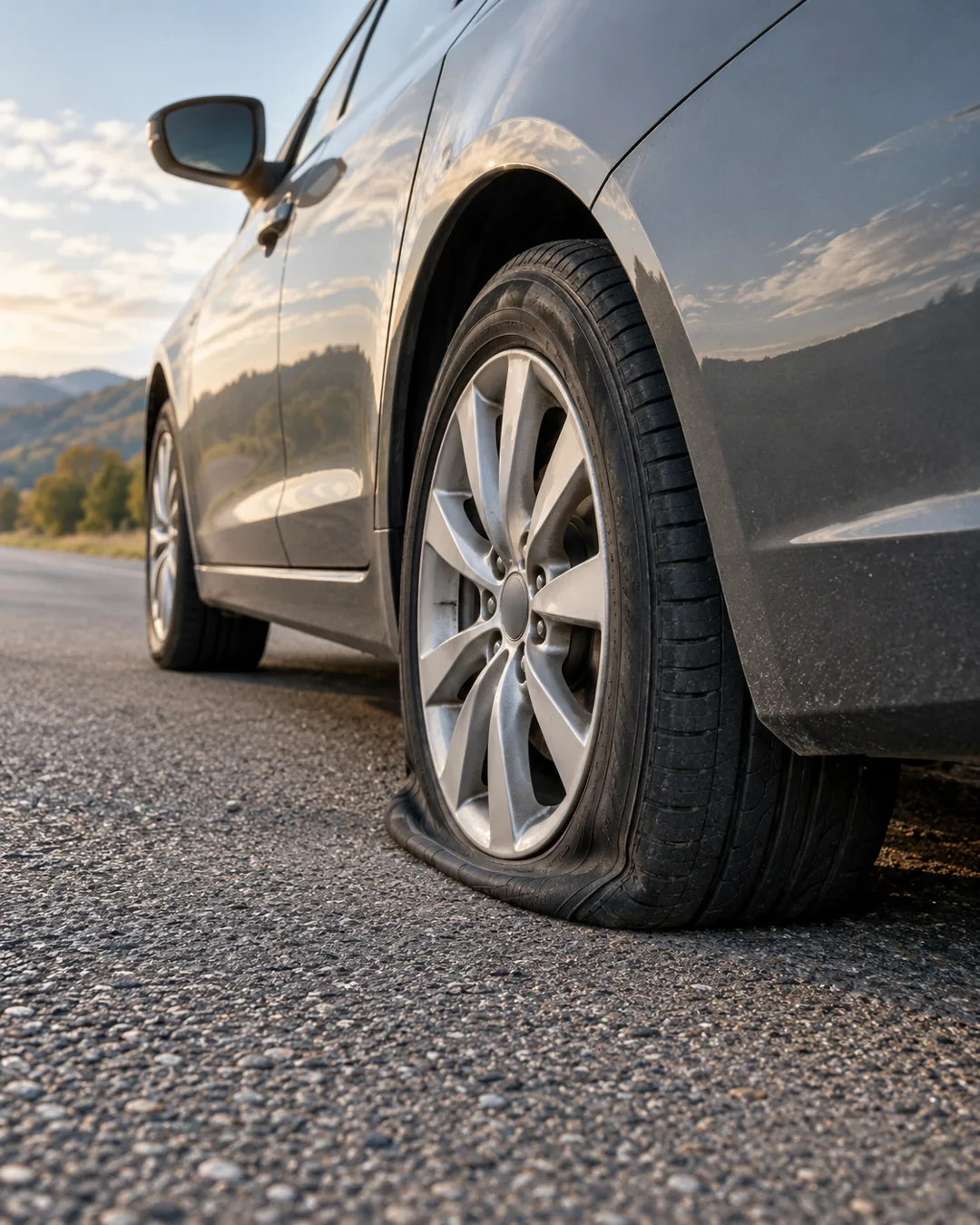
Driving on a deflated tire starts a cascade that gets more expensive the farther you go. Tires are not built to carry the car’s weight without air, so the structure begins breaking down immediately.
- The tire itself: materials stretch and distort, and the sidewall can be pushed beyond repair, according to Virginia Tire & Auto’s breakdown.
- The rim: with no air cushion, the wheel can ride directly on the road, bending, warping, or ruining the rim.
- Vehicle components: brakes, suspension, and body panels are all at risk, and that risk climbs sharply with distance and speed.
- Handling: steering and braking turn unpredictable, which is especially dangerous on a fast interstate where other drivers don’t expect your slow speed.
If You Drove on It Flat, the Tire May No Longer Be Repairable
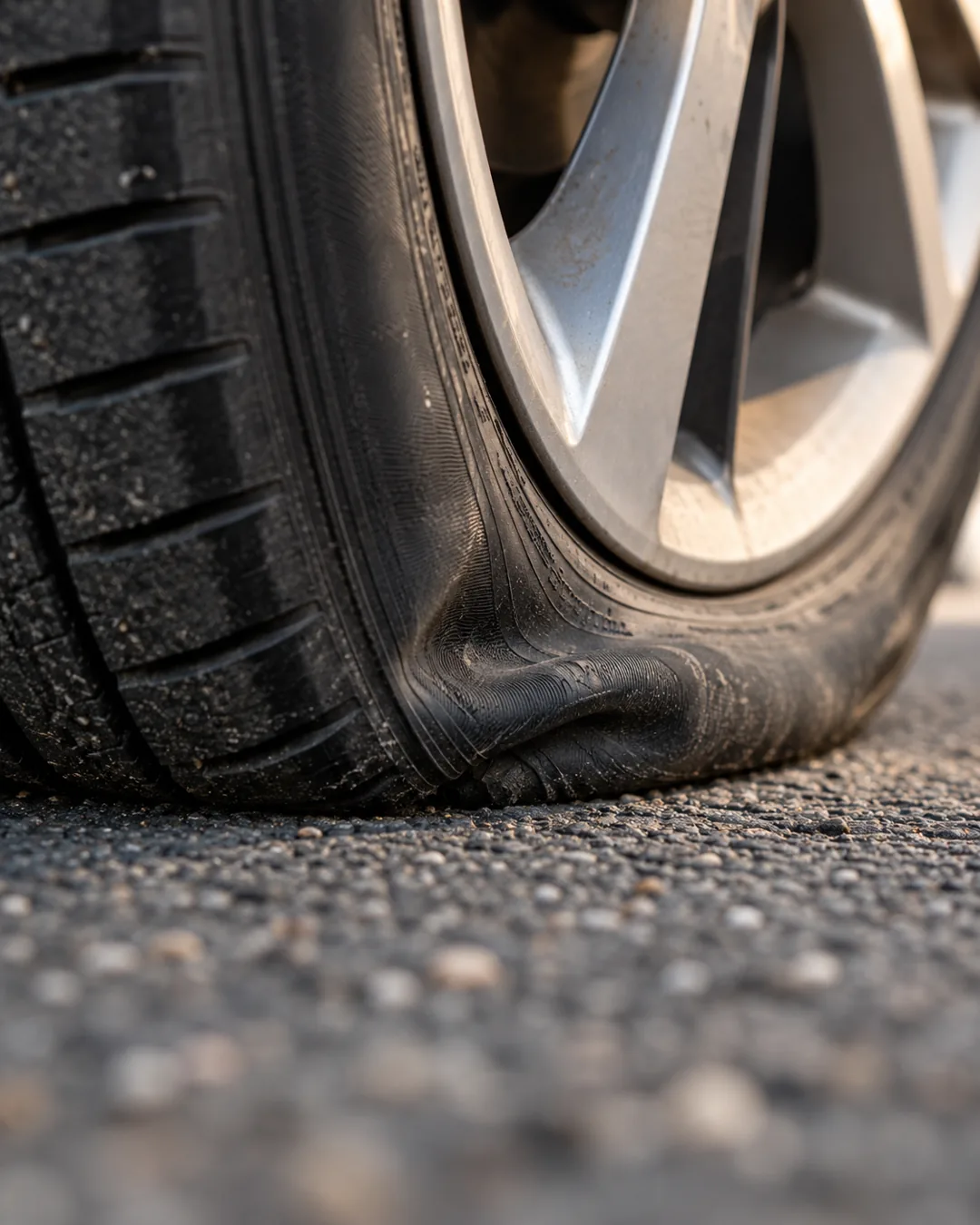
This is the part most drivers get wrong. A puncture can meet every repair rule and still be a write-off if you drove on it flat. Michelin’s repair criteria are specific: “The puncture must be in the tread area only. It must be no larger than 1/4 inch (6 mm),” with sufficient tread remaining, assessed by a technician with the tire off the wheel (Michelin). The Tire Industry Association confines the repairable zone to the crown, in from each shoulder.
But Michelin adds a separate warning: running even briefly on a fully deflated tire can harm the sidewall and carcass from within, leaving no visible trace on the surface. That concealed damage is independent of where the puncture sits. So a nail in the center of the tread (textbook repairable) can become unrepairable purely because the tire ran flat on the way to the shop. The practical shift: stop immediately, don’t “limp it there.” The technician has to make the final call after an off-wheel inspection.
A before / during / after decision checklist
This is a sourced decision sequence built from the guidance above: the one tool a stressed driver needs at the roadside.
- Before you move: If parked safely, don’t drive at all (change the tire or call a tow).
- If it goes flat while moving: Slow gradually, avoid hard braking, flip on your hazards, and stay on smooth, level ground without turning.
- Finding the spot: Continue only far enough to reach safety (never beyond half a mile on a conventional flat).
- After you stop: Apply the parking brake, inspect for punctures and bulges, then fit the spare or call for assistance.
Low but Not Flat Is a Different Call
A tire that is low but still holding some air is not the same as a flat. Virginia Tire & Auto’s guidance is that you can usually drive slowly and cautiously to the nearest air pump or shop, but stop and inspect if handling worsens, new noises appear, or vibration increases, since that signals the tire has crossed into unsafe territory.
Your dashboard alone won’t catch the slow slide. The National Highway Traffic Safety Administration notes that tire pressure monitoring systems “only activate a warning when a tire is significantly underinflated,” which is why they recommend checking the pressure of all tires, including the spare, at least once a month when cold (NHTSA). The agency reports only 19 percent of consumers properly inflate their tires, and that underinflation is one of the conditions that leads to flats and blowouts in the first place.
Warning Signs and Who to See
Some problems are fine to monitor; others mean stop driving now and get a professional’s eyes on the tire. Keep general guidance separate from what only a tire technician can assess.
- A sidewall bulge or bubble: have a tire professional inspect it rather than continuing to drive.
- A cut or puncture in the sidewall or shoulder: cannot be safely repaired; a tire shop should replace it, not patch it.
- You already drove on it fully flat: have a technician remove it from the wheel and inspect the inside before trusting any repair.
- Vibration, pulling, or new noise after a low-pressure warning: stop and have a tire professional assess it rather than continuing.
- Run-flats or any sidewall damage: these calls belong to a professional, not a roadside plug.
Getting the Tire Checked After a Flat
Once the tire is off the car, a technician has to assess the damage before any repair. A puncture can cause internal damage invisible from the tread side, so the inner liner has to be inspected. For how long a temporary plug realistically holds, see our tire plug guide, and if a dashboard light is driving the question, our brake light explainer covers the warning side.
Frequently Asked Questions
How far can i drive on a flat tire?
Keep it to half a mile at most, and only to reach a safe stopping point off the road. The deciding factor is purpose, not distance: you are buying a few hundred yards to get clear of traffic, not covering ground. Each extra foot risks the rim and can push a fixable puncture past the point of repair.
How far can i drive on a run flat tire?
Bridgestone rates its run-flats for up to 50 miles (80 km) at up to 50 mph (80 km/h) after air loss, but that is a per-manufacturer figure, so confirm your own. It assumes a working pressure monitor to tell you the air is gone, and the tire still needs professional inspection afterward.
How long does it take a tire to go flat?
It varies with the cause. A blowout or a large puncture drops pressure in seconds; a slow leak from a small nail can take days, with the monitor light appearing only once pressure falls significantly below spec. Because the alert comes late, a monthly cold-pressure check catches losses the dashboard misses.
Can you drive a short distance on a flat tire?
Only the bare minimum to clear traffic: Walser’s limit is a few feet, not a few miles. “Short” here is measured in car lengths, not errands. Even that brief roll on a completely deflated tire can leave hidden sidewall and carcass damage, so a technician should check it off the wheel before any repair. Driving on a flat is a safety matter, and tire structure can fail without an obvious outside sign. When a bulge, sidewall cut, or run-flat is involved, let a tire professional make the call.