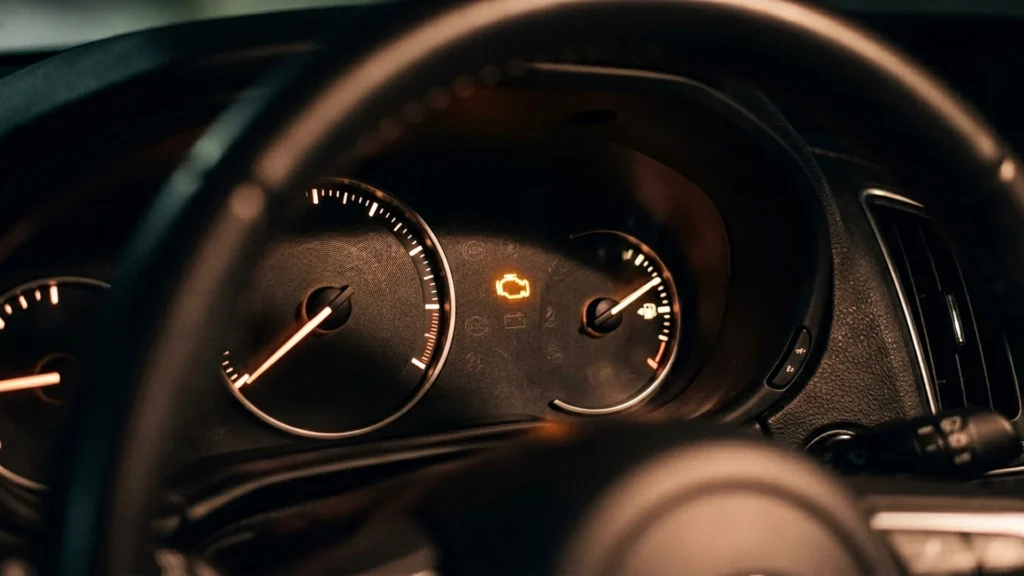
The check engine soon light sitting there on your dashboard can feel like the car is speaking a language you were never taught. Most drivers see that amber glow and feel a spike of dread, then quietly hope it turns off on its own. Sometimes it does. More often it does not, and ignoring it long enough turns a $150 fix into a $1,200 repair. This guide breaks down exactly what that light is telling you, how serious it really is, and the practical steps you need to take – whether you plan to handle it yourself or hand it to a shop. Understanding the check engine soon light is not complicated once you know the basic logic behind it, and that knowledge alone saves money and stress.
What the Light Actually Means (and What “Soon” Signals)
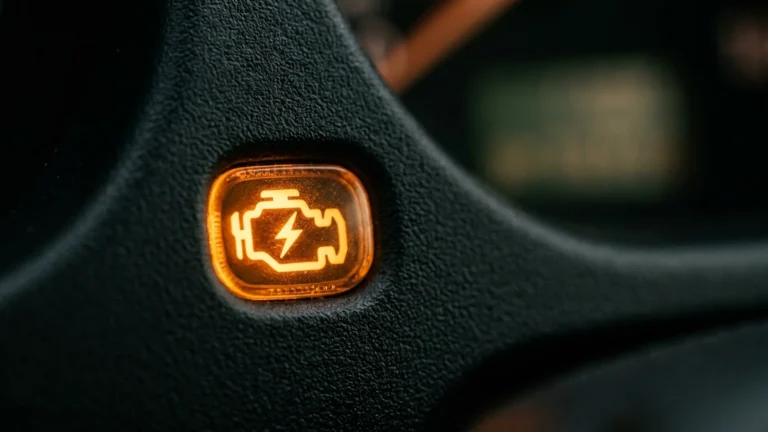
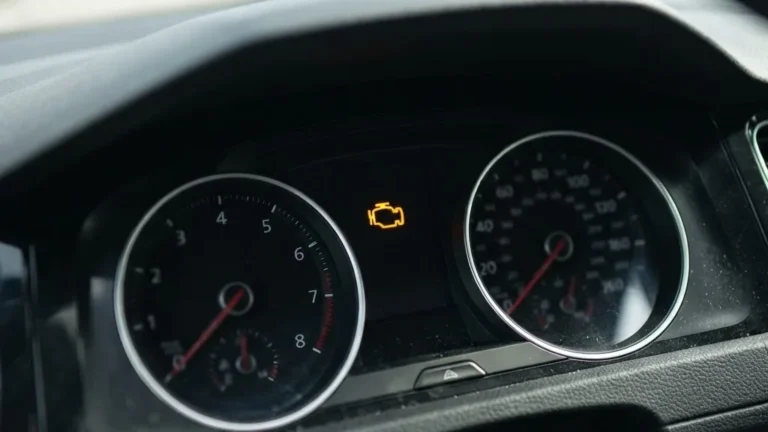
The check engine soon light – sometimes labeled “service engine soon” or just “check engine” depending on the manufacturer – is the output of your car’s onboard diagnostics system, called OBD-II. This system became federally required on all passenger vehicles sold in the United States starting in model year 1996. When any sensor in the powertrain or emissions system detects a reading outside normal parameters, the engine control module (ECM) stores a fault code and illuminates the light.
The word “soon” is doing real work in that phrase. It signals that something is wrong, but not necessarily that the car is about to stop. Think of it as your car saying, “Schedule an appointment – do not blow this off for two months.” The light does not tell you the cause. It tells you only that a code is stored and waiting to be read.
Solid Amber vs. Flashing: This Distinction Matters a Lot
Pay close attention to whether the light is steady or flashing. A solid amber check engine soon light means there is a stored fault, the car can usually be driven carefully, and you should get it diagnosed within the next few days. A flashing or blinking light – especially one that flashes red on some vehicles – is a different situation entirely. That pattern almost always means an active cylinder misfire is happening right now. Raw, unburned fuel is entering the exhaust stream, and that is extremely hard on the catalytic converter. Catalytic converters can be destroyed in a matter of minutes under a sustained misfire. They cost $800 to $2,500 to replace depending on the vehicle. Pull over safely, let the engine cool, and do not continue driving until a technician has looked at it. The blinking light is the car’s way of saying stop soon, not eventually.
The Most Common Causes – Plain English, No Jargon
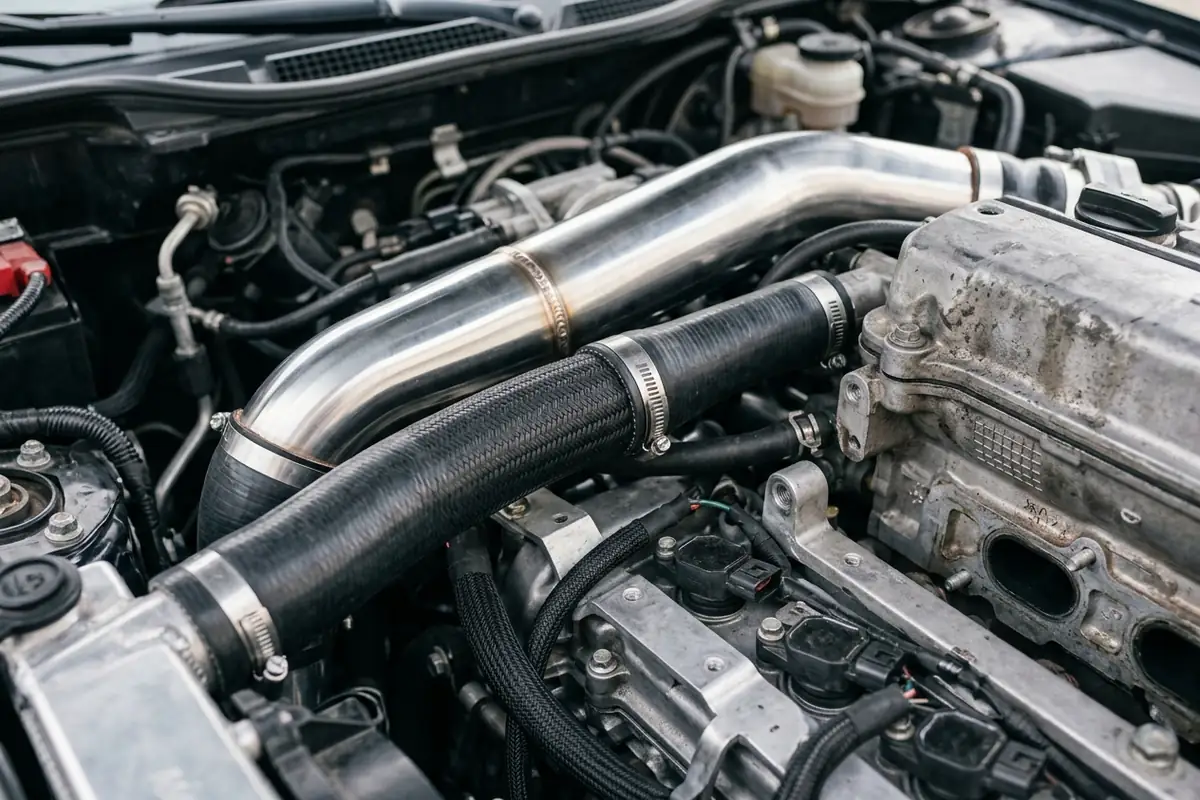
I have seen hundreds of check engine soon light codes come through the shop, and the reality is that maybe six or seven causes cover the vast majority of them. Understanding what these components do makes the diagnosis feel less like guesswork.
Loose or Damaged Gas Cap
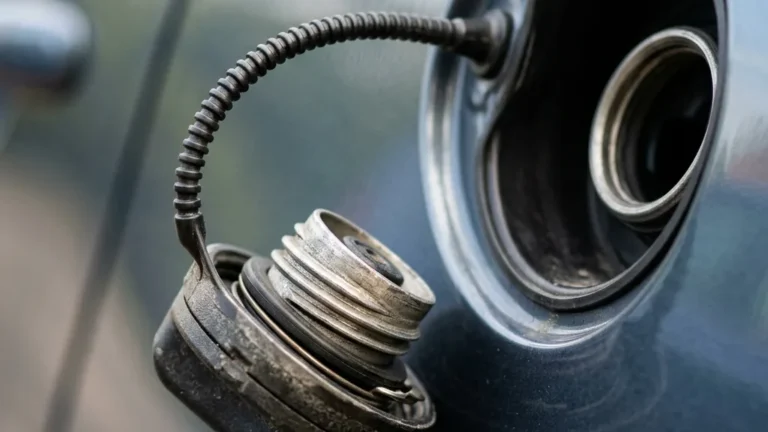
This is the most embarrassingly simple trigger, and it accounts for a surprising slice of check engine soon light complaints. The evaporative emission control system (EVAP) is a sealed network designed to trap fuel vapors and route them back through the engine instead of releasing them into the atmosphere, which the the EPA regulates tightly. A gas cap that is loose, cracked, or missing breaks that seal. The ECM detects the pressure drop and stores a code. Tighten the cap until it clicks, reset nothing, and drive a few days. The light may go out on its own once the system passes its self-test cycle. It sounds trivial until you realize the repair cost is literally $10 to $25 for a replacement cap if the old one has a worn seal.
Failing Oxygen (O2) Sensor
Oxygen sensors measure the amount of unburned oxygen in the exhaust, and the ECM uses that data to fine-tune the fuel-air mixture in real time. Most vehicles built after the year 2000 have two to four O2 sensors. When one degrades – they typically last 60,000 to 100,000 miles – the fuel trim goes off and fuel economy drops noticeably, sometimes by 10 to 20 percent. The part itself runs $20 to $100 depending on the sensor position and vehicle, but labor can push the total to $150 to $300 at a shop. Not urgent to pull over, but not something to ignore for months either.
Catalytic Converter Failure
The catalytic converter reduces harmful exhaust pollutants. Code P0420 is the classic converter efficiency code – it means the downstream O2 sensor is seeing exhaust that looks too similar to what the upstream sensor sees, suggesting the catalyst is no longer doing its job. Converter failure can be caused by coolant or oil burning internally, sustained misfires (see above), or simple age past 120,000 miles. Replacement cost ranges from roughly $800 to $2,500 depending on whether the car uses a cheaper universal-fit unit or a pricier direct-fit catalytic converter. This is one reason you do not let the blinking light go unaddressed.
Mass Airflow Sensor (MAF)
The mass airflow sensor sits in the intake path between the air filter and the throttle body and measures how much air is entering the engine. Dirt and oil contamination are the usual culprits when it starts reporting bad data. The engine runs too rich or too lean as a result. Sometimes you can clean the sensor with MAF-safe spray cleaner for under $10 and clear the code. If it is actually failing, replacement parts run $100 to $400, and a shop visit including labor might reach $200 to $550 total.
Worn Spark Plugs or Bad Ignition Coils
Spark plugs and ignition coils are the ignition system components that fire the air-fuel mixture in each cylinder. Plugs are a maintenance item – most modern iridium or platinum plugs are rated for 60,000 to 100,000 miles, but people routinely push them past 120,000 miles and then wonder why the car hesitates. A single worn plug causes a misfire. A failing coil on one cylinder causes a misfire on that cylinder specifically. Misfire codes (P0300 through P0308) are very common check engine soon light triggers. A full spark plug replacement on a four-cylinder runs $80 to $200 at a shop. A single coil replacement might be $150 to $350 depending on access.
EVAP System Leak
Beyond the gas cap, the EVAP system includes a charcoal canister, purge valve, and a network of hoses. A small crack in a hose or a stuck purge valve generates a large family of EVAP leak codes (P0440, P0441, P0442, P0455, P0456). The repair could be as cheap as a $15 hose replacement or as involved as a $200 to $500 canister and valve replacement. A smoke test – where a technician pressurizes the EVAP system with inert smoke and watches where it escapes – is the standard way to find the leak, and it usually costs $75 to $150 as a diagnostic fee at most shops.
What to Do the Moment the Light Comes On
First: glance at how the light behaves. Steady means proceed with appropriate caution. Flashing means find a safe place to stop.
Second, notice anything obvious. Did you just refuel and forget to tighten the gas cap? Does the car feel different – rough idle, hesitation under acceleration, unusual smell? A car that drives completely normally with a steady light is not likely to leave you stranded. A car that is shaking, misfiring, or has oil smoke coming from the exhaust is a different story.
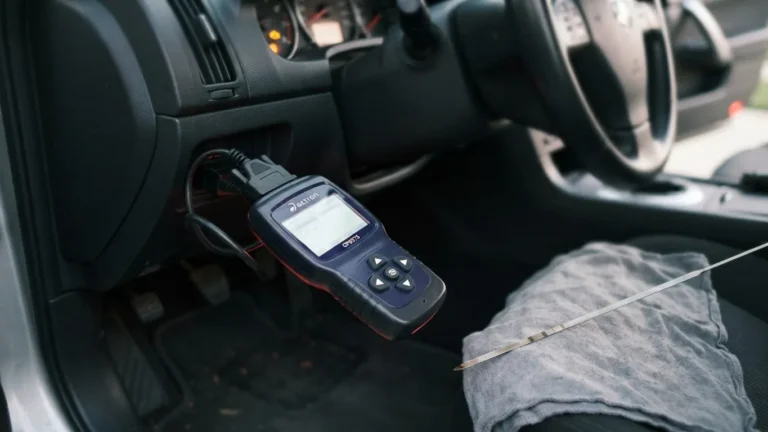
Third, get the code read. You do not need a mechanic to pull the stored fault code. Most auto parts stores – AutoZone, O’Reilly, Advance Auto Parts – will scan your OBD-II port for free. The port is a 16-pin trapezoid-shaped connector almost always located under the dashboard on the driver’s side, typically within 12 inches of the steering column. Plug in any OBD-II scanner, and within seconds you have a five-character code like P0171 (system too lean, bank 1) or P0301 (cylinder 1 misfire). That code narrows the diagnosis dramatically. Write it down. Look it up. Bring it to the mechanic so you go in informed.
For a broader look at what different warning indicators mean, the engine light guide covers the full range of dashboard warning lights and what each color signals.
Is It Safe to Keep Driving?
The honest answer is: it depends on what the car is doing, not just what the light is doing.
A steady check engine soon light with no drivability symptoms – no stumbling, no rough idle, no strange smells, temperature gauge normal – typically means you can drive carefully for a few days while you arrange diagnosis. Do not plan a 500-mile road trip, but commuting to work is usually fine.
Stop driving or drive only as far as the nearest shop if you notice any of these alongside the light: the light is flashing, the engine is shaking or misfiring, you smell burning from the engine bay or exhaust, oil pressure or temperature warning lights are also on, or the transmission is behaving oddly. The brake system warning light is a different indicator entirely and uses its own logic, but when multiple warning lights appear together, the urgency level goes up considerably.
Consumer Reports has long noted that the O2 sensor is the single most frequently cited cause of check engine soon light illumination across its subscriber surveys, and that the majority of repairs linked to the light cost under $500 when addressed promptly. Delay tends to compound costs.
Reading the OBD-II Code Yourself
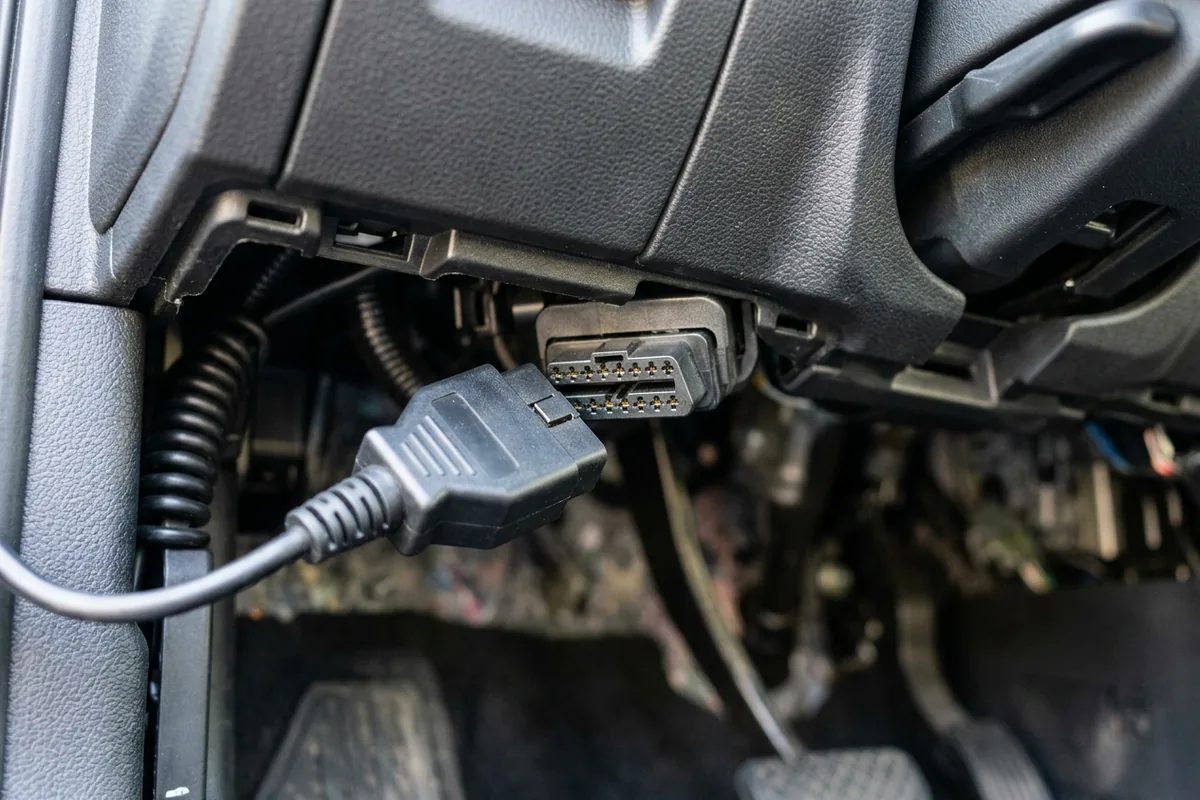
OBD-II scanners are cheap now. A basic Bluetooth model that pairs with a free phone app (like Torque Lite) costs $20 to $40 on Amazon. A handheld stand-alone unit with a screen runs $30 to $80. These are not professional-grade tools, but for reading and clearing codes, they get the job done.
The five-character code format breaks down like this: the letter indicates the system (P = powertrain, B = body, C = chassis, U = network), the next digit is 0 (standard/OBD) or 1 (manufacturer-specific), and the last three digits pinpoint the fault. Here is a quick reference for the most common codes tied to a check engine soon light:
| Code | What It Means | Typical Repair Cost |
|---|---|---|
| P0420 | Catalytic converter efficiency below threshold | $800 – $2,500 |
| P0171 | System too lean (bank 1) – O2, MAF, vacuum leak | $50 – $400 |
| P0300 | Random/multiple cylinder misfire | $80 – $500 |
| P0442 | EVAP small leak – often gas cap | $10 – $300 |
| P0135 | O2 sensor heater circuit malfunction (bank 1, sensor 1) | $150 – $350 |
| P0102 | Mass airflow sensor low input | $200 – $550 |
Knowing your code before you walk into a shop gives you a baseline for the conversation. You are not going in blind, and an honest technician will respect that.
Repair Cost Overview by Cause
Costs vary by region, shop type (dealer vs. independent), and vehicle make. European vehicles generally cost more to repair than domestic or Japanese ones because parts pricing and labor complexity differ. The table below reflects national US averages as of 2025 for common check engine soon light repairs at an independent shop:
| Cause | DIY Part Cost | Shop Total (Parts + Labor) |
|---|---|---|
| Gas cap replacement | $10 – $25 | $15 – $40 |
| O2 sensor (upstream) | $20 – $100 | $150 – $350 |
| MAF sensor | $80 – $300 | $200 – $550 |
| Spark plugs (4-cyl) | $20 – $60 | $80 – $250 |
| Ignition coil (single) | $30 – $100 | $150 – $400 |
| Catalytic converter | $200 – $800 | $800 – $2,500 |
| EVAP purge valve / hose | $15 – $80 | $75 – $350 |
One note on diagnostics: most shops charge a diagnostic fee of $75 to $150 to pull codes, perform a visual inspection, and give you a confirmed cause and repair estimate. That fee is often waived if you proceed with the repair. If your check engine soon light is on and the car is drivable, calling ahead to ask about the diagnostic fee policy is worth 30 seconds.
AAA recommends getting a written estimate before authorizing any repair and asking specifically whether the diagnostic fee applies toward the total cost.
A Note on Clearing the Code
Some people ask about clearing the check engine soon light without fixing anything – either by disconnecting the battery or using a scanner. This makes the light go away temporarily, but the underlying fault code will return once the ECM runs its monitors and detects the same problem again. More importantly, if you clear codes before a state emissions inspection, the car’s monitors need to complete a full drive cycle before they are ready. Arrive at the inspection station with recently cleared codes and you may fail simply because the monitors show “not ready.” Fix the cause first. That is what clears the light for real.
FAQ
Can I drive my car if the check engine soon light is on?
If the light is steady and the car drives normally with no other warning lights active, you can usually drive carefully for a few days while arranging diagnosis. If the light is flashing, the engine is misfiring, or any other warning light is also illuminated, stop as soon as it is safe to do so.
Why is the check engine soon light different from the service engine soon light?
They refer to the same indicator on most vehicles. “Check engine soon” is the phrasing used by Ford, GM, and many others. “Service engine soon” appears on several Nissan, BMW, and Mercedes models. Both tie into the OBD-II diagnostic system and both mean a fault code has been stored. On some vehicles, “service engine soon” can also flag a scheduled maintenance interval, but an OBD-II scan will clarify which type of alert it is.
What does it mean when the check engine soon light flashes?
A flashing check engine soon light almost always indicates an active engine misfire. Unburned fuel entering the hot exhaust system can damage or destroy the catalytic converter within a short time. Do not continue driving normally – find a safe place to stop, let the engine cool down, and have the car towed or driven very gently to a shop.
Will a loose gas cap really trigger the check engine soon light?
Yes. The EVAP system is a sealed circuit, and even a small pressure loss – from a loose, worn, or cracked cap – can trigger a fault code. Tighten the cap until it clicks, then drive normally for several days. If the seal on the cap is worn, a new cap costs $10 to $25 and often resolves the issue without any other work.
How long does it take for the check engine soon light to go off after a repair?
Once the underlying issue is fixed, the ECM needs to run its diagnostic monitors and confirm the problem is resolved. This typically happens within one to three complete drive cycles, which means normal driving over one to three days. If the light has been manually cleared with a scanner, the monitors need to complete as well. A shop will typically verify the repair and confirm the light stays off before returning the vehicle.
Should I use a cheap OBD-II scanner or pay for a professional diagnosis?
A basic scanner is excellent for reading the stored code and narrowing down the likely cause. It does not replace a professional diagnosis for complex issues. Many faults – a failing sensor that reads in range but is slow to respond, an intermittent EVAP leak – require live data, a smoke machine, or manufacturer-specific software to pin down accurately. Use a cheap scanner to get informed. Trust a qualified mechanic for anything you cannot confidently diagnose yourself, and always ask a shop to explain their findings before authorizing work.
The Bottom Line
The check engine soon light is your car’s way of flagging that something in the powertrain or emissions system needs attention. Steady means act within a few days. Flashing means stop and get help now. The majority of causes – gas cap, O2 sensor, spark plugs, EVAP leak – are straightforward and inexpensive when caught early. Pull the code at any parts store for free, look up what it means, and go into the shop conversation with that information in hand. For anything you cannot diagnose with confidence, have a qualified mechanic verify the cause and repair. Never guarantee yourself an outcome based on a code alone – a code points to a system, not always to a single part. Fixing the actual cause is what makes the check engine soon light go out for good.