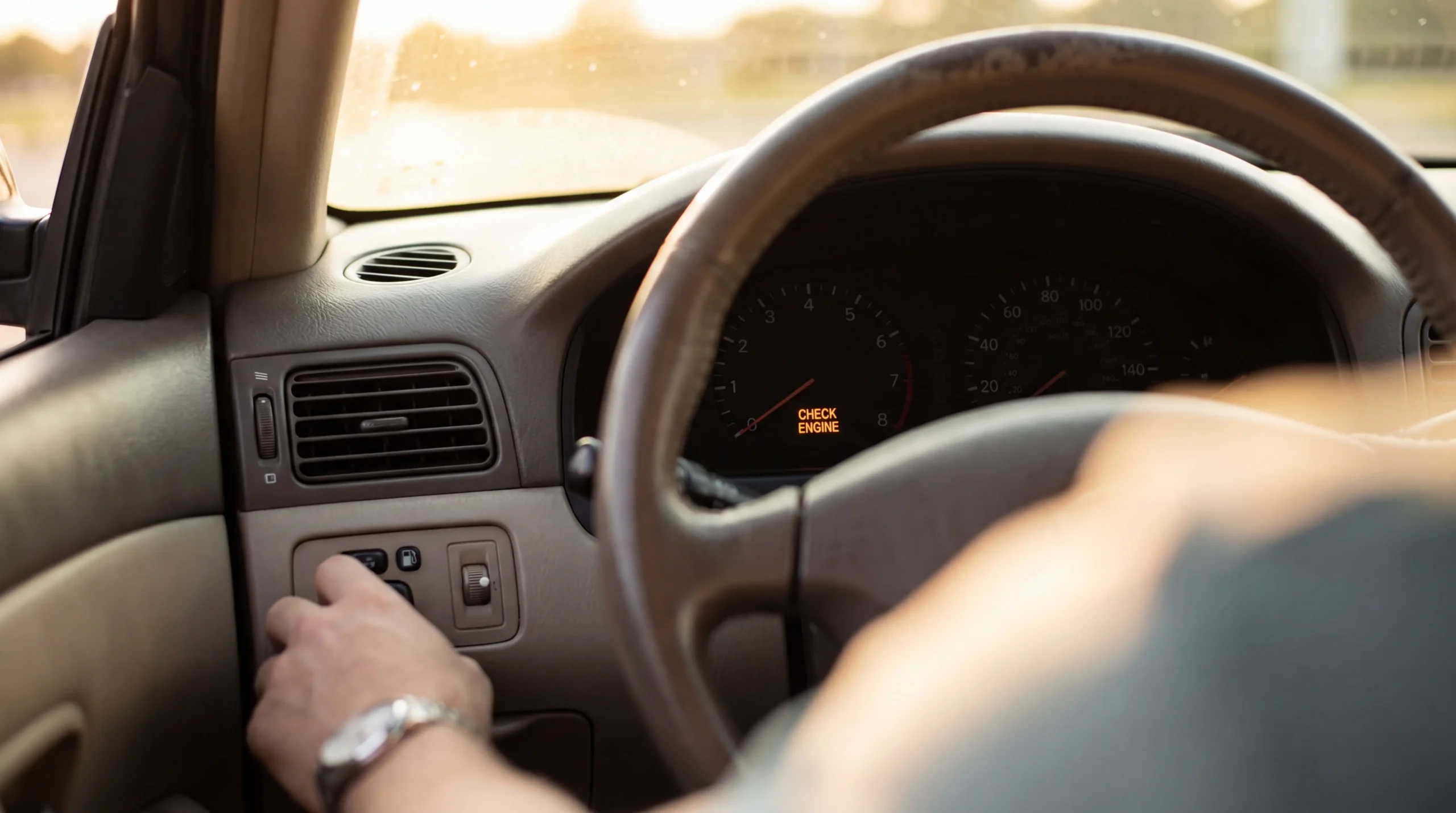

Check engine light on gas cap loose? Yes, that’s probably exactly what’s happening. It’s actually the most common reason that light pops on, and the fix takes about ten seconds. I’m going to save you the headache I went through the first time this happened to me (spoiler: I panicked for no reason).
Quick heads up: I’m sharing what I’ve learned from personal experience, not professional mechanic advice. For anything beyond basic troubleshooting, consult a certified mechanic.
Your car’s EVAP system monitors fuel vapors, and when the gas cap isn’t sealed right, the system detects a leak. The computer flags it, the light comes on, and suddenly you’re wondering if your engine is about to fall out. It’s not. This is one of those problems that sounds scarier than it actually is.
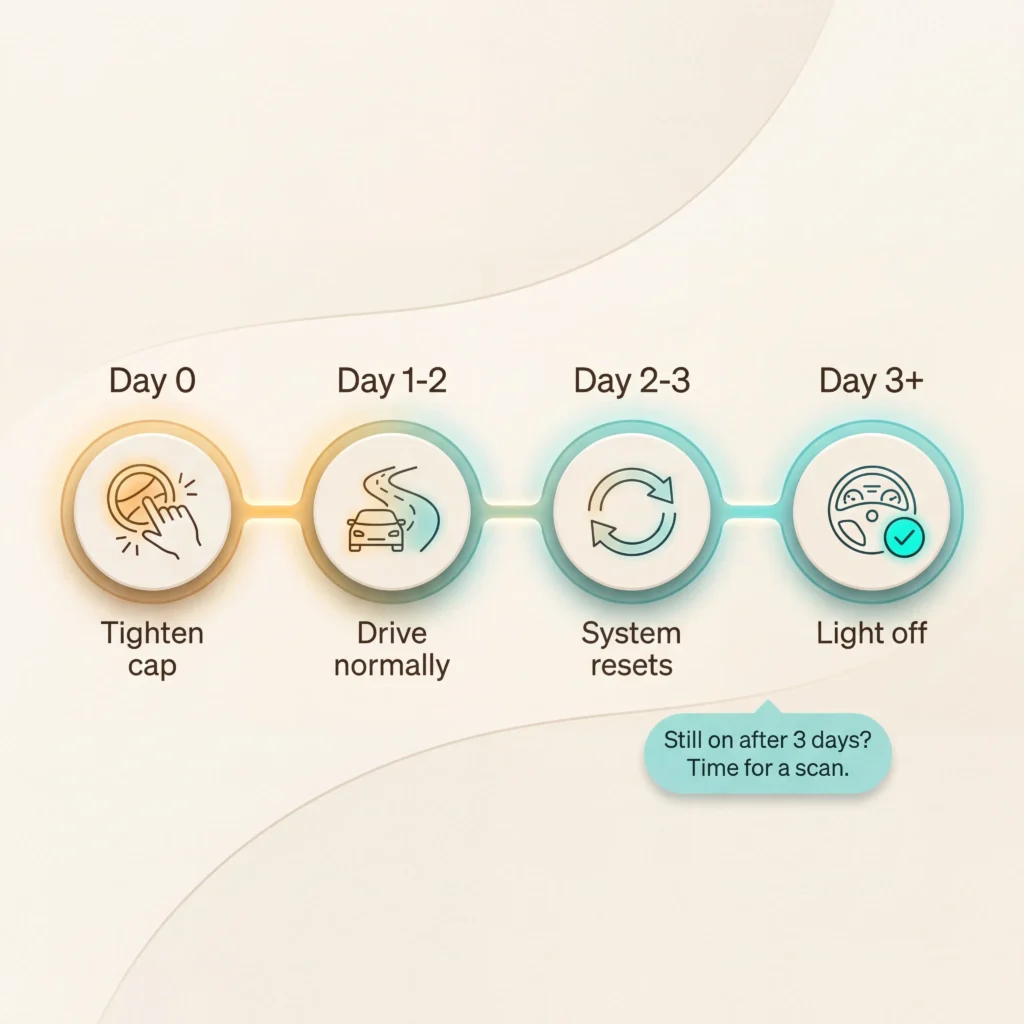
The quick fix? Tighten your gas cap until you hear two or three clicks, then drive normally for a few days. The light should turn off on its own. If you want to understand why this happens and what to do if tightening doesn’t work, keep reading. For more reset methods and other common triggers, check out our complete guide on how to reset check engine light.
Why a Loose Gas Cap Triggers the Check Engine Light
Ever wonder why something as simple as a gas cap can set off a warning light? If you’re seeing your check engine light on gas cap loose, it comes down to your car’s evaporative emission system, which most people just call the EVAP system.
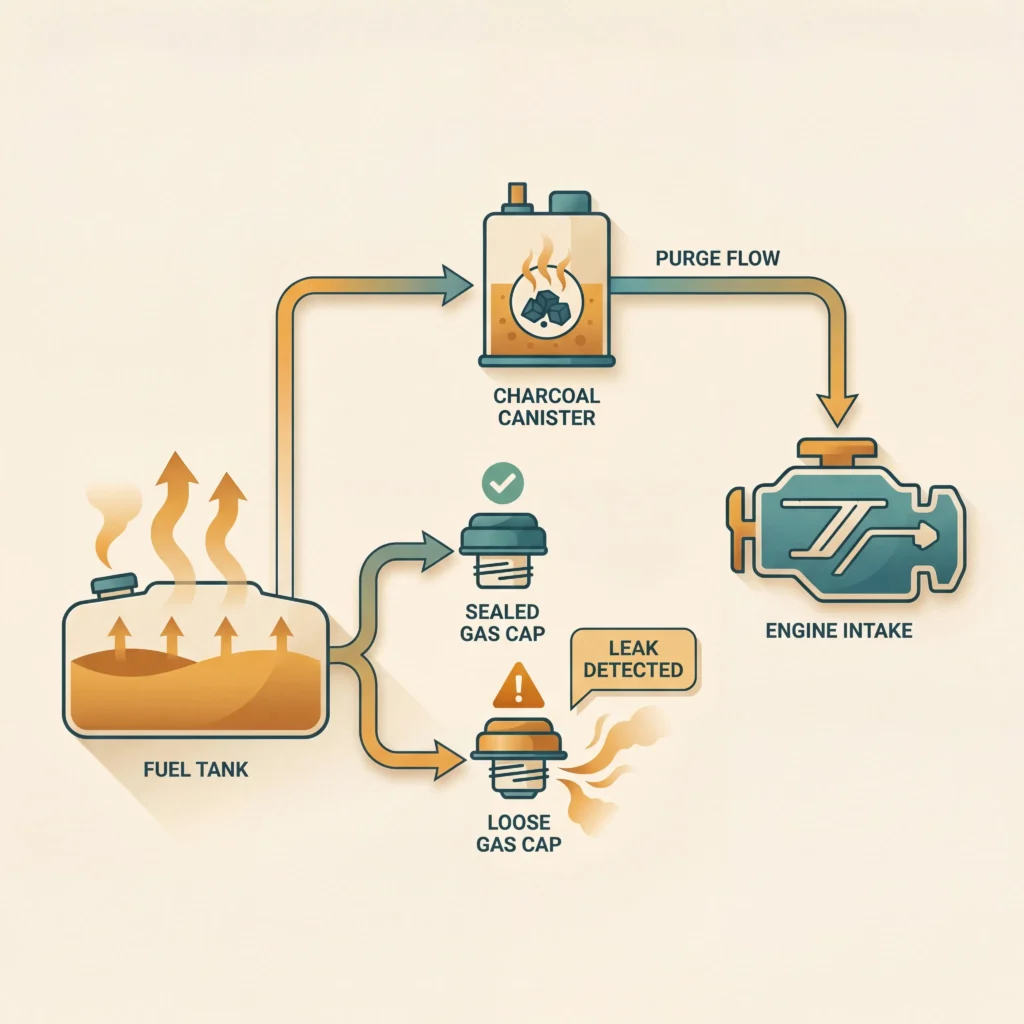
What is the EVAP system? Your car’s evaporative emission system captures fuel vapors from the gas tank, stores them in a charcoal canister, and eventually burns them off through the engine instead of releasing them into the atmosphere.
Here’s how it works. Your fuel tank produces vapors constantly. Instead of letting those vapors escape into the air (bad for the environment, also illegal), your car captures them in a charcoal canister and eventually burns them off through the engine. The whole system needs to stay sealed for this to work properly.
The gas cap is part of that seal. When it’s loose, cracked, or missing entirely, the EVAP system detects a pressure drop. Your car’s computer interprets this as a leak and turns on the check engine light to let you know something’s off.
I remember the first time my light came on right after filling up. I had this sinking feeling in my stomach, like maybe I’d somehow broken something at the gas station. Turns out I just hadn’t clicked the cap all the way. That’s literally all it was.
The EVAP system is pretty sensitive. Even a small gap in the seal can trigger the warning. On the bright side, this sensitivity means your car catches real problems early. On the annoying side, it also means a half-turn loose cap will set off the same alarm as a major fuel system issue.
How to Check If Your Gas Cap Is the Problem
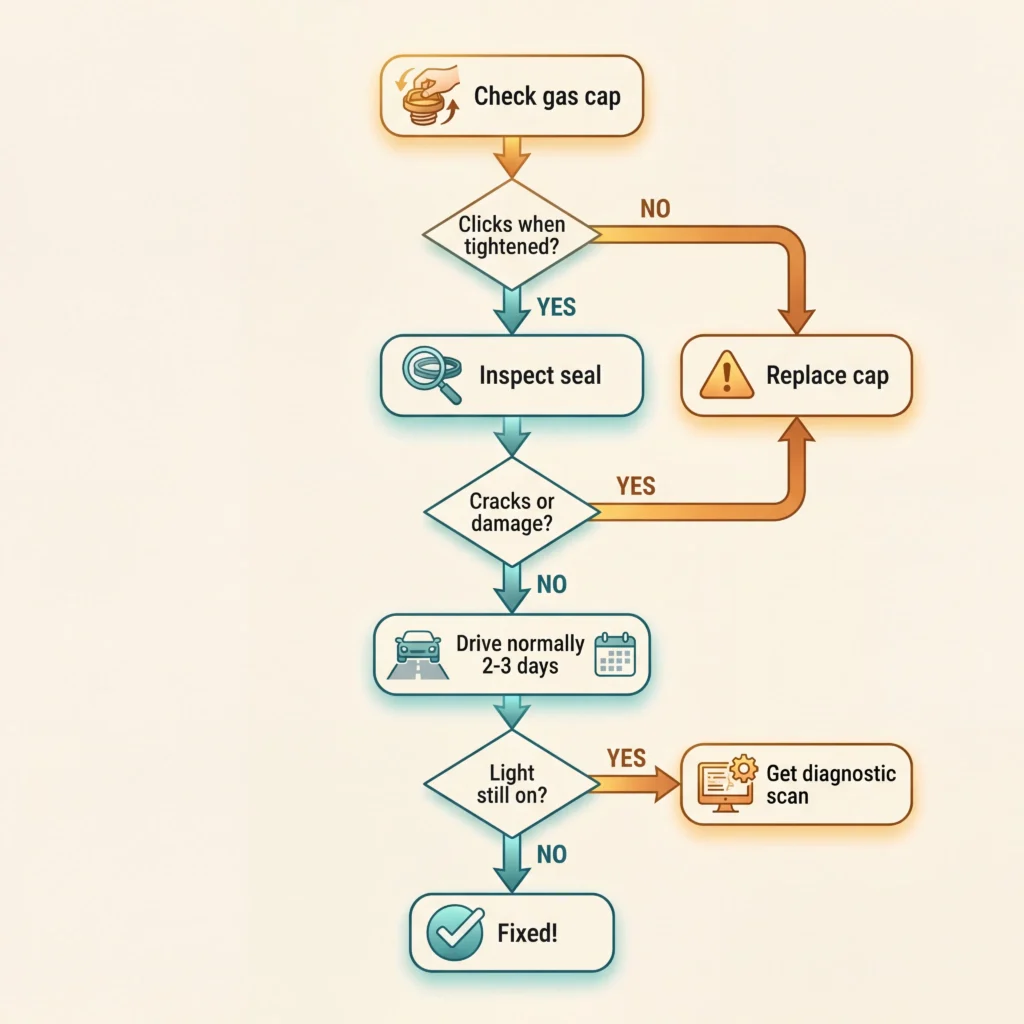
Not sure if the gas cap is actually your issue? When your check engine light on gas cap loose appears, here’s a simple way to figure it out before you spend money on diagnostics.
Step 1: Turn off your car and open the fuel door.
Step 2: Remove the gas cap completely. Look at the rubber seal around the edge. You’re checking for cracks, chunks missing, or any spots where the rubber looks dried out and brittle.
Step 3: Check the cap itself for damage. Any visible cracks in the plastic? Does the tether look frayed or broken?
Step 4: Put the cap back on and tighten until you hear it click. Most caps click two or three times when properly sealed. If you don’t hear any clicks, or if the cap just spins freely without catching, that’s your problem.
Step 5: If everything looks fine, drive normally for 50 to 100 miles (about three to four trips). The light should reset itself if the cap was the issue.
Here’s a handy trick I use: after tightening, try to turn the cap backwards. It should resist. If it moves easily in both directions, the seal isn’t holding.
Don’t skip this step – trust me. I once drove around for two weeks assuming my cap was fine, only to discover the seal had a tiny crack I couldn’t see without really looking. A replacement cap fixed everything.
Related: If your light came on but your car seems totally normal otherwise, check out check engine light on but car runs fine for more possible causes.
How to Fix a Loose or Damaged Gas Cap
Fixing this is genuinely one of the easiest car repairs you’ll ever do. No tools required, no mechanic needed.
If your cap is just loose: Remove it, reseat it on the threads, and tighten clockwise until you hear clicks. That’s it. You’re done.
If your seal is damaged: You need a new gas cap. The good news is they’re inexpensive and universal caps work for most vehicles. Just tell the store your year, make, and model to get the right fit.
When you buy a replacement, go for an OEM cap or a quality aftermarket one. I grabbed the cheapest option once and it never sealed right. Ended up buying a better one anyway, so I basically paid twice. The mid-range options work fine.
Installing a new cap:
- Remove the old cap
- Check the filler neck for any debris or damage
- Thread the new cap on clockwise
- Tighten until you hear multiple clicks
- Try to turn it backwards to confirm it’s locked
Some newer vehicles have capless fuel systems. If you don’t have a traditional cap at all, you can skip this whole article (lucky you). But if your capless system is having issues, that’s a different problem that usually needs a mechanic.
Quick heads up: if your cap looks fine and seats properly but the light keeps coming back, the issue might be somewhere else in the EVAP system. More on that in a bit.
How Long Until the Light Resets After Tightening
This is the question everyone asks, and I get it. You fixed the problem, now you want confirmation that it worked.
The short answer: typically 50 to 100 miles of driving, or about three to four “drive cycles.”
A drive cycle isn’t just starting your car. It means driving long enough for the engine to warm up completely, maintaining highway speeds for a bit, then cooling back down. Your car runs self-diagnostic checks during these cycles. Once it completes enough checks without detecting the leak, it clears the code automatically.
For most people, this means the light turns off after a few days of normal driving. Commuting to work and back, running errands, that kind of thing.
Some folks get impatient (I’m one of them) and want the light gone immediately. You have options:
Option 1: Use an OBD2 scanner to clear the code manually. These plug into a port under your dashboard. Clear the code, and if the cap was really the issue, the light stays off.
Option 2: Take it to an auto parts store. Places like AutoZone and O’Reilly often scan and clear codes for free in most states, though policies vary by location so check with your local store first.
Option 3: Wait it out. Boring but effective.
I keep a cheap OBD2 scanner in my glove box for exactly this reason. Being able to clear a code and confirm it doesn’t come back gives me peace of mind without waiting a week.
One thing to know: if you clear the code and the light comes back within a day or two, the gas cap probably isn’t your only problem. Time to dig deeper or visit a mechanic.
Common Gas Cap Codes: P0442 and P0455
If you’ve scanned your car or had someone read the codes, you might see P0442 or P0455. These are the two most common codes related to gas cap issues.
P0455 means “Large EVAP Leak Detected.” Despite the scary name (sounds serious, but usually isn’t), this often just means your gas cap was loose or missing. The system detected a significant pressure drop in the fuel vapor system. Tighten or replace the cap, clear the code, and see if it comes back.
P0442 means “Small EVAP Leak Detected.” This is trickier. It could be a slightly loose cap, a worn seal, or a small crack somewhere in the EVAP system. Start with the gas cap fix. If that doesn’t solve it, you might have a leak in a hose, the charcoal canister, or the purge valve.
Other codes you might see:
- P0440: General EVAP system malfunction
- P0456: Very small leak detected (often a degraded cap seal)
- P0457: Loose gas cap detected (some cars have this specific code)
The code gives you a starting point, not a final diagnosis. I’ve seen P0442 turn out to be nothing more than a cap that needed replacing. I’ve also seen it lead to a cracked EVAP hose that took a mechanic an hour to find.
If you get a code, start with the cheap fix (the cap). Work your way up from there only if needed.
Related: Want to understand all the reasons your light might come on? See why did my check engine light come on for the full breakdown.
When It Is Not the Gas Cap
Sometimes you tighten the cap, wait a week, and the light is still staring at you. That’s frustrating, but it tells you something useful: the problem is elsewhere in the EVAP system.
Other common EVAP leak sources:
The purge valve controls when fuel vapors get sent to the engine. If it’s stuck open or closed, you’ll get a leak code even with a perfect gas cap.
The charcoal canister stores fuel vapors until they can be burned. Cracks or damage here cause leaks.
EVAP hoses connect everything. They can crack, come loose at connections, or get damaged by heat over time.
The vent valve controls airflow through the system. Failure here mimics a leak.
Here’s my personal rule: if I’ve confirmed the gas cap is good (new cap, properly tightened, still getting codes), I take it to a mechanic. EVAP diagnostics require a smoke test where they pump vapor through the system to find leaks. A smoke test typically runs between $80 and $150 and takes about 30 minutes. That’s not something I can do in my driveway.
Signs it’s probably NOT the gas cap:
- You smell fuel near your car (could be a more serious leak)
- The light came on and you haven’t gotten gas recently
- You’ve replaced the cap and the code comes back within one drive cycle
- You’re getting codes unrelated to EVAP (anything not starting with P04XX)
Don’t beat yourself up if the simple fix doesn’t work. The gas cap is the most common cause, but it’s not the only one. You eliminated the easy answer, which is exactly what you should do before spending money on diagnostics.
Frequently Asked Questions
How do you reset the check engine light on a loose gas cap?
Tighten the cap until it clicks, then drive normally for 50 to 100 miles. The light resets automatically once your car completes a few drive cycles without detecting the leak. If you want it gone faster, an OBD2 scanner clears the code instantly. I’ve done this probably a dozen times and it works every time (assuming the cap was actually the problem).
Can a bad gas cap cause a check engine light to come on?
Absolutely. A damaged, loose, or missing gas cap breaks the seal on your fuel system. Your car’s EVAP system detects this as a leak and triggers the check engine light. It’s the single most common reason for that light to appear, which is actually good news because it’s also the cheapest fix.
How long will the check engine light stay on after replacing the gas cap?
Typically three to four drive cycles, which translates to roughly 50 to 100 miles of normal driving. Some cars reset faster, some slower. If you’re impatient like me, you can use an OBD2 scanner to clear it immediately. Just know that if the code comes back quickly, you’ve got a different problem.
How much does it cost to fix a loose fuel cap?
If the cap just needs tightening, it costs nothing. If you need a replacement cap, expect to pay somewhere in the ten to thirty dollar range at any auto parts store. I’ve found the fifteen dollar range hits the sweet spot between quality and price. The truly budget options sometimes don’t seal properly.
What’s the difference between P0442 and P0455 codes?
P0455 indicates a large EVAP leak (often a completely loose or missing cap). P0442 indicates a small leak (could be a worn seal or minor crack). Both can be caused by gas cap issues, but P0442 is more likely to point to something beyond just the cap if tightening doesn’t fix it.
Will my car pass inspection with the check engine light on?
No. Most states require the check engine light to be off for your vehicle to pass emissions inspection. Additionally, your car’s OBD monitors need to show “ready” status, which means you’ll need to complete several drive cycles after clearing any codes. If your inspection is coming up, address the gas cap issue now and give yourself at least a week of normal driving before the test.
Your Gas Cap Checklist
A loose gas cap is one of those problems that seems alarming but usually isn’t. You’ve got this.
- Check your cap whenever you fill up (make it a habit)
- Listen for clicks when tightening (two or three means it’s sealed)
- Inspect the rubber seal every few months (cracks mean replacement time)
- Keep driving normally after tightening (give it 50 to 100 miles)
- Use an OBD2 scanner if you want confirmation faster
Prices and policies mentioned in this article were accurate at time of writing and may vary.
If the fix doesn’t stick after a week of driving, or if the code comes back right away, you’re looking at something beyond the cap. At that point, what to do if check engine light comes on walks you through next steps.
For the complete picture on clearing that dashboard warning, head back to our main guide: How to Reset Check Engine Light.
— Corinne
