
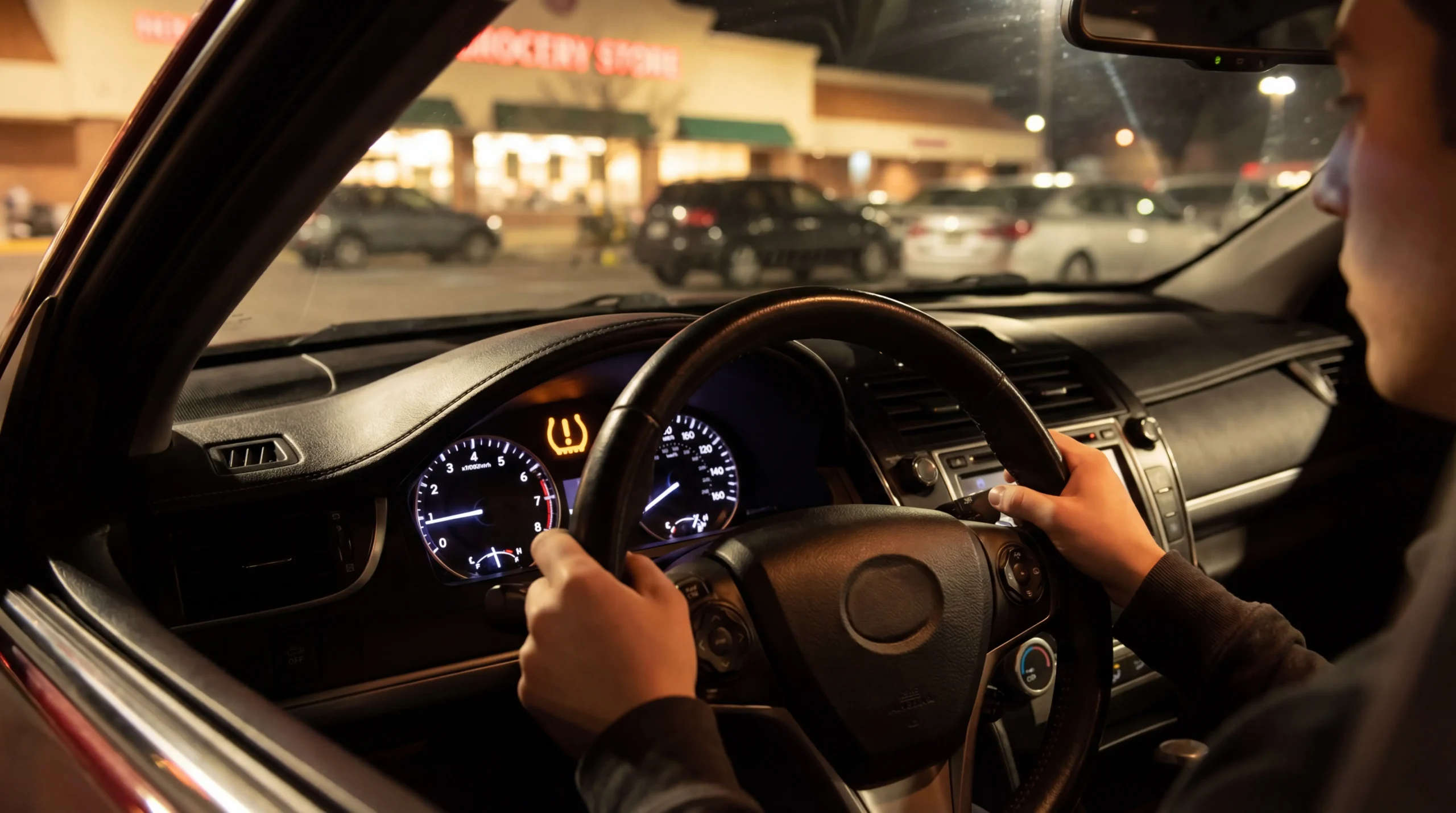

Can we talk about that flashing tire pressure light for a second? I was pulling into a grocery store parking lot last fall when mine started blinking at me. My first thought was that I’d run over something. I got out, walked around the car twice, and every tire looked totally fine. No nails, no obvious damage, nothing. The light kept flashing anyway.
That’s the annoying part about a flashing TPMS light. It’s trying to tell you something, but it’s not exactly clear about what. A solid light means one thing. A flashing light means something else entirely. And if you don’t know the difference, you might waste money fixing the wrong problem (ask me how I know).
Here’s the quick version: a tire pressure monitoring system light flashing for about 60 to 90 seconds and then stays solid usually points to a sensor malfunction, not low air pressure. The system is saying it can’t communicate with one or more sensors. This could be a dead battery inside the sensor, a damaged sensor, or a signal issue.
The good news? Most of the time, you can figure out what’s going on without heading straight to the dealer. This guide covers what different flash patterns mean, the most common causes, and how to fix the problem yourself when possible. For the full picture on tire pressure warnings and how the whole system works, check out the complete service tire monitor system guide.
A note before we dive in: The troubleshooting steps and cost estimates in this article come from my own experience working on several vehicles over the years. I’m not a certified mechanic, and this isn’t professional automotive advice. If your TPMS issue involves anything beyond basic checks and resets, or if you’re not comfortable with any step, please take your car to a qualified professional. Always follow your vehicle manufacturer’s guidelines and owner’s manual.
What Does a Tire Pressure Monitoring System Light Flashing Mean?
This distinction trips people up constantly. A solid TPMS light and a flashing one are telling you completely different things.
When your tire pressure light comes on and stays on without blinking, it’s a pressure alert. One or more tires has dropped below the recommended PSI. This happens from slow leaks, temperature changes, or just regular air loss over time. Check your pressures, add air, and the light should turn off after a few miles of driving.
A flashing light is different. When that TPMS indicator blinks for a minute or so and then stays solid, the system has detected a fault. It’s not primarily about air pressure anymore. Something is preventing the sensors from talking to your car’s computer.
| Light Behavior | What It Means | Urgency | First Step |
|---|---|---|---|
| Solid (steady on) | Low tire pressure in one or more tires | Check within the day | Add air to recommended PSI |
| Flashing then solid | Sensor or system malfunction | Not urgent but needs attention | Check pressures first, then diagnose sensor |
| Flashing only | System error during startup | Moderate | Watch if it continues after driving |
| Intermittent (on/off over days) | Temperature-related or borderline sensor | Low | Monitor pattern, check when cold |
I figured this out after replacing a sensor that didn’t need replacing. My light was solid, I assumed sensor issue, and paid for a new one. Turned out I just had a slow leak from a nail I hadn’t spotted. Would’ve saved myself about a hundred bucks if I’d understood the difference.
Flash Pattern Decoder: What Each Pattern Actually Tells You
Not all flashing is the same. The pattern matters, and this is something most guides skip over completely.
The 60 to 90 Second Flash, Then Solid
This is the classic sensor malfunction pattern. The system runs a check at startup, finds a problem communicating with a sensor, flashes to alert you, then stays on as a reminder. Think of it as roughly the time it takes to buckle your seatbelt and adjust your mirrors before driving off.
Common causes include a dead sensor battery, a damaged sensor from a pothole or tire change, or a sensor that wasn’t programmed correctly after a tire rotation.
Rapid Continuous Flash
This usually means the system has lost signal from a sensor entirely. The sensor might be missing (did someone forget to transfer sensors during a tire swap?), completely dead, or so damaged it can’t transmit at all. This pattern is less common but indicates a more urgent issue.
Intermittent Blinking Over Days
Temperature swings are often the culprit here. As tires heat up from driving, pressure increases. As they cool overnight, pressure drops. If you’re right at the threshold where the system triggers, the light might flash some days and not others. You’ll see this pattern a lot during seasonal transitions when temps swing 20 or 30 degrees between day and night.
Flashes at Startup, Then Turns Off
Usually means the system detected a temporary issue it resolved. Could be a brief signal interference or a pressure reading that was borderline and corrected itself. If it happens once, don’t stress. If it happens repeatedly, dig deeper.
Knowing your pattern helps you skip the guesswork. A 60 to 90 second flash pattern on a car with sensors over five years old? Probably a battery issue. Rapid flashing after getting new tires? Someone might have forgotten to program the sensors.
Top Reasons Your Tire Pressure Light Is Flashing
The flashing light has a handful of usual suspects. Working through them in order saves time.
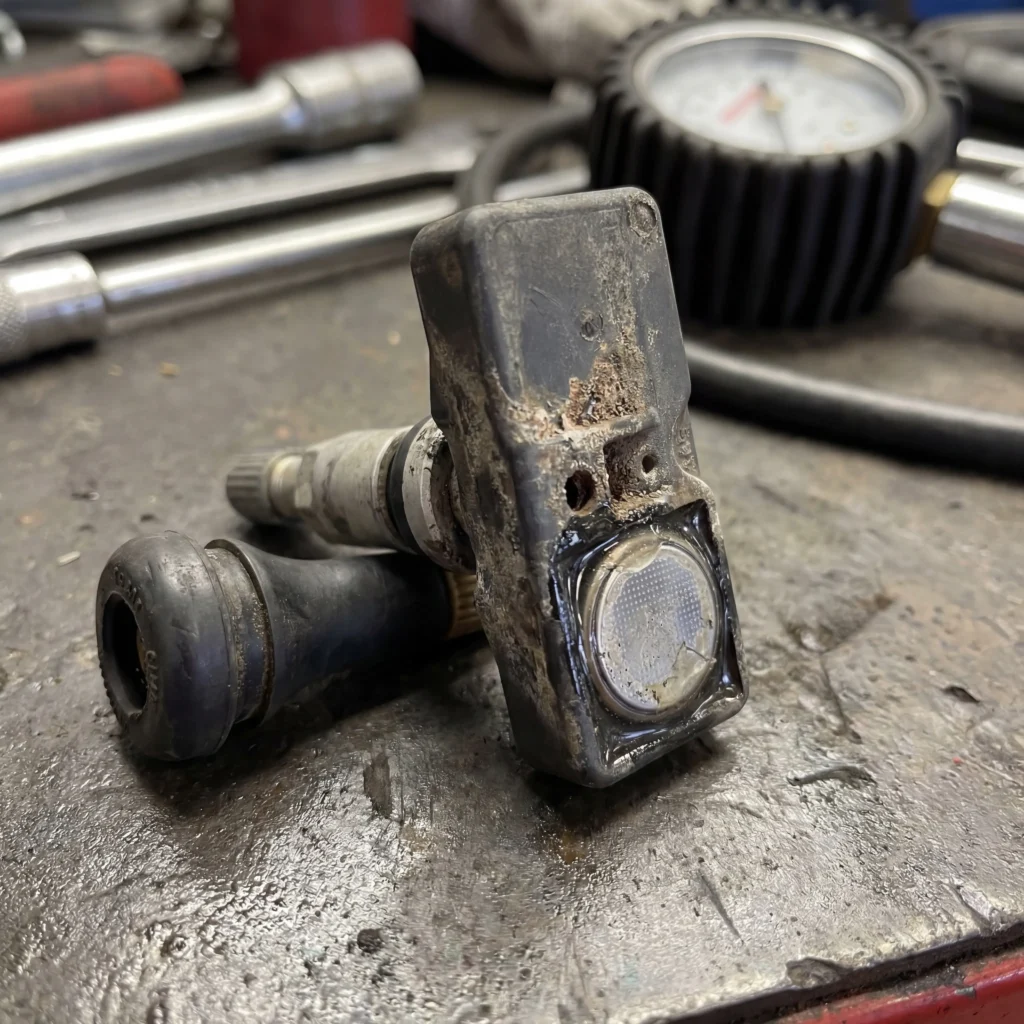
Sensor battery failure is the most common cause on older vehicles. TPMS sensors run on small lithium batteries (typically CR2032 or CR1632 types) that last roughly five to ten years, with hot climates shortening that lifespan to the lower end. The batteries are sealed inside the sensor housing with epoxy for waterproofing, which means they can’t be replaced separately. When the battery dies, the whole sensor needs to go. If your car is approaching that age and you’ve never replaced sensors, this is the most likely culprit. Toyota, Honda, Subaru, and most other brands all use similar battery-powered sensors.
Physical sensor damage happens more often than people realize. Sensors sit inside the tire, attached to the valve stem. They take a beating from potholes, curbs, and road debris. A hard impact can crack the sensor housing or damage the antenna. I’ve also seen sensors get damaged during tire changes when the technician isn’t careful with the mounting machine.
Signal interference is weird but real. Certain aftermarket accessories, phone chargers, or even nearby electronics can interfere with the radio frequency signal sensors use. It’s rare, but if your light started flashing after you installed something new in your car, that’s worth investigating.
Incorrect sensor programming trips up a lot of people. After a tire rotation, some vehicles need the sensors “relearned” so the system knows which sensor is in which position. Skip this step and the car might report a fault. This also happens when aftermarket sensors are installed without proper programming.
Corrosion on the valve stem is easy to overlook. The metal parts of the TPMS valve stem can corrode over time, especially in areas with road salt during winter. This corrosion can affect the sensor’s ability to transmit or even cause a slow leak that triggers warnings.
A quick note on TPMS types: Most vehicles use direct TPMS with sensors in each wheel. Some older or budget vehicles use indirect TPMS, which calculates pressure from wheel speed differences. If your car has indirect TPMS, a flashing light usually means the system needs recalibration rather than a sensor replacement. Check your owner’s manual to confirm which type you have.
Related reading: If you’re seeing a “sensor fault” message specifically, there’s more detail in the tire pressure sensor fault guide.
[IMAGE: TPMS sensor removed from tire showing battery location and valve stem]
How Cold Weather Triggers TPMS Flash Warnings
Temperature drops catch a lot of people off guard. Here’s what’s happening.
Air contracts when it gets cold. For every 10 degree Fahrenheit drop in temperature, your tires lose about 1 to 2 PSI. So if you filled your tires to 35 PSI during a warm afternoon and temps drop 30 degrees overnight, you could wake up to tires at 32 PSI or lower. That might be enough to trigger a low pressure warning.
But cold weather can also cause flashing specifically. Here’s why: sensor batteries perform worse in cold temperatures. A battery that’s borderline dying might work fine during summer but fail to transmit reliably when it gets cold. The system interprets this weak or missing signal as a sensor fault, triggering the flash pattern.
This explains why some people see a flashing TPMS light only in winter. The sensor isn’t dead yet. It’s just struggling in the cold. Come spring, the light might disappear for months before returning the next winter.
What to do: First, check your tire pressures when the tires are cold (before driving). If they’re at or above the recommended PSI and the light still flashes, you’re probably looking at a sensor battery issue. The pressure is fine but the sensor can’t report it properly.
Quick heads up: your car’s recommended PSI is on the door jamb sticker, not the tire sidewall. The sidewall number is the maximum, not the target.
How to Fix a Tire Pressure Monitoring System Light Flashing
Let’s work through this systematically. Most people can handle the first few steps without any special tools.
Step 1: Check all tire pressures manually. Use a gauge you trust (I keep a digital one in my glove box). Check all four tires plus the spare if your vehicle monitors it. Compare to the door jamb sticker. Even if pressures look fine, this step rules out the simple cause first.
Step 2: Inflate to the correct PSI. If any tire is low, add air. Drive for ten to fifteen minutes at highway speed. Some systems need driving time to recheck sensors and clear the warning.
Step 3: Try the TPMS reset procedure. Many vehicles have a reset button under the dashboard, near the steering column, or in the glove box. Press and hold it for three to five seconds until the TPMS light blinks. This tells the system to relearn the sensors. Your owner’s manual has the exact location and procedure for your car.
Step 4: Check for recent tire work. Did you just get a rotation, new tires, or a flat repaired? The sensors might need reprogramming. Some shops skip this step. You can ask them to run the relearn procedure, or many auto parts stores will do it for free.
Step 5: Inspect the valve stems. Look for corrosion, damage, or debris. A corroded or leaking valve stem can cause both pressure loss and sensor issues.
Step 6: Scan for fault codes. If you have an OBD2 scanner with TPMS capability (or a dedicated TPMS tool, which you can often find for 30 to 100 dollars), you can read which sensor is reporting a fault. This tells you exactly which wheel needs attention instead of guessing. Some auto parts stores will scan this for free.
If none of these steps fix the flashing light, you’re likely looking at a dead sensor that needs replacement.
For more detailed reset methods including the battery disconnect trick, see the full reset tire pressure light guide.
When a Flashing TPMS Light Means Sensor Failure
Sometimes the sensor is just done. Here’s how to know.
If your car is over five years old, the original sensors have never been replaced, and the light started flashing without any obvious trigger (no tire work, no major temp swings, no damage), sensor battery failure is the most likely cause. The batteries have a finite life, and when they go, there’s no warning before the light appears.
Signs pointing to sensor failure:
Your light flashes every time you start the car, regardless of temperature. You’ve ruled out pressure issues and all tires are at correct PSI. The reset procedure doesn’t help or the light returns immediately. A diagnostic scan shows “no signal” from a specific wheel. Your car is five plus years old with original sensors.
You can sometimes narrow down which sensor failed even without a scanner. After driving for twenty minutes, check which tire’s valve stem cap is the same temperature as the others. A working TPMS sensor generates a tiny bit of heat when transmitting. This isn’t foolproof, but it sometimes helps identify the culprit.
The sensor itself is a small unit attached to the inside of the valve stem. Replacing it requires removing the tire from the wheel, which means a trip to a tire shop. Some people buy sensors online and bring them to the shop for installation to save on parts markup.
Can You Drive Safely With a Flashing TPMS Light?
Real talk though: yes, you can usually drive safely with a flashing TPMS light. But there’s an important caveat.
A flashing light (sensor malfunction) isn’t the same as a solid light (low pressure). The flashing light means the system can’t monitor your pressures properly. Your tires might be perfectly fine. The system just can’t confirm that.
The risk isn’t immediate danger. The risk is losing your early warning system. If you develop a slow leak or a tire starts losing air, the system won’t alert you. You’d need to catch it yourself through manual checks.
My recommendation: Check your tire pressures manually at least once a week while the light is flashing. Do a quick visual walk-around before longer trips. Get the sensor fixed when it’s convenient, but don’t panic and rush to the dealer thinking your tire is about to blow.
One exception: if the light started flashing immediately after hitting a pothole, curb, or road debris, stop and inspect that tire carefully. The impact might have damaged more than just the sensor.
State inspection note: In states like Texas, California, and New York, a flashing TPMS light will often cause your car to fail inspection. The TPMS system became federally required under the TREAD Act in September 2007, and many states treat a fault light as automatic failure. Check your specific state’s requirements if inspection is coming up.
TPMS Sensor Replacement: What It Costs
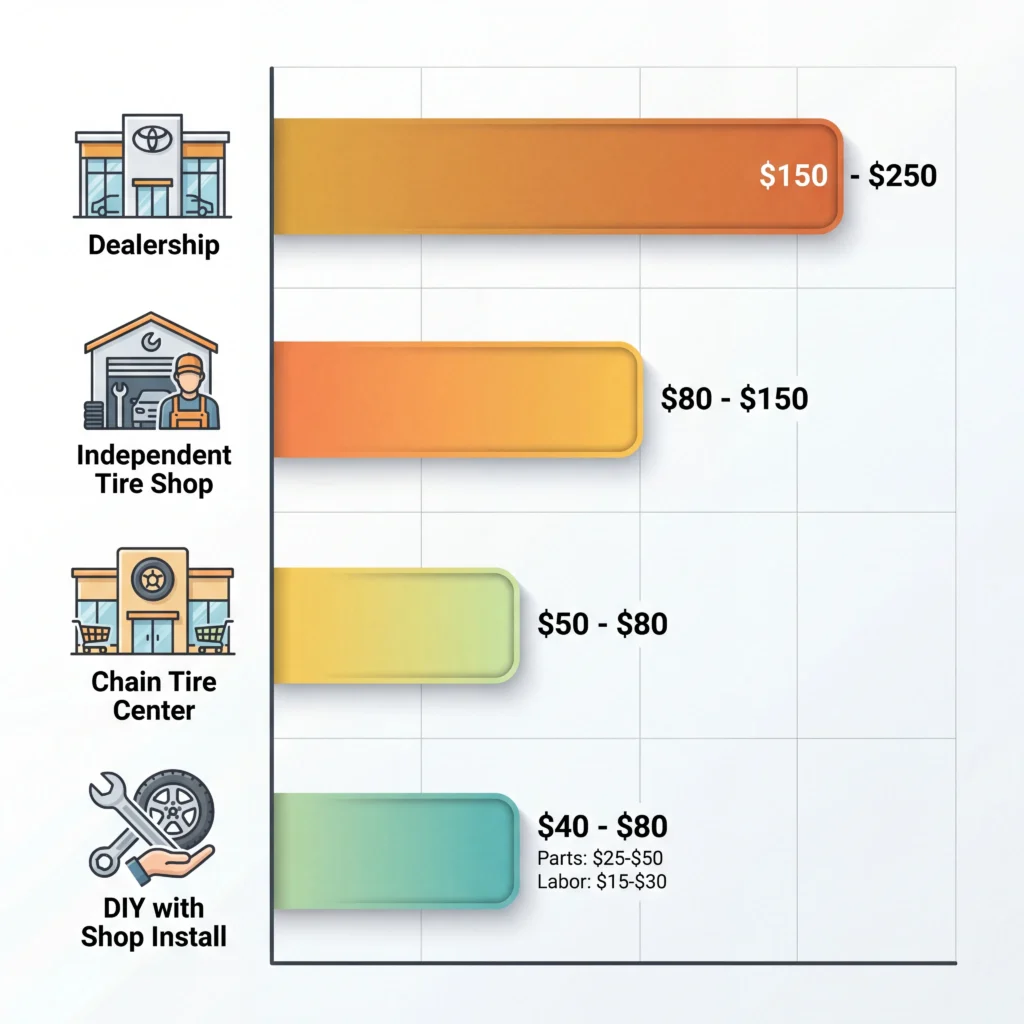
Let’s talk numbers, because this catches people off guard. These are typical prices as of early 2026, and they’ll shift over time, so check current rates before you budget.
Dealership replacement typically runs between 150 and 250 dollars per sensor, including parts and labor. OEM sensors cost more but are guaranteed compatible.
Independent tire shops usually charge 80 to 150 dollars per sensor. Many shops use quality aftermarket sensors that work just as well. I’ve had good experiences with shops that use programmable universal sensors.
Walmart, Costco, or chain tire centers are often the cheapest option at roughly 50 to 80 dollars per sensor installed. The sensors are basic but functional. One person in a Toyota forum mentioned paying around 65 dollars per sensor at Discount Tire, which matches what I’ve seen at similar shops.
DIY with shop installation can save you money if you’re willing to source parts yourself. You can often find sensors online for around 25 to 50 dollars each, then pay 15 to 30 dollars per tire for mounting and programming. This requires the shop to dismount the tire to access the sensor.
Important note: Sensor replacement requires removing the tire from the wheel. You can’t do this at home without specialized equipment. Even if you buy your own sensors, you’ll need a shop to install them.
Some shops recommend replacing all four sensors at once if one fails, arguing the others will fail soon. This isn’t always necessary. If your sensors are seven plus years old, doing all four makes sense. If one failed early (three to four years), just replace that one.
For context on what triggers these warnings in the first place, the service tire pressure system guide covers GM-specific messages that often appear alongside sensor faults.
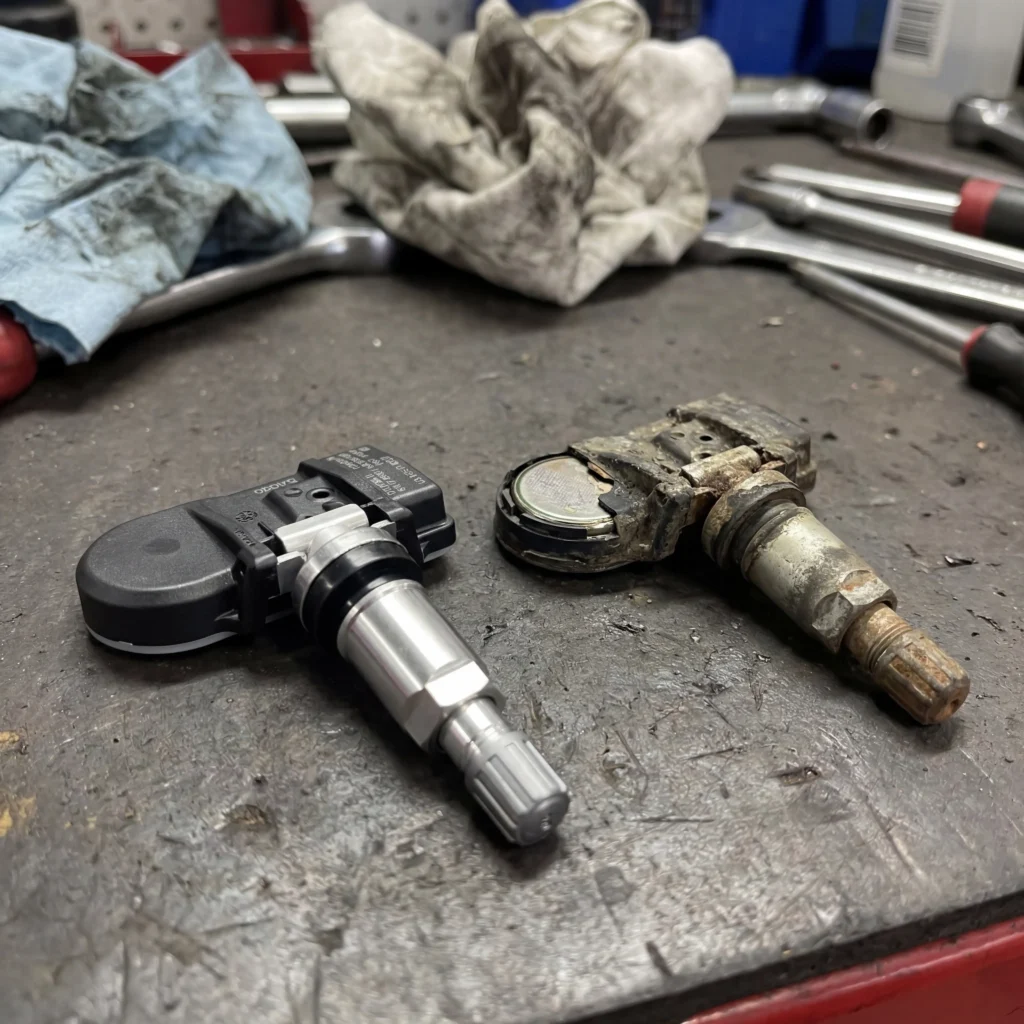
[IMAGE: New TPMS sensor next to worn sensor showing battery and valve stem comparison]
Your TPMS Questions, Answered
Is it safe to drive with the TPMS light blinking?
You can drive with a blinking TPMS light in most cases. The blinking indicates a sensor or system problem, not necessarily a tire emergency. Your tires might be at perfect pressure. The catch is that you’ve lost your automatic monitoring, so check pressures manually every week until you fix the sensor. Don’t ignore a blinking light for months though (I may have done this once and regretted it when I missed a slow leak).
How do I fix a blinking TPMS light?
Start by checking all tire pressures with a manual gauge, including the spare. If pressures are correct, try the reset procedure in your owner’s manual. Still blinking? The sensor likely needs replacement, which typically runs 50 to 200 dollars depending on where you go. A diagnostic scan can confirm which sensor failed before you spend money.
What is the difference between a blinking and solid TPMS light?
A solid light means tire pressure is low in one or more tires. Add air and it should turn off. A blinking light (usually for about a minute to a minute and a half, then solid) means the system detected a sensor malfunction. The sensors can’t communicate properly with your car. Different problem, different fix.
Can I fix a TPMS error myself?
Partially. You can check pressures, try the reset procedure, and diagnose which sensor failed using a scan tool. But replacing the actual sensor requires removing the tire from the wheel, which needs shop equipment. You can save money by buying sensors online and paying a shop just for installation.
Will a flashing TPMS light fail state inspection?
In many states, yes. The TPMS system became federally required in 2007, and a fault light often means automatic failure. States like Texas, California, and New York are particularly strict. Check your specific state’s requirements. If inspection is coming up and your light is flashing, get it fixed first.
Do I need to replace all four TPMS sensors at once?
Not necessarily. If one sensor failed after five plus years and the others are original, they might fail soon too. Replacing all four makes sense for peace of mind. But if one failed early or you’re on a budget, replacing just the bad one is fine. Plenty of people replace sensors one at a time as they fail.
What to Do Next
A flashing tire pressure light is annoying, but it’s rarely an emergency. The system is telling you something needs attention, not that your tire is about to fail.
Here’s your action plan:
Check all tire pressures manually and don’t forget the spare. Try the reset procedure from your owner’s manual. If the light persists, get a diagnostic scan to identify the faulty sensor. Budget 50 to 200 dollars for sensor replacement when you’re ready.
For more detail on any of these topics:
- Blinking tire pressure light covers the intermittent on-and-off pattern specifically
- Reset tire pressure light guide walks through every reset method in detail
- Tire pressure sensor fault explains the “sensor fault” message
For the complete picture on tire pressure monitoring, how the system works, and when it’s telling you something more serious, head to the full service tire monitor system guide.
You’ve got this. And honestly, now that you know what that flashing light actually means, you’re ahead of most people who just stare at it and hope it goes away.
— Corinne Desai
